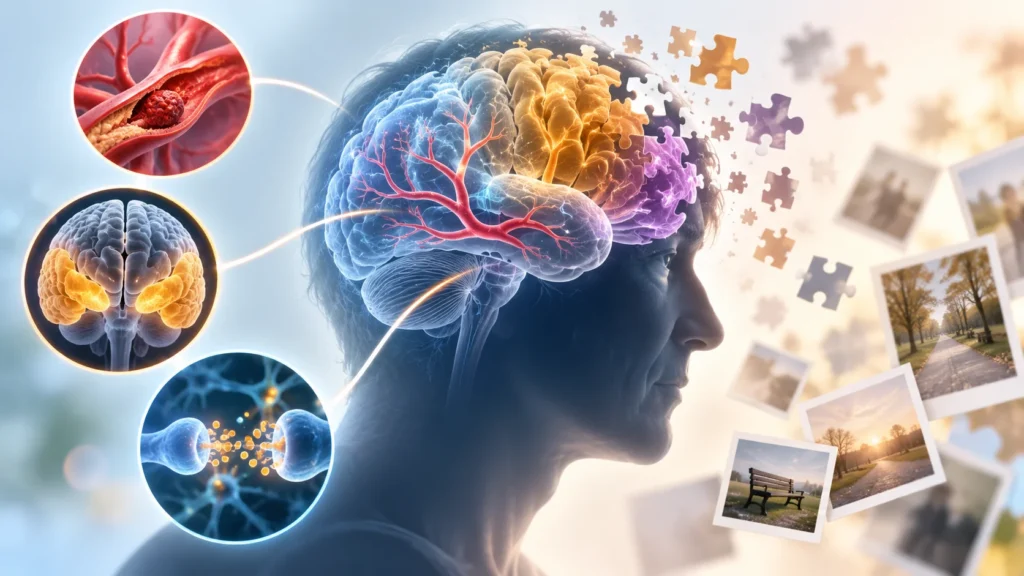
Dementia is a term used to describe a group of symptoms that affect memory, thinking, behavior, and the ability to perform daily activities. It is not a single disease, but rather a syndrome caused by different underlying brain conditions. Many people think this is just about forgetfulness, but it involves much more. It can affect language, judgment, mood, personality, movement, and the ability to recognize familiar people or places.
Dementia is more common in older adults, but it is not a normal part of aging. Some forms of this condition progress slowly over years, while others may worsen more quickly. The most common types include Alzheimer’s disease, vascular, frontotemporal, and Lewy body. Each type has different causes, patterns of symptoms, and treatment approaches.
What is Dementia?
This is a chronic brain condition that leads to a decline in cognitive function beyond what is expected from normal aging. It affects the brain’s ability to process, store, and retrieve information. Over time, this decline interferes with work, social life, self-care, and independence.
The brain cells in people with this condition gradually become damaged or die. This damage affects communication between different parts of the brain. As more areas are involved, symptoms become more noticeable and disabling.
This is progressive, meaning it tends to worsen over time. However, the speed of progression varies from person to person. Some people remain stable for years with mild symptoms, while others may decline more rapidly. Early diagnosis and proper management can help improve quality of life and support both the patient and the family.
Types of Dementia
There are many types of dementia, each with different causes and patterns. The most common types include Alzheimer’s disease, vascular, frontotemporal, and Lewy body. Some people may have more than one type at the same time, which is called mixed dementia.
Vascular dementia
- Caused by problems with blood supply to the brain.
- Often follows one or more strokes or small vessel disease.
- Symptoms may appear suddenly after a stroke or gradually over time.
- Commonly affects planning, judgment, and speed of thinking.
- Memory may be less affected in early stages compared to Alzheimer’s.
- Strongly linked to high blood pressure, diabetes, high cholesterol, and smoking.
Frontotemporal dementia
- Affects the frontal and temporal lobes of the brain.
- Often starts at a younger age, sometimes in the forties or fifties.
- Mainly affects behavior, personality, language, and judgment.
- Memory may be relatively preserved in early stages.
- Patients may show inappropriate behavior, loss of empathy, or language difficulties.
- Often misdiagnosed as psychiatric illness in the beginning.
Lewy body dementia
- Caused by abnormal protein deposits called Lewy bodies in the brain.
- Symptoms overlap with both Alzheimer’s disease and Parkinson’s disease.
- Common features include fluctuating alertness, visual hallucinations, and movement problems.
- Patients may have stiffness, tremor, or slow movement.
- Sleep disturbances and acting out dreams are common.
- Sensitivity to certain medicines used for behavior or psychosis is higher.
Other types
- Mixed dementia, where more than one type is present.
- This due to Parkinson’s disease.
- This related to Huntington’s disease, HIV, head injury, or other conditions.
- Reversible causes such as vitamin deficiency, thyroid problems, or medication side effects.
Causes of Dementia
This is caused by damage to brain cells that interferes with their ability to communicate. Different types of this condition have different underlying causes.
Common causes include:
- Build-up of abnormal proteins in the brain.
- Reduced blood flow to brain tissue.
- Repeated small strokes or large stroke events.
- Degeneration of specific brain regions.
- Chronic inflammation in the brain.
- Genetic factors in some forms of dementia.
- Head injury or repeated trauma.
- Infections affecting the brain.
- Metabolic or nutritional problems.
- Long-term alcohol abuse.
Why brain cells get damaged
In vascular dementia, blood vessels become narrowed or blocked, reducing oxygen and nutrient supply. In frontotemporal dementia, certain brain regions shrink due to protein abnormalities. In Lewy body dementia, abnormal protein clumps disrupt nerve signaling. Over time, these changes lead to loss of brain tissue and function.
Risk Factors for Dementia
Some people are more likely to develop dementia than others. Risk factors can be divided into those that can be changed and those that cannot.
Non-modifiable risk factors
- Older age.
- Family history of dementia.
- Genetic conditions such as certain gene mutations.
- History of head injury.
- Down syndrome.
Modifiable risk factors
- High blood pressure.
- Diabetes.
- High cholesterol.
- Smoking.
- Obesity.
- Physical inactivity.
- Poor diet.
- Excessive alcohol use.
- Depression and social isolation.
- Hearing loss.
- Sleep disorders such as sleep apnea.
- Uncontrolled vascular risk factors.
Why risk reduction matters
Studies suggest that managing vascular and lifestyle risk factors can reduce the risk of developing condition or delay its onset. Even in people who already have mild cognitive changes, controlling these factors can slow progression and improve brain health.
Symptoms of Dementia
Symptoms vary depending on the type of condition, the brain areas affected, and the stage of the disease. In general, symptoms worsen over time.
Early symptoms
- Forgetfulness, especially for recent events.
- Repeating questions or stories.
- Misplacing items frequently.
- Difficulty finding words.
- Trouble managing finances or bills.
- Getting lost in familiar places.
- Poor judgment or decision-making.
- Changes in mood or personality.
- Loss of interest in hobbies.
- Difficulty learning new things.
Middle stage symptoms
- Increased memory loss.
- Confusion about time and place.
- Difficulty recognizing familiar people.
- Need help with dressing, bathing, or eating.
- Wandering or restlessness.
- Agitation, anxiety, or suspiciousness.
- Sleep disturbances.
- Behavior changes such as aggression or apathy.
- Language problems.
- Poor coordination in some types.
Late stage symptoms
- Severe memory impairment.
- Inability to communicate clearly.
- Dependence on others for all daily activities.
- Incontinence.
- Difficulty swallowing.
- Increased infections.
- Weight loss.
- Limited mobility.
- Bedridden state in advanced cases.
Symptoms specific to vascular dementia
- Slowed thinking.
- Difficulty with planning and organization.
- Stepwise decline, where symptoms worsen after each stroke.
- Walking difficulties.
- Mood changes such as depression or emotional instability.
Symptoms specific to frontotemporal dementia
- Personality changes such as loss of empathy.
- Inappropriate social behavior.
- Compulsive or repetitive actions.
- Language difficulties such as trouble finding words or understanding meaning.
- Changes in eating habits.
- Lack of insight into their own behavior.
Symptoms specific to Lewy body dementia
- Fluctuating alertness and attention.
- Visual hallucinations.
- Parkinson-like movement problems.
- REM sleep behavior disorder, where patients act out dreams.
- Sensitivity to certain antipsychotic medicines.
- Autonomic problems such as blood pressure drops and constipation.
Diagnosis of Dementia
Diagnosis is based on a detailed history, examination, cognitive testing, and investigations. There is no single test that can diagnose all types of dementia.
Diagnostic steps
- Detailed history from the patient and a family member.
- Assessment of daily functioning and independence.
- Cognitive and memory testing.
- Neurological examination.
- Mood and behavior assessment.
- Blood tests to rule out reversible causes.
- Brain imaging such as MRI or CT scan.
- Specialized tests in selected cases.
Common tests that may be done
- Complete blood count.
- Blood sugar and HbA1c.
- Thyroid function tests.
- Vitamin B12 and folate levels.
- Liver and kidney function tests.
- Lipid profile.
- MRI brain to look for strokes, shrinkage, or specific patterns.
- CT scan if MRI is not possible.
- Neuropsychological testing for detailed cognitive assessment.
- PET scan or specialized imaging in complex cases.
Why accurate diagnosis matters
Different types of this condition need different management strategies. Some conditions that mimic dementia are treatable. Early and accurate diagnosis helps in planning care, starting appropriate treatment, and supporting the family.
Treatment for Dementia
There is currently no cure for most types of this condition, but treatment can help manage symptoms, slow progression, and improve quality of life.
1. Medicines for memory and thinking
- Certain medicines may help improve memory and daily function in some types of dementia.
- These work by affecting brain chemicals involved in memory and learning.
- Benefits are usually modest and vary from person to person.
- Regular follow-up is needed to assess response and side effects.
2. Medicines for behavior and mood
- Depression, anxiety, agitation, and sleep problems are common in dementia.
- Medicines may be used to manage these symptoms when non-drug strategies are not enough.
- In Lewy body dementia, some antipsychotic medicines can cause severe side effects and must be used with great caution.
- Non-drug approaches are always preferred as the first step.
3. Management of vascular risk factors
- Controlling blood pressure, diabetes, and cholesterol is crucial in vascular dementia.
- Stopping smoking and reducing alcohol are important.
- Antiplatelet medicines may be used to reduce stroke risk in selected patients.
- Regular follow-up with a physician or neurologist is recommended.
4. Therapy and rehabilitation
- Occupational therapy can help with daily activities and safety at home.
- Speech therapy may help with language and swallowing problems.
- Physical therapy can improve mobility, balance, and strength.
- Cognitive stimulation activities may help maintain function for longer.
5. Support for caregivers
- Caregiver education is a key part of treatment.
- Training on communication, behavior management, and safety.
- Respite care to give caregivers a break.
- Support groups for emotional support and shared experiences.
- Counseling for depression or stress in caregivers.
Care and Management at Home
Most people with this are cared for at home by family members. Good home care can greatly improve quality of life.
Daily routine
- Keep a regular schedule for meals, sleep, and activities.
- Use simple and clear instructions.
- Allow extra time for tasks.
- Break tasks into small, manageable steps.
- Use calendars, clocks, and labels for orientation.
Safety at home
- Remove tripping hazards such as loose rugs.
- Install handrails in bathrooms and stairs.
- Use locks on dangerous areas if wandering is a risk.
- Keep medicines and sharp objects out of reach.
- Consider identification bands for patients who may wander.
Communication tips
- Speak slowly and clearly.
- Use short sentences.
- Maintain eye contact.
- Avoid arguing or correcting repeatedly.
- Use gestures and visual cues.
- Be patient and give time to respond.
Managing behavior changes
- Identify triggers such as pain, hunger, or overstimulation.
- Keep the environment calm and familiar.
- Use distraction and redirection instead of confrontation.
- Maintain a regular sleep routine.
- Seek medical advice if behavior becomes dangerous or unmanageable.
Possible Complications
This can lead to several complications, especially in later stages.
Common complications
- Falls and fractures.
- Infections such as urinary tract infections or pneumonia.
- Malnutrition and dehydration.
- Pressure sores from prolonged bed rest.
- Wandering and getting lost.
- Agitation and aggression.
- Caregiver burnout.
- Hospital admissions due to preventable causes.
- Loss of independence.
- Emotional distress for both patient and family.
Why complications happen
As this progresses, patients become less able to care for themselves. They may forget to eat or drink, have difficulty walking, or be unable to communicate pain or discomfort. This makes them more vulnerable to infections, injuries, and other health problems.
When to See a Doctor?
Early evaluation is important when memory or behavior changes are noticed.
- Increasing forgetfulness affecting daily life.
- Getting lost in familiar places.
- Difficulty managing money or medications.
- Personality or behavior changes.
- Language problems.
- Poor judgment.
- Hallucinations or unusual beliefs.
- Movement problems along with memory issues.
- Family history of early dementia.
Prevention of Dementia
Not all conditions can be prevented, but risk can be reduced.
Prevention pointers
- Control blood pressure, diabetes, and cholesterol.
- Exercise regularly.
- Eat a balanced diet rich in fruits, vegetables, and whole grains.
- Maintain a healthy weight.
- Stop smoking.
- Limit alcohol.
- Stay socially active.
- Keep the brain engaged with reading, puzzles, or learning.
- Treat hearing loss and sleep disorders.
- Manage depression and stress.
- Protect the head from injury.
Why prevention matters
Brain health is linked to overall health. The same habits that protect the heart and blood vessels also protect the brain. Starting early and maintaining these habits over years gives the best protection.
Why Choose Rama Hospital for Dementia Care?
This care requires a multidisciplinary approach involving neurologists, physicians, therapists, and caregivers. A hospital with experience in memory disorders can provide accurate diagnosis, personalized treatment, and long-term support.
- Expert evaluation by neurology and memory clinic specialists.
- Advanced imaging and cognitive testing.
- Personalized treatment plans for different types of dementia.
- Support for behavioral and psychological symptoms.
- Caregiver training and counseling.
- Coordination with rehabilitation and home care services.
Frequently Asked Questions (FAQs)
Is dementia the same as Alzheimer’s disease?
No, Alzheimer’s disease is the most common type of condition, but there are other types such as vascular dementia, frontotemporal dementia, and Lewy body dementia. Each type has different causes and symptoms.
Can dementia be cured?
Most types of conditions cannot be cured at present, but symptoms can be managed. Some causes of memory loss are reversible and should be ruled out. Early treatment can improve quality of life and slow progression.
At what age does dementia start?
This is more common after age sixty-five, but some types can start earlier. Frontotemporal dementia often begins in the forties or fifties. Early-onset dementia needs careful evaluation.
Can dementia be prevented?
Not all dementia can be prevented, but risk can be reduced. Controlling blood pressure, diabetes, and cholesterol, staying active, eating well, and keeping the brain engaged can lower risk.
How long can a person live with dementia?
Life expectancy varies widely depending on the type, age, and overall health. Some people live for many years with mild symptoms, while others decline more quickly. Good care can improve both length and quality of life.
Is dementia hereditary?
Some forms of dementia have a genetic component, especially early-onset types. However, most cases are not directly inherited. Family history increases risk but does not guarantee dementia.
What is the role of caregivers in dementia care?
Caregivers play a crucial role in daily care, safety, and emotional support. They help with medications, appointments, and managing behavior. Caregiver support and training are essential for better outcomes.
Conclusion
This is a complex and challenging condition that affects not only the patient but also the entire family. Vascular, frontotemporal, and Lewy body each have distinct features, but all require careful diagnosis, personalized treatment, and long-term support. While there is no cure for most types, early recognition and proper management can make a significant difference.
The most important steps are accurate diagnosis, control of vascular and lifestyle risk factors, appropriate medicines, therapy, and strong caregiver support. For families noticing memory loss, behavior changes, or movement problems in a loved one, a medical evaluation can provide clarity and a plan. With compassionate care and the right support, patients can live with dignity and comfort for as long as possible.
Rama Hospital can help evaluate condition, identify the type and stage, and provide a comprehensive care plan that supports both the patient and the family through every stage of the journey.