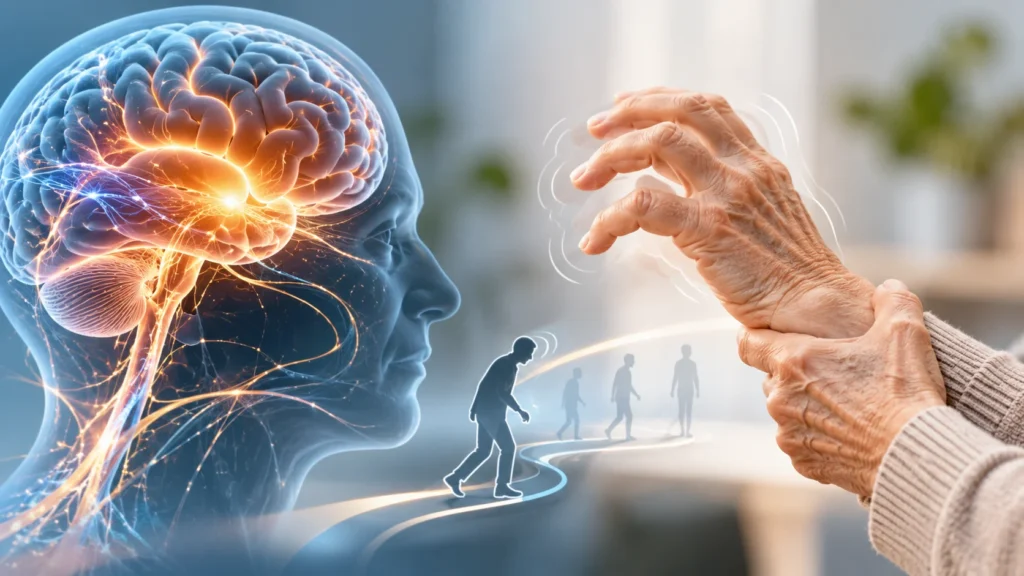
Parkinson’s disease is a progressive neurological condition that affects movement, balance, and coordination. It happens when certain nerve cells in a part of the brain that controls movement gradually stop working or die. These cells normally produce a chemical called dopamine, which helps messages travel smoothly between the brain and muscles. When dopamine levels fall, movement becomes slower, stiffer, and less coordinated.
The condition usually develops slowly over years. Early signs may be very mild, such as a slight tremor, reduced arm swing while walking, softer voice, smaller handwriting, or a feeling of stiffness. Because these changes happen gradually, many people and families assume it is just aging, stress, or fatigue. Over time, symptoms become more noticeable and start affecting daily activities, posture, walking, and speech.
Parkinson’s disease is not just a movement disorder. It can also affect mood, sleep, thinking, digestion, and autonomic functions like blood pressure and bladder control. This makes it important to have care from specialists who understand both the motor and non-motor aspects of the disease.
What is Parkinson’s Disease?
Parkinson’s disease is a chronic, progressive disorder of the nervous system. It mainly affects the part of the brain called the substantia nigra, where dopamine-producing cells are located. As these cells decrease, the brain has less dopamine to coordinate smooth, controlled movements.
The disease usually begins on one side of the body and later involves both sides. It is more common in people over the age of sixty, but it can also occur in younger adults. The course of the disease varies from person to person. Some progress slowly over many years, while others may notice faster changes.
Parkinson’s is not the same as normal aging. It is a specific medical condition with characteristic symptoms and treatment options. With proper management, many patients maintain good function and quality of life for a long time.
Causes of Parkinson’s Disease
The exact cause of Parkinson’s disease is not fully understood. It is likely due to a combination of genetic and environmental factors.
Possible causes and contributing factors
- Loss of dopamine-producing nerve cells in the brain.
- Abnormal protein clumps called Lewy bodies inside brain cells.
- Genetic changes in some families.
- Aging-related changes in the brain.
- Exposure to certain toxins or environmental factors in some cases.
- Oxidative stress and inflammation in brain tissue.
- Mitochondrial dysfunction affecting nerve cell energy.
Why the brain changes
Over time, the nerve cells that control movement become damaged and die. This reduces dopamine levels and disrupts communication between the brain and muscles. The result is slower, stiffer, and less coordinated movement. Non-motor symptoms occur because the disease also affects other areas of the brain and nervous system.
Risk Factors for Parkinson’s Disease
Some people are more likely to develop Parkinson’s disease than others.
Higher-risk groups
- People over the age of sixty.
- Men, who are slightly more affected than women.
- People with a family history of Parkinson’s.
- Individuals with certain genetic variations.
- People exposed to certain pesticides or industrial chemicals.
- Those with a history of head injury.
- People with low levels of vitamin D or poor overall health.
Why risk increases in these groups
- Aging naturally reduces dopamine cell reserve.
- Genetics can make some brains more vulnerable.
- Environmental toxins may damage nerve cells.
- Head trauma may trigger changes in susceptible individuals.
- Hormonal and biological differences may affect men more.
Symptoms of Parkinson’s Disease
Symptoms vary from person to person and progress over time. They are divided into motor symptoms and non-motor symptoms.
Motor symptoms
- Tremor, usually starting in one hand at rest.
- Slowness of movement, called bradykinesia.
- Stiffness or rigidity in muscles.
- Reduced arm swing while walking.
- Shuffling gait or small steps.
- Difficulty starting movement.
- Freezing of gait, where feet feel stuck.
- Stooped posture.
- Balance problems and increased fall risk.
- Soft or low voice.
- Small, cramped handwriting.
- Reduced facial expression, sometimes called masked face.
- Difficulty with fine tasks like buttoning or writing.
Non-motor symptoms
- Constipation.
- Loss of smell.
- Sleep problems, including acting out dreams.
- Fatigue and low energy.
- Anxiety and low mood.
- Memory and thinking changes.
- Dizziness on standing due to low blood pressure.
- Urinary urgency or frequency.
- Swallowing difficulties.
- Excessive saliva or drooling.
- Pain or discomfort in muscles and joints.
- Sexual dysfunction.
Early warning signs
- Mild tremor in one hand.
- Stiffness in one shoulder or leg.
- Reduced arm swing on one side.
- Change in handwriting size.
- Softer voice than before.
- Constipation without clear cause.
- Loss of smell.
- Sleep disturbances or dream enactment.
Stages of Parkinson’s Disease
Parkinson’s disease progresses through stages, although the speed varies.
Early stage
- Mild symptoms on one side of the body.
- Minimal impact on daily activities.
- Good response to medicines.
- Independent living with minor adjustments.
Middle stage
- Symptoms on both sides of the body.
- More noticeable slowness and stiffness.
- Balance problems may begin.
- Daily tasks take longer but are still possible.
- Medication adjustments often needed.
Advanced stage
- Significant disability in movement.
- Frequent freezing and falls.
- Need for assistance with daily activities.
- Possible cognitive or mood changes.
- Complex medication and therapy needs.
How is Parkinson’s Disease Diagnosed?
Diagnosis is mainly clinical, based on symptoms and neurological examination. There is no single blood test or scan that confirms Parkinson’s in all cases.
Diagnostic steps
- Detailed history of symptoms and their progression.
- Family history of movement disorders.
- Review of medicines that may mimic Parkinson’s.
- Neurological examination of movement, tone, reflexes, and balance.
- Assessment of response to Parkinson’s medicines.
- Imaging tests to rule out other conditions.
Tests that may be done
- MRI of the brain to exclude stroke, tumor, or other causes.
- DaTscan or specialized imaging in selected cases.
- Blood tests to rule out thyroid, vitamin, or metabolic issues.
- Assessment by a movement disorder specialist.
Why diagnosis matters
Early and accurate diagnosis helps start the right treatment, plan therapy, and educate the family. It also helps distinguish Parkinson’s from other conditions that may need different management.
Treatment for Parkinson’s Disease
There is no cure yet, but treatment can significantly improve symptoms and quality of life. The goal is to restore dopamine function, manage symptoms, and maintain independence as long as possible.
1. Medicines
Medicines are the mainstay of treatment. They help replace dopamine or mimic its action in the brain.
- Levodopa combined with carbidopa is the most effective medicine for movement symptoms.
- Dopamine agonists mimic dopamine action in the brain.
- MAO-B inhibitors help prolong the effect of dopamine.
- COMT inhibitors extend the duration of levodopa effect.
- Amantadine may help with tremor and medication side effects.
- Anticholinergic medicines may be used in selected cases for tremor.
Medicines are adjusted over time as the disease progresses. The dose and timing are important to maintain smooth control of symptoms.
2. Physical therapy
Therapy plays a key role in maintaining mobility and preventing complications.
- Exercises to improve strength, flexibility, and balance.
- Gait training to reduce freezing and falls.
- Posture correction to prevent stooping.
- Home exercise programs for daily practice.
- Use of walking aids if needed.
3. Occupational therapy
Occupational therapy helps patients manage daily activities safely.
- Training for dressing, bathing, and eating.
- Home modifications to reduce fall risk.
- Energy conservation techniques.
- Strategies to handle fine motor tasks.
4. Speech and swallowing therapy
Speech problems and swallowing difficulties are common in Parkinson’s.
- Voice exercises to improve volume and clarity.
- Swallowing techniques to reduce choking risk.
- Strategies for safe eating and drinking.
- Communication aids if speech becomes very soft.
5. Deep brain stimulation (DBS)
For selected patients with advanced disease and good response to medicines, surgery may be considered.
- Electrodes are placed in specific brain areas.
- A device similar to a pacemaker is implanted under the skin.
- Electrical signals help regulate abnormal brain activity.
- DBS can reduce tremor, stiffness, and slowness in suitable candidates.
- It is not a cure but can improve quality of life.
6. Supportive care
Long-term care involves managing non-motor symptoms and complications.
- Treatment for constipation, sleep problems, and mood issues.
- Management of blood pressure changes and urinary symptoms.
- Regular follow-up with neurology and therapy teams.
- Caregiver education and support.
Lifestyle Measures That Help
Daily habits can make a big difference in symptom control and overall well-being.
Helpful habits
- Regular physical activity tailored to ability.
- Balanced diet with adequate fiber and fluids.
- Good sleep routine and sleep hygiene.
- Stress management and relaxation techniques.
- Social engagement and mental stimulation.
- Safe home environment to prevent falls.
- Adherence to medication schedule.
- Regular follow-up with the treating team.
Diet and nutrition
- High-fiber foods to prevent constipation.
- Adequate water intake throughout the day.
- Protein timing may be adjusted around levodopa doses.
- Calcium and vitamin D for bone health.
- Small, frequent meals if appetite is low.
Possible Complications
Parkinson’s disease can lead to several complications over time.
Movement-related complications
- Falls and fractures.
- Freezing of gait.
- Severe stiffness and pain.
- Difficulty walking without support.
- Wheelchair dependence in advanced stages.
Non-motor complications
- Depression and anxiety.
- Cognitive decline or dementia.
- Severe constipation.
- Swallowing problems and aspiration risk.
- Urinary infections.
- Low blood pressure on standing.
- Sleep disorders and daytime sleepiness.
Medication-related issues
- Wearing-off of medicine effect before the next dose.
- Fluctuations between good and bad movement periods.
- Involuntary movements called dyskinesias with long-term use.
- Nausea, dizziness, or confusion in some patients.
When to See a Doctor?
Medical evaluation is important if Parkinson’s symptoms are suspected.
- Persistent tremor at rest.
- Slowness in daily activities.
- Stiffness in limbs or trunk.
- Reduced arm swing while walking.
- Soft voice or change in handwriting.
- Frequent constipation without clear cause.
- Loss of smell.
- Sleep disturbances or dream enactment.
- Balance problems or falls.
Prevention and Risk Reduction
Parkinson’s disease cannot be fully prevented, but some steps may reduce risk or delay progression.
Prevention pointers
- Regular physical exercise.
- Healthy diet rich in fruits, vegetables, and antioxidants.
- Avoiding exposure to pesticides and toxins where possible.
- Protecting the head from injury.
- Maintaining good vitamin D and bone health.
- Managing stress and sleep.
- Regular health check-ups.
Why these steps matter
While they do not guarantee prevention, they support overall brain health and may reduce vulnerability to neurodegenerative changes.
Why Choose Rama Hospital for Parkinson’s Disease Care?
Parkinson’s disease requires long-term, specialized care from a team that understands both movement and non-motor symptoms. A hospital with experienced neurologists, therapists, and support services can make a major difference in outcomes.
- Expert evaluation by neurology and movement disorder specialists.
- Accurate diagnosis and differentiation from other conditions.
- Personalized medicine plans and dose adjustments.
- Access to physical, occupational, and speech therapy.
- Advanced options like deep brain stimulation for suitable patients.
- Long-term follow-up and caregiver support.
Frequently Asked Questions (FAQs)
Is Parkinson’s disease hereditary?
Most cases are not directly inherited, but having a family member with Parkinson’s slightly increases risk. Some rare genetic forms exist. Genetics may make some people more vulnerable, but environment and aging also play a role.
Can Parkinson’s disease be cured?
There is no cure yet, but symptoms can be managed effectively with medicines, therapy, and lifestyle changes. Treatment aims to improve movement, reduce complications, and maintain quality of life for as long as possible.
At what age does Parkinson’s start?
It most commonly starts after age sixty, but it can occur earlier. Young-onset Parkinson’s may begin before age fifty. The pattern and progression can differ in younger patients compared to older adults.
What are the first signs of Parkinson’s?
Early signs often include mild tremor in one hand, stiffness, reduced arm swing, smaller handwriting, softer voice, constipation, or loss of smell. These changes are subtle and develop slowly over months or years.
How is Parkinson’s diagnosed?
Diagnosis is mainly based on symptoms and neurological examination by a specialist. Imaging and blood tests may be done to rule out other causes. Response to Parkinson’s medicines also helps confirm the diagnosis.
What medicines are used for Parkinson’s?
Common medicines include levodopa with carbidopa, dopamine agonists, MAO-B inhibitors, COMT inhibitors, and others. The choice depends on age, symptoms, and disease stage. Doses are adjusted over time.
Can surgery help in Parkinson’s disease?
Yes, deep brain stimulation can help selected patients with advanced disease and good medicine response. It can reduce tremor, stiffness, and fluctuations. It is not suitable for everyone and requires careful evaluation.
Conclusion
Parkinson’s disease is a chronic, progressive neurological condition that affects movement, balance, and many other functions. It develops slowly and varies from person to person. While there is no cure, modern treatment can significantly improve symptoms, delay disability, and support a good quality of life.
The most important steps are early diagnosis, appropriate medicines, regular therapy, lifestyle support, and long-term follow-up. For patients with tremor, stiffness, slowness, balance issues, or non-motor symptoms, a specialist evaluation can make a major difference. With the right care plan, patients and families can manage the condition more confidently and maintain independence for longer.
Rama Hospital can help evaluate Parkinson’s disease, provide personalized treatment, and offer comprehensive support through neurology, therapy, and long-term care services.