A change in your breast can be easy to dismiss.
You may notice a small lump while changing clothes, a nipple that looks different, or skin that suddenly appears dimpled. Sometimes, these changes are harmless. Other times, they may be signs that deserve medical attention.
Breast cancer is one of the most common cancers affecting women, and recognizing unusual breast changes can help people seek evaluation sooner. However, breast cancer does not always cause noticeable symptoms in its early stages, and some cases are first detected through screening rather than a physical change.
Knowing the early signs of breast cancer is not about living in fear. It is about understanding what is normal for your body, noticing what changes, and knowing when to consult a healthcare professional.
In this guide, we explain 10 breast changes you shouldn’t ignore, what they may indicate, and when to seek medical advice.
What Are the Early Signs of Breast Cancer?
The early signs of breast cancer can vary from person to person. Some people notice a new lump, while others experience changes in the skin, nipple, breast shape, or underarm area.
Common warning signs include:
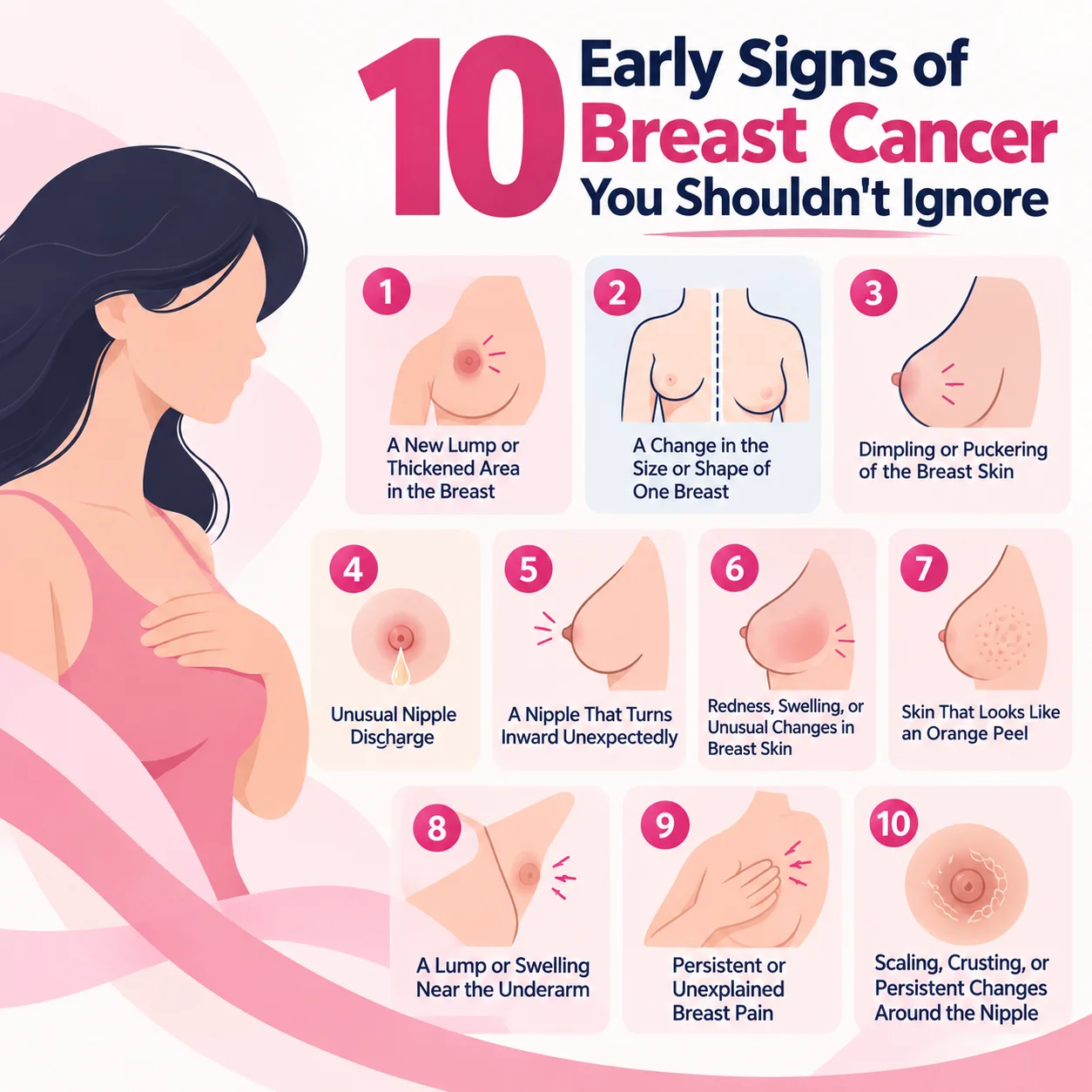
- A new lump or thickened area in the breast.
- A noticeable change in breast size or shape.
- Skin dimpling or puckering.
- Unusual nipple discharge.
- A nipple that turns inward unexpectedly.
- Persistent changes in breast skin.
- Swelling in part or all of one breast.
- A lump or swelling near the underarm.
- Persistent, unexplained breast discomfort.
- Nipple or areola changes, including scaling or crusting.
These signs do not automatically mean cancer. Several benign breast conditions, hormonal changes, infections, and other problems can cause similar symptoms.
Still, any new, unusual, or persistent breast change should be evaluated by a healthcare professional.
10 Early Signs of Breast Cancer You Shouldn’t Ignore
1. A New Lump or Thickened Area in the Breast
A new breast lump is one of the most recognised warning signs of breast cancer.
You may notice it while bathing, changing clothes, or checking your breasts. It may feel like a small, firm knot or an area of tissue that feels different from the surrounding breast.
Some breast cancer lumps are painless, which is why waiting for pain before seeking medical advice can lead to unnecessary delays.
What should you know?
- A lump may appear anywhere in the breast.
- It may feel firm, hard, or different from the surrounding tissue.
- It may be painless.
- A lump can vary in size and texture.
However, the way a lump feels cannot confirm whether it is cancerous. Cysts, fibroadenomas, fibrocystic changes, and other non-cancerous conditions can also cause breast lumps.
If you discover a new lump, arrange a clinical evaluation rather than trying to diagnose it by touch.
2. A Change in the Size or Shape of One Breast
It is normal for breasts to differ slightly in size or shape. Their appearance can also change with age, hormonal fluctuations, pregnancy, and weight changes.
But a sudden or unexplained change in one breast deserves attention.
You may notice that:
- One breast appears larger or swollen.
- The shape of one breast has changed.
- The breast contour looks different.
- One breast appears fuller than usual.
- The difference does not settle or has no obvious explanation.
Breast cancer can sometimes cause changes in breast size, shape, or contour, even when there is no obvious lump.
This does not mean every difference is a sign of cancer. The important point is to recognise a new change from your usual breast appearance and discuss it with a doctor.
3. Dimpling or Puckering of the Breast Skin
Have you noticed a small indentation or unusual pulling of the skin on your breast?
Skin dimpling can sometimes occur when changes beneath the skin affect the tissues that support the breast.
It may look like:
- A small depression in the skin.
- A puckered area that appears when you raise your arms.
- An indentation that resembles a dimple.
- Skin that appears pulled inward around a particular area.
Some breast cancers can cause these changes, although dimpling is not exclusive to cancer.
Why should you pay attention?
A new indentation or puckering that was not previously present should be examined, particularly if it occurs alongside a lump, nipple changes, or other unusual symptoms.
Do not assume it is simply a cosmetic change without understanding its cause.
4. Unusual Nipple Discharge
Nipple discharge does not always indicate a serious problem. It can occur due to hormonal changes, breastfeeding, medications, infections, and certain benign breast conditions.
However, new or unexplained nipple discharge—especially if it occurs without squeezing the nipple—should be evaluated.
Discharge that deserves attention may include:
- Bloody discharge.
- Clear discharge from one breast.
- Discharge that occurs spontaneously.
- Fluid coming from a single nipple duct.
- Discharge accompanied by a lump or nipple change.
Breast cancer is one possible cause, but it is not the only explanation.
The colour or appearance of discharge alone cannot establish a diagnosis. A doctor may recommend further examination and imaging based on your age, symptoms, and clinical findings.
5. A Nipple That Turns Inward Unexpectedly
Some people naturally have inverted nipples. If your nipples have always looked that way, it may not indicate a problem.
The concern arises when a nipple that previously pointed outward begins to turn inward without an obvious explanation.
This change may occur because of alterations in the tissues beneath the nipple.
Look out for:
- A newly inverted nipple.
- A nipple that appears flattened.
- A change in nipple direction.
- Retraction accompanied by a lump or skin changes.
A newly inverted nipple does not automatically mean breast cancer, but it warrants medical assessment.
Do not delay consultation simply because there is no pain.
6. Redness, Swelling, or Unusual Changes in Breast Skin
Breast skin can change for many reasons, including irritation, allergies, infections, and inflammatory conditions.
But persistent or unexplained changes in the skin may also be associated with breast cancer.
Possible changes include:
- Redness or unusual darkening of the skin.
- Swelling in one breast.
- Persistent irritation.
- Skin that feels thicker than usual.
- Unusual warmth.
- A change in the appearance of one breast over a short period.
One uncommon form of breast cancer, called inflammatory breast cancer, may cause redness, swelling, warmth, and skin changes. It may not present as a typical breast lump.
Because these symptoms can resemble an infection, it is important to seek medical evaluation if they persist, worsen, or do not improve as expected.
7. Skin That Looks Like an Orange Peel
Have you noticed that a patch of breast skin looks rough, thickened, or resembles the surface of an orange?
This appearance is sometimes called peau d’orange, a French term meaning “orange peel.”
It can occur when swelling affects the skin and underlying tissues.
What might it look like?
- Enlarged skin pores.
- Thickened breast skin.
- A textured or uneven surface.
- Swelling associated with changes in skin appearance.
This is a finding that should not be ignored, especially when it develops suddenly or affects one breast.
Although it can occur with inflammatory breast cancer, other conditions may also cause swelling or skin changes. A healthcare professional can determine whether further testing is necessary.
8. A Lump or Swelling Near the Underarm
Breast tissue extends toward the underarm, and lymph nodes in this area can become enlarged for several reasons.
You may notice:
- A lump in the armpit.
- Swelling near the breast’s outer edge.
- A firm area that persists.
- A change accompanied by breast symptoms.
Sometimes, enlarged lymph nodes occur because of infections or other non-cancerous conditions. In some cases, breast cancer can involve lymph nodes near the underarm.
This is why a persistent underarm lump should not automatically be dismissed as a muscle strain or minor swelling.
A doctor can assess the area and determine whether breast examination, imaging, or other tests are appropriate.
9. Persistent or Unexplained Breast Pain
Breast pain is common and often has causes unrelated to cancer.
Hormonal fluctuations, menstrual cycles, certain medications, injuries, and benign breast conditions can all contribute to discomfort.
Breast cancer is not usually first identified by pain alone. However, persistent, localised, or unexplained breast pain should still be discussed with a healthcare professional, particularly if it is accompanied by other changes.
Pay attention to pain that:
- Continues without an obvious explanation.
- Remains in one specific area.
- Does not follow your usual menstrual pattern.
- Occurs alongside a lump or skin changes.
- Persists or worsens over time.
Do not assume that pain means cancer. Equally, do not ignore ongoing symptoms simply because breast cancer is often painless.
10. Scaling, Crusting, or Persistent Changes Around the Nipple
The skin around the nipple and areola can become irritated due to dryness, eczema, allergies, or other skin conditions.
However, persistent changes that do not resolve should be examined.
These may include:
- Scaling or flaking.
- Crusting around the nipple.
- Persistent redness or irritation.
- A sore that does not heal.
- Changes in nipple skin texture.
- Unexplained itching accompanied by visible skin changes.
A rare type of breast cancer called Paget disease of the breast can affect the nipple and areola, sometimes resembling eczema.
Not every nipple rash is cancer, but persistent or unusual changes deserve medical attention rather than repeated self-treatment without evaluation.
Can Breast Cancer Have No Symptoms in the Early Stages?
Yes. Breast cancer may not cause noticeable symptoms in its early stages. Some breast cancers are detected during screening before a person feels a lump or notices any visible changes.
This is one reason why breast awareness and age-appropriate screening both matter.
A person may feel completely well and still have an abnormality that requires further investigation.
Remember:
- No symptoms do not guarantee that breast cancer is absent.
- A recent normal mammogram does not mean every future breast change should be ignored.
- Screening recommendations depend on factors such as age and personal risk.
- New breast changes should be reported even if you recently had imaging.
Are All Breast Lumps Cancerous?
No. Most breast lumps are not cancerous.
Several benign conditions can cause lumps or changes in breast tissue, including:
| Benign condition | What it may involve |
| Breast cysts | Fluid-filled sacs that may feel smooth or tender |
| Fibroadenomas | Common non-cancerous solid breast lumps |
| Fibrocystic breast changes | Hormone-related lumpiness or tenderness |
| Breast infections | Swelling, pain, redness, or warmth |
| Hormonal changes | Temporary changes in breast tenderness or texture |
However, it is not possible to reliably distinguish every benign lump from a cancerous lump based only on how it feels.
A painless lump can be cancerous, and a painful lump can have a non-cancerous cause.
The safest approach is to have a new or concerning lump assessed by a healthcare professional.
How Is Breast Cancer Diagnosed?
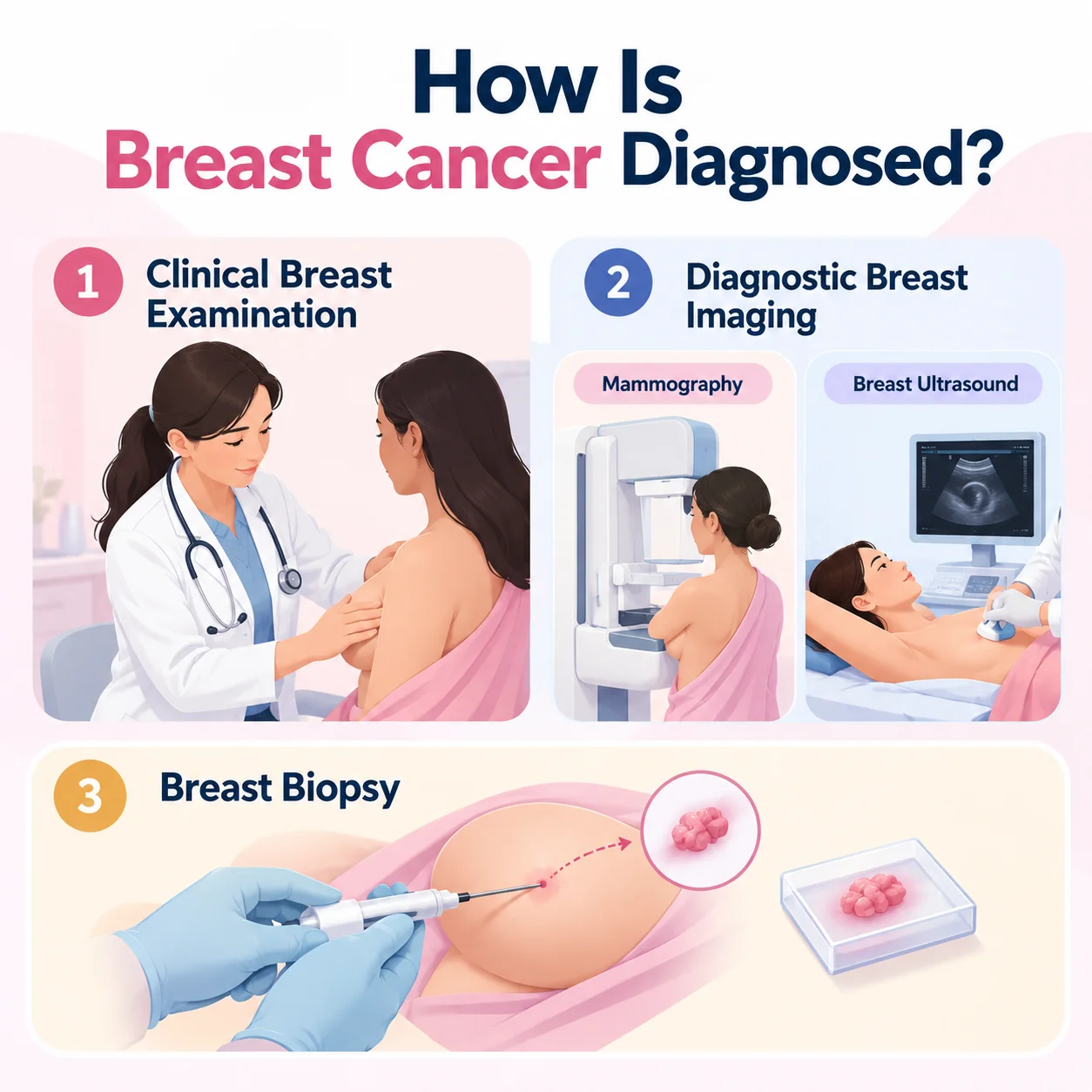
If you notice a breast change, the next step is not automatically a biopsy or cancer treatment.
A doctor first evaluates your symptoms and decides which investigations are appropriate.
1. Clinical Breast Examination
A healthcare professional examines the breast and surrounding areas, including the underarm.
They may assess:
- The location and size of a lump.
- Breast skin and nipple changes.
- Whether swelling is present.
- Lymph nodes or other areas of concern.
2. Diagnostic Breast Imaging
Depending on your age, symptoms, and examination findings, your doctor may recommend:
Mammography
A mammogram uses low-dose X-rays to create images of breast tissue. It may help identify suspicious changes that cannot be felt.
Breast Ultrasound
Ultrasound uses sound waves to examine breast tissue. It can help assess a lump and determine whether it appears fluid-filled or solid.
It is often used alongside mammography when clinically appropriate.
3. Breast Biopsy
If imaging or examination identifies a suspicious area, a biopsy may be recommended.
During a biopsy, a sample of tissue is collected and examined under a microscope to determine whether cancer cells are present.
Only appropriate medical evaluation and, when needed, tissue testing can establish a diagnosis of breast cancer.
When Should You See a Breast Specialist?
You should arrange a medical consultation if you notice:
- A new breast lump.
- A persistent change in breast size or shape.
- New nipple inversion.
- Bloody or unexplained nipple discharge.
- Skin dimpling or thickening.
- Persistent redness or swelling.
- An unexplained underarm lump.
- Ongoing or unusual breast discomfort.
Do not wait for symptoms to become painful or severe.
Also, do not postpone an evaluation simply because you recently had a normal mammogram. A new breast change still deserves assessment.
Looking for Breast Cancer Evaluation in Noida?
If you have noticed an unusual breast change and are looking for breast cancer evaluation in Noida, consider consulting a qualified breast specialist or oncology team.
At Rama Hospital, Noida, patients can discuss breast health concerns with the appropriate medical team and receive guidance on further evaluation based on their symptoms and clinical needs.
For patients seeking breast cancer treatment in Noida, timely consultation can help clarify the diagnosis and identify appropriate next steps.
How Can You Support Early Detection of Breast Cancer?
Early detection is not about checking your breasts obsessively or assuming every change is cancer.
It is about combining breast awareness with appropriate medical screening.
1. Know What Is Normal for You
Become familiar with the usual appearance and feel of your breasts.
This makes it easier to notice changes that are new or unusual.
2. Pay Attention to Changes
Look for differences in:
- Breast shape or size.
- Skin texture.
- Nipple appearance.
- Breast tissue.
- Underarm area.
3. Follow Recommended Screening Guidance
Ask a healthcare professional when breast cancer screening should begin and how often it should be performed based on your age and risk factors.
Screening recommendations may differ depending on personal and family history.
4. Do Not Ignore Persistent Symptoms
If you notice a change, seek medical advice even if you are young, have no family history, or recently had a normal screening test.
Breast cancer can occur at different ages, and symptoms should be assessed individually.
Frequently Asked Questions (FAQs)
1. What is the most common early sign of breast cancer?
A new breast lump is one of the most common presenting signs of breast cancer. However, breast cancer may also cause skin changes, nipple changes, or other abnormalities, and some cases have no noticeable symptoms initially.
2. Is a painless breast lump a sign of cancer?
A painless breast lump can be a sign of breast cancer, but many painless lumps are benign. The way a lump feels cannot confirm its cause, so a new lump should be evaluated by a healthcare professional.
3. Can breast cancer cause pain?
Yes, breast cancer can sometimes cause breast discomfort or pain. However, pain alone is more commonly associated with other conditions. Persistent or unexplained breast pain should be discussed with a doctor.
4. Is nipple discharge always a sign of breast cancer?
No. Nipple discharge can occur due to several benign causes, including hormonal changes, infections, and other breast conditions. However, new, spontaneous, bloody, or unexplained discharge should be medically evaluated.
5. Can breast cancer occur without a lump?
Yes. Breast cancer does not always cause a noticeable lump. Some cases are detected through screening, while others may present with skin, nipple, or breast shape changes.
6. What should I do if I notice a breast change?
Schedule an appointment with a healthcare professional for an examination. Depending on the findings, they may recommend diagnostic imaging or other tests. Avoid self-diagnosing based only on symptoms.
7. Can young women develop breast cancer?
Yes. Although breast cancer is more common in older women, it can occur at a younger age. A new breast lump or unusual breast change should not be dismissed solely because of age.
Conclusion
Your body often gives you clues when something changes. A lump, unusual nipple discharge, skin dimpling, or a change in breast shape may have a harmless explanation, but it deserves attention when it is new or unexplained.
The absence of pain does not mean a breast change is unimportant. And noticing a change does not mean you have cancer.
The most important step is knowing when to seek medical advice.
If you have noticed a breast lump, nipple change, or another unusual symptom, consult a qualified healthcare professional for appropriate evaluation.
Get guidance from the appropriate medical team for breast health evaluation and cancer care. Your concerns deserve attention. Early evaluation can help you understand what is happening and what to do next.