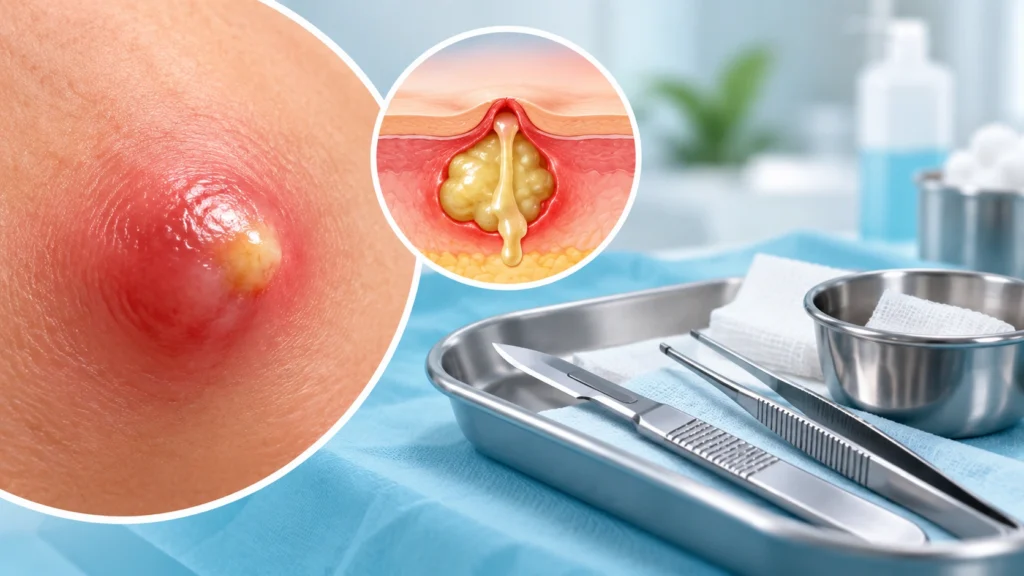
An abscess is a painful collection of pus that forms in the body due to infection. It can occur anywhere, but common sites include the skin, armpit, groin, breast, buttocks, and around the anus. The body forms a wall around the infected area, trapping pus made up of bacteria, dead cells, and immune cells. This causes swelling, redness, warmth, and severe pain.
Antibiotics alone often cannot cure an this because they cannot penetrate the pus collection effectively. The most effective treatment is to drain the pus. This is done through a minor surgical procedure called Incision and Drainage, commonly known as I and D. It is one of the most common procedures performed in surgery clinics and emergency departments.
What is an Abscess?
An abscess is a localized collection of pus that forms when the body tries to fight an infection. The immune system sends white blood cells to the infected area. As these cells fight bacteria, they die and mix with tissue debris and bacteria to form pus. The body then creates a wall around this area, leading to a swollen, painful lump.
This can be superficial, meaning they are just under the skin, or deep, meaning they are inside the body in organs or tissues. Superficial abscesses are more common and often visible as red, swollen, tender lumps. Deep abscesses may cause internal pain, fever, and general illness.
Common types of abscess
- Skin abscess or boil, which is a painful lump under the skin.
- Perianal abscess, which occurs near the anus and is very painful.
- Breast abscess, which can occur during breastfeeding or due to infection.
- Dental abscess, which forms around a tooth or in the gums.
- Pilonidal abscess, which occurs near the tailbone.
- Axillary or groin abscess, which occurs in the armpit or groin area.
- Deep organ abscess, which occurs inside the abdomen or other organs.
Why this form
- Bacterial infection entering through a cut, hair follicle, or gland.
- Blocked sweat glands or oil glands.
- Ingrown hairs.
- Minor trauma or injury to the skin.
- Weakened immune system.
- Diabetes or other conditions that increase infection risk.
- Poor hygiene or friction in skin folds.
Why Incision and Drainage is Needed: The main goal of treating an abscess is to remove the pus and relieve pressure. This reduces pain, clears the infection, and allows healing to begin.
Why antibiotics alone are often not enough
- Antibiotics travel through the blood, but pus has poor blood supply.
- The thick wall of the abscess prevents medicines from reaching the infection.
- Pus must be physically removed for the infection to resolve.
- Delaying drainage can lead to spread of infection or larger lesion.
Benefits of incision and drainage
- Immediate relief of pain and pressure.
- Faster healing compared to antibiotics alone.
- Reduced risk of infection spreading.
- Lower chance of recurrence if properly drained.
- Minimal scarring when done correctly.
- Can often be done as a minor procedure without major surgery.
When drainage is recommended
- When the lesion is large, painful, or fluctuant.
- When there is fever or signs of spreading infection.
- When the lesion does not improve with warm compresses.
- When the lesion is in a sensitive area like the face, groin, or anus.
- When the patient has diabetes or weakened immunity.
How is Incision and Drainage Done?
Incision and drainage is a minor surgical procedure. It is usually quick and can be done in a clinic, procedure room, or operating theater depending on the size and location of the lesion.
Pre-procedure preparation
- The doctor examines the abscess to confirm it needs drainage.
- Medical history is reviewed, including allergies and medicines.
- Blood sugar may be checked in diabetic patients.
- The area is cleaned with an antiseptic solution.
- Local anesthesia is planned for pain control.
Steps of the procedure
- The skin over the lesion is numbed using local anesthesia.
- A small cut is made over the most swollen or softest part of the lesion.
- Pus is allowed to drain out completely.
- The cavity may be gently cleaned with sterile saline.
- A small piece of sterile gauze or a drain may be placed inside to keep the wound open and allow continued drainage.
- The area is covered with a sterile dressing.
- In some cases, a sample of pus is sent for culture to identify the bacteria.
Anesthesia options
- Local anesthesia is most common for skin abscesses.
- Sedation may be used for anxious patients or larger abscesses.
- General anesthesia may be needed for deep or complex abscesses.
- Children may require sedation or general anesthesia depending on age and cooperation.
Duration of the procedure
- Most simple abscess drainage procedures take 15 to 30 minutes.
- Complex or deep abscesses may take longer.
- Patients can usually go home the same day.
Aftercare and Wound Care
Proper aftercare is essential for healing and preventing recurrence. The wound needs to be kept clean, dry, and protected while it heals from the inside out.
Immediate post-procedure care
- Keep the dressing clean and dry.
- Change the dressing as advised by the doctor.
- Take prescribed pain medicines if needed.
- Complete the full course of antibiotics if prescribed.
- Avoid touching or squeezing the wound.
- Keep the area elevated if possible to reduce swelling.
Wound care at home
- Wash hands before touching the dressing.
- Gently clean the area with sterile saline or as instructed.
- Do not use harsh antiseptics like hydrogen peroxide inside the wound.
- Replace the gauze or packing if instructed.
- Watch for signs of infection or complications.
- Avoid tight clothing that rubs against the wound.
Bathing and hygiene
- Avoid soaking the wound in water until advised.
- Showers may be allowed after a day or two depending on the wound.
- Pat the area dry gently after bathing.
- Keep the surrounding skin clean to prevent new infection.
- Change clothes and towels regularly.
Activity guidance
- Avoid heavy lifting or strenuous activity for a few days.
- Avoid swimming or pools until the wound heals.
- Return to work when pain is manageable and dressing is secure.
- Follow specific advice for abscesses in sensitive areas like the groin or anus.
Recovery After Incision and Drainage
Recovery is usually quick for simple skin abscesses. Most people feel significant relief within a day or two after drainage.
Expected healing timeline
- Pain and swelling start improving within 24 to 48 hours.
- Drainage may continue for a few days.
- The wound gradually fills in from the bottom up.
- Complete healing may take 1 to 3 weeks depending on size.
- Larger or deep abscesses may take longer to heal.
What to expect during healing
- Mild discomfort or tenderness is normal.
- Some drainage of fluid or blood-tinged discharge is expected.
- The wound may look red at the edges initially.
- Itching may occur as the wound heals.
- A small scar may remain after healing.
Follow-up visits
- A follow-up visit is usually scheduled within a few days.
- The doctor checks healing and removes any packing if used.
- Further dressing changes may be advised.
- Additional treatment is given if infection persists.
Possible Complications of Incision & Drainage
Incision and drainage is generally safe, but like any procedure, it can have complications. Most are minor and can be managed with proper care.
Common complications
- Recurrence of the abscess if not fully drained.
- Delayed healing in diabetic or immunocompromised patients.
- Formation of a sinus or tunnel that continues to drain.
- Scarring at the incision site.
- Pain or discomfort during dressing changes.
Less common complications
- Spread of infection to surrounding tissues.
- Bleeding from the wound.
- Allergic reaction to anesthesia or dressing materials.
- Formation of a chronic fistula, especially in perianal abscess.
- Need for repeat drainage if the abscess re-accumulates.
Signs that need medical attention
- Increasing pain instead of improvement.
- Spreading redness or warmth around the wound.
- High fever or chills.
- Foul-smelling discharge.
- Excessive bleeding.
- Wound not healing after several weeks.
- New lump forming near the same area.
Prevention of Abscess Formation
While not all abscesses can be prevented, good hygiene and early care of skin infections can reduce the risk.
- Wash hands regularly with soap and water.
- Keep skin clean and dry, especially in folds.
- Avoid sharing razors, towels, or personal items.
- Clean and cover any cuts or wounds promptly.
- Do not squeeze or pop boils or pimples.
- Wear loose, breathable clothing to reduce friction.
- Manage diabetes and other chronic conditions well.
- Seek early treatment for skin infections or ingrown hairs.
- Maintain a healthy diet and good immunity.
For recurrent abscesses
- Identify and treat underlying causes such as diabetes.
- Consider evaluation for bacterial carriage in the nose or skin.
- Follow long-term hygiene measures as advised.
- In some cases, antibiotics or antiseptic washes may be prescribed.
- Surgical evaluation may be needed for chronic or complex cases.
Why Choose Rama Hospital for Abscess Treatment?
Abscess drainage may seem like a simple procedure, but proper technique, sterile conditions, and experienced care are essential to prevent complications and recurrence. A hospital setting ensures safety, pain control, and proper follow-up.
- Sterile procedure environment reduces infection risk.
- Experienced surgeons ensure complete drainage.
- Proper pain control with local or general anesthesia.
- Ability to handle complex or deep abscesses safely.
- Access to laboratory tests and culture if needed.
- Structured wound care and follow-up support.
Frequently Asked Questions (FAQs)
Is the procedure painful?
The area is numbed with local anesthesia, so pain during the procedure is minimal. Some discomfort may be felt during dressing changes. Pain medicines can help manage post-procedure soreness.
How long does it take to heal?
Most simple abscesses heal within 1 to 3 weeks. Larger or deep abscesses may take longer. Healing depends on the size, location, and the patient’s overall health.
Will I need antibiotics?
Antibiotics are often prescribed along with drainage, especially if there is fever, spreading infection, or underlying conditions like diabetes. However, drainage is the main treatment, not antibiotics alone.
Can an abscess come back after drainage?
Yes, an abscess can recur if the infection is not fully cleared or if underlying risk factors persist. Proper drainage, wound care, and prevention measures reduce the risk of recurrence.
Do I need to take leave from work?
Most people can return to work within a day or two for simple abscesses. Jobs involving heavy physical work may require a few more days. Your doctor will advise based on the wound location and your job.
How should I care for the wound at home?
Keep the dressing clean and dry, change it as instructed, and avoid touching the wound with unwashed hands. Follow bathing and activity advice given by your doctor. Report any signs of infection promptly.
When should I see a doctor after the procedure?
See a doctor if there is increasing pain, fever, spreading redness, foul discharge, or if the wound is not healing. Regular follow-up visits are important to ensure proper healing.
Conclusion
Incision and drainage is a safe, effective, and commonly performed procedure for treating abscesses. It provides quick relief from pain, clears infection, and promotes healing. While it is a minor procedure, proper technique, sterile conditions, and good aftercare are essential to prevent complications and recurrence.
The most important steps are timely drainage, completing prescribed medicines, proper wound care, and following prevention measures. For patients with painful lumps, fever, or signs of infection, early medical evaluation can prevent the abscess from becoming larger or more complex. With the right care, most abscesses heal well without long-term problems.
Rama Hospital can provide expert evaluation, safe incision and drainage procedure, structured wound care, and follow-up support to ensure complete healing and reduce the risk of recurrence. Patients with diabetes, recurrent abscesses, or complex infections benefit from comprehensive hospital-based management for better outcomes.