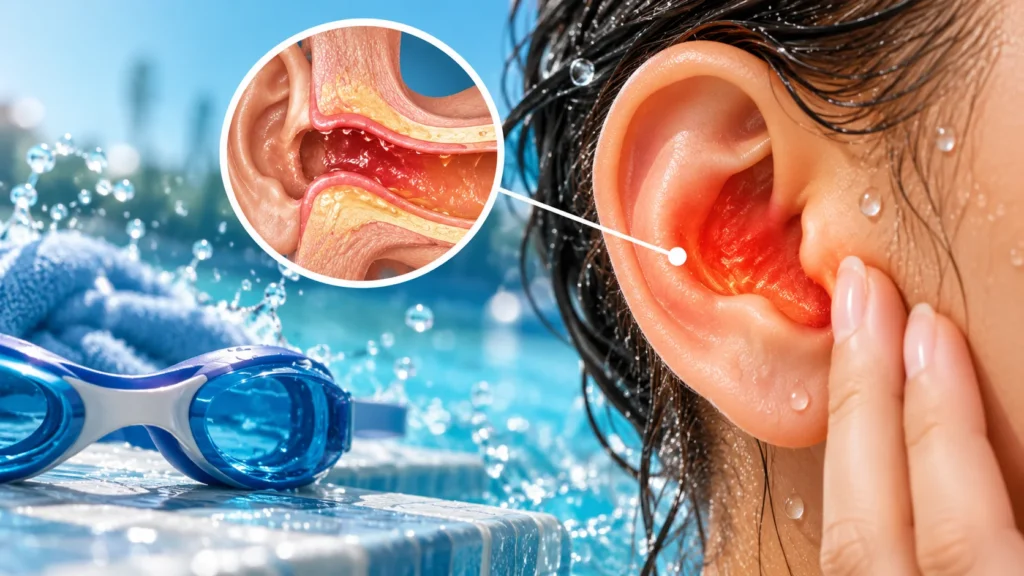
Otitis externa, commonly known as swimmer’s ear, is an infection or inflammation of the outer ear canal. It is the part of the ear that runs from the outside opening to the eardrum. This condition often causes ear pain, itching, redness, swelling, discharge, and temporary hearing difficulty. It is called swimmer’s ear because water remaining in the ear after swimming can create a moist environment where bacteria or fungi grow easily. However, it can also occur in people who do not swim.
Otitis externa can affect people of all ages, but it is more common in children, teenagers, and adults who spend a lot of time in water or expose their ears to moisture. In most cases, it is not serious and improves with proper treatment. But if ignored, it can lead to severe pain, spreading infection, or complications, especially in people with diabetes or weak immunity.
What is Otitis Externa?
Otitis externa is an inflammation or infection of the outer ear canal. The ear canal is a small tube that carries sound from the outside to the eardrum. Its skin is thin and sensitive. When this skin becomes irritated, damaged, or infected, it can swell, turn red, and become painful.
The condition is different from middle ear infection, which happens behind the eardrum. Otitis externa affects the ear canal itself. It may be caused by bacteria, fungi, or irritation from objects, water, or skin conditions. In mild cases, the ear feels itchy and uncomfortable. In more severe cases, the ear canal can swell so much that hearing is reduced and pain becomes intense.
Most cases improve with ear drops, pain relief, and keeping the ear dry. But some patients need oral medicines, cleaning of the ear canal, or specialist care if the infection is severe or keeps coming back.
Types of Otitis Externa
Otitis externa can be classified in different ways based on duration, cause, and severity.
Based on duration
- Acute otitis externa, which starts suddenly and usually lasts less than six weeks.
- Chronic otitis externa, which lasts longer than six weeks or keeps recurring.
- Recurrent otitis externa, which happens multiple times in a year.
Based on cause
- Bacterial otitis externa, which is the most common type and often caused by common skin bacteria.
- Fungal otitis externa, which is caused by fungi and may cause more itching and discharge.
- Irritant or allergic otitis externa, which happens due to irritation from objects, earbuds, hearing aids, hair products, or skin conditions.
Based on severity
- Mild otitis externa, with itching, slight redness, and mild discomfort.
- Moderate otitis externa, with more pain, swelling, and discharge.
- Severe otitis externa, with intense pain, marked swelling, fever, and possible spread of infection.
Special forms
- Malignant or necrotizing otitis externa, which is a rare but serious infection that spreads to nearby bone and tissue, mostly in elderly patients with diabetes or weak immunity.
- Diffuse otitis externa, which affects the whole ear canal.
- Localized otitis externa, which affects a small area, such as a boil or infected hair follicle.
Causes of Otitis Externa
Otitis externa happens when the skin of the ear canal is damaged or stays wet for too long. This allows germs to grow and cause infection.
Common causes include:
- Water remaining in the ear after swimming, bathing, or showering.
- Scratching the ear canal with fingers, cotton buds, or hairpins.
- Using earbuds, earphones, or hearing aids for long periods.
- Skin conditions such as eczema, psoriasis, or dermatitis affecting the ear.
- Allergic reaction to hair products, shampoos, or ear drops.
- Narrow ear canals that trap moisture easily.
- Excessive earwax that holds water inside.
- Frequent cleaning of ears that removes protective wax.
- Exposure to dirty or contaminated water.
- Warm and humid climate that promotes germ growth.
Why moisture is a key factor
The ear canal is designed to stay slightly moist but not wet. When water stays inside, the skin becomes soft and more easily damaged. Small cracks allow bacteria or fungi to enter. Warmth and moisture create an ideal environment for infection.
Risk Factors for Otitis Externa
Some people are more likely to develop swimmer’s ear than others.
Higher-risk groups
- People who swim frequently.
- Children and teenagers who play in water.
- People living in hot and humid climates.
- Individuals who use earbuds, earphones, or hearing aids often.
- People who clean their ears aggressively with cotton buds or objects.
- Patients with eczema, psoriasis, or sensitive skin.
- Individuals with narrow or hairy ear canals.
- People with diabetes or weak immunity.
- Those who use hair sprays, dyes, or chemicals near the ears.
- Patients with a history of recurrent ear infections.
Why risk increases in these groups
- Frequent water exposure keeps the ear canal moist.
- Skin conditions make the ear canal more fragile.
- Objects in the ear can cause small injuries.
- Diabetes and weak immunity reduce the body’s ability to fight infection.
- Humid weather promotes bacterial and fungal growth.
Symptoms of Otitis Externa
Symptoms can range from mild itching to severe pain and discharge. They often develop over a few days.
Common symptoms include:
- Ear pain, which may be mild at first and become severe.
- Itching inside the ear canal.
- Redness and swelling of the outer ear or ear canal.
- Feeling of fullness or blockage in the ear.
- Reduced hearing due to swelling or discharge.
- Fluid or pus draining from the ear.
- Tenderness when touching or pulling the outer ear.
- Pain while chewing or moving the jaw.
- Mild fever in some cases.
- Swollen lymph nodes near the ear in severe infection.
Signs of worsening infection
- Severe pain that disturbs sleep.
- Marked swelling that closes the ear canal.
- Fever and feeling unwell.
- Spread of redness to the outer ear or face.
- Foul-smelling discharge.
- Severe hearing difficulty.
Emergency warning signs
- Very high fever.
- Severe headache.
- Swelling and redness spreading beyond the ear.
- Facial weakness or difficulty moving facial muscles.
- Severe pain in patients with diabetes or weak immunity.
- Confusion or signs of spreading infection.
Otitis Externa in Children
Children are more prone to swimmer’s ear because they spend more time in water and may put objects in their ears.
Common signs in children
- Complaining of ear pain or itching.
- Crying or irritability.
- Pulling or rubbing the ear.
- Reduced hearing or not responding to sounds.
- Fever in some cases.
- Discharge from the ear.
- Difficulty sleeping due to pain.
Why it can be troublesome in children
Children may not describe symptoms clearly. Pain can affect sleep, eating, and school activities. In some cases, infection can spread if not treated properly. Parents should avoid putting objects or drops in the ear without medical advice.
Otitis Externa in Adults
Adults may develop otitis externa due to swimming, frequent ear cleaning, use of earphones, or skin conditions.
Adults may experience:
- Sudden ear pain.
- Itching and discomfort.
- Feeling of blockage.
- Discharge on pillows or towels.
- Pain while using earphones or hearing aids.
- Temporary hearing difficulty.
Higher-risk adult groups
- Frequent swimmers.
- People working in humid or wet environments.
- Patients with diabetes.
- Elderly individuals with weak immunity.
- People using hearing aids or earbuds for long hours.
How is Otitis Externa Diagnosed?
Diagnosis is usually based on symptoms and examination of the ear. Tests are rarely needed unless the infection is severe, recurrent, or not improving.
Diagnostic steps
- Detailed history of symptoms and activities such as swimming or ear cleaning.
- Review of medical conditions such as diabetes or skin disease.
- Examination of the outer ear and ear canal using an otoscope.
- Gentle cleaning of discharge to see the ear canal clearly.
- Assessment of pain, swelling, redness, and discharge.
Tests that may be done if needed
- Ear swab culture to identify bacteria or fungi in recurrent or severe cases.
- Blood tests if there is fever or signs of spreading infection.
- Imaging such as CT scan in rare cases of severe or malignant otitis externa.
- Blood sugar testing in patients with diabetes or suspected immune problems.
When tests are more likely
- Infection not improving with standard treatment.
- Severe pain and swelling.
- Recurrent episodes.
- Suspected fungal infection.
- Elderly or diabetic patients with severe symptoms.
- Signs of infection spreading beyond the ear.
Treatment for Otitis Externa
Treatment depends on the severity of symptoms and the cause of infection. Most cases improve with ear drops, pain relief, and keeping the ear dry.
1. Ear drops
Ear drops are the main treatment for otitis externa.
- Antibiotic ear drops to treat bacterial infection.
- Steroid ear drops to reduce swelling and itching.
- Antifungal ear drops if fungi are the cause.
- Acidic drops to restore normal ear canal environment.
- Combination drops with antibiotic and steroid for faster relief.
2. Pain relief
Pain can be significant, especially in the first few days.
- Pain relief medicines such as paracetamol or ibuprofen.
- Warm compress over the ear for comfort.
- Avoiding pressure on the ear while sleeping.
3. Ear cleaning
In some cases, the ear canal needs gentle cleaning by a doctor.
- Removal of discharge, debris, or infected wax.
- Helps ear drops reach the infected area better.
- Should be done by a trained professional to avoid injury.
4. Oral medicines
Oral medicines are used in more severe cases.
- Oral antibiotics if infection is spreading or severe.
- Oral antifungal medicines for fungal infection.
- Pain medicines for significant discomfort.
- Medicines to control fever if present.
5. Hospital care if needed
Some patients need admission, especially if infection is severe or spreading.
- IV antibiotics for malignant or necrotizing otitis externa.
- Close monitoring in diabetic or immunocompromised patients.
- Specialist ENT and infectious disease care.
- Imaging and advanced treatment if bone or nearby tissue is involved.
Home Care for Mild Otitis Externa
Many mild cases can be managed at home with careful support and medical advice.
Helpful home care steps
- Use prescribed ear drops exactly as directed.
- Keep the ear dry during bathing or showering.
- Avoid swimming until the infection clears.
- Do not put cotton buds, fingers, or objects in the ear.
- Avoid using earphones or hearing aids until pain reduces.
- Take pain relief medicines as advised.
- Sleep on the opposite side to reduce pressure.
- Do not pour home remedies or oils into the ear without advice.
Things to avoid during infection
- Swimming or diving.
- Inserting cotton buds or earbuds.
- Using hair sprays or chemicals near the ear.
- Scratching or rubbing the ear.
- Trying to clean the ear deeply at home.
Ear Care During Recovery
Proper ear care helps speed recovery and prevents recurrence.
Recovery care pointers
- Complete the full course of ear drops even if symptoms improve.
- Keep the ear dry until fully healed.
- Avoid inserting anything into the ear canal.
- Follow up with the doctor if symptoms do not improve.
- Use a shower cap or cotton with petroleum jelly while bathing to keep water out.
When to resume normal activities
- Swimming can usually be resumed after symptoms fully resolve and the doctor confirms healing.
- Earphones and hearing aids can be used again once pain and discharge stop.
- Normal bathing can continue with care to keep water out of the ear.
Possible Complications
Most patients recover without problems, but complications can occur when infection is severe or ignored.
Complications may include:
- Chronic otitis externa with repeated episodes.
- Narrowing of the ear canal due to scarring.
- Persistent hearing difficulty.
- Spread of infection to nearby skin and tissue.
- Malignant otitis externa in high-risk patients.
- Bone infection in rare severe cases.
- Facial nerve involvement in advanced infection.
In high-risk patients, complications may include:
- Severe pain and swelling.
- Fever and feeling very unwell.
- Infection spreading to the skull base.
- Need for prolonged IV antibiotics or surgery.
- Longer recovery and hospital stay.
When to See a Doctor?
Not every case of ear pain needs hospital treatment, but some symptoms should never be ignored.
- Ear pain lasts more than a day or two.
- There is discharge from the ear.
- Hearing is reduced.
- Pain is severe or worsening.
- There is fever or swelling.
- Symptoms keep coming back.
- You have diabetes or weak immunity.
- Home care is not helping.
Prevention of Otitis Externa
Preventing otitis externa is possible in many cases through good ear care and water safety.
Prevention pointers
- Dry ears properly after swimming or bathing.
- Tilt the head to let water drain out.
- Use a soft towel to gently dry the outer ear.
- Avoid inserting cotton buds or objects into the ear.
- Limit use of earphones and hearing aids when possible.
- Use swimmer’s ear drops after swimming if advised by a doctor.
- Wear a swim cap or earplugs if prone to infection.
- Treat skin conditions such as eczema affecting the ear.
- Avoid swimming in dirty or contaminated water.
- Do not over-clean the ears, as some wax is protective.
For frequent swimmers
- Dry ears immediately after swimming.
- Consider preventive ear drops after water exposure.
- Take breaks from swimming if early symptoms appear.
- Get regular ear check-ups if infections are recurrent.
For children
- Supervise water play and bathing.
- Teach children not to put objects in their ears.
- Seek medical advice early for ear pain or discharge.
- Avoid home remedies without guidance.
Why Choose Rama Hospital for Otitis Externa Care?
When otitis externa is mild, home care may be enough. But when pain is severe, infection is recurrent, or the patient has other health conditions, a hospital evaluation becomes important. A hospital can identify whether the infection is bacterial, fungal, or related to skin disease, and provide the right treatment.
- Expert ENT evaluation of ear symptoms.
- Safe and effective ear cleaning when needed.
- Appropriate ear drops and medicines based on cause.
- Support for children, adults, and high-risk patients.
- Emergency care for severe or spreading infection.
- Monitoring for complications in diabetic or immunocompromised patients.
- Guidance on ear care, prevention, and long-term management.
Frequently Asked Questions (FAQs)
Is swimmer’s ear contagious?
No, otitis externa is not contagious in the usual sense. It does not spread from person to person like a cold. However, sharing earbuds, towels, or objects that touch the ear may increase risk in some situations.
Can otitis externa cause hearing loss?
Yes, temporary hearing loss can happen due to swelling, discharge, or blockage in the ear canal. Hearing usually returns to normal after treatment and healing. Persistent hearing problems need further evaluation.
How long does otitis externa take to heal?
Most mild to moderate cases improve within 7 to 10 days with proper treatment. Severe or recurrent cases may take longer. Completing the full course of treatment is important to prevent relapse.
Can I swim with otitis externa?
No, swimming should be avoided until the infection fully heals. Water can worsen the infection and delay recovery. A doctor can advise when it is safe to resume swimming.
Are ear drops safe for everyone?
Ear drops are safe when used as prescribed, but some types should not be used if the eardrum is perforated. Always use medicines under medical guidance to avoid complications or wrong treatment.
Can otitis externa come back?
Yes, it can recur, especially in people who swim often, have narrow ear canals, or have skin conditions. Good ear care, drying ears properly, and avoiding objects in the ear can reduce recurrence.
Conclusion
Otitis externa, or swimmer’s ear, is a common ear condition that causes pain, itching, discharge, and temporary hearing difficulty. Most cases are mild and improve with ear drops, pain relief, and proper ear care. However, severe or recurrent infection can lead to complications, especially in people with diabetes or weak immunity.
The key to managing otitis externa is early recognition, correct treatment, and prevention of recurrence. If ear pain, discharge, or hearing difficulty persists, a medical evaluation is important. With the right care, most people recover fully and return to normal activities.
Rama Hospital can provide evaluation, treatment, and supportive care for otitis externa, along with guidance on ear care, water safety, and prevention to reduce the risk of recurrence.