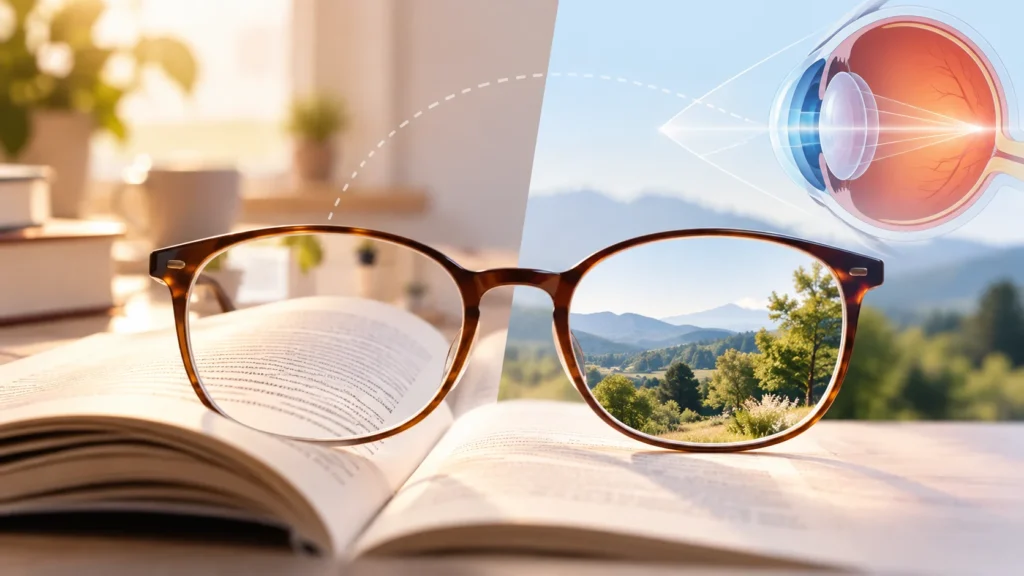
Presbyopia: Causes, Symptoms, Diagnosis, Treatment, and Management

Presbyopia is a common age-related vision condition that makes it difficult to focus on close objects. Most people begin to notice it in their early to mid-forties, when they find themselves holding books, phones, or menus farther away to see clearly. Words may look blurred at normal reading distance, and eyes may feel tired or strained after reading or working on a computer.

This condition is a normal part of aging and happens to almost everyone over time. It is not a disease, but rather a natural change in the way the eye’s lens works. As the lens becomes less flexible with age, it loses its ability to change shape and focus on near objects. This makes tasks like reading, sewing, using a phone, or working on a computer more difficult without help.

What is Presbyopia?

Presbyopia is an age-related condition where the eye gradually loses its ability to focus on nearby objects. The word comes from Greek, meaning “old eye.” It typically becomes noticeable around age forty to forty-five and continues to progress slowly until about age sixty to sixty-five, when it tends to stabilize.

The main reason for presbyopia is the natural aging of the eye’s lens. In younger people, the lens is soft and flexible. It can easily change shape to focus on objects at different distances. This process is called accommodation. With age, the lens becomes harder and less flexible. The muscles around the lens also become less effective. As a result, the eye cannot focus clearly on close objects.

Presbyopia affects everyone eventually, regardless of whether they had perfect vision, were nearsighted, or were farsighted earlier in life. Even people who never needed glasses before may find they need reading glasses as they get older.

Causes of Presbyopia

Presbyopia is caused by natural changes in the eye that occur with aging.

Main causes include:

  • Hardening of the eye’s lens over time.
  • Reduced flexibility of the lens, making it difficult to change shape.
  • Weakening of the ciliary muscles that control the lens.
  • Natural aging of the focusing system of the eye.
  • Gradual loss of accommodation power.

Contributing factors

  • Age over forty years.
  • Family history of early presbyopia.
  • Certain medical conditions that affect the eye.
  • Long-term use of some medicines that affect focusing.
  • Previous eye surgery in some cases.
  • High visual demand from close work.

Why it happens with age

The lens inside the eye is made of layers of protein fibers. Over time, these fibers become more compact and less elastic. At the same time, the muscle that controls the lens does not work as efficiently. Together, these changes reduce the eye’s ability to focus up close, leading to presbyopia.

Symptoms of Presbyopia

Symptoms usually develop gradually and become more noticeable over time.

Common symptoms include:

  • Difficulty reading small print at normal distance.
  • Needing to hold books, phones, or newspapers farther away.
  • Blurred vision at reading distance.
  • Eye strain or fatigue after reading or close work.
  • Headaches after prolonged near tasks.
  • Needing brighter light to read comfortably.
  • Squinting to see close objects clearly.
  • Feeling that arms are “not long enough” to hold reading material.
  • Difficulty focusing when switching between near and far objects.
  • Tired or heavy feeling in the eyes after computer work.

How symptoms progress

In the early stage, a person may only notice difficulty in dim light or when tired. Over time, they may need to increase the distance for reading. Eventually, reading glasses or other correction become necessary for most near tasks. Without correction, near vision remains blurred, but distance vision may stay clear if there is no other eye problem.

Presbyopia in Different Age Groups

Presbyopia follows a fairly predictable pattern with age.

In early forties

  • Mild difficulty with small print.
  • Need for more light when reading.
  • Occasional eye strain after close work.
  • May manage without glasses in some situations.

In late forties to fifties

  • Clear need for reading glasses for most near tasks.
  • Increasing blur at normal reading distance.
  • More noticeable eye fatigue.
  • May need stronger reading power over time.

In sixties and beyond

  • Presbyopia usually stabilizes.
  • Reading glasses or multifocal lenses are commonly used.
  • Other age-related eye changes may also appear, such as cataract or dry eye.

How is Presbyopia Diagnosed?

Diagnosis is based on symptoms, age, and a detailed eye examination.

Diagnostic steps

  • Discussion of vision complaints and daily activities.
  • Review of medical history and medicines.
  • Assessment of work habits and screen time.
  • Visual acuity testing for distance and near.
  • Refraction test to determine the correct lens power.
  • Examination of the eyes with a slit lamp.
  • Evaluation of the lens, retina, and optic nerve.
  • Assessment for other eye conditions such as cataract, glaucoma, or dry eye.

Why diagnosis matters

Presbyopia can coexist with other vision problems such as nearsightedness, farsightedness, or astigmatism. A proper eye exam ensures that the correct type of correction is given and that no other eye disease is missed. Regular eye checks are important, especially after age forty.

Treatment for Presbyopia

Presbyopia cannot be reversed, but it can be corrected effectively. Treatment aims to restore clear near vision and reduce eye strain.

1. Reading glasses

Reading glasses are the simplest and most common solution.

  • Used only for near tasks such as reading, phone use, or close work.
  • Available in different powers based on age and vision needs.
  • Can be bought over the counter or prescribed after an eye exam.
  • Affordable and easy to use.
  • Should be removed when looking at distant objects.

2. Bifocal glasses

Bifocal lenses have two powers in one lens.

  • Upper part for distance vision.
  • Lower part for near vision.
  • Useful for people who need correction for both distance and near.
  • Visible line separates the two zones.
  • Helpful for those who do not want to switch between different glasses.

3. Trifocal glasses

Trifocal lenses have three zones in one lens.

  • Distance vision at the top.
  • Intermediate vision for computer or arm’s length in the middle.
  • Near vision at the bottom.
  • Useful for people who need clear vision at multiple distances.
  • May take some time to get used to.

4. Progressive lenses

Progressive lenses are multifocal lenses without visible lines.

  • Smooth transition from distance to near vision.
  • Provide clear vision at all distances.
  • More natural appearance than bifocals or trifocals.
  • May require a short adaptation period.
  • Suitable for people who want one pair of glasses for all tasks.

5. Contact lenses for presbyopia

Contact lenses can also correct presbyopia.

  • Multifocal contact lenses provide different powers in one lens.
  • Monovision contact lenses correct one eye for distance and the other for near.
  • Require proper fitting and hygiene.
  • May not be suitable for everyone, especially those with dry eye.
  • Need regular follow-up and care.

6. Surgical options

Surgery may be considered for selected patients who want to reduce dependence on glasses.

  • Laser vision correction can be adjusted for monovision in suitable candidates.
  • Lens-based surgery may replace the natural lens with a multifocal or accommodating lens.
  • Suitable mainly for people with early cataract or specific lens-related needs.
  • Requires detailed evaluation and discussion of risks and benefits.
  • Not everyone is a candidate, and glasses may still be needed for some tasks.

7. Combination approaches

Some people use a combination of methods.

  • Distance glasses with separate reading glasses.
  • Contact lenses for daily use with reading glasses for fine print.
  • Progressive lenses for most activities with specialized glasses for specific tasks.
  • The best approach depends on lifestyle, occupation, and eye health.

Lifestyle Tips for Managing Presbyopia

Simple daily habits can make near vision more comfortable.

Helpful habits

  • Use adequate lighting when reading or doing close work.
  • Hold reading material at a comfortable distance, usually about thirty-five to forty centimeters.
  • Take regular breaks during prolonged screen time.
  • Follow the 20-20-20 rule: every twenty minutes, look at something twenty feet away for at least twenty seconds.
  • Keep screens at eye level and at a comfortable distance.
  • Use larger font sizes on phones and computers when possible.
  • Avoid reading in dim light or while lying down in awkward positions.
  • Keep eyes lubricated if dryness is present, using artificial tears if advised.

Why lifestyle matters

Good visual habits reduce strain and fatigue. They do not stop presbyopia, but they make daily tasks more comfortable and help prevent additional stress on the eyes.

Possible Complications

Presbyopia itself does not damage the eyes, but uncorrected presbyopia can affect quality of life.

Possible issues

  • Persistent eye strain and headaches.
  • Reduced productivity at work or while studying.
  • Difficulty with hobbies such as reading, sewing, or crafts.
  • Increased risk of accidents if near vision is poor during tasks.
  • Frustration or reduced confidence in daily activities.
  • Delayed detection of other eye problems if regular eye exams are skipped.

Importance of regular eye checks

Regular eye examinations ensure that presbyopia is properly corrected and that other age-related eye conditions are detected early. Conditions such as cataract, glaucoma, diabetic retinopathy, and macular degeneration can coexist with presbyopia and need separate management.

When to See an Eye Specialist?

Medical evaluation is important for anyone noticing changes in near vision.

  • Increasing difficulty reading small print.
  • Need to hold objects farther away to see clearly.
  • Frequent eye strain or headaches after near work.
  • Blurred vision at reading distance.
  • Need for brighter light to read comfortably.
  • Any sudden change in vision.
  • Double vision or distortion.
  • Floaters, flashes, or a curtain-like shadow in vision.
  • Eye pain, redness, or discharge.

Prevention and Long-Term Eye Health

Presbyopia itself cannot be prevented, as it is a natural part of aging. However, overall eye health can be supported.

Prevention and care pointers

  • Have regular comprehensive eye exams after age forty.
  • Control systemic conditions such as diabetes and high blood pressure.
  • Wear sunglasses to protect eyes from harmful UV rays.
  • Maintain a balanced diet rich in fruits, vegetables, and omega-3 fatty acids.
  • Stay hydrated and manage dry eye if present.
  • Avoid smoking, which can harm eye health.
  • Follow good screen and reading habits.
  • Use prescribed glasses or lenses consistently.

For people with high visual demand

  • Take frequent breaks during close work.
  • Adjust screen brightness and contrast to comfortable levels.
  • Use anti-reflective coatings on glasses if glare is a problem.
  • Consider ergonomic work setups to reduce strain.

Why Choose Rama Hospital for Presbyopia Care?

Presbyopia may seem like a simple need for reading glasses, but proper evaluation is important to rule out other eye problems and to choose the right correction. A hospital-based eye care team can provide comprehensive assessment and personalized solutions.

  • Detailed eye examination by qualified ophthalmologists.
  • Accurate measurement of near and distance vision.
  • Assessment for cataract, glaucoma, retinal issues, and dry eye.
  • Customized advice on glasses, lenses, and surgical options.
  • Long-term follow-up for changing vision needs.
  • Coordination with other specialties if systemic disease is present.

Frequently Asked Questions (FAQs)

At what age does presbyopia start?

Presbyopia typically begins in the early to mid-forties. Symptoms may start mildly and progress slowly until around age sixty to sixty-five, when they tend to stabilize. The exact age can vary from person to person.

Can presbyopia be cured?

Presbyopia cannot be cured or reversed, as it is a natural part of aging. However, it can be corrected effectively with reading glasses, bifocals, progressive lenses, contact lenses, or selected surgical options. Proper correction restores clear near vision and reduces eye strain.

Do I need glasses forever for presbyopia?

Most people need some form of near vision correction for the rest of their lives. The power may change over time and then stabilize. Glasses or lenses do not weaken the eyes; they simply help the eyes focus comfortably at near distances.

Can contact lenses help with presbyopia?

Yes, multifocal contact lenses and monovision contact lenses can help correct presbyopia. They provide different focusing powers for near and distance. Proper fitting and regular follow-up are important, especially for people with dry eye or other eye conditions.

Is presbyopia the same as farsightedness?

No, presbyopia is not the same as farsightedness, although both can cause difficulty with near vision. Farsightedness is a refractive error due to the shape of the eye, while presbyopia is an age-related loss of focusing ability. A person can have one, the other, or both.

Can surgery fix presbyopia?

Surgery can reduce dependence on glasses in selected patients, but it does not stop the aging process of the eye. Options include laser vision correction with monovision or lens-based surgery with multifocal lenses. Suitability depends on eye health, lifestyle, and expectations.

How often should I get my eyes checked for presbyopia?

Adults over forty should have a comprehensive eye exam every one to two years, or as advised by their eye specialist. Regular checks ensure that presbyopia is properly corrected and that other age-related eye conditions are detected early.

Conclusion

Presbyopia is a normal, age-related change in vision that affects almost everyone as they grow older. It makes near tasks such as reading, using a phone, or working on a computer more difficult without correction. While it cannot be prevented or reversed, it can be managed very effectively with the right glasses, lenses, or selected surgical options.

The most important steps are timely diagnosis, proper correction, and regular eye examinations. For people noticing increasing difficulty with near vision, eye strain, or headaches after reading, an evaluation by an eye specialist can make daily tasks much more comfortable. With appropriate care, patients can maintain clear vision, reduce strain, and enjoy good quality of life as they age.

Rama Hospital can help evaluate presbyopia, rule out other eye conditions, and provide personalized solutions such as reading glasses, multifocal lenses, contact lenses, or surgical options where appropriate, along with long-term follow-up for healthy aging of the eyes.
Table of Contents

Explore More

What to Know More About Presbyopia

Find Ailments & Treatments

Search Ailments

Quickly find the information you need. Search our database to explore detailed information on various diseases and conditions, including symptoms, causes, and treatment options.

Search Treatments

Quickly find the information you need. Search our database to explore detailed information on various diseases and conditions, including symptoms, causes, and treatment options.

Recommended Reading

Video Playlist

No rows found.

Experience Healthcare the Rama Way

Emergency • OPD • Surgery • ICU Care

Need Help? Talk to our experts

Get a callback from our experts

Request a callback