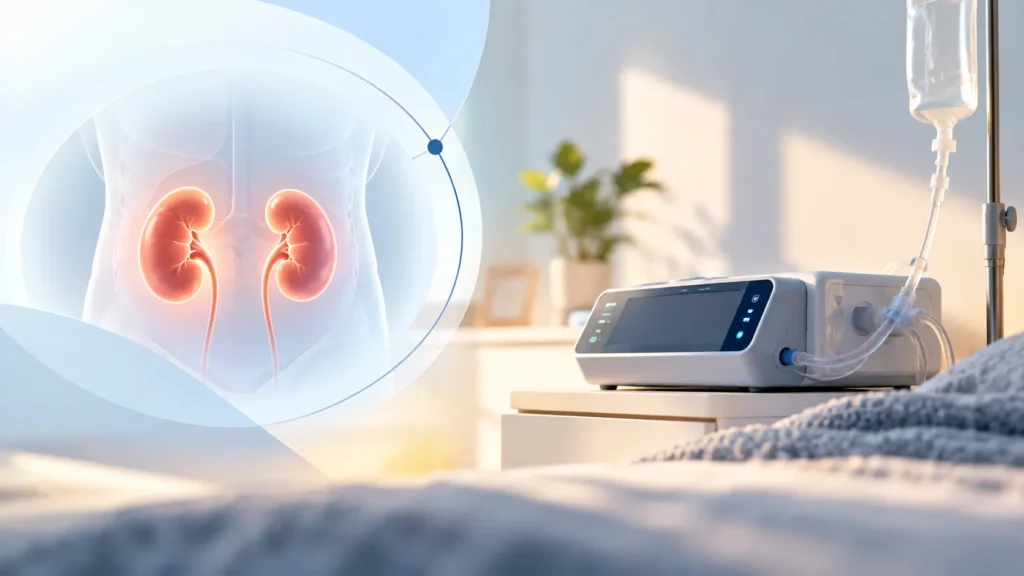
Continuous Cycling Peritoneal Dialysis, commonly called CCPD, is a form of dialysis used for patients with advanced kidney failure. It is a type of peritoneal dialysis that uses a machine to perform dialysis automatically while the patient sleeps at night. This allows the patient to be free from dialysis sessions during the day and continue with work, study, or daily activities with greater flexibility.
In CCPD, the lining of the abdomen, called the peritoneum, is used as a natural filter to remove waste products, extra fluid, and toxins from the blood. A soft tube called a catheter is placed in the abdomen, through which dialysis fluid is introduced and later drained out. The process is repeated in cycles through a machine called a cycler, usually over eight to ten hours at night.
What is Continuous Cycling Peritoneal Dialysis (CCPD)?
CCPD is an automated form of peritoneal dialysis. Unlike hemodialysis, which uses an external machine to filter blood through a dialyzer, peritoneal dialysis uses the patient’s own peritoneal membrane inside the abdomen as the filtering surface.
In CCPD, a machine called a cycler is connected to the peritoneal dialysis catheter at night. The cycler automatically fills the abdomen with dialysis fluid, allows it to stay for a set period, and then drains it out. This fill-dwell-drain cycle is repeated several times through the night. In the morning, the last fill may be left in the abdomen for the day, or the abdomen may be left empty, depending on the patient’s needs.
The main advantage of CCPD is that it is done while the patient sleeps, freeing up daytime hours. It also provides gentle and continuous removal of fluid and toxins, which can be easier on the heart and blood pressure compared to intermittent hemodialysis.
How CCPD Works
Understanding how CCPD works helps patients feel more confident about the treatment.
Basic principle
- The peritoneum acts as a semi-permeable membrane.
- Dialysis fluid contains substances that draw waste and extra fluid from the blood into the fluid.
- The used fluid is then drained out and discarded.
- This process is repeated in cycles to achieve adequate clearance.
Night-time process
- The patient connects the cycler to the abdominal catheter before going to bed.
- The machine performs multiple cycles of fill, dwell, and drain through the night.
- Alarms on the machine alert the patient if there is a problem with flow or pressure.
- In the morning, the patient disconnects from the machine and starts the day.
Day-time situation
- Some patients have a final fill left in the abdomen during the day.
- Others may have the abdomen empty during the day.
- The plan depends on fluid removal needs and lifestyle.
Who is Suitable for CCPD?
Not every patient with kidney failure is suitable for CCPD. A nephrologist evaluates each patient based on medical condition, lifestyle, and personal preference.
Suitable candidates may include:
- Patients with end-stage kidney disease who need long-term dialysis.
- Patients who want more flexibility and independence.
- Those who live far from dialysis centers.
- Patients who wish to continue working or studying during the day.
- Individuals who have a suitable home environment and support.
- Patients who are motivated to learn self-care and hygiene.
- Those without severe abdominal adhesions or hernias that may interfere.
Patients who may not be ideal candidates
- Those with extensive abdominal surgery and scarring.
- Patients with active abdominal infection.
- Individuals with severe hernias that cannot be repaired.
- Patients unable to perform or learn the procedure safely.
- Those with certain heart or lung conditions that make fluid shifts risky.
A detailed evaluation helps determine whether CCPD is the right option.
Pre-Procedure Evaluation
Before starting CCPD, a thorough assessment is done to ensure safety and suitability.
Evaluation steps
- Detailed medical history and examination.
- Assessment of kidney function and other health conditions.
- Review of previous abdominal surgeries.
- Evaluation of home environment and support system.
- Discussion of lifestyle, work, and personal preferences.
- Blood tests to check infection risk and nutritional status.
- Imaging if needed to assess the abdomen.
Preparation for catheter placement
- Planning the catheter exit site.
- Treating any existing infections.
- Educating the patient and caregiver about the procedure.
- Arranging for training on the cycler machine.
The CCPD Procedure
The procedure involves catheter placement, training, and then regular home sessions.
1. Catheter placement
- A soft silicone catheter is placed into the abdomen through a minor surgical procedure.
- The catheter has a cuff that helps secure it and reduce infection risk.
- The exit site is usually on the abdomen, away from the belt line.
- Healing time is needed before regular dialysis can begin.
2. Training
- Patients and caregivers receive detailed training from a dialysis nurse.
- Training includes hand hygiene, mask use, and sterile technique.
- Patients learn how to connect and disconnect from the cycler.
- They are taught how to handle bags, check fluids, and respond to alarms.
- Emergency procedures and when to call the hospital are explained.
3. Starting CCPD at home
- The cycler is set up in the bedroom or a clean area.
- Dialysis fluid bags are connected to the machine.
- The patient connects the catheter to the cycler before sleep.
- The machine runs automatically through the night.
- In the morning, the patient disconnects and disposes of used bags.
Benefits of CCPD
CCPD offers several advantages over other forms of dialysis for suitable patients.
Lifestyle benefits
- Dialysis is done at night, freeing up the day.
- Greater flexibility for work, study, and travel.
- Fewer visits to the hospital or dialysis center.
- More independence and control over treatment.
Medical benefits
- Gentle and continuous fluid and waste removal.
- Better blood pressure control in many patients.
- Less strain on the heart compared to rapid fluid shifts.
- Preservation of remaining kidney function for longer in some cases.
- No need for blood access or needles.
Personal benefits
- Ability to maintain a more normal daily routine.
- Reduced travel burden for in-center dialysis.
- Greater privacy and comfort at home.
- Improved quality of life for many patients.
Risks and Complications
Like any medical treatment, CCPD has potential risks. Awareness and proper technique help reduce these risks.
Infection risks
- Peritonitis, which is infection of the peritoneal cavity.
- Exit site infection around the catheter.
- Tunnel infection along the catheter path.
Mechanical issues
- Catheter blockage or poor flow.
- Leakage of fluid around the catheter.
- Hernia development due to increased abdominal pressure.
- Discomfort or pain during fills.
Metabolic and fluid issues
- Inadequate fluid removal leading to swelling or breathlessness.
- Excess fluid removal causing low blood pressure or dizziness.
- Changes in blood sugar due to glucose in dialysis fluid.
- Protein loss through the peritoneum over time.
Other possible issues
- Weight gain due to absorption of glucose from dialysis fluid.
- Back pain or abdominal discomfort.
- Sleep disturbance due to machine noise or alarms.
- Rare complications such as encapsulating peritoneal sclerosis with long-term use.
Most complications can be prevented or managed with good technique, regular follow-up, and early reporting of symptoms.
Home Care and Hygiene
Home care is a critical part of safe CCPD.
Daily care pointers
- Wash hands thoroughly before handling the catheter or machine.
- Wear a mask during connections and disconnections.
- Keep the exit site clean and dry as instructed.
- Check the exit site daily for redness, discharge, or pain.
- Inspect dialysis fluid for cloudiness or particles before use.
- Follow the prescribed exchange schedule strictly.
- Keep the cycler and supplies in a clean, dust-free area.
- Dispose of used bags and materials safely.
Exit site care
- Clean the exit site as taught by the dialysis nurse.
- Use prescribed antiseptics or ointments if advised.
- Avoid pulling or tugging on the catheter.
- Secure the catheter to prevent snagging on clothing.
Machine and supply care
- Store dialysis fluid in a cool, dry place.
- Check expiry dates on all bags and tubing.
- Clean the cycler surface regularly as instructed.
- Report any machine alarms or errors promptly.
Diet and Fluid Management
Diet plays an important role in patients on CCPD.
General dietary advice
- Adequate protein intake to compensate for protein loss.
- Controlled salt intake to manage fluid and blood pressure.
- Balanced calories to prevent excessive weight gain.
- Limited high-sugar foods due to glucose absorption from dialysis fluid.
- Adequate vitamins and minerals as advised by a dietitian.
Fluid management
- Daily weight monitoring to assess fluid status.
- Blood pressure monitoring at home.
- Adjusting dialysis prescriptions based on fluid removal needs.
- Limiting excessive fluid intake if advised.
Foods to emphasize
- Lean proteins such as eggs, fish, chicken, pulses, and dairy.
- Fresh fruits and vegetables within potassium limits.
- Whole grains and healthy fats in moderation.
- Adequate hydration as per individual prescription.
Foods to limit
- Very salty or processed foods.
- High-sugar snacks and beverages.
- Excessive fried or fatty foods.
- Foods high in potassium or phosphorus if restricted.
A renal dietitian can provide a personalized diet plan.
Monitoring and Follow-Up
Regular follow-up is essential for safe and effective CCPD.
Routine monitoring
- Monthly or periodic visits to the nephrologist.
- Blood tests to check kidney function, electrolytes, and nutrition.
- Assessment of fluid status and blood pressure.
- Review of dialysis adequacy and prescription adjustments.
- Exit site examination and infection screening.
Tests that may be done
- Blood urea and creatinine.
- Electrolytes including sodium, potassium, and bicarbonate.
- Hemoglobin and iron status.
- Albumin and nutritional markers.
- Peritoneal equilibration test to assess membrane function.
- Culture of dialysis fluid if infection is suspected.
Why follow-up matters
Regular monitoring helps detect problems early, adjust treatment, and prevent complications. It also ensures that the dialysis prescription remains adequate as the patient’s condition changes over time.
When to Seek Medical Help
Patients must know when to contact their healthcare team.
- Cloudy dialysis fluid or particles in the bag.
- Fever, chills, or abdominal pain.
- Redness, swelling, or discharge at the exit site.
- Nausea, vomiting, or poor appetite.
- Sudden weight gain or swelling.
- Breathlessness or chest discomfort.
- Persistent low blood pressure or dizziness.
- Poor flow or frequent machine alarms.
Long-Term Management
CCPD is often a long-term treatment for kidney failure.
Long-term care pointers
- Adherence to prescribed dialysis schedule.
- Consistent hygiene and infection prevention.
- Regular medical and laboratory follow-up.
- Timely reporting of symptoms or problems.
- Lifestyle measures to support heart and kidney health.
- Emotional and psychological support for patient and family.
Transition to other treatments
- Some patients may eventually need hemodialysis.
- Kidney transplantation may be an option for suitable candidates.
- CCPD can be continued until transplantation or as long as it remains effective.
Planning ahead helps patients make informed decisions about their care.
Why Choose Rama Hospital for CCPD Care?
CCPD requires specialized nephrology care, trained dialysis nurses, and strong support systems. A hospital with experience in peritoneal dialysis can provide comprehensive management from evaluation to long-term follow-up.
- Expert assessment for suitability of CCPD.
- Safe catheter placement by experienced surgeons.
- Structured training for patients and caregivers.
- Access to 24/7 support for emergencies.
- Regular monitoring of dialysis adequacy and complications.
- Coordinated care with dietitians, surgeons, and transplant teams.
Frequently Asked Questions (FAQs)
Who can undergo CCPD?
CCPD is suitable for many patients with end-stage kidney disease who are medically fit, motivated, and have a supportive home environment. A nephrologist evaluates each patient to determine if CCPD is appropriate based on health and lifestyle.
Is CCPD safe to do at home?
Yes, CCPD is safe when patients and caregivers are properly trained and follow hygiene protocols strictly. Regular follow-up and early reporting of symptoms help prevent and manage complications effectively.
How long does each CCPD session last?
A typical CCPD session lasts about eight to ten hours at night. The exact duration and number of cycles depend on the patient’s prescription and individual needs as decided by the nephrologist.
Can patients work or study while on CCPD?
Yes, one of the main advantages of CCPD is that it is done at night, leaving the daytime free. Many patients continue to work, study, or manage daily activities while on CCPD.
What are the main risks of CCPD?
The main risks include infection of the peritoneum or catheter site, fluid imbalance, hernia, and catheter problems. Good hygiene, proper technique, and regular follow-up significantly reduce these risks.
How is infection prevented in CCPD?
Infection is prevented by strict hand hygiene, wearing a mask during connections, keeping the exit site clean, using sterile technique, and following all training instructions. Any signs of infection should be reported immediately.
Can CCPD be stopped if needed?
Yes, CCPD can be stopped or changed to another form of dialysis if complications arise or if the patient’s condition changes. Some patients may transition to hemodialysis or kidney transplantation based on medical advice.
Conclusion
Continuous Cycling Peritoneal Dialysis is a valuable treatment option for many patients with advanced kidney failure. It offers greater flexibility, independence, and gentle dialysis compared to conventional in-center hemodialysis. With proper training, hygiene, and medical support, many patients can manage CCPD safely at home and maintain a good quality of life.
The key to success is careful patient selection, thorough training, consistent home care, and regular follow-up. For patients considering home dialysis or seeking better flexibility in their treatment schedule, CCPD can be an excellent option under specialist guidance.
Rama Hospital can provide comprehensive evaluation, training, and long-term management for patients on CCPD, along with support for diet, infection prevention, and coordination with transplant services when appropriate.