

Most people think joint pain is just a part of getting older. They blame it on age, long working hours, too much walking, or “just a bit of arthritis.”
But rheumatoid arthritis doesn’t play by those rules.
It can affect a 28-year-old just as easily as a 68-year-old. It doesn’t wait for old age, and it doesn’t simply cause occasional achefs. It’s an autoimmune disease that can silently attack your joints, causing inflammation, pain, and stiffness that gradually worsen over time.
What makes it even more concerning is that doesn’t just affect the joints. If left untreated, it can also impact your eyes, lungs, heart, and blood vessels, affecting your overall health and quality of life.
One of the earliest warning signs is morning stiffness that lasts for more than 30–60 minutes. Many people ignore this symptom, assuming they slept in the wrong position or overworked their hands. Unfortunately, delaying treatment allows the disease to progress and may lead to permanent joint damage.
What is rheumatoid arthritis?
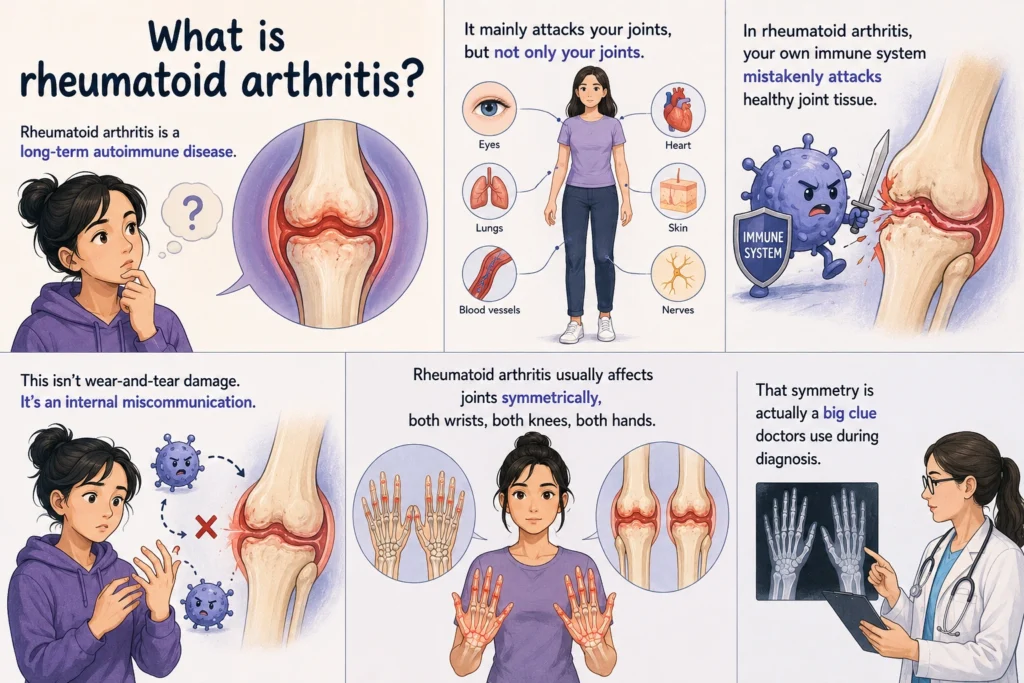
Here’s the simple version:
- This is a long-term autoimmune disease.
- It mainly attacks your joints, but not only your joints.
- In rheumatoid arthritis, your own immune system mistakenly attacks healthy joint tissue.
- This isn’t wear-and-tear damage. It’s an internal miscommunication.
- This usually affects joints symmetrically, both wrists, both knees, both hands.
- That symmetry is actually a big clue doctors use during diagnosis.
Unlike normal joint pain that improves with rest, rheumatoid arthritis often gets worse without proper treatment.
Left unmanaged, arthritis can quietly damage joints for years before real symptoms show up.
That’s the scary part. Arthritis doesn’t always announce itself loudly.
Why rheumatoid arthritis is an autoimmune disease?
Normally, your immune system protects you. It fights infections, viruses, and foreign invaders.
But in arthritis, something goes wrong.
- Your immune system gets confused.
- It starts attacking the synovium, the lining around your joints.
- This triggers constant inflammation.
- Over time, this inflammation damages cartilage and bone.
This is why rheumatoid arthritis is classified as an autoimmune disease, not just a joint problem.
Doctors often explain it this way: arthritis is your body fighting a war against itself, and your joints become the battlefield.
Researchers still don’t know the exact trigger. But genetics, infections, smoking, and hormonal changes are all considered possible contributors to arthritis.
Early symptoms of rheumatoid arthritis
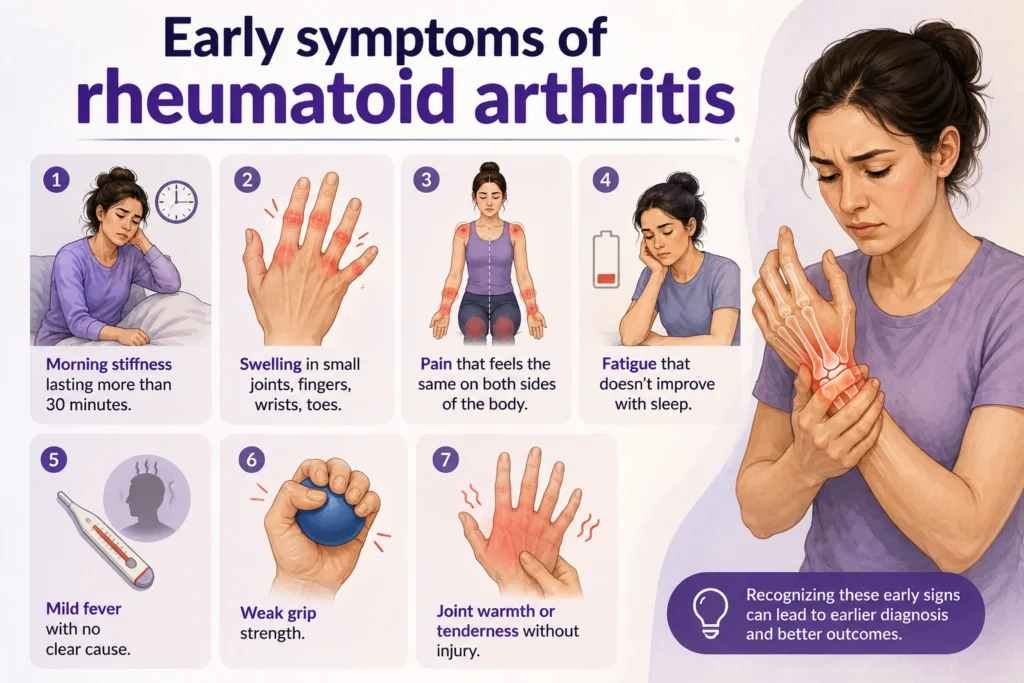
This is where most people miss the signs.
Early arthritis symptoms are often mistaken for tiredness, stress, or “just aging.”
Watch out for:
- Morning stiffness lasting more than 30 minutes.
- Swelling in small joints, fingers, wrists, toes.
- Pain that feels the same on both sides of the body.
- Fatigue that doesn’t improve with sleep.
- Mild fever with no clear cause.
- Weak grip strength.
- Joint warmth or tenderness without injury.
If these symptoms continue for more than six weeks, it’s a strong signal to get evaluated for rheumatoid arthritis rather than dismissing them as temporary joint pain.
Here’s the key insight: arthritis symptoms usually build gradually. They often start with mild stiffness, occasional swelling, or pain in the small joints of the hands and feet. Because the symptoms come and go in the early stages, many people ignore them or assume they’re caused by stress, overuse, or aging.
Over time, however, the inflammation becomes more persistent. Simple tasks like buttoning a shirt, opening a jar, writing, or climbing stairs may become increasingly difficult. Without timely treatment, the ongoing inflammation can permanently damage the joints, reducing mobility and affecting your quality of life.
The earlier arthritis is diagnosed, the better the chances of controlling the disease, protecting your joints, and maintaining an active, independent lifestyle.
How rheumatoid arthritis affects the entire body?
This is the part most patients don’t expect.
Rheumatoid arthritis is not “just joint pain.” It’s a systemic autoimmune disease, which means it can affect many parts of the body, not just the joints.
Because it’s driven by an overactive immune system, the inflammation doesn’t always stay limited to the hands, wrists, knees, or feet. Over time, it can spread and affect other organs, especially if the condition is left untreated.
Chronic inflammation may impact the eyes, causing dryness or irritation, the lungs, leading to breathing problems, and even the heart and blood vessels, increasing the risk of cardiovascular disease. Some people also experience extreme fatigue, low energy, anemia, or small lumps called rheumatoid nodules under the skin.
This is why early diagnosis is so important. Treating arthritis isn’t only about relieving joint pain, it’s about controlling inflammation before it causes long-term damage throughout the body.
The sooner treatment begins, the better the chances of protecting your joints, preserving mobility, and reducing the risk of serious complications.
- Skin: rheumatoid nodules can form under the skin.
- Eyes: dryness, irritation, inflammation.
- Lungs: inflammation or scarring in severe arthritis cases.
- Heart: increased cardiovascular risk.
- Blood vessels: inflammation known as vasculitis.
- Mental health: chronic pain often triggers anxiety and low mood.
Serious complications beyond joint pain
Ignoring rheumatoid arthritis doesn’t just mean more pain later. It means real, lasting damage.
Potential complications of untreated arthritis include:
- Permanent joint deformity.
- Reduced mobility and independence.
- Higher risk of osteoporosis.
- Increased risk of heart disease.
- Lung complications.
- Nerve compression (carpal tunnel syndrome).
- Higher infection risk due to weakened immunity.
Yes, rheumatoid arthritis can affect organs beyond the joints. That’s exactly why early treatment matters so much.
Rheumatoid arthritis vs osteoarthritis
People confuse these two constantly. Here’s the clear difference:
| Factor | Rheumatoid Arthritis | Osteoarthritis |
| Cause | Autoimmune disease | Wear-and-tear damage |
| Onset | Can start at any age | Mostly age-related |
| Pattern | Symmetrical joints | Often one-sided |
| Morning stiffness | Over 30 minutes | Usually under 30 minutes |
| Inflammation | High | Lower |
| Body-wide impact | Yes | Rare |
If your pain feels inflammatory, symmetrical, and comes with fatigue, think arthritis, not general wear and tear.
Treatment options for rheumatoid arthritis
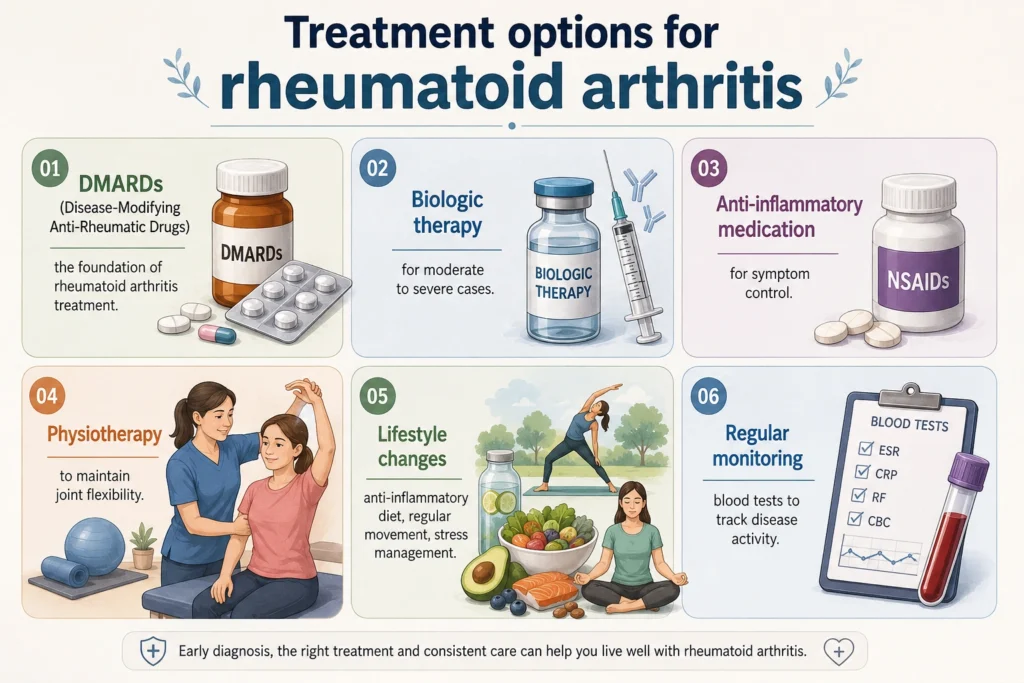
Good news: rheumatoid arthritis is manageable with the right approach.
Modern arthritis treatment focuses on three goals, reduce inflammation, protect joints, and slow disease progression.
Common treatment options include:
- DMARDs (Disease-Modifying Anti-Rheumatic Drugs), the foundation of arthritis treatment.
- Biologic therapy, for moderate to severe cases.
- Anti-inflammatory medication, for symptom control.
- Physiotherapy, to maintain joint flexibility.
- Lifestyle changes, anti-inflammatory diet, regular movement, stress management.
- Regular monitoring, blood tests to track disease activity.
There’s no one-size-fits-all plan. Rheumatoid arthritis treatment works best when it’s personalized to the patient’s symptoms and disease stage.
If you’re looking for rheumatoid arthritis treatment in Noida, early consultation with a specialist can significantly improve long-term outcomes.
Frequently Asked Questions (FAQs)
Can rheumatoid arthritis affect organs?
Yes. Rheumatoid arthritis can affect the lungs, heart, eyes, and blood vessels, not just the joints. Since it is an autoimmune disease, the inflammation can spread throughout the body if it isn’t properly controlled. Over time, this may increase the risk of breathing problems, vision issues, heart disease, and other health complications. Early diagnosis and treatment can help control inflammation and reduce the risk of these long-term effects.
What are the first symptoms of rheumatoid arthritis?
Morning stiffness lasting more than 30 minutes, joint swelling, fatigue, and pain on both sides of the body are some of the most common early symptoms of rheumatoid arthritis. These symptoms often develop gradually and may come and go at first, making them easy to overlook. If they persist for several weeks, it’s important to consult a doctor for an early evaluation.
Is rheumatoid arthritis hereditary?
Genetics can increase your risk, but rheumatoid arthritis is not directly inherited. Having a parent or sibling with the condition doesn’t mean you’ll definitely develop it. Environmental factors such as smoking, certain infections, hormonal changes, and obesity can also trigger the disease in people who are genetically more susceptible.
Can rheumatoid arthritis cause permanent disability?
If left untreated, rheumatoid arthritis can lead to joint deformity, permanent joint damage, and reduced mobility. Over time, even simple daily activities like writing, walking, or holding objects can become difficult. Early diagnosis and treatment can slow disease progression, protect the joints, and help maintain an active, independent lifestyle.
What foods should rheumatoid arthritis patients avoid?
Processed foods, excess sugar, fried foods, and high-sodium items may worsen inflammation linked to rheumatoid arthritis. While these foods don’t directly cause the condition, they can increase inflammation in the body and may make joint pain, stiffness, and swelling more difficult to manage.
How is rheumatoid arthritis diagnosed?
Diagnosis typically involves blood tests (RF and anti-CCP), inflammation markers, and imaging like X-rays or ultrasound. Your doctor will also evaluate your symptoms, medical history, and perform a physical examination to confirm the diagnosis. Early diagnosis helps start treatment sooner and reduces the risk of permanent joint damage.
Conclusion
Rheumatoid arthritis is more than joint pain. It’s a whole-body autoimmune disease that deserves early attention.
The earlier rheumatoid arthritis is diagnosed, the better the long-term outcome in best hospital in Noida.
If you’re experiencing unexplained joint stiffness, swelling, or fatigue, don’t wait it out. Get evaluated.
Rheumatoid arthritis is manageable. But only when caught early.
Struggling with joint pain or stiffness?
Don’t self-diagnose rheumatoid arthritis based on Google searches alone.
Book a consultation with our specialists for accurate diagnosis and personalized rheumatoid arthritis treatment in Noida, because your joints deserve real answers, not guesswork.