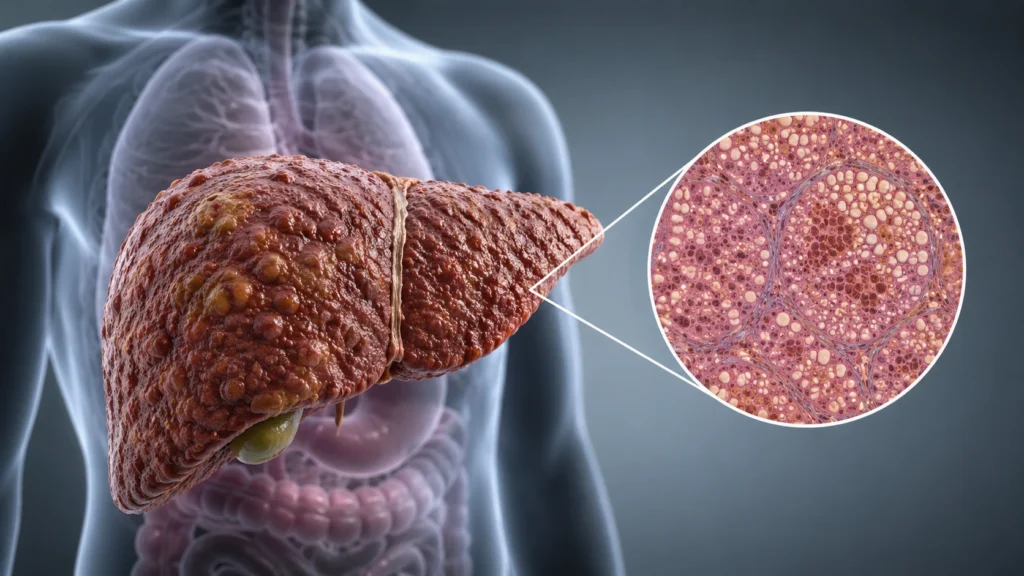
Liver cirrhosis is a serious long-term condition in which healthy liver tissue is gradually replaced by scar tissue. The liver is one of the most important organs in the body because it helps filter toxins, process nutrients, produce proteins, store energy, and support digestion. When cirrhosis develops, the liver slowly loses its ability to do these jobs properly.
This condition does not happen overnight. It usually develops over many years due to ongoing liver damage. Some people may not notice symptoms in the early stages, while others may first become aware of the condition only after they develop weakness, swelling, yellowing of the skin, fluid in the abdomen, or bleeding problems. Because cirrhosis can become severe before symptoms are obvious, early recognition is very important.
Liver cirrhosis is not a single disease. It is the final stage of many different liver problems, including chronic alcohol-related liver damage, hepatitis B, hepatitis C, fatty liver disease, autoimmune liver disease, and bile duct disorders. The good news is that while the scarring already present cannot usually be fully reversed, the progression can often be slowed or controlled if the cause is treated early. In many patients, proper treatment can also improve symptoms, prevent complications, and support a better quality of life.
Liver cirrhosis is the advanced stage of long-term liver damage. In a healthy liver, the tissue is soft, flexible, and able to carry out many essential functions. When the liver is repeatedly injured, it tries to repair itself. Over time, however, repeated injury and healing lead to scar tissue formation. This scar tissue is called fibrosis. When the scarring becomes widespread and severe, it is called cirrhosis.
As scar tissue builds up, blood flow through the liver becomes difficult, and the liver’s structure becomes distorted. This affects the liver’s ability to filter harmful substances, produce clotting factors, regulate metabolism, and help with digestion. Cirrhosis can also increase pressure in the blood vessels that supply the liver, leading to complications such as fluid buildup in the abdomen, enlarged veins in the food pipe, and splenomegaly.
Many people assume cirrhosis only happens in people who drink alcohol heavily. While alcohol is one important cause, it is not the only one. Viral hepatitis, fatty liver disease, autoimmune conditions, and inherited disorders can also cause cirrhosis. In some patients, cirrhosis develops silently and is discovered only after blood tests, scans, or complications appear.
Important points about liver cirrhosis
Cirrhosis usually develops gradually over time. The liver has a natural ability to repair itself after injury, but repeated damage overwhelms that ability. The body responds by forming scar tissue instead of healthy tissue. Initially, this scarring may be limited, but if the injury continues, the scar tissue spreads and changes the liver’s shape and function.
The process often begins with inflammation. For example, chronic hepatitis causes ongoing inflammation of the liver cells. Alcohol can directly injure liver cells. Fatty liver disease can lead to inflammation and cell injury when fat buildup becomes severe. Autoimmune diseases can also make the immune system attack the liver. Whatever the trigger, the repeated cycle of injury and healing eventually leads to fibrosis and then cirrhosis.
Once cirrhosis becomes advanced, the liver may become stiff and nodular. Blood may have trouble passing through it, leading to portal hypertension. This raises pressure in the veins around the liver and abdomen. That high pressure is responsible for many of the serious complications seen in advanced liver disease.
Stages in the disease process
Liver cirrhosis can result from many different causes. Identifying the exact cause is essential because treatment depends on it.
Common causes include:
Alcohol-related cirrhosis: Long-term heavy alcohol use can injure liver cells repeatedly. The liver becomes inflamed, fatty, and damaged over time. If drinking continues, scarring can progress to cirrhosis. The risk is higher in people who drink heavily for many years, though the exact amount needed varies from person to person.
Viral hepatitis-related cirrhosis: Hepatitis B and hepatitis C can cause chronic inflammation of the liver. Many people may not know they have the infection for years. Over time, the ongoing inflammation damages the liver and may lead to cirrhosis.
Fatty liver-related cirrhosis: Fatty liver disease is becoming increasingly common. In some patients, the condition progresses from fat buildup to inflammation, then fibrosis, and finally cirrhosis. Obesity, diabetes, high cholesterol, and sedentary lifestyle are common risk factors.
Autoimmune and bile duct-related cirrhosis: In autoimmune liver disease, the body’s immune system attacks liver tissue or bile ducts. These conditions often need long-term specialist care and regular monitoring.
Less common causes
Liver cirrhosis may be described based on cause, stage, or the way it affects the body.
Based on cause
Based on stage
Based on clinical behavior
Early cirrhosis may not cause obvious symptoms. As the disease progresses, symptoms become more noticeable.
Common symptoms include:
Symptoms in compensated cirrhosis: In early or compensated cirrhosis, a patient may feel only mild fatigue, bloating, or reduced appetite. Some people are diagnosed only after a routine blood test or ultrasound shows liver changes.
Symptoms in decompensated cirrhosis
When cirrhosis becomes advanced, the symptoms can include:
Other possible signs
Cirrhosis can affect many parts of the body because the liver is involved in so many functions.
Common complications include:
Portal hypertension: Scar tissue blocks normal blood flow through the liver. This raises pressure in the portal vein system. As a result, blood may be redirected through smaller veins that are not designed to carry such high pressure. These veins may enlarge and burst.
Ascites: When fluid accumulates in the abdomen, the stomach becomes swollen and uncomfortable. This can make breathing, eating, and moving around difficult. Ascites may also be a sign that the cirrhosis has become decompensated.
Hepatic encephalopathy: When the liver cannot remove toxins properly, they may affect the brain. A person may become confused, sleepy, forgetful, or irritable. In severe cases, they may become difficult to awaken or may develop altered consciousness.
Variceal bleeding: Bleeding from swollen veins in the esophagus or stomach is a medical emergency. It may cause vomiting of blood, black stools, dizziness, or collapse. This needs urgent hospital care.
Diagnosis is based on symptoms, examination, blood tests, and imaging. In some cases, additional tests or biopsy may be needed.
History and examination
The doctor may ask about:
The physical examination may look for:
Blood tests
Blood tests help assess liver function and identify the cause of disease.
Imaging tests
Additional tests
Early diagnosis helps the medical team:
Treatment depends on the cause, the stage of disease, and whether complications are present. The goal is to stop further damage, manage symptoms, prevent complications, and improve quality of life.
1. Treat the underlying cause
This is the most important step.
2. Lifestyle changes
Lifestyle changes can make a major difference, especially in early or compensated cirrhosis.
3. Medicines
Medicines may be used to control complications or treat the root cause.
4. Treatment of ascites
If fluid accumulates in the abdomen, treatment may include:
5. Treatment of varices
Swollen veins in the esophagus or stomach may be managed by:
6. Treatment of hepatic encephalopathy
Confusion due to liver failure is treated by reducing toxin buildup.
7. Nutritional support
Nutrition is very important in cirrhosis.
8. Liver transplant
For advanced cirrhosis where the liver can no longer function adequately, liver transplant may be the best option. This is considered when complications are repeated, liver function is severely reduced, or the risk of death becomes high without transplant.
Supportive care helps patients live more comfortably and safely.
Supportive care may include:
Daily care tips
Diet plays a major role in managing cirrhosis.
General diet
Foods that may be helpful
Foods to limit
Diet plans should be individualized, especially if the patient has ascites, encephalopathy, diabetes, or kidney disease.
A person should seek medical evaluation if they have:
Not all forms of cirrhosis can be prevented, but many can be reduced by protecting the liver early.
Prevention tips
Prevention in people with fatty liver risk
Liver cirrhosis requires careful long-term management. A hospital setting is important because patients may need diagnostic testing, medication adjustment, emergency care, nutrition support, and follow-up for complications.
Liver cirrhosis is advanced scarring of the liver that develops after long-term damage. It affects how well the liver works and can lead to complications if not managed properly.
The scar tissue already present usually cannot be fully reversed, but progression can often be slowed or controlled. Treating the cause and managing complications can make a big difference.
Early signs may include fatigue, poor appetite, weakness, and mild abdominal discomfort. Some people notice no symptoms until the disease is more advanced.
No. Alcohol is one cause, but hepatitis B, hepatitis C, fatty liver disease, autoimmune conditions, and bile duct disorders can also cause cirrhosis.
Not always. Some patients have no pain at all, especially in the early stages. Others may feel discomfort, fullness, or pain from swelling and complications.
No. Many patients can be treated without transplant, especially if the disease is caught early. Transplant is usually considered only in advanced or decompensated cirrhosis.
Yes. A proper diet supports strength, reduces complications, and helps recovery. However, diet should be personalized based on the patient’s condition and doctor’s advice.
It is dangerous because it can affect liver function, blood flow, clotting, digestion, and brain function. Severe complications can become life-threatening without treatment.
Liver cirrhosis is a serious chronic liver condition, but it does not mean the end of treatment or support. The most important thing is early identification of the cause, strict control of the injury, and regular monitoring for complications. Many patients can live better and more stable lives when cirrhosis is managed properly and when the liver is protected from further harm.
If you have symptoms such as jaundice, swelling, fatigue, poor appetite, bleeding, or confusion, it is important to seek medical evaluation without delay. Patients with known hepatitis, fatty liver disease, alcohol-related liver injury, or other liver disorders should also have regular follow-up so the condition does not progress silently.
With timely care, specialist guidance, and lifestyle discipline, the risks of cirrhosis can often be reduced. Rama Hospital can help with evaluation, treatment, complication management, and long-term liver care for patients and families who need support.

Cirrhosis of the liver is permanent scarring that damages your liver and interferes with its functioning. It can lead to liver failure.
No rows found.