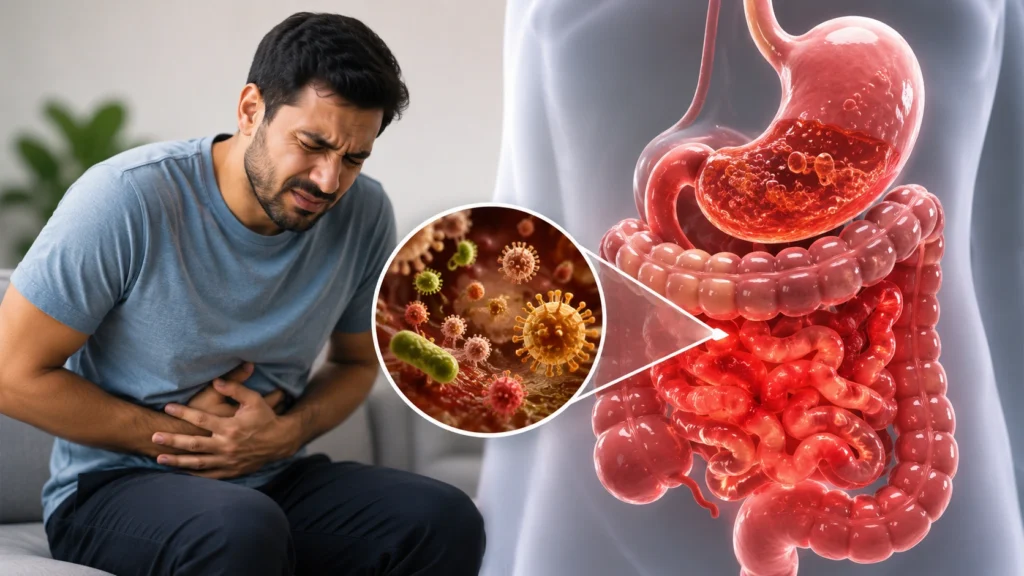
Gastroenteritis is one of the most common causes of sudden stomach illness in children and adults. Most people know it as a “stomach infection,” “stomach flu,” or “food poisoning,” although the exact cause can be different in each case. It usually leads to diarrhea, vomiting, abdominal cramps, nausea, fever, weakness, and dehydration. In many cases, it improves on its own with rest and fluids. But in some patients, especially young children, older adults, pregnant women, and people with weak immunity, gastroenteritis can become serious quickly.
This condition matters because it affects digestion, hydration, energy levels, and the body’s ability to function normally. A person with gastroenteritis may be unable to eat, drink, or even keep fluids down. If dehydration becomes severe, the person may need urgent medical treatment. That is why it is important to understand the early signs, the possible causes, and the correct treatment approach.
What is gastroenteritis?
Gastroenteritis is an inflammation of the stomach and intestines. The word “gastro” refers to the stomach, “entero” refers to the intestines, and “itis” means inflammation. When the lining of the stomach or intestines becomes irritated or infected, a person may develop diarrhea, vomiting, nausea, stomach pain, and fever.
The condition is often caused by viruses, bacteria, or parasites. Sometimes it can happen after eating contaminated food or drinking unsafe water. In other cases, it spreads from one person to another through poor hand hygiene, shared utensils, contaminated surfaces, or close contact with someone who is already infected.
Although many people recover within a few days, the biggest risk of gastroenteritis is dehydration. When the body loses too much fluid through diarrhea and vomiting, the patient may become weak, dizzy, confused, or unable to pass urine properly. Severe dehydration can be dangerous and requires immediate medical care.
Types of gastroenteritis
Gastroenteritis can be classified in different ways depending on the cause, duration, and severity of symptoms.
Based on cause
- Viral gastroenteritis, which is caused by viruses such as rotavirus, norovirus, adenovirus, or astrovirus.
- Bacterial gastroenteritis, which is caused by bacteria such as Salmonella, Shigella, E. coli, Campylobacter, or Vibrio.
- Parasitic gastroenteritis, which is caused by parasites such as Giardia or Entamoeba histolytica.
- Non-infectious gastroenteritis, which may happen due to food intolerance, irritation, certain medicines, or inflammation of the bowel.
Based on duration
- Acute gastroenteritis, which starts suddenly and usually lasts a few days to a week.
- Persistent gastroenteritis, which lasts longer than usual and may need more evaluation.
- Chronic digestive infection-like symptoms, which may suggest another underlying problem if symptoms keep returning.
Based on severity
- Mild gastroenteritis, where the patient has loose stools, nausea, and mild stomach upset but can still drink fluids.
- Moderate gastroenteritis, where vomiting and diarrhea are more frequent and weakness becomes noticeable.
- Severe gastroenteritis, where dehydration, reduced urination, severe weakness, or blood in stool may appear.
Causes of gastroenteritis
Gastroenteritis has many possible causes, but infection is the most common. Understanding the cause helps guide treatment.
Common causes include:
- Viral infection from contaminated hands, food, or surfaces.
- Bacterial infection after eating undercooked meat, contaminated food, or unsafe water.
- Parasitic infection from poor sanitation or contaminated drinking water.
- Food poisoning caused by toxins produced by bacteria in food.
- Poor hygiene, especially before eating or preparing food.
- Travel to places with unsafe water or food hygiene.
- Shared items and close contact with an infected person.
- Overuse or side effects of certain medicines.
- Food intolerance or sensitivity in some people.
- Weak immune system that makes infections more likely.
Common sources of infection
- Unwashed fruits and vegetables.
- Unclean water or ice.
- Street food prepared in unsafe conditions.
- Raw or undercooked meat, eggs, or seafood.
- Contaminated surfaces in kitchens, schools, daycare centers, or shared households.
- Close contact with someone who has vomiting or diarrhea.
How gastroenteritis spreads?
Gastroenteritis spreads very easily, especially in homes, schools, offices, hostels, hospitals, and public spaces. Some viral forms are highly contagious and can spread even before the patient feels very sick. That is why handwashing and hygiene are so important.
It can spread through:
- Touching contaminated surfaces and then touching the mouth.
- Eating food handled by infected or unwashed hands.
- Drinking contaminated water.
- Sharing towels, utensils, or cups with an infected person.
- Coughing, sneezing, or vomiting droplets in some viral infections.
- Poor sanitation and unsafe disposal of waste.
Symptoms of gastroenteritis
Symptoms can be mild or severe depending on the cause and the patient’s age and overall health.
Common symptoms include:
- Loose stools or diarrhea.
- Vomiting.
- Nausea.
- Stomach cramps.
- Bloating or abdominal discomfort.
- Fever.
- Weakness.
- Loss of appetite.
- Headache.
- Body aches.
- Chills.
- Dehydration.
Signs of dehydration
- Dry mouth or dry tongue.
- Thirst.
- Less urine than usual.
- Dark-colored urine.
- Dizziness.
- Fatigue.
- Sunken eyes.
- Irritability.
- Weak pulse in severe cases.
Warning signs that need medical attention
- Blood in stool or vomit.
- High fever.
- Severe stomach pain.
- Continuous vomiting.
- Inability to drink fluids.
- Signs of severe dehydration.
- Confusion or unusual sleepiness.
- Symptoms lasting more than a few days.
- Severe weakness or fainting.
Gastroenteritis in children
Children are at higher risk of dehydration because they lose fluids quickly and may not be able to explain how they feel.
Common signs in children
- Frequent loose stools.
- Vomiting after feeds.
- Fever.
- Crying without tears.
- Reduced activity.
- Dry lips or mouth.
- Fewer wet diapers.
- Irritability.
- Tiredness.
- Refusal to eat or drink.
Why it can be serious in children: Small children lose fluids quickly, and even a short illness can lead to dehydration. If not treated on time, they may require oral rehydration, medical monitoring, or hospital care. Parents should never ignore repeated vomiting or a child who is refusing fluids.
Gastroenteritis in Adults
Adults usually recover faster than children, but the illness can still be troublesome and sometimes serious.
Adults may experience:
- Sudden diarrhea.
- Nausea and vomiting.
- Lower abdominal cramps.
- Weakness.
- Fever.
- Reduced appetite.
- Dizziness when standing.
- Missed work or reduced energy.
Higher-risk adult groups
- Elderly people.
- Pregnant women.
- People with diabetes.
- People with kidney disease.
- People with weakened immunity.
- Patients taking medicines that affect fluid balance.
How is gastroenteritis diagnosed?
Most mild cases are diagnosed based on symptoms and history. However, if the illness is severe, prolonged, or unusual, a doctor may order tests.
Diagnosis usually includes:
- Review of symptoms.
- Medical history.
- Recent food and water exposure.
- Travel history.
- Examination for dehydration.
- Checking temperature, pulse, and blood pressure.
Tests that may be done if needed
- Stool test to look for infection.
- Stool culture to identify bacteria.
- Blood tests to check dehydration or infection.
- Electrolyte tests to assess salt balance.
- Sugar test if weakness or confusion is present.
- Urine test to assess hydration.
- Sometimes imaging or further testing if abdominal pain is severe or diagnosis is unclear.
When tests are more likely
- Blood in stool.
- High fever.
- Persistent symptoms.
- Severe dehydration.
- Recent travel.
- Immunocompromised patient.
- Outbreak in family or institution.
Treatment for gastroenteritis
Treatment depends on the cause and the severity of symptoms. In many cases, the main goal is to replace fluids and allow the body to recover.
1. Rehydration
The most important treatment is hydration. The body loses a lot of water and electrolytes during vomiting and diarrhea, so fluids must be replaced early.
- Oral rehydration solution is often the first choice.
- Small sips are better than large amounts at once.
- Water alone may not be enough if fluid loss is significant.
- In severe cases, IV fluids may be required.
2. Rest
The body needs rest while fighting the infection. Too much activity can worsen weakness and delay recovery.
- Avoid strenuous activity.
- Sleep adequately.
- Do not force yourself to work or travel if you are very weak.
3. Diet support
Food may need to be changed temporarily depending on tolerance.
- Start with light, easy-to-digest foods.
- Eat small meals.
- Avoid oily, spicy, heavy, or very sugary foods initially.
- Return to normal food slowly as symptoms improve.
4. Medicines
Medicines may be used depending on the cause and symptoms.
- Anti-vomiting medicines may help when vomiting is severe.
- Fever medicines may be given if fever is present.
- Antibiotics are only used when a bacterial cause is confirmed or strongly suspected.
- Antiparasitic treatment may be needed for parasitic infection.
- Probiotic support may be suggested in some cases.
- Medicines to slow diarrhea should only be used under medical advice.
5. Hospital care if needed
Some patients need admission, especially if they are dehydrated or unable to drink.
- IV fluids may be given.
- Electrolytes may be corrected.
- The patient may be monitored for urine output and vital signs.
- Children and elderly patients may need closer observation.
Home care for mild gastroenteritis
Many mild cases can be managed at home with careful support.
Helpful home care steps
- Drink oral rehydration solution.
- Take small sips frequently.
- Rest as much as possible.
- Eat simple foods when tolerated.
- Wash hands regularly.
- Avoid preparing food for others until recovered.
- Clean bathroom surfaces properly.
- Separate towels and utensils if someone else in the home is sick.
Foods that are usually easier to tolerate
- Plain rice.
- Khichdi.
- Toast.
- Banana.
- Applesauce.
- Plain curd if tolerated.
- Boiled potatoes.
- Soup.
- Light porridge.
Foods to avoid initially
- Fried food.
- Very spicy food.
- Heavy cream-based dishes.
- Alcohol.
- Too much caffeine.
- Sugary soft drinks.
- Raw food or street food during recovery.
Diet advice during recovery after gastroenteritis
Food should be introduced slowly and based on tolerance.
Recovery diet pointers
- Begin with fluids first.
- Move to bland, soft foods when vomiting reduces.
- Increase portion size gradually.
- Eat only what the stomach can tolerate.
- Return to normal diet once stools improve and appetite returns.
Good hydration choices
- Oral rehydration solution.
- Coconut water if tolerated.
- Clear soups.
- Water in small frequent sips.
Diet caution: Some patients believe they should stop all food during gastroenteritis. That is not always correct. In many cases, light food helps maintain energy and supports recovery. The choice depends on the patient’s symptoms and medical advice.
Possible complications in gastroenteritis
Most patients recover without problems, but complications can occur when dehydration or infection becomes severe.
Complications may include:
- Dehydration.
- Electrolyte imbalance.
- Weakness and exhaustion.
- Kidney stress.
- Fainting.
- Low blood pressure.
- Severe infection in rare cases.
- Malnutrition if illness persists.
- Worsening of existing medical conditions.
In children, complications may include:
- Rapid dehydration.
- Seizure in severe electrolyte imbalance.
- Reduced feeding.
- Hospitalization if fluid loss is severe.
In older adults, complications may include:
- Falls due to dizziness.
- Worsening of heart or kidney disease.
- Confusion due to dehydration.
- Faster physical decline.
When should you see a doctor?
Not every case of gastroenteritis needs hospital treatment, but some symptoms should never be ignored.
- Diarrhea lasts more than a few days.
- Vomiting is repeated or severe.
- There is blood in stool or vomit.
- The patient cannot keep fluids down.
- Fever is high or persistent.
- Stomach pain is severe.
- The patient becomes weak or dizzy.
- Urine output is reduced.
- A child is refusing fluids.
- An elderly person seems confused or very weak.
Prevention of gastroenteritis
Preventing gastroenteritis is possible in many cases through hygiene, safe food practices, and proper vaccination where appropriate.
Prevention pointers
- Wash hands before eating and after using the toilet.
- Drink safe and clean water.
- Eat freshly prepared food.
- Avoid undercooked meat, eggs, and seafood.
- Wash fruits and vegetables thoroughly.
- Keep kitchen surfaces clean.
- Do not share utensils or towels with an infected person.
- Dispose of waste safely.
- Stay home when sick to avoid spreading infection.
- Ensure good sanitation in homes and workplaces.
For children
- Follow vaccination advice where available.
- Teach handwashing habits early.
- Keep feeding bottles and utensils clean.
- Avoid unsafe street food.
For travelers
- Drink bottled or treated water if needed.
- Be careful with raw food.
- Prefer well-cooked meals.
- Carry oral rehydration solution if traveling to areas with limited healthcare access.
Why choose Rama Hospital for gastroenteritis care?
When gastroenteritis is mild, home care may be enough. But when symptoms are severe, repeated, or affecting hydration, a hospital evaluation becomes important. A hospital can identify whether the illness is viral, bacterial, parasitic, or related to another medical problem.
- Expert assessment of digestive symptoms.
- Safe treatment for dehydration.
- Laboratory testing when needed.
- Support for children, adults, and elderly patients.
- Emergency care for severe vomiting or diarrhea.
- Monitoring for infection and electrolyte imbalance.
- Guidance on diet, medicines, and recovery.
- Care that focuses on both treatment and prevention of recurrence.
Frequently Asked Questions (FAQs)
1. What is gastroenteritis?
Gastroenteritis is inflammation of the stomach and intestines, usually caused by an infection. It often leads to diarrhea, vomiting, stomach cramps, and dehydration. Many people call it a stomach infection or stomach flu.
2. Is gastroenteritis the same as food poisoning?
Not always. Food poisoning is one possible cause of gastroenteritis, but gastroenteritis can also be caused by viruses, bacteria, or parasites. The symptoms may look similar, so medical evaluation may be needed in severe cases.
3. How long does gastroenteritis last?
Most mild cases improve within a few days. Some infections may last longer, especially if the cause is bacterial or parasitic, or if the patient is not able to stay hydrated properly.
4. Can gastroenteritis be treated at home?
Yes, mild cases often improve with rest, fluids, and light food. However, if the patient cannot drink, has high fever, blood in stool, or signs of dehydration, medical care is important.
5. What is the best drink for gastroenteritis?
Oral rehydration solution is usually the best choice because it replaces both fluid and electrolytes. Water, soups, and other clear fluids may also help, but ORS is especially useful when there is frequent diarrhea or vomiting.
6. Can children get gastroenteritis easily?
Yes, children are more vulnerable because their bodies lose fluids faster. They can become dehydrated quickly, so parents should watch for reduced urination, dry mouth, sleepiness, or refusal to drink.
7. When are antibiotics needed?
Antibiotics are not needed for every case. They are used only when a bacterial infection is confirmed or strongly suspected. Viral gastroenteritis does not improve with antibiotics.
8. How can I prevent gastroenteritis?
Good hand hygiene, safe food, clean water, and proper sanitation are the best preventive steps. Avoiding contaminated food and contact with infected people also helps reduce the risk.
Conclusion
Gastroenteritis is a very common digestive illness, but it should still be taken seriously, especially in young children, elderly patients, and anyone who becomes dehydrated quickly. Most cases are caused by infection and improve with rest, fluids, and supportive care. However, some cases can become severe and need medical attention.
The key to managing gastroenteritis is early recognition, proper hydration, and timely evaluation when warning signs appear. If symptoms are severe, prolonged, or associated with blood in stool, high fever, or weakness, a doctor should assess the patient without delay. With the right care, most people recover fully and return to normal health.
Rama Hospital can provide evaluation, treatment, and supportive care for gastroenteritis, along with guidance on diet, hydration, and prevention to reduce the risk of recurrence.