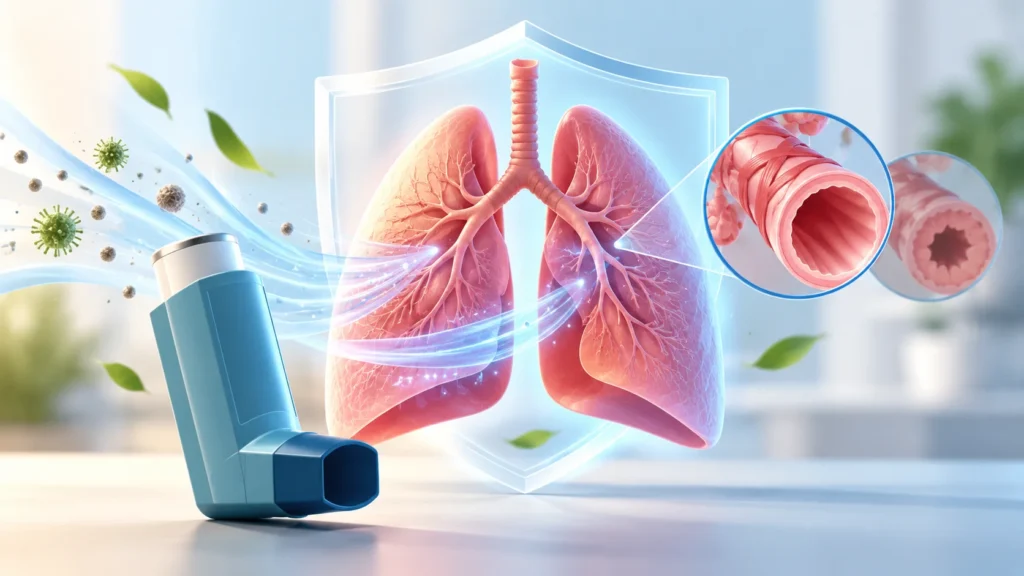
Asthma is a long-term condition that affects the airways in the lungs. In people with asthma, the airways become inflamed, narrow, and overly sensitive to certain triggers. This leads to symptoms such as wheezing, breathlessness, chest tightness, coughing, and difficulty breathing. Asthma can affect people of any age, from young children to older adults, and its severity can vary from mild to severe.
The good news is that the symptoms can be managed very effectively with the right treatment plan. Most people with asthma can live normal, active lives if they understand their condition, use their medicines correctly, avoid triggers, and follow up regularly with their doctor. The goal of symptoms management is not just to control symptoms but also to prevent attacks, protect lung function, and improve quality of life.
What is Asthma?
This is a chronic inflammatory condition of the airways. In a healthy person, air moves freely through the bronchial tubes into the lungs. In the symptoms, these tubes become inflamed and swollen, and the muscles around them tighten. This makes the airways narrower, making it harder for air to flow in and out.
The symptoms can come and go. Some people have symptoms only during exercise or at night, while others have frequent symptoms throughout the day. This can also worsen during infections, exposure to allergens, or changes in weather.
Although the symptoms cannot be cured, it can be controlled. With proper treatment, most people with the symptoms can breathe normally, sleep well, exercise, and carry out daily activities without limitation.
Types of Asthma
This can be classified in different ways based on triggers, severity, and pattern of symptoms.
Based on triggers
- Allergic asthma, which is triggered by allergens such as dust, pollen, mold, or pet dander.
- Non-allergic asthma, which is triggered by factors such as cold air, exercise, stress, or infections.
- Exercise-induced asthma, which occurs during or after physical activity.
- Occupational asthma, which is triggered by workplace irritants such as chemicals, dust, or fumes.
- Cough-variant asthma, where the main symptom is a persistent dry cough rather than wheezing.
Based on severity
- Mild intermittent asthma, where symptoms occur less than twice a week.
- Mild persistent asthma, where symptoms occur more than twice a week but not daily.
- Moderate persistent asthma, where symptoms occur daily and may affect activity.
- Severe persistent asthma, where symptoms are frequent and may not respond well to standard treatment.
Based on control level
- Well-controlled asthma, where symptoms are minimal and lung function is stable.
- Partially controlled asthma, where symptoms occur more often than desired.
- Uncontrolled asthma, where symptoms are frequent, and there is risk of attacks or lung function decline.
Causes and Risk Factors of Asthma
The exact cause of the symptoms is not fully known, but it results from a combination of genetic and environmental factors.
Common causes and contributing factors
- Family history of the symptoms or allergies.
- Childhood exposure to allergens such as dust mites, pollen, or pet dander.
- Respiratory infections in early childhood.
- Exposure to tobacco smoke, especially in childhood.
- Air pollution and environmental irritants.
- Obesity, which can worsen the symptoms control.
- Certain occupational exposures.
- Stress and strong emotions.
- Cold air or sudden weather changes.
- Use of certain medicines such as aspirin or NSAIDs in some people.
Why the airways become sensitive
In the symptoms, the immune system overreacts to certain triggers. This causes inflammation, swelling, and increased mucus production in the airways. The muscles around the airways also tighten, making the tubes narrower. Over time, repeated inflammation can make the airways more sensitive and prone to symptoms.
Common Asthma Triggers
Identifying and avoiding triggers is a key part of symptoms management.
Common triggers include:
- Dust mites in bedding, carpets, or upholstery.
- Pollen from trees, grass, or weeds.
- Mold and dampness.
- Pet dander from cats, dogs, or birds.
- Tobacco smoke, including secondhand smoke.
- Air pollution and smog.
- Cold air or sudden weather changes.
- Respiratory infections such as cold or flu.
- Exercise, especially in cold or dry air.
- Strong smells such as perfumes, paints, or cleaning agents.
- Stress, anxiety, or strong emotions.
- Certain medicines such as aspirin or NSAIDs.
Why trigger control matters
Avoiding or reducing exposure to triggers can significantly reduce symptoms and the need for medication. It also lowers the risk of the symptoms attacks and helps improve overall control.
Symptoms of Asthma
The symptoms can vary from person to person and may change over time.
Common symptoms include:
- Wheezing, which is a whistling sound while breathing.
- Shortness of breath.
- Chest tightness or discomfort.
- Coughing, especially at night or early morning.
- Difficulty sleeping due to breathing problems.
- Fatigue or reduced exercise tolerance.
- Rapid breathing during flare-ups.
Symptoms of worsening asthma
- Increased frequency of symptoms.
- More need for rescue inhaler.
- Waking at night due to cough or breathlessness.
- Reduced ability to do daily activities.
- Decreased peak flow readings.
- Increased use of reliever medication.
Emergency warning signs
- Severe breathlessness even at rest.
- Difficulty speaking full sentences.
- Blue lips or fingernails.
- Confusion or drowsiness.
- No improvement after using rescue inhaler.
- Rapid worsening of symptoms.
How is Asthma Diagnosed?
Diagnosis is based on symptoms, medical history, physical examination, and lung function tests.
Diagnostic steps
- Detailed history of symptoms and triggers.
- Family history of asthma or allergies.
- Physical examination, including listening to the lungs.
- Assessment of symptom pattern and frequency.
- Lung function tests to measure airflow.
- Allergy testing if allergic asthma is suspected.
Common tests that may be done
- Spirometry, which measures how much air you can exhale and how quickly.
- Peak flow measurement, which tracks airflow at home.
- Bronchodilator response test, which checks if symptoms improve after using a reliever inhaler.
- Allergy skin or blood tests to identify triggers.
- Chest X-ray in some cases to rule out other conditions.
- FeNO test to measure airway inflammation.
Why diagnosis matters
Accurate diagnosis helps confirm the symptoms, assess severity, and rule out other conditions such as COPD, reflux, or heart problems. It also guides the right treatment plan and helps monitor control over time.
Treatment for Asthma
The treatment aims to control symptoms, prevent attacks, and maintain normal lung function. Treatment is usually long-term and involves a combination of medicines, trigger avoidance, and lifestyle measures.
1. Inhaled corticosteroids
These are the most important long-term control medicines for the symptoms.
- Reduce inflammation in the airways.
- Prevent symptoms and attacks.
- Improve lung function over time.
- Usually taken daily, even when feeling well.
- Have fewer side effects than oral steroids because they act directly in the lungs.
2. Long-acting bronchodilators
These medicines help keep the airways open for a longer time.
- Often combined with inhaled corticosteroids.
- Taken daily for long-term control.
- Should not be used alone without steroid in most cases.
- Help reduce nighttime symptoms and improve exercise tolerance.
3. Reliever inhalers
These are short-acting medicines used for quick relief during symptoms.
- Provide rapid opening of the airways.
- Used during the symptoms attacks or before exercise.
- Should not be overused.
- Increased need for reliever indicates poor control.
4. Combination inhalers
These contain both a steroid and a long-acting bronchodilator in one device.
- Simplify treatment.
- Improve adherence.
- Provide both anti-inflammatory and bronchodilator effect.
- Commonly used in moderate to severe asthma.
5. Oral medicines
In some cases, oral medicines may be used.
- Leukotriene modifiers, which help reduce inflammation.
- Theophylline, which helps open airways.
- Oral steroids, which are used short-term during severe flare-ups.
- Biologic therapies for severe allergic or eosinophilic asthma.
6. Allergy treatment
For allergic asthma, treating allergies can improve control.
- Allergen avoidance.
- Antihistamines for associated allergy symptoms.
- Immunotherapy or allergy shots in selected cases.
- Regular follow-up with allergy specialist if needed.
Asthma Action Plan
An asthma action plan is a written plan that helps patients manage their condition day to day and during flare-ups.
What it includes
- Daily medicines and when to take them.
- How to recognize worsening symptoms.
- When to use rescue inhaler.
- When to seek medical help.
- Peak flow readings and what they mean.
- Emergency contact numbers.
Why it matters
Having a clear plan reduces panic during symptoms, helps patients act early, and prevents severe attacks. It also improves communication between patient and doctor.
Lifestyle Measures for Asthma Control
Lifestyle plays a big role in symptoms management.
Helpful habits
- Take medicines regularly as prescribed.
- Avoid smoking and secondhand smoke.
- Maintain a healthy weight.
- Exercise regularly, with warm-up and precautions.
- Manage stress through relaxation or breathing exercises.
- Get enough sleep.
- Keep indoor air clean and well-ventilated.
- Use dust-proof covers on bedding.
- Wash bedding regularly in hot water.
- Avoid strong smells and irritants.
Exercise and asthma
Exercise is important for overall health and can be safe for most people with asthma.
- Warm up before exercise.
- Use reliever inhaler before exercise if advised.
- Avoid exercising in cold, dry air.
- Choose activities that are well tolerated.
- Stop and rest if symptoms occur.
Managing Asthma Attacks
Despite good control, the major symptoms attacks can happen. Knowing what to do is important.
Steps during an asthma attack
- Stay calm and sit upright.
- Use rescue inhaler as prescribed.
- Loosen tight clothing.
- Breathe slowly and steadily.
- Seek medical help if symptoms do not improve.
- Follow the asthma action plan.
When to seek emergency care
- No improvement after using rescue inhaler.
- Severe breathlessness.
- Difficulty speaking.
- Blue lips or fingers.
- Confusion or drowsiness.
- Rapid worsening.
Long-Term Follow-Up
This is a long-term condition that needs regular monitoring.
Follow-up includes:
- Regular review of symptoms.
- Assessment of inhaler technique.
- Lung function tests.
- Review of trigger control.
- Adjustment of medicines if needed.
- Education about self-management.
Why follow-up matters
Regular follow-up helps catch worsening control early, adjust treatment, and prevent severe attacks. It also helps patients stay confident and informed about their condition.
Possible Complications
Poorly controlled the symptoms can lead to complications.
Complications may include:
- Frequent asthma attacks.
- Reduced lung function over time.
- Hospitalization.
- Missed work or school.
- Poor sleep and fatigue.
- Anxiety or depression.
- Side effects from overuse of reliever medicines.
- Severe, life-threatening attacks.
Why complications happen
When the symptoms is not controlled, inflammation continues and airways become more sensitive. This leads to more frequent and severe symptoms. Long-term inflammation can also cause permanent changes in the airways.
When to See a Doctor
Medical review is important for anyone with the symptoms.
- Frequent wheezing or cough.
- Shortness of breath during daily activities.
- Nighttime symptoms.
- Increased use of rescue inhaler.
- Symptoms not controlled with current medicines.
- New triggers or worsening symptoms.
Prevention of Asthma Attacks
Prevention is a key part of symptoms management.
Prevention pointers
- Take controller medicines daily as prescribed.
- Identify and avoid triggers.
- Keep home clean and dust-free.
- Avoid smoke and strong smells.
- Get flu and pneumonia vaccinations as advised.
- Follow asthma action plan.
- Attend regular follow-up.
- Use inhaler correctly.
For children with asthma
- Teach proper inhaler use.
- Inform school about the condition.
- Keep rescue inhaler accessible.
- Monitor symptoms during sports or infections.
Why Choose Rama Hospital for Asthma Management?
The symptoms management requires accurate diagnosis, personalized treatment, and ongoing support. A hospital with experienced pulmonologists, allergy specialists, and respiratory therapists can make a major difference in outcomes.
- Expert evaluation by pulmonology and allergy specialists.
- Advanced lung function testing.
- Personalized treatment plans.
- Education on inhaler technique and trigger control.
- Emergency care for severe attacks.
- Long-term follow-up and monitoring.
Frequently Asked Questions (FAQs)
Can asthma be cured?
The symptoms cannot be cured, but it can be controlled very effectively. With the right medicines and lifestyle measures, most people live normal, active lives.
What are common symptoms triggers?
Common triggers include dust, pollen, smoke, cold air, exercise, infections, and strong smells. Identifying personal triggers helps reduce symptoms and prevent attacks.
How are inhalers used in major symptoms?
Inhalers deliver medicine directly to the lungs. Controller inhalers reduce inflammation and are used daily, while reliever inhalers provide quick relief during symptoms.
What is an asthma action plan?
An asthma action plan is a written guide that tells you what medicines to take daily, how to recognize worsening symptoms, and when to seek help. It helps manage the symptoms safely at home.
Can exercise worsen the symptoms?
Exercise can trigger symptoms in some people, but with proper warm-up and pre-exercise inhaler use, most people can exercise safely. Regular activity is important for overall health.
When should I seek emergency care for the symptoms?
Seek emergency care if there is severe breathlessness, difficulty speaking, blue lips, confusion, or no improvement after using rescue inhaler. These are signs of a severe attack.
How often should I follow up for the symptoms?
Regular follow-up is important, usually every few months or sooner if symptoms worsen. Follow-up helps adjust treatment, check inhaler technique, and monitor lung function.
Conclusion
This is a common but manageable condition that affects the airways and can cause wheezing, breathlessness, and coughing. With proper diagnosis, regular use of controller medicines, trigger avoidance, and a clear action plan, most people with the symptoms can live full and active lives.
The most important steps are understanding your triggers, using inhalers correctly, following your treatment plan, and attending regular follow-up. For patients with frequent symptoms, poor control, or severe attacks, expert medical care can make a major difference.
Rama Hospital can help evaluate the symptoms, create a personalized management plan, and provide ongoing support to help patients breathe easier and live better.