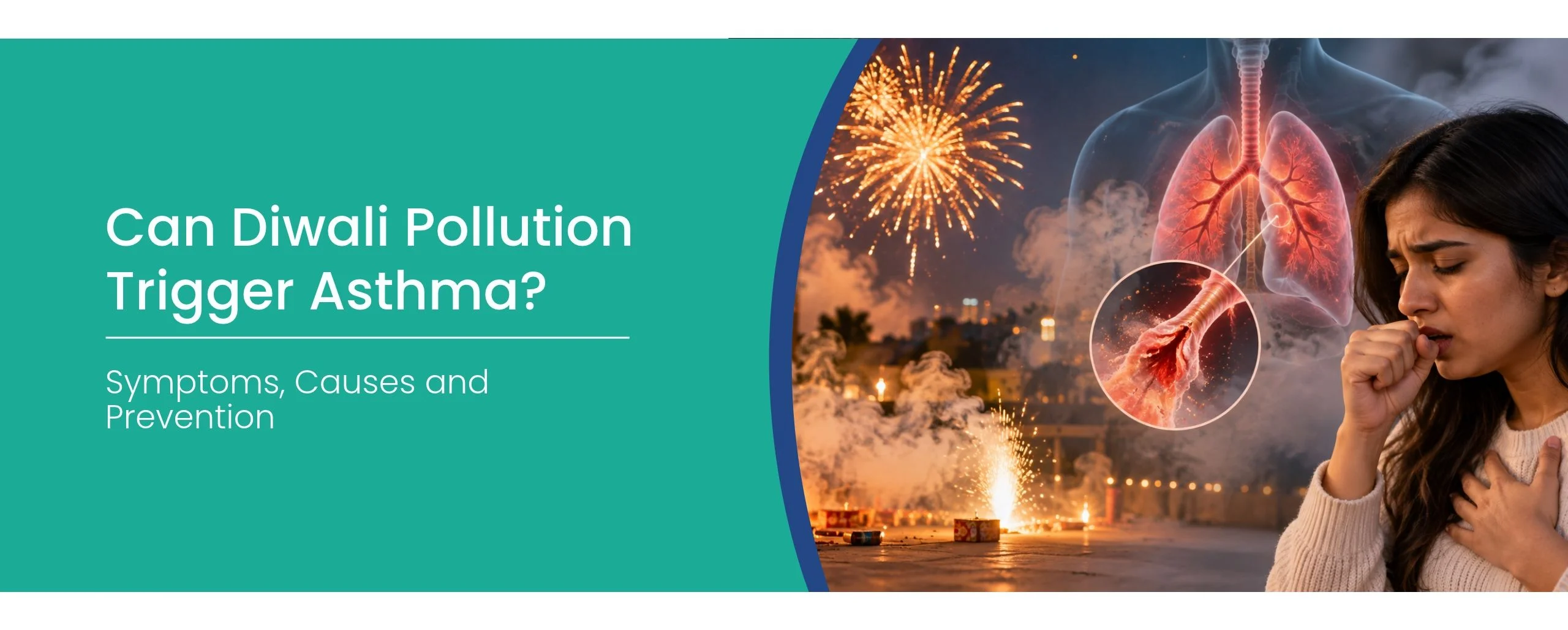
Diwali is a time for family gatherings, festive lights and celebrations. However, the smoke released by firecrackers, combined with existing air pollution, can make breathing difficult for people with asthma and other respiratory conditions.
For some people, the effects may begin with a mild cough or throat irritation. For others, particularly those with asthma, exposure to polluted air can trigger wheezing, chest tightness and sudden breathing difficulty. Children, older adults and people with existing lung conditions may need extra precautions during periods of poor air quality.
The connection between Diwali pollution and asthma is especially important in Delhi-NCR, where seasonal air pollution can coincide with the festive period. Smoke exposure may aggravate existing asthma, even in people whose symptoms are usually well controlled.
What Is Asthma?
Asthma is a chronic respiratory condition in which the airways become inflamed and sensitive to certain triggers. The muscles around these airways may tighten, the lining can swell, and mucus production may increase. Together, these changes make it harder for air to move in and out of the lungs.
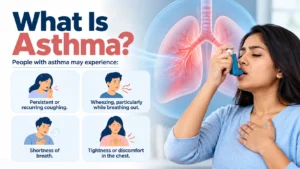
People with asthma may experience:
- Persistent or recurring coughing.
- Wheezing, particularly while breathing out.
- Shortness of breath.
- Tightness or discomfort in the chest.
Symptoms can vary from person to person. Some people experience occasional episodes, while others require regular treatment to keep their condition under control. Asthma can affect both children and adults.
Why are people with asthma sensitive to pollution?
In people with asthma, the airways can react strongly to substances that irritate the respiratory system. Smoke and airborne pollutants can increase airway inflammation and trigger an asthma flare-up.
This explains why Diwali pollution and asthma can become a concern even after relatively brief exposure to heavy smoke. The response depends on factors such as the person’s asthma control, existing sensitivity, duration of exposure and the concentration of pollutants in the air.
Pollution does not affect everyone in the same way. A person without asthma may experience eye, nose or throat irritation, while someone with asthma may develop more significant respiratory symptoms.
How Does Diwali Pollution Trigger Asthma?
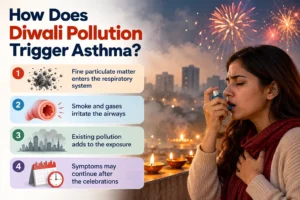
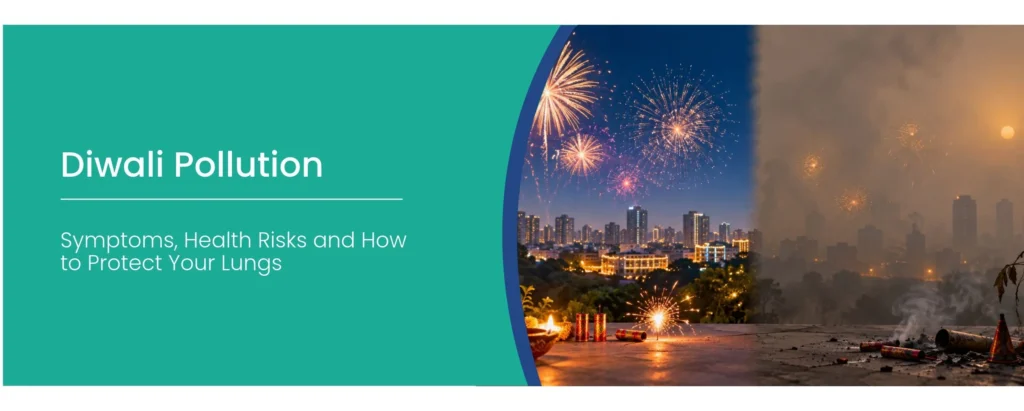
During Diwali, firecrackers release smoke, fine particles and gases into the surrounding air. These emissions can combine with pollution from vehicles, industries, construction activities and other sources.
In northern India, weather conditions may also contribute to the accumulation of pollutants near ground level. When the air is relatively stagnant, pollution can remain in the environment for longer rather than dispersing quickly.
The relationship between Diwali pollution and asthma becomes particularly important when these pollutants irritate already sensitive airways.
1. Fine particulate matter enters the respiratory system
Firecracker smoke contains particulate matter, including fine particles known as PM2.5. These particles are small enough to travel deep into the respiratory tract.
Exposure can irritate the airways and worsen existing respiratory symptoms. Research examining Diwali-related air pollution across cities in the Indo-Gangetic Basin has documented substantial increases in particulate pollution during the festival period.
2. Smoke and gases irritate the airways
Fireworks release a mixture of combustion products, including gases and chemical particles. These substances can irritate the respiratory tract and may trigger symptoms in people who are sensitive to smoke.
For someone with asthma, this irritation can contribute to coughing, wheezing and breathlessness.
3. Existing pollution adds to the exposure
Firecracker emissions are not the only source of concern. Traffic fumes, industrial emissions, dust and other sources of pollution may already affect local air quality.
When additional smoke enters the atmosphere, the overall pollution burden can increase.
This is why Diwali pollution and asthma should be considered in the context of the wider air quality around your home, workplace or neighbourhood, not just the smoke visible immediately after a firecracker bursts.
4. Symptoms may continue after the celebrations
The air does not necessarily become clean as soon as the firecrackers stop.
Depending on local weather conditions and other pollution sources, poor air quality may persist after Diwali night. People with asthma may continue to experience symptoms if they remain exposed to polluted air.
Checking local air quality and reducing exposure during periods of poor air quality can help limit the risk.
What Are the Common Asthma Symptoms During Diwali?
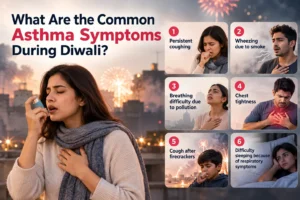
Recognising symptoms early can help you take appropriate action before breathing problems become more serious.
Although Diwali pollution and asthma can affect people differently, the following symptoms deserve attention, especially if they begin or worsen after exposure to smoke.
1. Persistent coughing
A cough that continues after exposure to firecracker smoke may indicate irritation of the respiratory tract.
Some people notice coughing soon after going outdoors, while others develop symptoms later. A cough may also become more troublesome at night.
A persistent cough should not automatically be attributed to pollution. If it continues, worsens or occurs alongside breathing difficulty, seek medical advice.
2. Wheezing due to smoke
Wheezing is a whistling sound that may occur when air moves through narrowed airways.
People with asthma may notice wheezing after exposure to smoke, particularly during exhalation. New or worsening wheezing deserves attention, especially when accompanied by chest tightness or breathlessness.
3. Breathing difficulty due to pollution
Breathlessness may feel like an inability to take a full breath or a need to breathe faster than usual.
If you experience breathing difficulty due to pollution, move away from the source of smoke and follow your prescribed asthma action plan, if you have one.
Do not assume that severe breathlessness will settle on its own.
4. Chest tightness
Some people describe chest tightness as pressure, heaviness or a feeling that their chest is being squeezed.
This can be a symptom of asthma, particularly when it occurs alongside coughing, wheezing or shortness of breath. New or severe chest discomfort may have other causes and should be assessed appropriately.
5. Cough after firecrackers
A cough after firecrackers may occur because smoke and airborne particles irritate the respiratory tract.
However, a cough alone does not confirm asthma. Respiratory infections, allergies and other conditions can produce similar symptoms.
If coughing repeatedly occurs during periods of pollution, consult a healthcare professional to identify the cause.
6. Difficulty sleeping because of respiratory symptoms
Asthma symptoms can become more noticeable at night. Repeated coughing, wheezing or breathlessness that interrupts sleep may suggest that asthma is not adequately controlled.
If this happens during Diwali, speak to your doctor rather than relying only on home remedies.
The World Health Organization identifies cough, wheezing, shortness of breath and chest tightness as common asthma symptoms. Symptoms can become significantly worse during an asthma attack.
Who Is Most at Risk During Diwali?
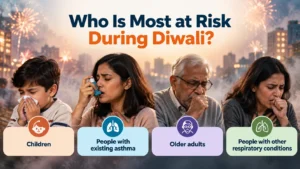
Although polluted air can affect anyone, some people are more vulnerable to respiratory irritation and asthma flare-ups.
Children
Children’s lungs are still developing, and those with asthma or other respiratory conditions may be particularly sensitive to polluted air.
Parents should watch for persistent coughing, wheezing, fast breathing or difficulty participating in normal activities. Respiratory problems in children should not be dismissed as a routine reaction to festive smoke, particularly if symptoms are new or worsening.
People with existing asthma
People who already have asthma may experience worsening symptoms when exposed to smoke, dust or other airborne irritants.
Even if symptoms are usually well controlled, Diwali pollution and asthma can become a concern when exposure increases or prescribed treatment is not being followed consistently.
Older adults
Older adults may be more vulnerable to the effects of poor air quality, particularly when they also have asthma, chronic obstructive pulmonary disease (COPD), heart disease or other long-term conditions.
Reducing exposure to heavy smoke and following medical advice are important precautions.
People with other respiratory conditions
Individuals with COPD, chronic bronchitis or other lung conditions may also experience worsening respiratory symptoms during periods of heavy pollution.
If you have an existing respiratory condition, discuss a suitable prevention plan with your doctor before the festive season.
What Other Factors Can Trigger Asthma During Diwali?
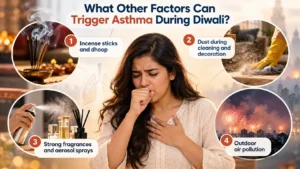
Firecracker smoke is an important concern, but it is not the only possible trigger during the festive season.
Understanding your individual asthma triggers can help you make better decisions about your surroundings.
1. Incense sticks and dhoop
Incense sticks, dhoop and other products that produce smoke can irritate sensitive airways.
Consider avoiding indoor smoke exposure, particularly if someone in your household has asthma.
2. Dust during cleaning and decoration
Festive cleaning may stir up dust, while stored decorations can collect dust mites and other allergens.
For people sensitive to these substances, exposure may contribute to coughing, sneezing or asthma symptoms.
Use damp cloths and wet mopping rather than dry dusting or sweeping when possible.
3. Strong fragrances and aerosol sprays
Perfumes, room fresheners and aerosol products may trigger symptoms in some people with asthma.
Choose fragrance-free alternatives where practical, and avoid spraying such products near someone who is experiencing respiratory symptoms.
4. Outdoor air pollution
Traffic emissions, construction dust and other pollution sources can contribute to poor air quality throughout the festive period.
Diwali pollution and asthma may be especially relevant when firecracker emissions combine with these existing sources.
Check the Air Quality Index (AQI) for your area and adjust outdoor activities according to current conditions and your doctor’s advice.
How to Prevent Asthma Flare-Ups During Diwali
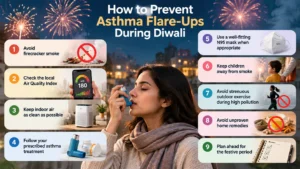
You cannot control every source of pollution, but you can take practical steps to reduce exposure and prepare for potential symptoms.
The following precautions are particularly useful for people with asthma, parents of children with asthma and families living in areas affected by poor air quality.
1. Avoid firecracker smoke
The most effective way to avoid firecracker-related exposure is to stay away from areas where fireworks are being used.
If you have asthma, avoid lighting firecrackers or standing near people who are lighting them. Consider celebrating with lamps, decorations and family activities that do not produce smoke.
Reducing exposure is an important part of managing Diwali pollution and asthma.
2. Check the local Air Quality Index
Check your area’s AQI before planning outdoor activities.
When air quality is poor, limit time outdoors and avoid strenuous activities outside. Children, older adults and people with existing respiratory conditions should take particular care.
Government health advisories recommend checking air quality, avoiding firecrackers and limiting outdoor exposure during periods of high pollution.
3. Keep indoor air as clean as possible
If outdoor pollution is high, reduce the amount of polluted air entering your home.
- Keep windows and doors closed during periods of heavy smoke.
- Avoid smoking indoors.
- Avoid incense, dhoop and other smoke-producing products.
- Use an appropriately sized air purifier with a HEPA filter if available.
- Clean surfaces using a damp cloth to minimise dust.
A purifier may reduce some airborne particles in a suitable indoor environment, but it does not eliminate every pollutant or replace medical treatment.
4. Follow your prescribed asthma treatment
If you have asthma, continue your prescribed medicines as directed by your doctor.
Keep your prescribed reliever inhaler accessible and ensure that you know how to use it correctly. If you have a written asthma action plan, follow it when symptoms begin.
Do not independently increase, stop or change medication doses to prepare for Diwali. If your symptoms have been worsening, arrange a medical review before the festive period.
5. Use a well-fitting N95 mask when appropriate
A well-fitting N95 respirator can reduce inhalation of many airborne particles when worn correctly. However, it does not protect against every harmful gas, and it should not be treated as permission to remain in heavy smoke.
For someone experiencing an asthma attack, moving away from the exposure and following their prescribed action plan are more important than relying on a mask.
6. Keep children away from smoke
Children should not be allowed to play near firecracker smoke or in areas where pollution is visibly heavy.
If your child has asthma, follow the treatment and prevention advice provided by their doctor. Discuss any recurring respiratory problems in children with a healthcare professional rather than assuming that all coughing is caused by the weather or pollution.
7. Avoid strenuous outdoor exercise during high pollution
Running, cycling and vigorous exercise increase the amount of air you breathe. Exercising outdoors during heavy pollution may therefore increase exposure to airborne pollutants.
Move exercise indoors or postpone it when air quality is poor, especially if you have asthma or another respiratory condition.
8. Avoid unproven home remedies
Steam inhalation, herbal drinks and other home remedies should not replace prescribed asthma treatment.
Some remedies may provide comfort, but they do not reliably prevent or treat an asthma attack. Hot steam can also cause burns.
If symptoms worsen, use your prescribed medication according to your action plan and seek medical help when needed.
9. Plan ahead for the festive period
A few preparations can make managing asthma easier during Diwali:
- Check that prescribed inhalers are available and not expired.
- Review your asthma action plan with your doctor.
- Know where to seek urgent medical care.
- Tell family members how to recognise a serious asthma attack.
- Keep children with asthma away from smoky celebration areas.
Taking these steps can help you respond more confidently if Diwali pollution and asthma become a concern in your household.
When Should You Seek Medical Help?
Mild irritation may improve after you move away from smoke, but persistent or worsening symptoms should not be ignored.
If you experience repeated wheezing, a cough that does not settle, increasing breathlessness or symptoms that disturb sleep, arrange a medical assessment.
A doctor can determine whether the symptoms are related to asthma, another respiratory condition or a different cause.
Follow your asthma action plan while arranging urgent care. Do not delay emergency assistance while trying home remedies.
Diwali pollution and asthma can become a medical emergency when exposure triggers a severe attack. Recognising warning signs and acting promptly can make a critical difference.
How Is Pollution-Related Asthma Diagnosed?
If respiratory symptoms repeatedly appear during periods of poor air quality, an assessment can help identify the underlying problem.
Your doctor may ask about your symptoms, medical history, exposure to smoke, allergies and current medicines.
Depending on your age and symptoms, the assessment may include:
Medical history and physical examination
The doctor will ask when symptoms started, how frequently they occur and whether they become worse around smoke, dust or other suspected triggers.
They may also examine your breathing and listen to your chest.
Spirometry
Spirometry is a breathing test that measures how much air you can exhale and how quickly you can do so. It may help assess airflow obstruction and support an asthma diagnosis.
Additional investigations
Depending on the findings, the doctor may recommend further tests to evaluate other possible causes of cough or breathlessness.
Not every person needs every test. Diagnosis should be based on clinical assessment and appropriate investigations rather than symptoms alone.
Asthma Treatment During the Diwali Season
The goal of asthma treatment is to control symptoms, reduce flare-ups and help patients maintain their normal activities.
Treatment depends on the individual’s condition, symptom pattern, age and medical history.
Inhaled medicines
Inhaled medicines are commonly used to manage asthma. Depending on the prescription, treatment may include inhaled corticosteroids to reduce airway inflammation and reliever medicines to ease symptoms.
The exact treatment plan should be determined by a qualified healthcare professional.
Personalised asthma action plans
An asthma action plan explains how to manage symptoms, when to use prescribed medicines and when to seek medical help.
For people whose asthma is affected by seasonal pollution, reviewing this plan before Diwali can be particularly useful.
Follow-up and monitoring
If symptoms become more frequent during the festive season, a medical review may be needed to assess asthma control and adjust treatment where appropriate.
People looking for a pulmonologist in Noida or a chest specialist in Noida should seek an evaluation if coughing, wheezing or breathlessness persists or repeatedly returns.
For those considering asthma treatment in Noida, the priority is to obtain an accurate diagnosis and an appropriate, individualised treatment plan, not simply to suppress symptoms temporarily.
Frequently Asked Questions (FAQs)
1. Can Diwali pollution trigger an asthma attack?
Yes. Firecracker smoke and other air pollutants can irritate sensitive airways and trigger an asthma flare-up. The severity depends on the person’s asthma control, sensitivity and level of exposure. Understanding the connection between Diwali pollution and asthma can help people take preventive steps before symptoms develop.
2. What are the first signs of asthma triggered by pollution?
Early symptoms may include coughing, wheezing, chest tightness and shortness of breath. If these symptoms appear after exposure to smoke, move away from the pollution and follow your prescribed asthma action plan. The link between Diwali pollution and asthma is especially important for people who have experienced similar symptoms during previous festive seasons.
3. Can firecracker smoke cause breathing difficulty in children?
Yes. Firecracker smoke can irritate children’s airways and worsen symptoms in those with asthma or other respiratory conditions. If your child develops persistent coughing, wheezing or breathlessness, seek medical advice. Parents should take extra precautions when Diwali pollution and asthma are a concern at home.
4. How long can asthma symptoms last after Diwali?
The duration varies. Mild irritation may settle after exposure ends, while an asthma flare-up may persist and require medical treatment. Poor air quality can also continue after the celebrations. If symptoms persist or worsen, consult a healthcare professional rather than waiting for pollution levels to improve.
5. Does wearing an N95 mask prevent asthma attacks?
A well-fitting N95 mask can reduce exposure to many airborne particles, but it does not filter every harmful gas or guarantee that an asthma attack will be prevented. Avoiding heavy smoke, following your prescribed treatment and monitoring air quality remain important.
6. When should I consult a pulmonologist in Noida?
Consult a pulmonologist in Noida if you experience recurring coughing, wheezing, breathlessness or worsening asthma symptoms during periods of poor air quality. Seek emergency care for severe breathing difficulty or other signs of a serious asthma attack. Early assessment can help determine whether your symptoms require changes to your treatment plan.
7. Can asthma be controlled during Diwali?
Asthma can often be managed effectively with appropriate prescribed treatment, trigger avoidance and regular medical follow-up. Although exposure cannot always be eliminated completely, reducing smoke exposure and preparing an asthma action plan can help lower the risk of flare-ups. Managing Diwali pollution and asthma begins with knowing your triggers and recognising symptoms early.
Conclusion
Diwali should be a time to enjoy the festivities with family and friends, but smoke and poor air quality can create additional challenges for people with asthma.
Understanding Diwali pollution and asthma helps you recognise why firecracker smoke may trigger coughing, wheezing, chest tightness and breathing difficulty. It also highlights the importance of reducing exposure, checking local air quality, following prescribed treatment and seeking medical advice when symptoms persist.
If you or your child has asthma, plan ahead rather than waiting for symptoms to appear. Avoid smoky areas, keep prescribed medicines accessible and know when to seek urgent care.
If you experience recurring respiratory symptoms, consult a qualified doctor for an appropriate assessment. Patients looking for a chest specialist in Noida, a pulmonologist in Noida or asthma treatment in Noida can seek professional guidance to understand their symptoms and discuss suitable care.
This Diwali, make clean air and healthy breathing part of your family’s celebration.