Diwali is a time for lights, celebrations and family gatherings. From lighting diyas to enjoying fireworks, the festival brings people together. However, a moment of carelessness around a flame or firecracker can result in a painful burn injury that needs immediate attention.
A spark from a phooljhari, a firecracker that explodes too close to the skin, or a diya that accidentally tips over can cause anything from mild redness to a deep burn. Injuries involving the eyes, face, hands or fingers can be particularly concerning because they may affect vision, movement or the appearance of the skin.
Knowing diwali burn first aid can help you respond calmly and take the right steps before medical assistance arrives. The most important priorities are to stop the burning process, cool the affected area safely, protect the wound and recognise when professional treatment is needed.
What Causes Burns During Diwali?
Diwali burn can happen in several ways. The severity depends on the source of heat, the duration of exposure, the depth of the injury and the part of the body affected.
Understanding how these injuries occur can help families take preventive measures and respond appropriately if an accident happens.
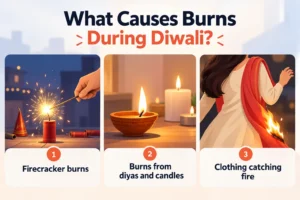
1. Firecracker burns
Firecrackers release heat, sparks and, in some cases, explosive force. When they ignite too close to the body, they can burn the skin or cause more serious injuries.
Common examples include:
- Sparks landing on exposed skin.
- A cracker exploding while someone is holding it.
- Burns to the fingers or palm while lighting fireworks.
- Hot debris striking the face or neck.
- Injuries caused by approaching a firecracker that has failed to ignite.
Firecracker injuries may also involve cuts, eye trauma or damage to deeper tissues. A wound that looks small on the surface should not automatically be considered harmless.
2. Burns from diyas and candles
Traditional diyas, candles and decorative lamps are another common source of diwali burns. Hot oil, direct contact with a flame or accidental tipping can injure the skin.
Diwali burns from diyas may occur when someone:
- Brushes against a lit diya.
- Spills hot oil while moving a lamp.
- Trips near a row of candles.
- Wears loose clothing that catches fire.
- Allows a child to reach a burning lamp.
These injuries often affect the fingers, hands, forearms or legs. Hot oil can cause significant tissue damage, so even a seemingly limited injury needs careful assessment if there is blistering, persistent pain or damage to sensitive areas.
3. Clothing catching fire
Loose sleeves, flowing dupattas and synthetic fabrics can come into contact with flames or catch fire near diyas and fireworks.
If clothing catches fire, the priority is to extinguish the flames immediately. Do not allow the person to run, as movement can fan the flames.
Diwali Burn First Aid: What Should You Do Immediately?
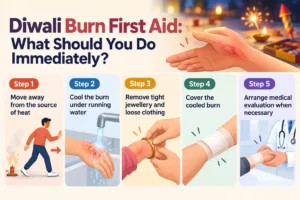
The first few minutes after a burn are important. Appropriate first aid can help limit further tissue damage, reduce pain and protect the wound until medical care is available.
Follow these steps for Diwali burn first aid, provided the area is safe to approach.
Step 1: Move away from the source of heat
First, ensure that you and the injured person are safe.
Move away from burning crackers, flames and any unexploded fireworks. Do not approach a firecracker that has failed to ignite or attempt to relight it.
If clothing is burning, help the person stop, drop to the ground and roll to extinguish the flames. If it is safe to do so, water or a suitable blanket can help put out the fire.
For a serious injury, ask someone to contact emergency services while you provide first aid.
Step 2: Cool the burn under running water
One of the most important steps in Diwali burn first aid is cooling the affected area promptly.
Hold the burned skin under cool, gently running tap water for approximately 20 minutes. Begin as soon as possible. Cooling can help reduce pain and limit the progression of thermal injury.
Keep the rest of the person’s body warm, particularly if the injured person is a child, an older adult or someone with a large burn.
Do not use ice or iced water. Extremely cold temperatures can cause additional tissue damage.
If the burn is extensive or the person is becoming cold or shivering, avoid excessive cooling of the whole body and prioritise urgent medical assistance.
Step 3: Remove tight jewellery and loose clothing
Rings, watches, bangles and other tight items should be removed from the affected area early, provided they are not stuck to the skin.
Swelling can develop after a diwali burn, making jewellery difficult to remove later.
Remove loose clothing near the injury if it comes away easily. However, never pull away clothing or other material that has melted or stuck to the burned skin. Leave it in place for medical professionals to manage.
Step 4: Cover the cooled diwali burn
After cooling, protect the area with a clean, non-fluffy, non-stick dressing or clean cloth.
Cover the injury loosely. Avoid applying pressure or wrapping a dressing tightly around a burned limb, as swelling may occur.
Do not apply adhesive dressings directly to the injured skin. Diwali burn involving the face may require a different approach, so seek medical guidance rather than covering the face with plastic film.
Step 5: Arrange medical evaluation when necessary
Do not rely on home care alone if the diwali burn is deep, extensive, blistering significantly or affecting a sensitive area.
Injuries involving the face, eyes, hands, feet, major joints or genitals need prompt medical assessment. Serious diwali burn, breathing difficulties and suspected inhalation injuries require emergency care.
These measures form the foundation of Diwali burn first aid, but first aid does not replace professional assessment when the injury may be serious.
What Should You Avoid After a Firecracker or Diya Burn?
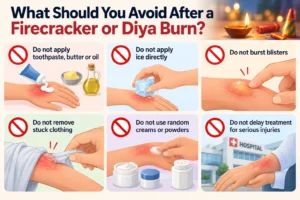
When someone is injured during a celebration, relatives and bystanders may suggest traditional remedies. Unfortunately, some of these can worsen the injury or interfere with medical treatment.
Avoid the following:
- Do not apply toothpaste, butter or oil: Toothpaste, butter, ghee, cooking oil and similar household substances do not provide appropriate diwali burn treatment. They may contaminate the wound and make it more difficult for a doctor to assess the injury.
- Do not apply ice directly: Ice can damage already injured tissue. Use cool running water instead.
- Do not burst blisters: Blisters provide a natural protective covering over damaged skin. Popping them can increase the risk of infection and delay healing.
- Do not remove stuck clothing: Pulling material away from a diwali burn can tear the skin and cause further injury. Leave it for trained medical personnel.
- Do not use random creams or powders: Avoid applying antiseptic powders, cosmetic creams, herbal pastes or medicated ointments without appropriate medical advice.
- Do not delay treatment for serious injuries: A deep diwali burn can look deceptively small. If the skin appears white, leathery, charred or numb, seek urgent medical assessment.
Correct Diwali burn first aid means protecting the injured area and arranging appropriate care, not experimenting with home remedies.
How Can You Recognise a Serious Burn?
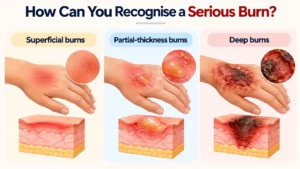
Not every diwali burn requires hospital admission, but some injuries need urgent treatment even when the affected area is relatively small.
Burn severity depends on the depth of tissue damage, the size of the affected area, the body part involved and the person’s age and overall health.
Superficial burns
These affect the outermost layer of skin. The area may look red, feel painful and develop mild swelling.
A small superficial diwali burn may heal without major complications, but medical advice is appropriate if symptoms worsen or the diagnosis is uncertain.
Partial-thickness burns
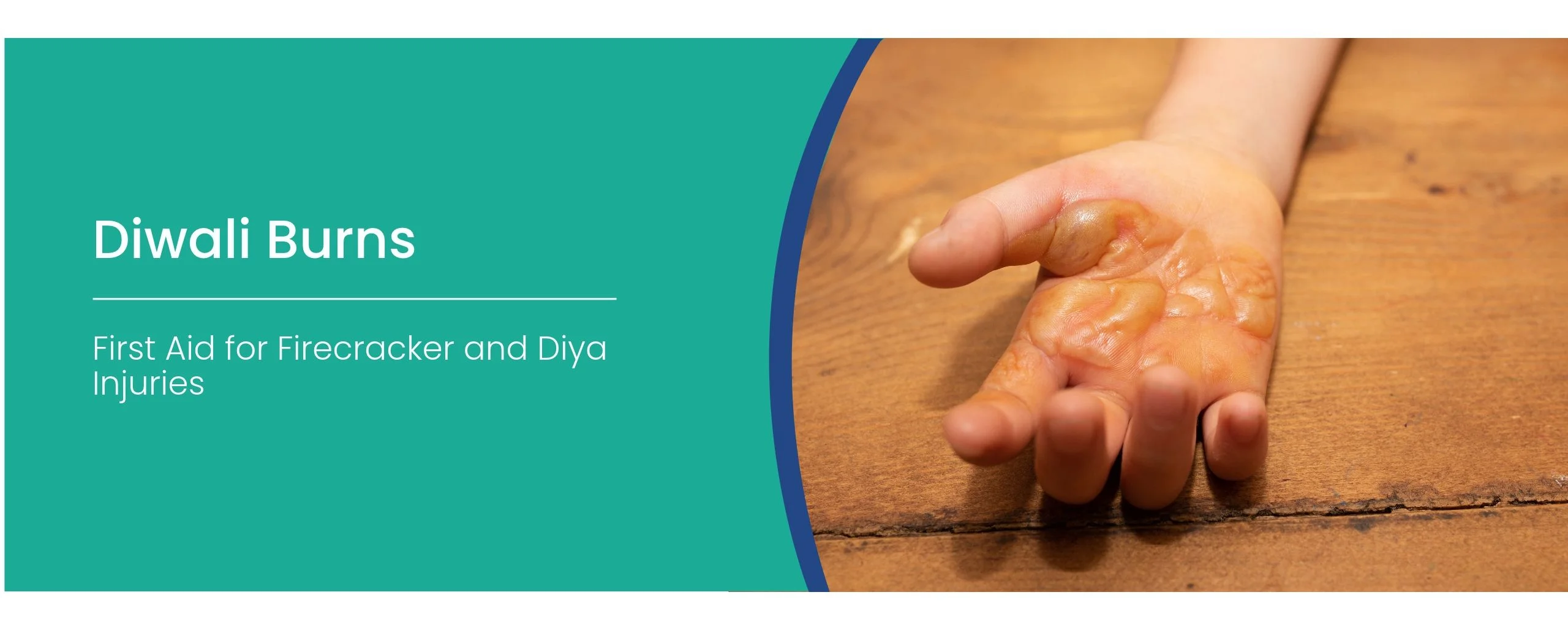
These extend deeper into the skin and may cause blisters, significant pain, swelling and a moist or damaged skin surface.
They should be assessed by a healthcare professional, particularly when caused by firecrackers or when they affect the face, hands or joints.
Deep burns
Deep burns may damage multiple layers of skin and underlying tissues. The skin may look pale, white, brown or charred. Surprisingly, a very deep diwali burn may be less painful in the centre because nerve endings have been damaged.
These injuries require urgent specialist assessment.
When is emergency care necessary?
Seek immediate medical assistance if the person has:
- A large or deep diwali burn.
- Burns affecting the face, eyes, hands, feet or genitals.
- Skin that appears white, leathery or charred.
- Severe pain or rapidly increasing swelling.
- Breathing difficulty, persistent coughing or suspected smoke inhalation.
- A diwali burn caused by electricity or chemicals.
- Sudden changes in vision or a suspected eye injury.
- Signs of shock, such as faintness, confusion or cold, clammy skin.
For an emergency in India, dial 112 for integrated emergency assistance. Do not delay transport or medical care while attempting home treatment.
Firecracker Burn Treatment: What Happens at the Hospital?
The treatment depends on the depth and location of the diwali burn, the extent of tissue damage and whether other injuries are present.
After a firecracker injury, the medical team will assess the wound, provide pain relief when appropriate, clean and dress the area, and determine whether additional treatment is necessary.
Wound cleaning and dressings
Small diwali burn may need cleaning and an appropriate dressing to protect the skin while it heals.
The dressing and follow-up plan depend on the injury. Some wounds need regular review to check for infection and ensure that healing is progressing as expected.
Pain management
Burn injuries can be painful, particularly when blisters develop or dressings need to be changed.
A healthcare professional can recommend suitable pain relief based on the person’s age, medical history and injury severity.
Infection prevention
Burned skin has a reduced ability to protect the body from infection. Keeping the wound clean, following dressing instructions and attending follow-up appointments can help reduce complications.
Antibiotics are not automatically required for every burn. They should be used when clinically indicated.
Specialist burn care
More serious burns may require hospital admission, intravenous fluids, specialised dressings or surgery. The treatment plan depends on the injury and the patient’s overall condition.
Prompt assessment is important because the full depth of some burns may not be immediately apparent.
Burns From Diyas: Special Considerations for Children
Children are particularly vulnerable to household and festive burns because they may not recognise the danger posed by an open flame or hot oil.
A diya placed near the edge of a table, a candle at floor level or a lit sparkler held too close to the body can cause an unexpected injury.
If a child experiences a burn, begin cooling the affected area with cool running water while arranging appropriate medical advice. Keep the child warm overall and do not apply home remedies.
Children with blistering, deep burns, burns affecting sensitive areas or injuries whose severity is uncertain should be assessed promptly by a healthcare professional.
For infants and young children, it is especially important not to underestimate the seriousness of a burn simply because the affected area appears small.
Parents can also reduce risk by keeping children away from lighting activities, securing loose clothing and placing diyas on stable surfaces away from walkways and curtains.
Can Firecracker Burns Leave Scars?
Yes. Some burns heal without noticeable marks, while deeper injuries can leave scars, changes in skin colour or contractures that restrict movement.
The likelihood of scarring depends on the depth of the injury, its location, the healing time, infection and individual skin characteristics.
Why burn depth matters
Superficial burns often heal without significant scarring. Deeper burns are more likely to require specialised wound care and may leave permanent changes.
Burns affecting the face, neck, hands or joints deserve particular attention because scars in these areas can affect appearance, movement or daily activities.
What should you do to support healing?
Follow your doctor’s instructions for wound cleaning, dressings and follow-up visits. Do not pick at healing skin or remove scabs yourself.
Once the wound has healed, your doctor may recommend moisturising products, sun protection or scar-management options, depending on the injury.
Avoid applying cosmetic products to an open wound or starting scar treatments before the skin has healed sufficiently.
When Is Reconstructive Surgery Needed After a Burn?
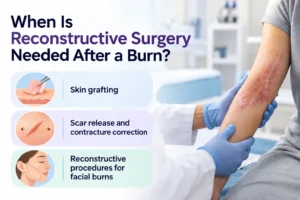
Not every burn requires surgery. Many injuries heal with appropriate wound care and follow-up. However, some deep burns cause tissue loss, significant scarring or contractures that affect movement and function.
In these situations, a specialist may assess whether a surgical procedure could improve healing, restore function or address the appearance of the affected area.
Skin grafting
A skin graft may be considered when a burn has damaged the skin so deeply that it cannot heal adequately on its own.
During the procedure, healthy skin is taken from another area of the body and placed over the wound. Whether grafting is appropriate depends on the injury and the patient’s condition.
Scar release and contracture correction
A contracture occurs when scar tissue tightens and restricts movement. This may affect the neck, fingers, elbows or other joints.
Surgical scar release or reconstructive procedures may help improve movement in selected cases. Rehabilitation and physiotherapy may also form part of the recovery plan.
Reconstructive procedures for facial burns
Deep facial burns can cause scarring or changes involving the eyelids, lips and other structures.
Depending on the damage, treatment may involve wound reconstruction, scar revision or other specialised procedures. The goal is to protect function and achieve the best possible outcome for the individual.
People seeking a plastic surgeon in Noida for burn-related concerns should look for an appropriately qualified specialist who can assess both functional and reconstructive needs.
Cosmetic Surgery in Noida: Can It Help With Burn Scars?
Burn scars can affect confidence, particularly when they are visible on the face, neck, arms or hands. However, cosmetic treatment is not suitable for every scar, and the right approach depends on the type of tissue damage.
A consultation can help determine whether scar management, laser-based procedures, scar revision or reconstructive surgery may be appropriate.
Scar revision
Scar revision may be considered when a healed scar causes discomfort, restricts movement or creates a significant cosmetic concern.
The procedure does not guarantee that a scar will disappear completely. Its aim is to improve the scar’s appearance or function where possible.
Other scar-management options
Depending on the scar, a specialist may recommend silicone-based products, pressure therapy, selected laser procedures or other treatments.
These options are not interchangeable, and treatment should begin only after the wound has healed sufficiently and the doctor has assessed the scar.
If you are exploring cosmetic surgery in Noida, make sure the consultation includes a realistic discussion of likely results, recovery time, possible complications and alternatives.
For injuries involving tissue loss or restricted movement, reconstructive surgery in Noida may be a more appropriate search focus than cosmetic treatment alone.
How Can You Prevent Diwali Burns?
Prevention remains the most effective way to reduce festive injuries. A few practical precautions can make celebrations safer for the whole family.
Firecracker safety
- Buy fireworks only from authorised, reputable manufacturers.
- Follow the manufacturer’s safety instructions.
- Light one firework at a time and move away promptly.
- Never hold a firecracker unless its instructions specifically permit it.
- Never relight or pick up a failed firecracker.
- Keep children at a safe distance and supervise them closely.
- Keep water available for fire emergencies.
Diya and candle safety
- Place diyas on stable, heat-resistant surfaces.
- Keep lamps away from curtains, bedding and paper decorations.
- Avoid placing diyas in busy walkways.
- Keep children and pets away from open flames.
- Secure loose sleeves, dupattas and flowing clothing.
- Never leave burning diyas or candles unattended.
Clothing and surroundings
Choose well-fitted clothing made from less flammable materials, and avoid loose garments near open flames.
Light fireworks in open, designated areas, away from vehicles, buildings and flammable materials. Keep emergency contact details accessible and know how to seek help if an accident occurs.
These precautions cannot eliminate every risk, but they can significantly improve safety during festive activities.
Frequently Asked Questions (FAQs)
1. What is the first thing to do after a firecracker burn?
Move away from the source of heat, ensure the area is safe and cool the affected skin under cool running water for approximately 20 minutes. Do not apply ice, toothpaste, butter or oil. Seek urgent medical care for serious diwali burn.
2. Should I apply toothpaste or ghee to a burn?
No. Toothpaste, ghee, butter, oils and similar household remedies should not be applied to a diwali burn. Use cool running water and seek medical advice when needed.
3. How do I treat burns from diyas at home?
For a small thermal diwali burn, cool the affected area under running water for approximately 20 minutes. Remove nearby jewellery if it is not stuck, then protect the cooled area with a clean, non-stick dressing. Seek medical advice if blisters develop, the burn is deep or the injury affects a sensitive area.
4. When should I take a burn patient to the hospital?
Seek urgent care for deep or extensive diwali burn, injuries involving the face, eyes, hands, feet or genitals, breathing problems, or skin that looks white or charred. Eye injuries and sudden changes in vision after fireworks also need urgent assessment.
5. Can a firecracker burn cause permanent scars?
Yes. Deep burns can leave permanent scars, skin-colour changes or contractures. Early assessment, appropriate wound care and follow-up can help manage complications. Some scars may benefit from specialist scar treatment or reconstructive procedures.
6. When should I consult a plastic surgeon after a burn?
Consult a qualified plastic surgeon if a healed diwali burn causes significant scarring, restricted movement, tissue loss or cosmetic concerns. Deep burns may need earlier specialist involvement as part of the initial treatment plan.
7. Can burn scars be treated with cosmetic procedures?
Some scars may improve with selected treatments, including scar revision or laser-based procedures. Suitability depends on the scar’s maturity, depth, location and effect on function. No procedure can guarantee complete scar removal.
Conclusion
A diwali burn injury can happen in seconds, but the right response can make a meaningful difference. Whether the injury comes from a firecracker, a sparkler, a candle or a traditional diya, the priorities remain the same: stop the burning process, cool the affected area, protect the wound and seek medical assistance when necessary.
Remember the essentials of diwali burn first aid: use cool running water, avoid household remedies, never burst blisters and do not delay treatment for serious injuries.
If a diwali burn causes deep tissue damage, persistent scarring or restricted movement, a specialist assessment can help identify appropriate treatment options. Patients looking for a plastic surgeon in Noida can discuss diwali burn reconstruction and scar management with a qualified specialist.
A little preparation, safer festive practices and prompt medical attention can help protect you and your family throughout the celebrations.