
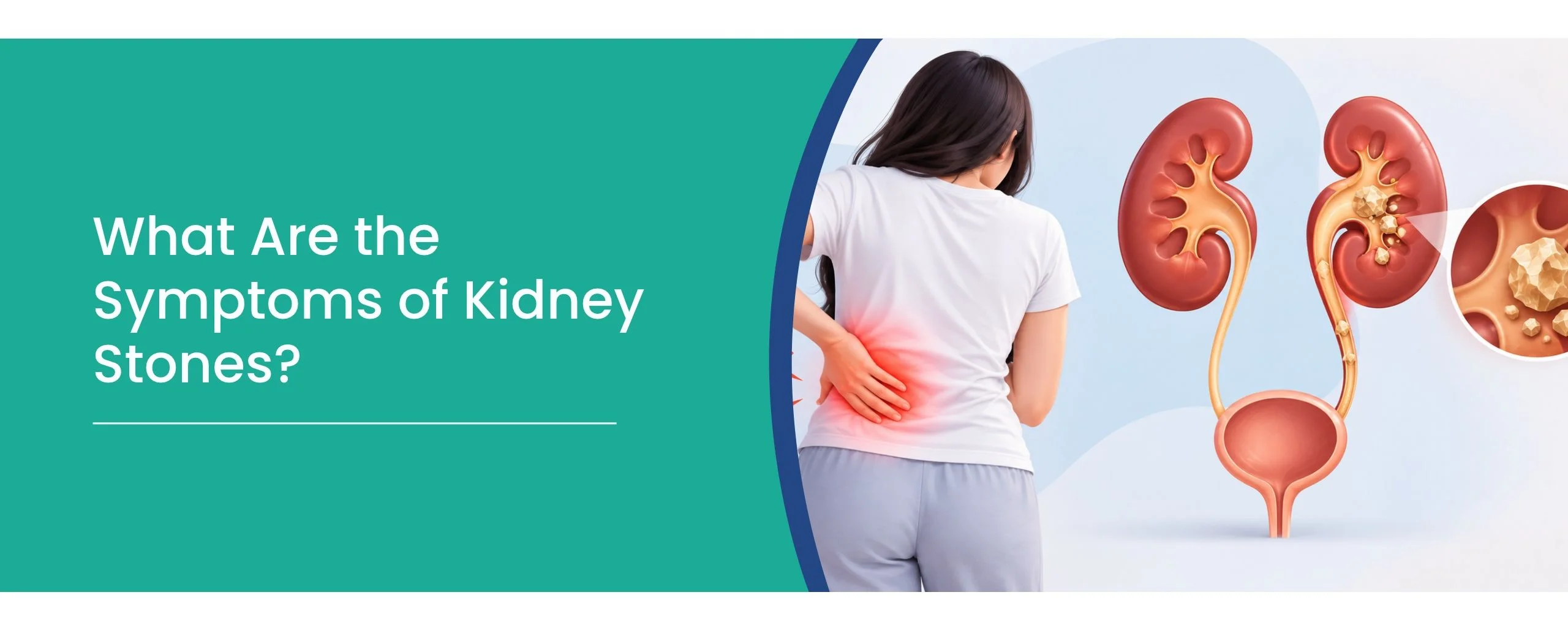
A sudden, sharp pain in your lower back or side can be difficult to ignore. Sometimes, it starts as a dull ache and gradually becomes severe. You may also notice nausea, frequent urination or a burning sensation while passing urine. These changes can be associated with kidney stone symptoms, a common urinary condition that affects people of different ages.
However, not everyone experiences the same discomfort. Some people have small stones that pass without noticeable symptoms, while others develop severe pain when a stone moves into the urinary tract or blocks the flow of urine.
Understanding kidney stone symptoms can help you recognise when something may be wrong and seek medical attention before complications develop. The location of the pain, changes in urine, and accompanying symptoms can provide important clues, although they cannot confirm the diagnosis on their own.
What Are Kidney Stones?
Kidney stones are hard deposits made from minerals and salts that accumulate in the kidneys. They form when certain substances in urine become concentrated and begin to crystallise.
These stones can vary in size, shape and composition. Some are as small as grains of sand, while others may grow considerably larger.
A kidney stone may remain inside the kidney without causing discomfort. Problems often begin when it moves into the ureter, the narrow tube that carries urine from the kidney to the bladder.
If the stone becomes stuck, it may obstruct urine flow, irritate the urinary tract and cause intense pain.
According to the National Institute of Diabetes and Digestive and Kidney Diseases (NIDDK), kidney stone symptoms can cause pain in the back, side, lower abdomen or groin, along with blood in the urine and other urinary symptoms.
What Are the Common Kidney Stone Symptoms?
The symptoms can vary depending on the stone’s size, location and whether it is blocking urine flow.
Some people experience sudden, severe discomfort, while others may have mild symptoms that develop gradually.
Here are the most common warning signs to watch for.
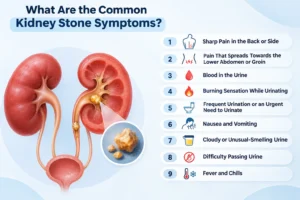
1. Sharp Pain in the Back or Side
One of the most recognised kidney stone symptoms is sudden pain in the back or side, usually below the ribs.
The pain may begin as a dull ache before becoming sharp, intense or cramping. It can also come and go in waves, making it difficult to find a comfortable position.
This type of pain is often called renal colic. It may become particularly severe when a stone moves through the ureter.
Unlike ordinary muscle pain, kidney stone pain may not improve simply by changing your posture or resting.
2. Pain That Spreads Towards the Lower Abdomen or Groin
Kidney stone pain does not always remain in one location.
As the stone moves through the urinary tract, the discomfort may travel from the back or side towards the lower abdomen, groin or genital area.
This changing pain pattern is one of the important kidney stone symptoms that doctors consider during an evaluation.
The location of the discomfort can provide clues about where the stone may be situated, although imaging tests are needed to confirm its exact position.
3. Blood in the Urine
Blood in the urine is another possible warning sign.
You may notice urine that appears:
- Pink
- Red
- Brown or tea-coloured
Sometimes, the blood is not visible to the naked eye and can only be detected through a urine test.
A kidney stone can irritate the lining of the urinary tract as it moves, causing bleeding.
However, blood in the urine should never automatically be attributed to kidney stone symptoms. Urinary infections and other medical conditions can also cause it and require evaluation.
4. Burning Sensation While Urinating
A burning sensation during urination may occur when a stone reaches the lower urinary tract or irritates the urinary passages.
You may experience discomfort while passing urine, particularly if the stone is close to the bladder.
Burning urination can also indicate a urinary tract infection, so it is important not to assume that kidney stone symptoms are the only possible explanation.
5. Frequent Urination or an Urgent Need to Urinate
Some people feel the need to urinate more frequently than usual.
You may experience:
- Frequent bathroom visits.
- A sudden urge to urinate.
- Passing only small amounts of urine.
- Discomfort or pressure in the lower abdomen.
These kidney stone symptoms may become more noticeable when the stone moves towards the lower ureter or bladder.
6. Nausea and Vomiting
Kidney stone pain can be intense enough to trigger nausea or vomiting.
This happens because the nerves involved in kidney and urinary tract pain can also influence the body’s response to nausea.
If vomiting continues, it may become difficult to keep fluids down. Dehydration can make the situation more concerning, particularly if urine output decreases.
Persistent vomiting alongside severe pain should be evaluated promptly.
7. Cloudy or Unusual-Smelling Urine
Urine may sometimes appear cloudy or develop an unusual smell.
This can occur with a urinary infection, which may coexist with a kidney stone.
Cloudy urine alone does not confirm a stone. If it occurs alongside fever, chills, pain or burning during urination, medical assessment is important.
8. Difficulty Passing Urine
A stone that obstructs the urinary tract may interfere with normal urine flow.
You may notice:
- Difficulty starting urination.
- Passing very little urine.
- A weak urine stream.
- An inability to urinate.
Being unable to urinate requires urgent medical evaluation.
A blockage can become dangerous, particularly if it affects both kidneys or occurs in someone with a single functioning kidney.
9. Fever and Chills
Fever and chills are not typical symptoms of an uncomplicated kidney stone.
However, they may indicate an infection associated with a stone or urinary obstruction.
This combination is particularly concerning because an infected, obstructed urinary tract can become a medical emergency.
If you experience fever or chills along with severe back or side pain, seek urgent medical care rather than waiting for the symptoms to settle.
Where Is Kidney Stone Pain Located?
Understanding kidney stone pain location can help you recognise a possible urinary problem.
Kidney stone pain commonly begins in the flank, the area on either side of your back, between the lower ribs and hip.
However, the discomfort can change as the stone moves.
| Possible stone location | Possible stone location |
| Inside the kidney | Back or side, below the ribs |
| Upper ureter | Back or flank, sometimes spreading towards the abdomen |
| Middle ureter | Side or lower abdomen |
| Lower ureter | Lower abdomen, groin or pelvic region |
The pain may occur on the right or left side, depending on which kidney or ureter is affected.
In some people, discomfort may spread towards the genital area. The exact pattern varies, so pain location alone cannot identify the stone’s position with certainty.
Is kidney stone pain constant or intermittent?
Kidney stone pain can come in waves.
You may experience periods of intense pain followed by temporary relief. This happens as the ureter contracts around the stone and attempts to move it towards the bladder.
The discomfort may also change in intensity as the stone moves.
Some people experience a persistent dull ache, while others develop sudden, severe pain that makes it difficult to sit, stand or rest comfortably.
If the pain is severe, recurring or accompanied by other concerning symptoms, seek medical assessment.
Can Kidney Stones Cause Symptoms Without Pain?
Yes. Not every kidney stone causes noticeable discomfort.
Small stones may remain inside the kidney without producing any obvious symptoms. They may be discovered incidentally during an ultrasound, CT scan or other imaging test performed for an unrelated reason.
This is why the absence of pain does not necessarily mean that kidney stones are absent.
A stone may begin causing discomfort when it moves into the ureter, obstructs urine flow or irritates the urinary tract.
If you have a history of kidney stone symptoms, follow your doctor’s advice regarding monitoring and follow-up examinations.
What Causes Kidney Stones?
Understanding kidney stone causes is important because prevention often depends on identifying why the stones developed in the first place.
kidney stone symptoms form when urine contains excessive amounts of certain minerals or substances, or when there is insufficient fluid to keep them dissolved.
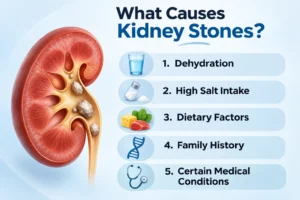
Common contributing factors include:
1. Dehydration
Not drinking enough water can make urine more concentrated.
When urine contains less fluid, minerals and salts may become more likely to form crystals that gradually develop into stones.
People who sweat heavily, work outdoors in hot weather or have inadequate fluid intake may be at increased risk.
2. High Salt Intake
Excessive sodium intake can increase the amount of calcium excreted in urine.
For some individuals, this may contribute to the formation of calcium-containing stones.
Reducing excessive salt intake can be an important part of prevention.
3. Dietary Factors
Certain dietary patterns may influence stone formation.
Depending on the type of stone, contributing factors may include:
- Excessive sodium intake.
- High intake of animal protein.
- Insufficient fluid consumption.
- High oxalate intake in susceptible individuals.
- Inadequate dietary calcium.
Dietary recommendations should depend on the type of stone and the patient’s individual risk factors.
4. Family History
If kidney stones run in your family, you may have a higher likelihood of developing them.
Genetic factors can influence how your body processes minerals and other substances in urine.
5. Certain Medical Conditions
Some health conditions may increase the risk of kidney stone symptoms, including:
- Hyperparathyroidism.
- Certain metabolic disorders.
- Recurrent urinary tract infections.
- Conditions affecting calcium or uric acid metabolism.
- Some digestive disorders.
A doctor may recommend additional investigations if stones occur repeatedly.
How Are Kidney Stones Diagnosed?
Recognising kidney stone symptoms is an important first step, but diagnosis requires medical evaluation.
A urologist may recommend several tests depending on your symptoms, medical history and examination findings.
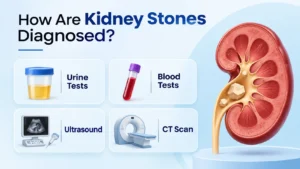
Urine Tests
A urine examination can help identify:
- Blood in the urine.
- Signs of infection.
- Certain minerals or crystals.
- Other abnormalities.
A urine culture may be recommended if an infection is suspected.
Blood Tests
Blood tests may help assess kidney function and identify certain metabolic abnormalities. They can also provide information about substances such as calcium and uric acid when clinically indicated.
Ultrasound
An ultrasound uses sound waves to create images of the kidneys and urinary tract.
It may help identify stones, kidney swelling or obstruction without exposing the patient to radiation.
CT Scan
A CT scan may be recommended when more detailed information is needed.
It can help determine:
- Stone size.
- Stone location.
- Number of stones.
- Whether the stone is obstructing urine flow.
The choice of imaging depends on the clinical situation, age, pregnancy status and other factors.
Kidney Stone Size and Treatment: Does Every Stone Need Surgery?
The relationship between kidney stone size and treatment is important, but size alone does not determine whether a procedure is necessary.
The stone’s location, symptoms, degree of obstruction, infection risk and kidney function also influence the treatment plan.
| Stone size | Possible management approach |
| Small stones | May pass naturally with appropriate medical guidance |
| Medium-sized stones | May require medication, monitoring or a procedure depending on location and symptoms |
| Larger stones | More likely to require a procedure for removal or fragmentation |
| Stones causing obstruction or infection | May require urgent intervention regardless of size |
These are general considerations, not a personalised treatment recommendation.
A small stone can still cause severe pain or obstruction, while a larger stone inside the kidney may sometimes remain relatively symptom-free.
Your urologist will determine the most appropriate approach after reviewing the examination and imaging results.
What Is the Treatment for Kidney Stones?
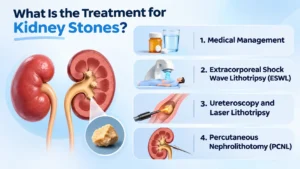
Kidney stone treatment depends on the stone’s size, location, composition and whether it is causing complications.
Not every patient requires surgery.
1. Medical Management
Some small stones may pass naturally through the urinary tract.
A doctor may recommend:
- Appropriate pain-relief medication.
- Medicines that may help certain ureteric stones pass.
- Adequate fluid intake, when suitable.
- Monitoring through follow-up examinations.
Do not attempt to force a stone to pass by drinking excessive amounts of water, particularly if you have severe pain, vomiting or an obstruction.
2. Extracorporeal Shock Wave Lithotripsy (ESWL)
ESWL uses shock waves generated outside the body to break a stone into smaller fragments.
These fragments may then pass through the urinary tract.
The procedure may be suitable for selected stones, depending on their size, location and other clinical factors.
3. Ureteroscopy and Laser Lithotripsy
Ureteroscopy involves passing a thin instrument through the urinary tract to reach the stone.
A laser may be used to break the stone into smaller fragments, which can then be removed or allowed to pass.
This approach is commonly considered for selected ureteric and kidney stones.
4. Percutaneous Nephrolithotomy (PCNL)
PCNL is a minimally invasive procedure used primarily for larger or complex kidney stone symptoms.
The surgeon accesses the kidney through a small incision in the back and removes the stone using specialised instruments.
The appropriate procedure depends on the stone and the patient’s overall condition.
When Is Kidney Stone Surgery Needed?
Kidney stone surgery or another procedure may be considered when:
- The stone is too large to pass naturally.
- The stone causes persistent or severe pain.
- Urine flow is obstructed.
- The stone is associated with recurrent infections.
- Kidney function is at risk.
- The stone does not pass despite appropriate medical management.
Not all kidney stone symptoms require surgery.
A urologist will assess the risks and benefits of observation, medication and procedural treatment before recommending an approach.
If infection and obstruction occur together, urgent drainage and medical treatment may be necessary. Definitive stone removal may be planned after the infection is controlled.
What Should You Eat If You Have Kidney Stones?
A suitable kidney stone diet depends on the type of stone you have developed.
There is no single diet that prevents every type of kidney stone.
General dietary recommendations
Your doctor or dietitian may recommend:
- Drinking adequate water throughout the day.
- Limiting excessive salt intake.
- Maintaining normal dietary calcium intake.
- Avoiding excessive animal protein when appropriate.
- Reducing specific high-oxalate foods if you have calcium oxalate stones and dietary restriction is indicated.
- Limiting excessive sugary drinks.
It is important not to eliminate calcium-rich foods without medical advice. Normal dietary calcium can help reduce oxalate absorption in the digestive tract.
If you have recurrent stones, your doctor may recommend stone analysis or metabolic testing to develop a more personalised prevention plan.
When Should You See a Urologist?
Do not ignore recurring pain, blood in urine or persistent urinary discomfort.
Consult a urologist if you experience:
- Sharp or recurring pain in the back or side.
- Blood in your urine.
- Burning during urination.
- Frequent or urgent urination.
- Previous kidney stones with new symptoms.
- Persistent nausea associated with urinary discomfort.
Seek urgent medical care if you experience severe pain, fever, chills, repeated vomiting, inability to urinate or markedly reduced urine output.
These symptoms may indicate obstruction, infection or another condition that requires prompt treatment.
Frequently Asked Questions (FAQs)
1. What are the first signs of kidney stones?
The early kidney stone symptoms may include a dull ache in the back or side, discomfort during urination, blood in the urine or frequent urination. Some stones cause no symptoms until they move into the ureter.
2. Can kidney stones cause pain in the stomach?
Yes. Kidney stone pain may spread from the back or side towards the lower abdomen, depending on the stone’s location. However, abdominal pain can have many causes and should not automatically be attributed to kidney stone symptoms.
3. Can kidney stones pass on their own?
Some small stones pass naturally through the urinary tract. The likelihood depends on the stone’s size, location and other factors. Medical evaluation is important to ensure that the stone is not causing obstruction or complications.
4. Does every kidney stone require surgery?
No. Many stones can be managed with observation, medication or other non-surgical approaches. Kidney stone surgery may be recommended when a stone is too large, causes obstruction, produces persistent symptoms or creates other complications.
5. Can kidney stones come back?
Yes. kidney stone symptoms can recur, particularly if the underlying risk factors remain unaddressed. Hydration, dietary changes and appropriate medical evaluation may help reduce recurrence risk.
6. Is blood in urine always a sign of kidney stones?
No. Blood in urine can occur due to kidney stone symptoms, urinary infections and other urinary or kidney conditions. It should always be evaluated by a healthcare professional.
7. Which doctor treats kidney stones?
A urologist specialises in conditions affecting the urinary tract, including kidney stones. A urologist can evaluate symptoms, recommend investigations and determine whether medication, monitoring or a procedure is appropriate.
Conclusion
Kidney stones can cause anything from mild discomfort to sudden, severe pain. Recognising the warning signs, particularly pain in the back or side, blood in the urine, burning during urination and changes in urine flow, can help you seek medical attention at the right time.
Although some stones pass naturally, others may require medication or a procedure. The right approach depends on the stone’s size, location, symptoms and effect on kidney function.
If you are experiencing persistent kidney stone symptoms, avoid self-diagnosis or delaying evaluation.
At Rama Hospital, Noida, kidney stone painpatients can consult a urologist for assessment of urinary symptoms, kidney stones and related concerns. If you are looking for a urology hospital in Noida or kidney stone treatment in Noida, a timely consultation can help identify the cause of your symptoms and guide appropriate care.
Your kidneys deserve attention before discomfort becomes a complication.