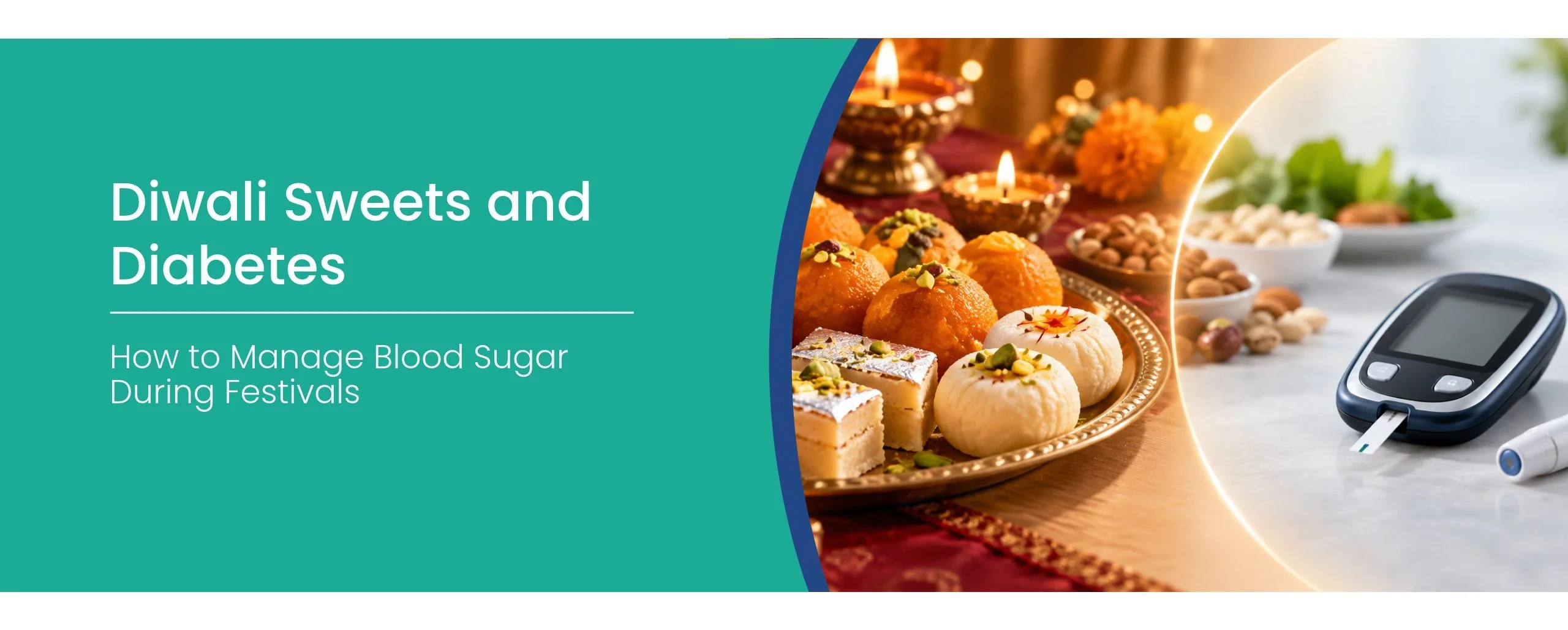
Diwali is a time for family gatherings, festive meals, homemade sweets and sharing mithai with loved ones. From kaju katli and laddoos to gulab jamun and barfi, festive treats are an important part of the celebration. But if you have diabetes, you may wonder whether you can enjoy these traditional foods without affecting your blood sugar levels.
The good news is that diabetes does not mean you must give up every festive food. With thoughtful portions, balanced meals, regular physical activity and appropriate monitoring, you can celebrate Diwali while taking care of your health.
Following a diabetes diet during diwali is not about avoiding every sweet or feeling guilty about what you eat. It is about understanding how different foods affect your blood glucose, planning your meals and making choices that suit your individual treatment plan.
Festive routines can make diabetes management more challenging. Late-night celebrations, irregular meals, sugary drinks and frequent snacking may affect glucose levels. However, a few practical changes can help you enjoy the occasion without losing sight of your health goals.
Why Is Blood Sugar Management Important During Diwali?
Diwali celebrations often involve eating more frequently than usual. You may have sweets at home, snacks during family visits and a large dinner at a gathering. Even small portions can add up when you eat them several times throughout the day.
Most traditional sweets contain carbohydrates from sugar, flour, milk and other ingredients. Carbohydrates are broken down into glucose, which enters the bloodstream. In people with diabetes, the body may not produce enough insulin or use insulin effectively, making it harder to keep blood glucose within the recommended range.
A practical diabetes diet during diwali helps you account for these additional carbohydrates without missing regular meals or making extreme dietary changes.
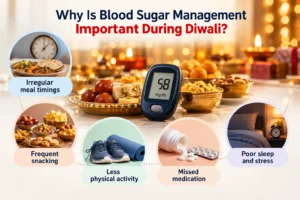
Other festive habits can also influence blood sugar:
- Irregular meal timings: Eating much later than usual can disrupt your established routine.
- Frequent snacking: Repeatedly eating sweets and savoury snacks can increase your overall carbohydrate intake.
- Less physical activity: Long visits, travel and late-night celebrations may reduce your usual activity.
- Missed medication: Busy schedules can make it easier to forget prescribed medicines.
- Poor sleep and stress: Changes in sleep and daily routines may affect glucose management.
The aim is not to make Diwali restrictive. It is to maintain a routine that allows you to celebrate while continuing to manage your diabetes.
Can People With Diabetes Eat Diwali Sweets?
Yes. Many people with diabetes can enjoy a small portion of their favourite sweets as part of an individualised meal plan. The key is to consider portion size, total carbohydrate intake and the way the sweet fits into the rest of the meal.
According to the US Centers for Disease Control and Prevention, people with diabetes can include desserts in their eating plan with appropriate planning and moderation.
A sensible diabetes diet during diwali should help you make informed choices rather than rely on strict food bans.

How to enjoy sweets more mindfully
- Choose your favourite: Have a small portion of a sweet you genuinely enjoy instead of sampling every option.
- Plan the portion: Decide how much you will eat before the celebration begins.
- Account for carbohydrates: Sweets contribute to your total carbohydrate intake, just as rice, roti and other carbohydrate-containing foods do.
- Avoid repeated tasting: A small bite from several dishes can add up over the course of an evening.
- Eat slowly: Take time to enjoy the taste rather than eating while distracted.
Remember that a small portion is not a guarantee that your blood glucose will remain within range. The response varies according to the food, portion, medication, activity and individual health circumstances.
Which Diwali Sweets Should You Choose?
No single traditional sweet is suitable for everyone with diabetes. Ingredients, portion sizes and recipes vary, so it is more useful to consider the overall nutritional content than to label a particular sweet as completely safe.
| Festive sweet | What to consider |
| Kaju katli | Cashews provide fat and some protein, but the sweet may also contain considerable added sugar. |
| Besan laddoo | Gram flour contains carbohydrates, while ghee and sugar contribute additional calories. |
| Gulab jamun | Sugar syrup and the carbohydrate content of the dough can contribute to a substantial glucose rise. |
| Barfi | Milk solids, sugar and other ingredients can make carbohydrate content vary considerably. |
| Soan papdi | Sugar and refined flour contribute carbohydrates; portion size matters. |
| Sugar-free sweets | Check total carbohydrates and serving size because sugar-free does not necessarily mean carbohydrate-free. |
You do not need to identify one universally best sweet. Instead, choose a portion that fits your meal plan and avoid treating a product labelled “sugar-free” as unlimited.
A balanced diabetes diet during diwali can include traditional foods when the quantity and overall meal composition are considered.
8 Practical Tips for Managing Diabetes During Diwali
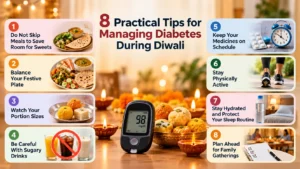
1. Do Not Skip Meals to Save Room for Sweets
It may seem sensible to skip breakfast or lunch if you expect to eat a large festive dinner. However, this strategy can backfire.
Going without food for long periods may lead to excessive hunger and overeating later. For people taking insulin or certain glucose-lowering medicines, skipping or delaying meals can also increase the risk of hypoglycaemia, or low blood sugar.
Instead, eat your usual balanced meals and plan your festive treat in advance.
For example, you could have a regular breakfast, a balanced lunch and a moderate dinner that includes your preferred sweet in a planned portion.
This approach makes a diabetes diet during diwali more practical because it works with your normal routine rather than replacing meals with sweets.
2. Balance Your Festive Plate
You can enjoy traditional Diwali food without making the entire meal carbohydrate-heavy.
One useful starting point is the diabetes plate method, which encourages a balanced combination of vegetables, protein and carbohydrate-containing foods. The exact proportions should be adapted to your nutritional needs and medical advice.
For a main meal, consider:
- Half the plate with non-starchy vegetables or salad.
- One-quarter with a protein source, such as dal, paneer, eggs, fish or lean meat.
- One-quarter with carbohydrate-containing foods, such as roti, rice or another grain.
This is a general meal-planning guide, not a fixed prescription for every person. Your needs may differ depending on your medicines, kidney health, nutritional requirements and glucose targets.
When following a diabetes diet during diwali, remember that adding a sweet also adds carbohydrates. Consider the whole meal rather than looking at the dessert in isolation.
3. Watch Your Portion Sizes
Portion control is one of the most practical ways to enjoy festive food.
A large serving of a sweet can contain considerably more sugar and carbohydrates than a small one. Eating multiple servings throughout the day can increase the total amount consumed without you noticing.
Try these simple habits:
- Serve your sweet on a small plate instead of eating directly from a box.
- Choose one planned portion rather than returning repeatedly for more.
- Share a larger sweet with a family member if that suits your needs.
- Avoid keeping open boxes of mithai beside you throughout the evening.
The purpose of a diabetes diet during diwali is to make portions intentional, not to make eating stressful.
4. Be Careful With Sugary Drinks
Sweets are not the only source of sugar during Diwali. Sweetened tea, soft drinks, packaged juices and festive beverages can also contribute carbohydrates.
Liquid carbohydrates may be consumed quickly and can raise blood glucose, particularly when drinks contain added sugar.
Choose water, sparkling water without added sugar or unsweetened beverages more often. If you prefer a festive drink, check its ingredients and consider how it fits into your overall meal plan.
Fruit juice is not automatically a better choice than a sugary soft drink for diabetes management. Whole fruit generally provides more fibre and takes longer to eat, although fruit still contains carbohydrates.
A thoughtful diabetes diet during diwali considers drinks as well as food.
5. Keep Your Medicines on Schedule
Celebrations can disrupt everyday routines, but diabetes medication should remain part of your plan.
Take your medicines or insulin exactly as prescribed. Do not skip a dose to compensate for eating less, and do not increase a dose on your own to compensate for eating sweets.
If your meal timings are likely to change, ask your treating doctor in advance how to manage your medication safely. This is especially important if you use insulin or medicines that can cause low blood sugar.
Keep your medicines and glucose-monitoring supplies accessible when visiting family or travelling.
6. Stay Physically Active
Physical activity can help your body use glucose and support overall diabetes management.
A short walk with family after a meal may be a convenient way to remain active during the festivities. You can also continue your usual walking routine or other activities, provided they are appropriate for your health.
However, exercise is not a way to cancel out a large serving of sweets. Physical activity can affect blood glucose differently depending on your medication, activity level and other circumstances.
If you use insulin or medicines that can cause hypoglycaemia, follow your clinician’s advice about checking glucose and taking precautions before and after exercise.
Regular movement is a useful part of a diabetes diet during diwali, alongside balanced eating and prescribed treatment.
7. Stay Hydrated and Protect Your Sleep Routine
Busy evenings, travel and social gatherings can make it easy to drink less water and sleep later than usual.
Drink water regularly, particularly if you are moving around or spending time outdoors. If you have been advised to restrict fluids because of a medical condition, follow your clinician’s instructions.
Try to maintain a reasonably consistent sleep schedule. Poor sleep and disruptions to daily routines can make diabetes management more difficult for some people.
A sustainable diabetes diet during diwali works best when food choices are supported by adequate rest, hydration and a manageable daily routine.
8. Plan Ahead for Family Gatherings
You may not control every dish served at a family celebration, but you can make a few decisions beforehand.
If you are visiting relatives, consider eating your regular meals on time and deciding which festive foods you would most like to try. If you are hosting, include vegetables, protein-rich dishes and unsweetened drinks alongside traditional favourites.
You can also explain your preferences to family members without feeling that you must refuse every offering.
Planning ahead makes a diabetes diet during diwali easier to follow without missing the social enjoyment of the festival.
What Happens to Blood Sugar After Eating Sweets?
Understanding blood sugar after eating sweets can help you make more informed decisions about portions and meal combinations.
When you eat sweets, the carbohydrates they contain are digested and absorbed, causing blood glucose to rise. The amount and timing of the rise depend on the food’s carbohydrate content, portion size, other foods eaten with it, physical activity, medication and individual metabolism.
A small portion may affect one person differently from another. A sweet eaten after a balanced meal may also produce a different glucose response from the same sweet eaten alone.
Fat and protein can slow the rate at which a meal is digested, but they do not remove the carbohydrates in the food. Rich sweets may also contain substantial calories, so their effect should not be judged only by how sweet they taste.
When evaluating blood sugar after eating sweets, consider your own glucose readings and your healthcare professional’s advice rather than relying on a general rule that applies to everyone.
What if your blood glucose rises after a festive meal?
One higher-than-usual reading does not necessarily mean your diabetes is out of control. However, repeated high readings or levels above your prescribed target deserve attention.
If your reading is higher than expected:
- Follow your usual glucose-monitoring and treatment plan.
- Drink water if you have not been advised to restrict fluids.
- Avoid eating additional sweets while you assess the situation.
- Continue prescribed medication rather than changing doses independently.
- Follow any correction-dose or sick-day instructions already provided by your healthcare team.
Do not use strenuous exercise as an emergency method of lowering blood glucose, especially if your levels are very high or you feel unwell. Seek medical advice when needed.
High Blood Sugar Symptoms You Should Not Ignore
Recognising high blood sugar symptoms is important during festivals, particularly when eating patterns, medication schedules and sleep routines change.
High blood sugar, also called hyperglycaemia, may develop gradually. Some people may not notice symptoms until their glucose levels are significantly elevated.

Common high blood sugar symptoms include:
- Increased thirst.
- Frequent urination.
- Unusual tiredness or weakness.
- Blurred vision.
- Unexplained weight loss, particularly when glucose remains high over time.
These symptoms are not exclusive to diabetes, but they should not be ignored.
If you have diabetes and your readings remain above your target, contact your treating clinician for advice. If you experience symptoms and have not been diagnosed with diabetes, arrange a medical assessment.
Seek emergency care if high blood glucose is accompanied by vomiting, abdominal pain, rapid or deep breathing, confusion, severe drowsiness or difficulty staying awake. These can indicate a serious complication requiring urgent treatment.
How to Monitor Blood Glucose During Diwali
Blood glucose monitoring helps you understand how meals, medication, physical activity and changes in routine affect your glucose levels.
The frequency of testing depends on your type of diabetes, treatment and individual needs. People who use insulin or medicines that can cause low blood sugar may need a different monitoring schedule from those managing diabetes with other treatments.
Your clinician may recommend checking glucose at particular times, such as before meals, after meals or at bedtime. If you use a continuous glucose monitor, follow your care team’s instructions for interpreting readings and responding to alerts.
During Diwali, blood glucose monitoring can help you identify patterns associated with larger meals, late dinners or changes in your usual activity.
Consider the following:
- Check your levels at the times recommended in your care plan.
- Record unusual readings alongside relevant meals or activities.
- Pay attention to repeated patterns rather than drawing conclusions from a single result.
- Keep your meter, strips or monitoring supplies available when travelling.
- Follow your clinician’s instructions about what to do if readings are too high or too low.
Do not test excessively or change medication simply because you have eaten a sweet. The goal of blood glucose monitoring is to support safe, informed decisions within your prescribed treatment plan.
What Should a Festive Diet for Diabetes Look Like?
A balanced festive diet for diabetes should include familiar foods, suitable portions and enough flexibility to fit your personal preferences.
You do not need to prepare an entirely separate menu for Diwali. Often, small adjustments to everyday dishes can make the festive meal more balanced.

Foods to include more often
- Non-starchy vegetables, such as beans, gourds, cauliflower and leafy greens.
- Protein-rich foods, such as dal, beans, paneer, eggs, fish or lean meat.
- Whole grains and other carbohydrate sources in portions suited to your plan.
- Whole fruit in appropriate portions.
- Water and unsweetened beverages.
Foods to moderate
- Sweets and desserts with added sugar.
- Sugar-sweetened beverages.
- Large servings of refined carbohydrates.
- Deep-fried snacks eaten frequently throughout the day.
- Repeated servings of rich, calorie-dense festive dishes.
A festive diet for diabetes does not have to be bland or culturally unfamiliar. The focus is on the overall pattern of eating, not on making every individual food choice perfect.
Are sugar-free sweets a better option?
Sugar-free sweets may contain less added sugar, but that does not automatically make them low in carbohydrates or calories. Ingredients such as flour, milk solids, nuts and starch can still contribute carbohydrates.
Check the nutrition information and serving size where available. If you have kidney disease or other conditions requiring specific dietary restrictions, seek personalised advice before making major changes to your diet.
Common Diwali Diabetes Myths
Myth 1: People with diabetes must never eat sweets
Fact: Some people with diabetes can include modest portions of sweets in an individualised meal plan. The quantity, total carbohydrate intake and treatment plan matter.
Myth 2: Sugar-free sweets do not affect blood glucose
Fact: Sugar-free products can still contain carbohydrates from other ingredients. Check the full nutritional information rather than relying only on the front label.
Myth 3: Skipping meals makes room for dessert
Fact: Skipping meals may increase hunger and can raise the risk of low blood glucose for people using certain medicines. Maintain your usual meal routine unless your healthcare team has advised otherwise.
Myth 4: A walk cancels out eating sweets
Fact: Physical activity supports glucose management, but its effect varies. It should complement, not replace, balanced eating and prescribed treatment.
Myth 5: One high reading means treatment has failed
Fact: Glucose can fluctuate for several reasons. Repeated high readings, symptoms or levels outside your care plan require appropriate follow-up, but a single reading should be interpreted in context.
When Should You Consult a Doctor About Diabetes?
Festivals are a good time to reconnect with family, but diabetes management during festivals should not be put on hold.
Consider consulting your doctor if your glucose readings are repeatedly outside your recommended range, you are unsure how to manage medicines around changed meal timings, or you frequently experience symptoms of high or low blood sugar.
You should also seek guidance if you have recently started a new medication, have another medical condition that affects your diet, or need help adapting your meal plan.
A general physician can review your symptoms, current treatment, blood glucose records and overall health. Depending on your needs, the doctor may recommend laboratory tests, medication review, dietary counselling or specialist care.
If you are looking for a general physician in Noida, choose a qualified clinician who can assess your individual health needs and provide appropriate follow-up. A general medicine hospital in Noida may also help coordinate evaluation and ongoing care when additional investigations or medical support are required.
For people seeking diabetes treatment in Noida, the right approach depends on their type of diabetes, glucose control, medication, associated conditions and personal health goals. Avoid changing treatment based on festive meals without professional advice.
Conclusion
Diwali is about connection, tradition and enjoying time with the people who matter. Living with diabetes does not mean you must step away from every festive meal or refuse every sweet offered with affection.
A practical diabetes diet during diwali starts with a few manageable habits: eat regular meals, plan your sweet portions, balance your plate, choose unsweetened drinks more often, stay active and take your medication as prescribed.
Continue monitoring your glucose as advised, and pay attention to persistent high readings or symptoms that need medical attention. If your routine changes significantly or you are unsure how to manage your treatment, speak with your doctor before making adjustments.
With planning and personalised guidance, a diabetes diet during diwali can help you enjoy the festival while keeping your health a priority.
At Rama Hospital, patients seeking a general physician in Noida can consult a qualified medical professional for assessment and guidance on diabetes and other general health concerns. If you need ongoing diabetes treatment in Noida, timely consultation can help you work towards a care plan that fits your needs.
Celebrate thoughtfully, enjoy the moments that matter and make your health part of the festivities.