Diwali is a time for family gatherings, festive celebrations and bright lights. However, the smoke from firecrackers, combined with traffic emissions, dust and seasonal pollution, can make the air difficult to breathe, particularly across Delhi-NCR.
You may notice burning eyes, an irritated throat, persistent coughing or difficulty breathing after spending time outdoors during Diwali. For people with asthma, allergies or other respiratory conditions, these symptoms can become more troublesome when air quality deteriorates.
Understanding the diwali pollution effects on health is important because polluted air does not affect everyone in the same way. While some people experience temporary irritation, others may develop worsening respiratory symptoms that require medical attention.
The good news is that a few practical precautions can help reduce exposure to polluted air. Knowing when to stay indoors, how to check the Air Quality Index (AQI) and when to seek medical advice can help you protect yourself and your family during the festive season.
What Causes Air Pollution During Diwali?
Diwali-related pollution is not caused by a single source. Firecrackers can release fine particulate matter, gases and other airborne pollutants, while existing urban emissions can contribute to the overall pollution burden.
In Delhi-NCR, these emissions may coincide with seasonal changes in weather that make it harder for pollutants to disperse. Low wind speeds and atmospheric conditions can allow polluted air to remain near the ground for longer periods.
Here are the main contributors.
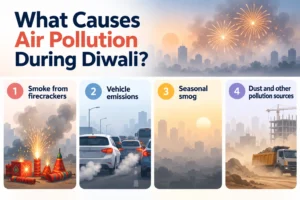
1. Smoke from firecrackers
Firecrackers release smoke containing particulate matter and gases such as sulphur dioxide and nitrogen oxides. Depending on the fireworks and their composition, the emissions may also contain metal-containing particles.
Fine particles are particularly concerning because they can travel deep into the respiratory system. Exposure may irritate the airways and aggravate existing lung conditions.
2. Vehicle emissions
Traffic emissions contribute to air pollution throughout the year. During periods of poor air quality, pollutants from vehicles can add to the overall exposure experienced by people living and working in busy urban areas.
3. Seasonal smog
During autumn and winter, weather conditions can contribute to the accumulation of pollutants. When emissions from multiple sources combine with limited air movement, smog may persist even after Diwali celebrations have ended.
4. Dust and other pollution sources
Construction activity, road dust, industrial emissions and other combustion sources also contribute to air pollution. The overall impact depends on local emissions, weather and the duration of exposure.
Research examining Diwali pollution across cities in the Indo-Gangetic Basin has documented increases in particulate pollution and other emissions around the festival, with the severity and duration varying by location and meteorological conditions.
This means that the Diwali pollution effects on health may continue beyond the night of the festival, particularly when poor air quality persists over the following days.
What Are the Symptoms of Air Pollution?
Not everyone exposed to polluted air will develop noticeable symptoms. However, when pollution levels rise, some people may experience irritation of the eyes, nose and throat, while others may develop respiratory discomfort.
The symptoms of air pollution can vary depending on the pollutants involved, their concentration, the duration of exposure and a person’s underlying health.
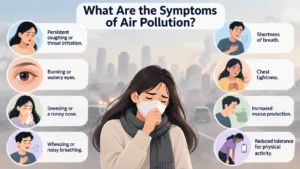
Common symptoms include:
- Persistent coughing or throat irritation.
- Burning or watery eyes.
- Sneezing or a runny nose.
- Wheezing or noisy breathing.
- Shortness of breath.
- Chest tightness.
- Increased mucus production.
- Reduced tolerance for physical activity.
Some symptoms may improve after leaving a polluted environment, but improvement is not guaranteed. People with asthma, chronic obstructive pulmonary disease (COPD) or other respiratory conditions may experience more significant flare-ups.
If you develop persistent symptoms, arrange a medical assessment rather than assuming that the discomfort is simply part of the festive season.
When should you take symptoms seriously?
Pay attention if your cough becomes persistent, you feel breathless during ordinary activities or you need your prescribed rescue inhaler more frequently than usual.
Severe breathlessness, difficulty speaking because of a lack of air, bluish lips, confusion or significant chest pain require urgent medical attention. Do not delay emergency care while waiting for pollution levels to improve.
How Does Diwali Pollution Affect Your Lungs?
The respiratory system filters, warms and humidifies the air you breathe. However, its natural defences cannot completely prevent harmful pollutants from entering the airways.
Fine particulate matter, particularly PM2.5, is small enough to penetrate deep into the lungs. Depending on the pollutant and exposure, air pollution can contribute to airway inflammation, worsen asthma and reduce lung function. Some fine particles can also enter the bloodstream and affect other organs.
The diwali pollution effects on health can therefore extend beyond temporary discomfort, especially when exposure is repeated or when someone already has a respiratory condition.
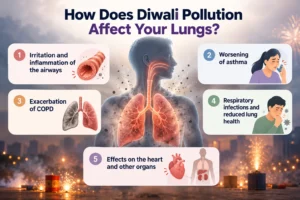
1. Irritation and inflammation of the airways
Polluted air can irritate the lining of the respiratory tract. This may cause coughing, throat discomfort, excess mucus or a sensation of irritation while breathing.
For some people, these symptoms are short-lived. For others, particularly those with sensitive airways, the irritation can trigger more pronounced respiratory symptoms.
2. Worsening of asthma
People with asthma have airways that can become inflamed and narrow in response to certain triggers. Smoke and particulate pollution may aggravate this inflammation and trigger coughing, wheezing, chest tightness or breathlessness.
The effects can be particularly concerning for children and adults whose asthma is not well controlled.
If you have asthma, continue following your prescribed treatment plan and keep your reliever medication available as directed by your doctor.
3. Exacerbation of COPD
COPD is a chronic lung condition that can make breathing difficult. People living with COPD may be more sensitive to polluted air because their lungs already have reduced respiratory function.
Pollution exposure can worsen coughing, mucus production and breathlessness. A significant change in symptoms should be assessed promptly, particularly if breathing becomes more difficult than usual.
4. Respiratory infections and reduced lung health
Air pollution is associated with respiratory health problems, including an increased risk of respiratory infections and adverse effects on lung function. However, not every episode of coughing or throat irritation after Diwali is an infection.
A doctor can help distinguish between irritation caused by pollution, an asthma flare-up, an infection and other possible causes.
5. Effects on the heart and other organs
The health risks of air pollution are not limited to the lungs. Exposure to fine particulate matter is also associated with cardiovascular problems, including heart disease and stroke.
This is one reason why reducing exposure matters for older adults and people with existing heart or lung conditions.
Who Is Most at Risk During Diwali?
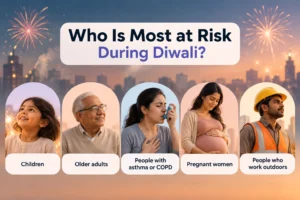
Although poor air quality can affect anyone, certain groups are more vulnerable to its effects.
Children
Children’s lungs are still developing, and they breathe more air relative to their body weight than adults. Exposure to polluted air may aggravate respiratory symptoms and affect respiratory health.
Parents should be especially attentive to persistent coughing, wheezing or breathing difficulties during periods of poor air quality.
Older adults
Older adults may be more susceptible to the effects of pollution, particularly if they have heart disease, lung disease or other chronic health conditions.
They should consider limiting outdoor exertion when air quality deteriorates.
People with asthma or COPD
Those with pre-existing respiratory conditions may experience worsening symptoms during pollution episodes.
If you have a prescribed inhaler or respiratory action plan, follow your doctor’s instructions. Do not independently change medication doses.
Pregnant women
Pregnancy is another reason to take air pollution exposure seriously. Research links air pollution exposure with adverse pregnancy outcomes, although individual risk depends on several factors.
Pregnant women should follow local air-quality advisories and reduce avoidable exposure during periods of poor air quality.
People who work outdoors
Traffic personnel, delivery workers, construction workers and others who spend long hours outdoors may have greater exposure than people who remain indoors.
Where possible, these workers should follow workplace safety guidance, use suitable protective equipment and reduce strenuous outdoor activity during periods of very poor air quality.
What Are the Long-Term Health Risks of Air Pollution?
The health impact of polluted air depends on the concentration of pollutants, the duration and frequency of exposure, and individual susceptibility.
Short-term exposure can aggravate asthma and other respiratory conditions. Long-term exposure to air pollution is associated with chronic respiratory disease, cardiovascular disease, lung cancer and other adverse health outcomes.
However, it is important not to assume that a few hours of exposure during Diwali will automatically cause a chronic illness. Individual outcomes vary, and the effects of air pollution reflect a combination of exposure and other risk factors.
The concern is particularly significant when pollution episodes occur repeatedly or when people are exposed to high pollution levels over extended periods.
For individuals who already have asthma, COPD or heart disease, even a temporary deterioration in air quality may be enough to trigger symptoms that require treatment.
How to Protect Your Lungs During Diwali?
You cannot control every source of pollution around you, but you can take steps to reduce your exposure.
The following precautions can help you make safer decisions during Diwali and the days that follow.
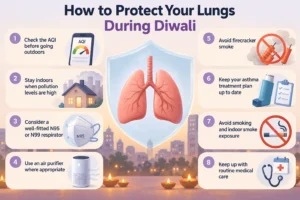
1. Check the AQI before going outdoors
The Air Quality Index provides information about the level of air pollution and its potential health implications.
In India, the Central Pollution Control Board classifies AQI values into categories ranging from Good to Severe. As air quality worsens, health concerns increase, particularly for sensitive groups.
Before exercising, taking children outdoors or planning a long journey, check the latest AQI for your area.
If pollution levels are poor or worse, consider postponing strenuous outdoor activities, especially if you have asthma, COPD or heart disease.
2. Stay indoors when pollution levels are high
Reducing the amount of time you spend in heavily polluted outdoor environments can help limit exposure.
During periods of severe pollution:
- Avoid unnecessary outdoor activities.
- Keep children away from areas filled with firecracker smoke.
- Reschedule outdoor exercise.
- Keep windows and doors closed when outdoor air is heavily polluted, provided indoor air is not being contaminated by other sources.
- Use air conditioning on a recirculation setting where available and appropriate.
Staying indoors does not guarantee clean air. Smoke can enter buildings, and indoor pollution sources may also affect air quality.
3. Consider a well-fitted N95 or N99 respirator
When you must go outdoors during periods of high particle pollution, a properly fitted N95 or N99 respirator can help reduce exposure to airborne particles.
Its effectiveness depends on the fit and correct use. Ordinary cloth masks and loose-fitting face coverings generally offer less reliable protection against fine particles.
Particle-filtering respirators do not protect against every harmful gas, and they should not be treated as a substitute for reducing exposure.
If you have a medical condition that makes breathing through a respirator difficult, seek advice from your healthcare professional.
4. Use an air purifier where appropriate
A portable air purifier with a suitably sized high-efficiency particulate air (HEPA) filter may reduce airborne particles in an enclosed room.
To use one effectively:
- Select a unit suitable for the room size.
- Follow the manufacturer’s filter replacement instructions.
- Keep doors and windows closed when outdoor pollution is high, where practical.
- Avoid devices that intentionally generate ozone.
An air purifier can improve indoor particle levels, but it cannot remove every pollutant or make a heavily polluted environment completely risk-free.
5. Avoid firecracker smoke
The most direct way to reduce exposure to firecracker emissions is to avoid areas where fireworks are being used.
Choose celebrations that do not involve burning firecrackers, particularly if you have asthma or another respiratory condition. Keep children and older family members away from concentrated smoke.
If you begin coughing or experiencing breathing discomfort, move away from the smoke and into a cleaner-air environment.
6. Keep your asthma treatment plan up to date
People with asthma should review their prescribed treatment plan before the festive season, especially if they have experienced recent flare-ups.
Make sure you know:
- Which medication to use for routine control.
- Which prescribed medication to use for quick relief.
- How to use your inhaler correctly.
- When worsening symptoms require medical attention.
Do not stop controller medication or increase doses without appropriate medical advice.
If your symptoms become more frequent or your usual treatment is not providing relief, contact your doctor promptly.
7. Avoid smoking and indoor smoke exposure
Cigarette smoke, incense smoke and other indoor combustion sources can add to respiratory irritation when outdoor air quality is already poor.
Consider avoiding smoking indoors and reducing unnecessary sources of smoke in enclosed spaces. Ventilate your home when outdoor air quality is suitable for doing so.
8. Keep up with routine medical care
If you have persistent respiratory symptoms or an existing lung condition, do not rely solely on home remedies or pollution precautions.
An appropriate medical assessment can help identify whether symptoms are related to pollution exposure, asthma, infection or another condition.
These measures can reduce exposure, but they cannot eliminate every risk associated with the Diwali pollution effects on health.
What Should You Do If You Develop a Pollution-Related Cough?
A cough after exposure to smoke or smog may occur because the respiratory tract has become irritated. However, a cough can also be caused by asthma, allergies, respiratory infections or other medical conditions.
If you develop a pollution cough, consider the following steps.
- Move to cleaner air: Leave areas where firecracker smoke or heavy pollution is present.
- Avoid strenuous activity: Give yourself time to recover, particularly if exercise makes the cough or breathlessness worse.
- Stay hydrated: Drinking fluids may soothe throat discomfort, although hydration does not remove pollutants from your lungs.
- Follow your prescribed treatment: If you have asthma or another diagnosed respiratory condition, follow your existing medical plan.
- Seek medical advice if symptoms persist: A cough that continues, worsens or occurs alongside wheezing, fever or shortness of breath needs appropriate evaluation.
Avoid taking antibiotics, steroids or other prescription medicines without medical advice. Treatment depends on the cause of the symptoms.
Seek emergency care for severe breathing difficulty, significant chest pain, bluish lips or other signs of a medical emergency.
When Should You Consult a Pulmonologist?
A pulmonologist is a doctor who specialises in diagnosing and treating diseases of the lungs and respiratory system.
You may benefit from a consultation if you experience:
- Persistent coughing after pollution exposure.
- Recurrent wheezing or chest tightness.
- Breathlessness during routine activities.
- Asthma symptoms that become more frequent.
- Repeated respiratory flare-ups during pollution season.
- A noticeable decline in your usual exercise tolerance.
People with asthma, COPD or other chronic respiratory conditions may need an individualised management plan during periods of poor air quality.
If you are looking for a pulmonologist in Noida or a chest specialist in Noida, consider consulting a qualified respiratory specialist for an assessment of persistent symptoms or worsening breathing difficulties.
A doctor may review your medical history, examine your lungs and recommend tests such as spirometry or other investigations if clinically appropriate.
Can Air Pollution Trigger Asthma Attacks?
Yes. Air pollution can trigger or worsen asthma symptoms in susceptible individuals.
Pollutants and smoke may irritate sensitive airways, contributing to inflammation and narrowing. This can lead to wheezing, coughing, chest tightness and breathlessness.
If you already have asthma, take the following precautions:
- Follow your prescribed asthma action plan.
- Carry your prescribed reliever inhaler.
- Limit outdoor exertion when air quality is poor.
- Avoid firecracker smoke and other obvious triggers.
- Seek medical advice if symptoms become more frequent.
If you need repeated relief medication or experience worsening breathlessness, do not ignore the change.
People whose asthma remains poorly controlled should arrange a medical review. Depending on the assessment, a doctor may recommend changes to their management plan.
For those seeking asthma treatment in Noida, a qualified respiratory specialist can help assess symptoms, review inhaler technique and develop a treatment plan based on individual needs.
Severe breathing difficulty is an emergency and requires immediate medical care.
Frequently Asked Questions (FAQs)
1. What are the most common Diwali pollution effects on health?
Common effects include coughing, throat irritation, burning eyes, wheezing, chest tightness and breathlessness. People with asthma or COPD may experience worsening symptoms. The severity depends on the level and duration of exposure and the person’s underlying health.
2. How long can Diwali air pollution affect breathing?
The duration varies according to the pollution level, weather conditions and individual susceptibility. Symptoms caused by temporary irritation may improve after exposure decreases, but pollution can remain elevated for days in some locations. Persistent or worsening symptoms should be medically assessed.
3. Can Diwali pollution damage the lungs?
Air pollution can irritate the airways, worsen asthma and affect lung function. Repeated or long-term exposure is associated with chronic respiratory and cardiovascular health risks. The effects depend on exposure and individual risk factors.
4. Does an N95 mask protect against Diwali pollution?
A properly fitted N95 respirator can reduce exposure to airborne particles, including fine particulate matter. However, it does not protect against every harmful gas, and its effectiveness depends on fit and correct use. Reducing exposure remains important.
5. What should I do if pollution makes my asthma worse?
Move away from the polluted environment and follow your prescribed asthma action plan. Use your medication as directed. Contact your doctor if symptoms worsen or your usual treatment is not providing adequate relief. Seek emergency care for severe breathing difficulty.
6. Is indoor air safer during Diwali?
Indoor air may contain fewer outdoor particles when windows and doors are closed and suitable filtration is used. However, smoke can enter buildings, and indoor sources can also contribute to pollution. Indoor air quality depends on the building, ventilation and pollution sources.
7. When should I visit a chest specialist for a pollution cough?
Consider consulting a chest specialist if your cough persists, repeatedly returns, worsens or occurs with wheezing or breathlessness. Severe breathing difficulty, bluish lips or significant chest pain require urgent medical attention.
8. Can children be affected by Diwali pollution?
Yes. Children may experience coughing, eye irritation, wheezing and worsening asthma symptoms during periods of poor air quality. Reduce their exposure to firecracker smoke and strenuous outdoor activity when pollution levels are high. Seek medical advice for persistent or concerning symptoms.
Conclusion
Diwali should be a time for celebration, but poor air quality can make the festive season challenging for people with sensitive airways and existing respiratory conditions.
Understanding the Diwali pollution effects on health can help you recognise early warning signs, make informed decisions about outdoor activities and take practical steps to reduce exposure.
Check the AQI before going outside, avoid concentrated firecracker smoke, improve indoor air quality where possible and follow your prescribed treatment plan if you have asthma or another lung condition.
Most importantly, do not ignore persistent coughing, wheezing or breathlessness. If symptoms continue or become more severe, seek medical advice. Sudden or severe breathing difficulty requires urgent care.
If you are experiencing ongoing respiratory symptoms and need a pulmonologist in Noida, consult a qualified medical professional for an appropriate assessment. People seeking asthma treatment in Noida should also receive an individualised evaluation rather than relying on home remedies alone.
A few sensible precautions can help you make safer choices during Diwali and protect your respiratory health throughout the pollution season.