Balloon dilatation of airways is a minimally invasive procedure used to open narrowed or blocked airways in the lungs. It is commonly performed when a patient has difficulty breathing due to narrowing of the trachea or bronchi. The narrowing may be caused by scarring, inflammation, tumors, or other conditions that reduce the space available for air to pass through.
This procedure is important because airway narrowing can seriously affect breathing, oxygen levels, and quality of life. Patients may experience shortness of breath, wheezing, coughing, or recurrent chest infections. Balloon dilatation helps widen the airway and improve airflow, often providing significant relief without the need for major surgery.
What is Balloon Dilatation of Airways?
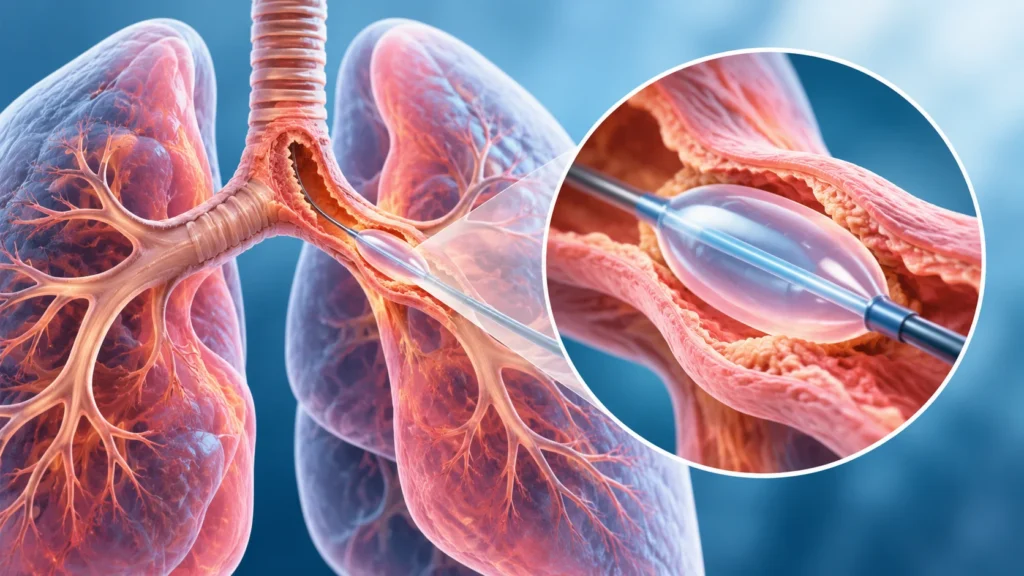
Balloon dilatation of airways is a procedure used to widen a narrowed or blocked section of the airway. The airway includes the trachea, which is the main windpipe, and the bronchi, which are the branches that carry air into the lungs. When any part of this system becomes narrow, airflow is reduced and breathing becomes difficult.
The procedure uses a small balloon that is inserted into the narrowed area and then inflated. The pressure from the balloon gently stretches the airway wall and widens the passage. This allows more air to flow through and improves breathing.
Balloon dilatation is usually performed using a bronchoscope, which is a thin, flexible tube with a camera. This allows the doctor to see inside the airway and place the balloon precisely at the narrowed area. The procedure is minimally invasive and does not require open surgery in most cases.
Why is Balloon Dilatation Done?
Balloon dilatation is done to treat airway narrowing that affects breathing. The goal is to restore normal airflow and improve the patient’s quality of life.
Common reasons for the procedure
- Scarring after prolonged intubation or tracheostomy.
- Narrowing after infection or inflammation.
- Tumors pressing on or growing into the airway.
- Post-surgical narrowing after airway surgery.
- Radiation-induced scarring.
- Congenital narrowing present from birth.
- Trauma or injury to the airway.
- Inflammatory conditions affecting the airway.
Why it matters
Airway narrowing can cause serious breathing problems. In some cases, it can lead to low oxygen levels, recurrent infections, or respiratory failure. Balloon dilatation helps open the airway and prevent these complications.
Types of Airway Narrowing
Airway narrowing can happen in different parts of the respiratory system and for different reasons.
Based on location
- Tracheal stenosis, which is narrowing of the main windpipe.
- Bronchial stenosis, which is narrowing of one or more branches of the airway.
- Subglottic stenosis, which is narrowing just below the vocal cords.
- Mainstem bronchus narrowing, which affects the large branches leading into the lungs.
Based on cause
- Post-intubation stenosis, which happens after prolonged use of a breathing tube.
- Post-tracheostomy stenosis, which happens after a tracheostomy tube has been in place.
- Tumor-related narrowing, which is caused by a growth pressing on or invading the airway.
- Inflammatory narrowing, which is caused by infection or chronic inflammation.
- Radiation-induced narrowing, which happens after radiation therapy to the chest or neck.
- Trauma-related narrowing, which happens after injury to the airway.
Based on severity
- Mild narrowing, which may cause mild symptoms or be found incidentally.
- Moderate narrowing, which causes noticeable breathing difficulty.
- Severe narrowing, which can cause severe shortness of breath and low oxygen levels.
Symptoms of Airway Narrowing
Symptoms depend on the location and severity of the narrowing. Some patients have mild symptoms, while others have severe breathing problems.
Common symptoms
- Shortness of breath, especially during activity.
- Wheezing or noisy breathing.
- Persistent cough.
- Difficulty breathing deeply.
- Recurrent chest infections.
- Stridor, which is a high-pitched sound during breathing.
- Feeling of tightness in the chest.
- Reduced exercise tolerance.
- Fatigue.
- Low oxygen levels in severe cases.
Symptoms that need urgent attention
- Severe shortness of breath.
- Inability to speak in full sentences.
- Blue lips or fingertips.
- Severe wheezing or stridor.
- Fainting or confusion.
- Sudden worsening of breathing.
Who Needs Balloon Dilatation?
Balloon dilatation is recommended for patients with airway narrowing that affects breathing or causes recurrent problems.
Patients who may benefit
- Patients with post-intubation or post-tracheostomy scarring.
- Patients with tumor-related airway narrowing.
- Patients with inflammatory or infection-related narrowing.
- Patients with narrowing after airway surgery.
- Patients with congenital airway narrowing.
- Patients with recurrent chest infections due to poor airflow.
- Patients who are not suitable for major surgery.
Why early treatment matters
Early treatment can prevent complications such as low oxygen, recurrent infections, or respiratory failure. It can also improve quality of life and reduce the need for emergency care.
How is Balloon Dilatation Performed?
Balloon dilatation is usually performed using a bronchoscope. The procedure is minimally invasive and is done under sedation or anesthesia depending on the patient and the extent of narrowing.
Steps of the procedure
- The patient is prepared and positioned comfortably.
- Sedation or anesthesia is given to keep the patient comfortable.
- A bronchoscope is inserted through the nose or mouth into the airway.
- The narrowed area is identified and assessed.
- A small balloon is passed through the bronchoscope to the narrowed area.
- The balloon is inflated gradually to widen the airway.
- The balloon is deflated and removed.
- The airway is rechecked to confirm improvement.
- The patient is monitored during recovery.
Duration of the procedure
The procedure usually takes about 30 to 60 minutes, depending on the location and severity of narrowing. Some patients may need more than one session to achieve the best result.
Preparation Before the Procedure
Proper preparation helps ensure the procedure is safe and effective.
Preparation steps
- Detailed medical history and physical examination.
- Review of medicines, especially blood thinners.
- Blood tests and imaging as needed.
- Fasting for a few hours before the procedure.
- Discussion of anesthesia or sedation plan.
- Arrangement for someone to accompany the patient home.
What patients should tell the doctor
- All medicines and supplements being taken.
- History of allergies.
- History of bleeding or clotting problems.
- History of lung or heart disease.
- Previous airway procedures or surgeries.
- Pregnancy or possibility of pregnancy.
Recovery After Balloon Dilatation
Recovery is usually quick because the procedure is minimally invasive. Most patients can go home the same day or after a short hospital stay.
Immediate recovery
- Monitoring of breathing and oxygen levels.
- Rest until the effects of sedation wear off.
- Mild sore throat or cough for a day or two.
- Avoid eating or drinking until fully awake.
Short-term recovery
- Avoid strenuous activity for a few days.
- Follow instructions on diet and fluids.
- Take prescribed medicines as directed.
- Watch for signs of complications such as fever or worsening breathing.
Long-term follow-up
- Regular follow-up to check airway patency.
- Repeat imaging or bronchoscopy if needed.
- Treatment of underlying cause such as tumor or inflammation.
- Repeat dilatation if narrowing returns.
Benefits of Balloon Dilatation
Balloon dilatation offers several benefits for patients with airway narrowing.
Key benefits
- Improves airflow and breathing.
- Reduces shortness of breath and wheezing.
- Lowers risk of recurrent chest infections.
- Minimally invasive with no large incision.
- Quick recovery compared to open surgery.
- Can be repeated if needed.
- Improves quality of life and daily activity tolerance.
Why patients prefer this procedure
- Less pain and discomfort.
- Shorter hospital stay.
- Faster return to normal activities.
- Lower risk compared to major surgery.
- Effective relief of breathing symptoms.
Risks and Complications
Like any medical procedure, balloon dilatation has some risks, although serious complications are rare.
Possible risks
- Mild bleeding.
- Temporary sore throat or cough.
- Infection.
- Airway spasm.
- Pneumothorax, which is air leaking around the lung.
- Recurrence of narrowing.
- Need for repeat procedure.
How risks are managed
- Careful patient selection.
- Use of imaging and bronchoscopy guidance.
- Monitoring during and after the procedure.
- Prompt treatment of any complications.
- Follow-up care to detect recurrence early.
When is Balloon Dilatation Not Suitable?
Balloon dilatation may not be suitable for all patients or all types of narrowing.
Situations where it may not be recommended
- Very long or complex narrowing that needs surgery.
- Severe bleeding risk.
- Uncontrolled infection.
- Severe heart or lung disease that makes sedation risky.
- Tumors that need surgical removal.
- Patients who cannot tolerate bronchoscopy.
Alternatives if not suitable
- Airway stenting.
- Surgical repair.
- Laser therapy or other airway treatments.
- Medical management of underlying cause.
Role of Interventional Pulmonology
Balloon dilatation is part of interventional pulmonology, a field that focuses on minimally invasive procedures for lung and airway problems.
Why specialist care matters
- Accurate diagnosis of the cause and location of narrowing.
- Skilled performance of the procedure.
- Safe management of sedation and anesthesia.
- Ability to handle complications.
- Follow-up care to ensure long-term success.
Multidisciplinary support
- Pulmonologists for lung and airway care.
- Thoracic surgeons for complex cases.
- Anesthesiologists for safe sedation.
- Oncologists if tumor-related.
- Radiologists for imaging support.
- Critical care team for severe cases.
When to See a Doctor
Medical evaluation is important for anyone with symptoms of airway narrowing.
See a doctor if you have:
- Persistent shortness of breath.
- Wheezing or noisy breathing.
- Recurrent chest infections.
- Difficulty breathing during activity.
- History of intubation or tracheostomy.
- Known airway narrowing or tumor.
- Symptoms that worsen over time.
Seek emergency care if you have:
- Severe shortness of breath.
- Blue lips or fingertips.
- Inability to speak in full sentences.
- Severe wheezing or stridor.
- Fainting or confusion.
- Sudden worsening of breathing.
Prevention of Airway Narrowing
Not all airway narrowing can be prevented, but some causes can be reduced.
Prevention pointers
- Avoid prolonged intubation when possible.
- Manage infections promptly.
- Avoid smoking and exposure to lung irritants.
- Follow up after airway surgery or tracheostomy.
- Treat inflammatory conditions early.
- Monitor for symptoms after chest radiation.
- Seek care for persistent breathing problems.
For patients with risk factors
- Regular follow-up with a pulmonologist.
- Imaging or bronchoscopy if symptoms appear.
- Early treatment of infections or inflammation.
- Avoid delay in reporting breathing changes.
Why Choose Rama Hospital for Balloon Dilatation?
Balloon dilatation of airways requires skill, experience, and advanced equipment. A hospital with interventional pulmonology expertise can provide safe and effective treatment.
Why hospital care matters
- Expert evaluation by pulmonologists and interventional specialists.
- Advanced bronchoscopy and imaging facilities.
- Safe sedation and anesthesia support.
- Minimally invasive procedure with quick recovery.
- Management of complex or recurrent narrowing.
- Follow-up care to ensure long-term airway patency.
Trust and authority points
- Experienced interventional pulmonology team.
- Modern technology for diagnosis and treatment.
- Comprehensive care from diagnosis to recovery.
- Patient education and family support.
- Emergency care for severe breathing problems.
Frequently Asked Questions (FAQs)
1. What is balloon dilatation of airways?
Balloon dilatation is a minimally invasive procedure used to widen a narrowed airway. A small balloon is inflated inside the narrowed area to improve airflow and breathing.
2. Why is balloon dilatation done?
It is done to treat airway narrowing caused by scarring, tumors, inflammation, or other conditions. The goal is to restore normal breathing and prevent complications.
3. Is balloon dilatation painful?
Most patients do not feel pain during the procedure because sedation or anesthesia is used. Some may have a mild sore throat or cough afterward.
4. How long does the procedure take?
The procedure usually takes about 30 to 60 minutes. Some patients may need more than one session depending on the severity of narrowing.
5. Is balloon dilatation safe?
Yes, it is generally safe when performed by experienced specialists. Serious complications are rare. Minor risks include sore throat, cough, or mild bleeding.
6. Can airway narrowing come back after treatment?
Yes, in some cases narrowing can return, especially if the cause is ongoing. Regular follow-up and treatment of the underlying cause help reduce recurrence.
7. How soon can I go home after the procedure?
Many patients go home the same day or after a short hospital stay. Recovery is usually quick because the procedure is minimally invasive.
8. When should I seek emergency care after the procedure?
Seek emergency care if you have severe shortness of breath, blue lips, fainting, or sudden worsening of breathing. These may be signs of a complication.
Conclusion
Balloon dilatation of airways is an effective, minimally invasive treatment for airway narrowing that affects breathing. It helps improve airflow, reduce symptoms, and prevent complications such as recurrent infections or respiratory failure. The procedure is safe, quick, and offers faster recovery compared to open surgery.
The most important steps are proper diagnosis, skilled performance of the procedure, and follow-up care to ensure long-term success. For patients with persistent breathing difficulty, wheezing, or a history of airway narrowing, a medical evaluation can make a major difference. With the right care, most patients experience significant improvement in breathing and quality of life.
Rama Hospital can help evaluate airway narrowing, determine if balloon dilatation is suitable, and provide expert care from diagnosis to recovery.