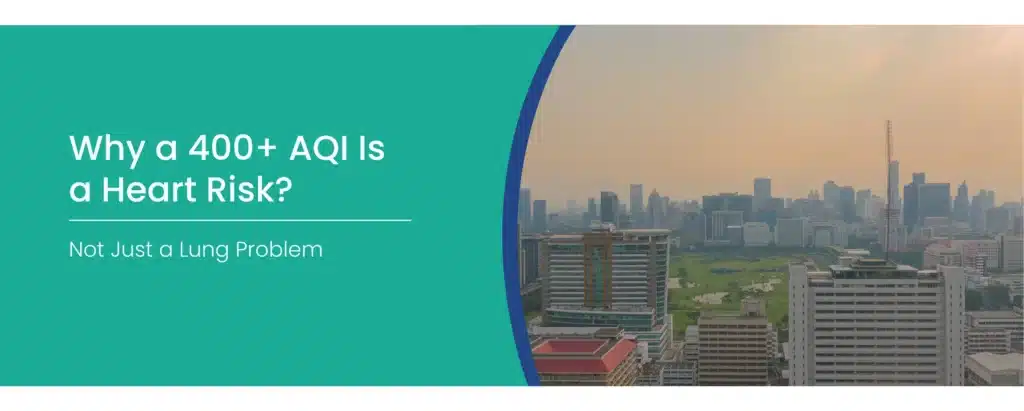
Diwali is a time for celebrations, family gatherings and festive traditions. But in Delhi-NCR, the celebrations often coincide with a deterioration in air quality. Smoke from firecrackers, vehicle emissions, construction dust and other pollution sources can combine with unfavourable weather conditions to create a thick layer of smog.
For some people, the immediate effects may include burning eyes, an irritated throat or a persistent cough. For others, particularly those with asthma, chronic obstructive pulmonary disease (COPD) or existing heart conditions, polluted air can trigger more serious breathing difficulties.
The challenge is knowing when a symptom is a temporary reaction to pollution and when it requires medical attention.
Diwali smog and lung health are closely connected because fine particles and irritating gases can enter the respiratory tract, trigger inflammation and worsen existing breathing conditions. The World Health Organization (WHO) identifies particulate matter as a major air pollutant associated with respiratory illness and aggravated asthma.
Here are seven warning signs you should never ignore during the festive season.
How Does Diwali Smog Affect Your Lungs?
Smog is a mixture of air pollutants that reduces air quality and can irritate the respiratory system. During Diwali, firecracker smoke can add to pollution from traffic, industries, dust and other combustion sources.
One of the main concerns is fine particulate matter, particularly PM2.5. These tiny particles can travel deep into the lungs, where they may trigger inflammation and contribute to respiratory and cardiovascular problems.
Exposure to polluted air can cause symptoms even in otherwise healthy people. Those with pre-existing respiratory conditions may experience more severe effects.
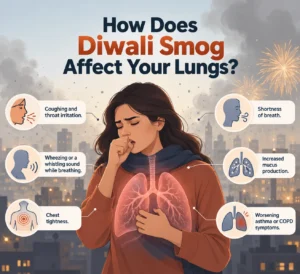
Common symptoms of air pollution exposure include:
- Coughing and throat irritation.
- Wheezing or a whistling sound while breathing.
- Chest tightness.
- Shortness of breath.
- Increased mucus production.
- Worsening asthma or COPD symptoms.
Not everyone exposed to smog will develop these symptoms, and their severity depends on factors such as pollution levels, duration of exposure and individual health.
The important point is that new, severe or worsening breathing symptoms should not automatically be dismissed as a normal effect of Diwali pollution.
7 Warning Signs of Diwali Smog You Shouldn’t Treat at Home
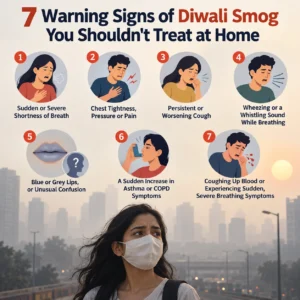
1. Sudden or Severe Shortness of Breath
Feeling breathless after walking quickly or climbing stairs can have several explanations. However, if you suddenly struggle to breathe while resting, speaking or performing simple activities, it may indicate a serious problem.
Air pollution can irritate the airways and aggravate conditions such as asthma and COPD. In some cases, severe breathing difficulty may also be associated with other lung or heart problems that need immediate assessment.
Watch for these signs:
- Gasping for air or struggling to complete a sentence.
- Feeling breathless while sitting or resting.
- Rapid breathing that does not settle.
- Difficulty breathing that is significantly worse than usual.
- A sudden inability to perform everyday activities because of breathlessness.
Do not wait for these symptoms to disappear on their own. Severe breathing difficulty requires emergency medical attention.
If you are experiencing mild but new or persistent breathlessness, arrange prompt medical assessment rather than repeatedly treating it at home.
What should you do?
Move away from the polluted environment if you can do so safely. Sit upright in a comfortable position and avoid physical exertion. If breathing is severely difficult, call India’s emergency number, 112, or seek immediate emergency care. Do not delay treatment while trying home remedies.
2. Chest Tightness, Pressure or Pain
Chest tightness can occur when polluted air irritates the airways, particularly in people with asthma. However, chest discomfort should never automatically be attributed to smog.
Chest pain or pressure can also indicate a heart-related emergency or another serious medical condition. Air pollution itself is associated with cardiovascular as well as respiratory health risks.
Be especially cautious if chest discomfort occurs alongside breathlessness, sweating, nausea, dizziness or pain spreading to the arm, back, neck or jaw.
Seek emergency medical care if you experience:
- Persistent or severe chest pressure.
- Chest pain accompanied by difficulty breathing.
- Pain spreading to the arm, back, neck or jaw.
- Chest discomfort accompanied by faintness or cold sweats.
Do not attempt to manage these symptoms with steam inhalation, herbal remedies or over-the-counter medication.
A doctor may need to assess your heart and lungs to identify the cause. Prompt evaluation is important because the consequences of delaying treatment can be serious.
3. Persistent or Worsening Cough
A cough is one of the more common symptoms of air pollution exposure. Smoke and fine particles can irritate the lining of the airways, leading to coughing as the body attempts to clear irritants.
However, a cough that becomes increasingly severe, interferes with sleep or continues after you have moved away from the polluted environment deserves attention.
Pay attention if your cough:
- Becomes progressively worse.
- Persists or repeatedly returns.
- Disrupts sleep or everyday activities.
- Occurs alongside fever or increasing breathlessness.
- Produces blood or blood-streaked mucus.
A persistent cough does not necessarily mean that your lungs have suffered permanent damage. It may result from irritation, asthma, an infection or another condition. The cause cannot be established from the symptom alone.
When should you seek help?
Arrange a medical assessment if your cough is worsening, persistent or accompanied by other concerning symptoms. Seek urgent medical care if you cough up blood, particularly if it is more than a small streak or occurs with chest pain or breathing difficulty.
Do not start antibiotics or cough medicines without appropriate medical advice, especially if you have an existing respiratory condition.
4. Wheezing or a Whistling Sound While Breathing
Wheezing is a high-pitched whistling sound that usually occurs when air moves through narrowed airways.
For people with asthma, exposure to smoke and air pollution can trigger airway inflammation and narrowing. People with COPD may also experience worsening wheezing and breathing difficulties during periods of poor air quality.
You might notice wheezing when breathing out, a feeling of tightness in the chest or difficulty getting enough air.
The symptoms may be particularly concerning if they are new or more severe than your usual experience.
Do not ignore wheezing if:
- It starts suddenly after exposure to smoke.
- It becomes progressively worse.
- Your prescribed reliever medication is not helping as expected.
- It occurs with significant breathlessness.
- You have difficulty speaking because of breathing problems.
If you have asthma or COPD, follow your prescribed action plan and use medication as directed by your doctor. Do not increase doses or add inhaled medicines on your own.
Severe wheezing or breathing difficulty requires emergency assessment. Remember that the absence of a loud wheezing sound does not rule out a serious asthma attack.
5. Blue or Grey Lips, or Unusual Confusion
Changes in lip colour, particularly a blue or grey appearance, can indicate that the body is not receiving enough oxygen. Sudden confusion may also occur during a serious medical emergency.
These symptoms are not typical signs of minor throat or airway irritation. They require immediate attention.
Look for warning signs such as:
- Blue or grey lips, tongue or gums.
- Sudden confusion or unusual drowsiness.
- Fainting or reduced responsiveness.
- Severe breathlessness accompanied by a change in skin colour.
On darker skin tones, oxygen-related colour changes may be easier to notice on the lips, tongue, gums, palms or inside the eyelids.
What should you do?
Call 112 or seek emergency medical assistance immediately. Do not wait to see whether the colour returns to normal, and do not attempt to treat the problem with steam, warm drinks or home remedies.
These symptoms can have several serious causes, including problems involving the lungs, heart or circulation. Immediate clinical assessment is essential.
6. A Sudden Increase in Asthma or COPD Symptoms
People living with asthma or COPD need to be particularly cautious during periods of severe air pollution.
Asthma causes inflammation and narrowing of the airways, while COPD can cause persistent breathing difficulties and reduced airflow. Polluted air may aggravate either condition, leading to a flare-up.
A person who normally manages their condition well may notice more coughing, wheezing, mucus production or breathlessness during a pollution episode.
Warning signs of a flare-up include:
- Needing prescribed reliever medication more often than usual.
- Symptoms that wake you during the night.
- Increasing breathlessness during routine activities.
- Difficulty performing everyday tasks.
- Symptoms that do not improve according to your prescribed action plan.
If your symptoms are worsening, contact your treating doctor promptly. If you have severe difficulty breathing, cannot speak normally or experience blue or grey lips, seek emergency care.
People with asthma or COPD should keep their prescribed medicines available and follow their existing treatment plan. Do not stop controller medication or change the dose without medical advice.
A doctor may need to assess whether your treatment requires adjustment and whether another condition is contributing to your symptoms.
7. Coughing Up Blood or Experiencing Sudden, Severe Breathing Symptoms
Blood in your sputum, particularly when accompanied by chest pain or breathlessness, should never be dismissed as a routine effect of smog.
Similarly, sudden severe breathlessness, sharp chest pain or an abrupt deterioration in your ability to breathe may indicate a medical emergency.
Although these symptoms can have several causes, they may be associated with serious lung conditions, including infections, bleeding or other urgent problems.
Seek urgent medical assessment if you notice:
- Blood in your cough or sputum.
- Sudden, unexplained breathing difficulty.
- Sharp chest pain that worsens when breathing.
- A rapid deterioration in your respiratory symptoms.
- Breathlessness accompanied by faintness or a racing heartbeat.
If you are coughing up blood alongside severe breathing difficulty or chest pain, seek emergency care immediately.
Do not assume that the pollution has caused the symptom and wait for it to settle. An examination is necessary to identify the cause and determine the appropriate treatment.
Who Is Most Vulnerable to Diwali Air Pollution?
Although poor air quality can affect anyone, certain groups may be more susceptible to its effects.
Children
Children’s lungs are still developing, and they may be more vulnerable to the effects of air pollution. Parents should watch for persistent coughing, wheezing, rapid breathing or difficulty participating in normal activities.
Seek prompt medical advice if a child develops worsening respiratory symptoms. Severe breathing difficulty, blue or grey lips, or unusual drowsiness requires emergency care.
Older adults
Older adults may be more vulnerable, particularly if they have existing lung or heart conditions. New breathlessness, chest discomfort or an unusual decline in activity tolerance should not be dismissed as aging or pollution alone.
People with asthma or COPD
Smoke and particulate pollution can aggravate airway inflammation and trigger flare-ups. People with these conditions should follow their prescribed treatment plans and avoid exposure as much as reasonably possible.
People with heart disease
Air pollution can affect the cardiovascular system as well as the lungs. Chest pain, unexplained breathlessness, faintness or sudden weakness require appropriate medical assessment.
Pregnant people
Reducing exposure to air pollution during pregnancy is a sensible precaution because air pollution has been associated with adverse pregnancy outcomes. Anyone who develops breathing difficulties or other concerning symptoms should seek medical advice.
The goal is not to create unnecessary fear. It is to recognise that the same level of pollution exposure may affect different people in different ways.
What Can You Do at Home if Pollution Irritates Your Lungs?
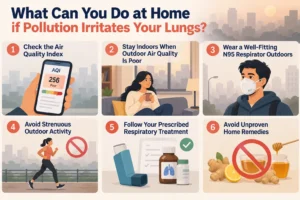
Mild irritation may improve when you reduce your exposure to polluted air. However, home care should never replace medical attention when warning signs are present.
1. Check the Air Quality Index
Check reliable air-quality updates before planning outdoor activities. When air quality is poor, reduce strenuous outdoor exercise and limit unnecessary time outside.
Children, older adults and people with existing respiratory or heart conditions should take extra precautions.
2. Stay Indoors When Outdoor Air Quality Is Poor
Keep windows and doors closed when outdoor pollution levels are high, provided indoor air is not being affected by another source of smoke or pollution.
Avoid burning incense, smoking, using indoor firecrackers or other activities that worsen indoor air quality.
If available, a suitable air purifier with a high-efficiency particulate air (HEPA) filter can help reduce airborne particles in an appropriately sized room. It does not remove every gaseous pollutant, and it cannot eliminate all health risks.
3. Wear a Well-Fitting N95 Respirator Outdoors
When outdoor exposure is unavoidable during high pollution, a well-fitting N95 respirator can reduce inhalation of fine particles.
The fit matters. Gaps around the nose and face reduce protection. A respirator does not remove every gaseous pollutant and should not be treated as permission to remain in heavily polluted surroundings.
People with significant breathing or heart conditions should discuss suitability with their doctor if they are unsure whether a respirator is appropriate for them.
4. Avoid Strenuous Outdoor Activity
Running, cycling or exercising vigorously outdoors increases the amount of air you breathe. During periods of severe pollution, consider moving exercise indoors to a cleaner environment.
If you develop unusual breathlessness, chest pain or wheezing during activity, stop and assess your symptoms. Seek medical care when indicated.
5. Follow Your Prescribed Respiratory Treatment
If you have asthma or COPD, keep your prescribed medication available and follow your action plan.
Do not discontinue inhalers because you feel better, and do not begin antibiotics, steroids or additional inhalers without medical guidance.
6. Avoid Unproven Home Remedies
Steam inhalation, herbal drinks and similar remedies do not remove pollutants from the lungs or treat serious respiratory distress. Hot steam can also cause burns.
Drinking enough water may help maintain hydration, but it is not a treatment for pollution-related lung injury.
If symptoms are severe, worsening or unusual, seek medical assessment rather than relying on home remedies.
When Should You Visit a Lung Specialist?
You should consider consulting a doctor if you develop a persistent cough, repeated wheezing, chest tightness or breathlessness during or after a period of poor air quality.
A pulmonologist, also known as a lung specialist, can assess respiratory symptoms and determine whether further investigation is needed.
Depending on your symptoms and medical history, the evaluation may include:
- A review of your symptoms and exposure history.
- A physical examination.
- Measurement of oxygen saturation when indicated.
- Lung function testing, such as spirometry, when appropriate.
- Chest imaging or other investigations if clinically necessary.
Not everyone exposed to pollution requires extensive testing. The appropriate assessment depends on the severity of symptoms, examination findings and individual risk factors.
If you are looking for a pulmonologist in Noida or a lung specialist in Noida, choose a healthcare provider who can evaluate your symptoms and guide you towards appropriate care.
At Rama Hospital, Noida, patients can contact the hospital to enquire about respiratory consultations and the appropriate route for assessment. If symptoms suggest an emergency, seek immediate emergency care rather than waiting for a routine appointment.
Frequently Asked Questions (FAQs)
1. Can Diwali smog damage your lungs?
Exposure to polluted air can irritate the respiratory tract, aggravate asthma and COPD, and contribute to respiratory and cardiovascular health problems. The effect depends on the pollutants involved, exposure level, duration and individual health. A single episode does not automatically mean permanent lung damage.
2. What are the first symptoms of air pollution affecting the lungs?
Common symptoms include coughing, throat irritation, wheezing, chest tightness and shortness of breath. Symptoms may be more pronounced in people with existing respiratory conditions. Severe or worsening symptoms require medical attention.
3. How long do breathing problems after Diwali last?
The duration varies according to the cause and severity. Mild irritation may settle after exposure decreases, while asthma flare-ups, infections and other conditions may require treatment. Persistent or worsening symptoms should be assessed by a doctor.
4. Can air pollution trigger an asthma attack?
Yes. Smoke and air pollution can trigger asthma symptoms, including coughing, wheezing, chest tightness and breathlessness. Follow your prescribed asthma action plan and seek urgent help if symptoms are severe or do not respond as expected.
5. Does wearing an N95 mask protect the lungs from Diwali smog?
A well-fitting N95 respirator can reduce exposure to airborne particles, including fine particulate matter. However, it does not remove every gaseous pollutant and cannot eliminate all risks associated with severe air pollution.
6. When should I go to the hospital for pollution-related breathing problems?
Seek emergency care for severe breathing difficulty, chest pressure or pain, blue or grey lips, sudden confusion or fainting. Coughing up blood also requires urgent medical assessment, especially when accompanied by breathlessness or chest pain.
7. Which doctor should I consult for pollution-related breathing problems?
A pulmonologist or respiratory specialist can assess persistent cough, wheezing, breathlessness and other lung-related symptoms. Severe or sudden symptoms should be evaluated through emergency services rather than waiting for a specialist appointment.
Conclusion
Diwali should be a time for celebration, not a reason to ignore your health. Yet smoke and poor air quality can place additional strain on the respiratory system, especially for children, older adults and people with existing lung or heart conditions.
A mild cough or temporary throat irritation may improve after you move away from polluted air. But severe breathlessness, chest pain, blue or grey lips, worsening asthma symptoms or coughing up blood should never be treated as routine effects of smog.
Reduce your exposure, monitor air quality and follow your prescribed treatment if you have a respiratory condition. Most importantly, recognise when symptoms need professional assessment.
If you are concerned about persistent breathing problems, consult an specialist. For patients seeking a lung specialist in Noida, Rama Hospital, Noida, can be contacted to enquire about respiratory consultation options.