Introduction
Have you ever felt a sudden, sharp ache just beneath your ribs after eating a heavy meal? If so, you might be dealing with the agonizing reality of gallstone pain. This common digestive issue affects millions of people worldwide, yet many mistake it for simple indigestion or a pulled muscle.
Understanding gallbladder stone pain early can save you from a late-night emergency room visit. In this guide, we will break down exactly where gallbladder pain is felt, what causes it, and how to find relief. If you are already experiencing these symptoms, getting expert advice from a specialized gallbladder pain doctor in Noida at a trusted center like Rama Hospital is the fastest path to recovery.
What are gallstones?
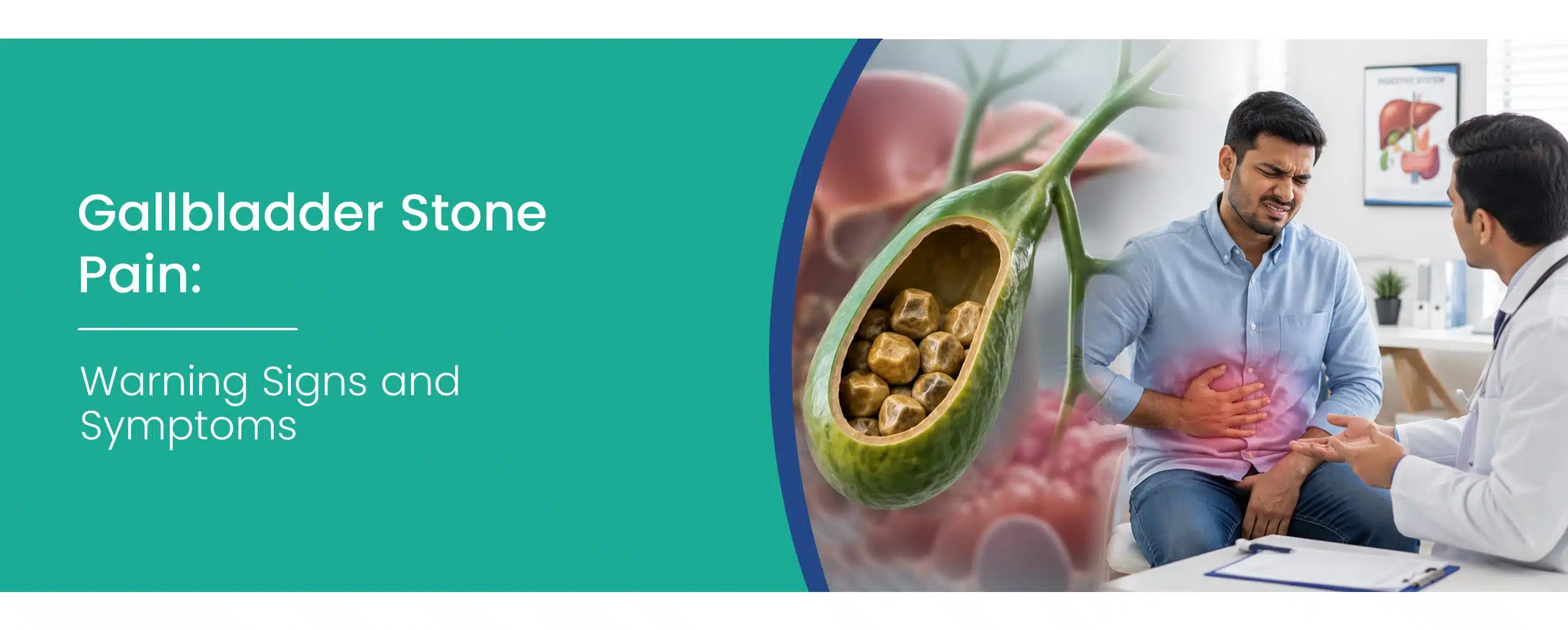
Gallstones are hardened, solid deposits of digestive fluid that form directly inside the small storage organ beneath your liver. These stones are not uniform in shape or size; they can range from tiny, microscopic grains of sand to large, solid masses the size of golf balls. As the stones grow in size, the risk of experiencing intense gallbladder stone pain increases significantly.
- Different Types: Most stones are made of hardened cholesterol, while others are pigment stones made of excess bilirubin.
- Varying Quantities: A person can develop a single, massive stone or host hundreds of tiny, sand-like crystals simultaneously.
- The Silent Threat: Smaller stones are often more dangerous because they can easily travel into the narrow exit tubes and cause sudden blockages.
- Physical Structure: They can be smooth and round or jagged and crystalline, which directly affects how much irritation they cause to the inner organ lining.
Why do they form?
Gallstones, medically known as cholelithiasis, typically form when the chemical balance of bile becomes disrupted, causing minerals and other substances to crystallize out of the liquid. When bile contains excessive waste products, it can become thick and sludge-like, eventually hardening into solid stones within the gallbladder. This is when symptoms of cholelithiasis, including gallbladder stone pain, may begin to develop, often without warning.

- Too Much Cholesterol: If your liver secretes more cholesterol than your bile can naturally dissolve, the excess forms hard crystals.
- High Bilirubin Levels: Certain blood conditions or liver issues cause your body to create too much bilirubin, leading to dark pigment stones.
- Improper Gallbladder Emptying: If the organ fails to contract completely or frequently enough, the stagnant bile becomes highly concentrated.
- The Sludge Stage: Before turning into solid stones, the fluid turns into a thick, sticky mucus known as biliary sludge, which is a primary precursor to an attack.
Exactly where is gallbladder pain felt?
One of the most confusing things about gallbladder stone pain is that it can travel to surprising parts of your body. Knowing the exact location helps doctors make a quick diagnosis.
- Pain under right rib cage: This is the primary location; it feels like a deep, dull, or sharp ache directly behind your lower ribs on the right side.
- Upper Middle Belly Pain: The ache often centers in the upper part of your stomach, right below your breastbone, making it easy to mistake for heartburn.
- Radiation to the Back: The pain frequently shoots straight through to your back, settling directly between your shoulder blades.
- Right Shoulder Aches: Because of shared nerve pathways in the chest, gallbladder inflammation can cause a strange, deep ache in your right shoulder tip.
How severe is gallbladder stone pain?
People who have experienced a gallbladder attack often describe gallbladder stone pain as some of the worst pain they have ever felt. It is vastly different from a typical stomach ache or gas pain.
The Intensity Metrics
- Severe stomach pain: The discomfort can be completely paralyzing, making it hard to sit still, bend over, or take deep breaths.
- The “Attack” Pattern: Known medically as biliary colic, the pain starts suddenly, builds to a high peak within an hour, and stays completely flat.
- No Relief from Movement: Unlike gas or a muscle strain, walking around, stretching, or passing gas provides absolutely zero relief.
- Can gallstones cause constant pain?: Generally, attacks come in waves, but if a stone creates a permanent blockage, the pain turns into a constant, throbbing ache that signals a medical emergency.
What triggers gallbladder stone pain?
When gallbladder stone pain starts causing painful attacks, lifestyle changes are rarely enough. You need professional care to avoid dangerous complications.
- The Gold Standard Treatment: Complete surgical removal of the gallbladder, known medically as a cholecystectomy.
- Laparoscopic (Keyhole) Surgery: Modern surgeons make 3 or 4 tiny incisions in your belly, using a small camera to remove the organ safely.
- Laser and Advanced Techniques: High-tech tools ensure minimal blood loss, almost no visible scarring, and a very low risk of infection.
- Fast Recovery Times: Most young adults can go home within 24 hours of keyhole surgery and return to normal desk work in less than a week.
- Living Without a Gallbladder: Your liver will still make bile; it will simply drip continuously into your digestive system, allowing you to live a normal life.
Progression to cholecystitis pain
If a gallstone stays stuck in the exit tube for too long, the trapped bile causes the walls of the gallbladder to become severely swollen and infected. This serious complication of cholelithiasis can lead to cholecystitis and severe pain. At this stage, gallbladder stone pain transforms from occasional discomfort into constant, debilitating agony that requires immediate medical attention.
- Cholecystitis Pain Characteristics: The pain changes from a temporary ache into a constant, burning, and severe daily agony.
- High Fever and Chills: As infection takes hold in the blood and tissue, your body temperature spikes significantly.
- Extreme Tenderness: Touching the upper right side of your stomach becomes unbearable; even the pressure of clothing can hurt.
- Jaundice Risks: If the blockage spills into the liver ducts, your skin and the whites of your eyes may turn visibly yellow.
Key warning signs and symptoms
Beyond the direct gallbladder stone pain, your body will drop several other clues that your gallbladder is struggling to function properly.
- Severe Nausea: A constant, unsettling feeling in your stomach that begins shortly after eating and lasts for hours.
- Projected Vomiting: Throwing up bitter, green-yellow bile because your digestive tract is completely backed up.
- Excessive Bloating: Feeling incredibly full, tight, and distended in your upper abdomen after regular meals.
- Changes in Stool: Passing pale, clay-colored stools because bile isn’t reaching your intestines to color it normally.
- Dark Urine: Urine that looks like tea or cola, which means bile pigments are backing up into your bloodstream and exiting through your kidneys.
Diagnostic steps your doctor will take
If you report gallbladder stone pain to a medical specialist, they will use quick, painless tests to see exactly what is happening inside your abdomen.
- The Ultrasound Standard: This is the most common tool; it uses sound waves to show real-time images of the stones.
- Liver Function Tests: Blood tests that check if your liver is irritated or blocked by a wandering stone.
- CT Scans: Used during emergencies to check if the gallbladder wall has ruptured or if there is severe internal swelling.
A guide to gallbladder stone treatment options
When gallbladder stone pain starts causing painful attacks, lifestyle changes are rarely enough. You need professional care to avoid dangerous complications.
- The Gold Standard Treatment: Complete surgical removal of the gallbladder, known medically as a cholecystectomy.
- Laparoscopic (Keyhole) Surgery: Modern surgeons make 3 or 4 tiny incisions in your belly, using a small camera to remove the organ safely.
- Laser and Advanced Techniques: High-tech tools ensure minimal blood loss, almost no visible scarring, and a very low risk of infection.
- Fast Recovery Times: Most young adults can go home within 24 hours of keyhole surgery and return to normal desk work in less than a week.
- Living Without a Gallbladder: Your liver will still make bile; it will simply drip continuously into your digestive system, allowing you to live a normal life.
Source: https://www.mayoclinic.org/diseases-conditions/gallstones/symptoms-causes/syc-20354214
For world-class care, booking an appointment for gallbladder stone treatment in Noida ensures you get access to top-tier surgical units. Consulting a trusted gallbladder pain doctor in Noida at Rama Hospital guarantees a smooth, safe, and stress-free recovery.
Frequently Asked Questions
Can gallstone pain come suddenly?
Yes, absolutely. Gallbladder stone pain is famous for starting completely out of nowhere. An attack can begin within minutes, turning a comfortable evening into a severe medical crisis because a stone has unexpectedly shifted and blocked the narrow neck of your gallbladder.
Does gallbladder pain worsen after eating?
Yes, it almost always gets significantly worse within one to two hours after consuming a meal. This happens because your stomach releases hormones that tell the gallbladder to squeeze down hard to help digest your food, forcing it against a hard stone block.
Can gallbladder stones cause fever?
Yes, if the stone creates a long-term blockage that turns into an infection, gallbladder stone pain becomes far more severe and persistent. If you develop a high fever alongside chills, it means you are transitioning into a more dangerous medical stage that needs urgent attention.
How do you stop gallbladder pain?
If you are wondering how to stop gallbladder stone pain, during an active attack, the only reliable way is to rest, completely avoid eating any solid foods, and take doctor-prescribed anti-inflammatory medications. However, these steps are only temporary fixes; surgery remains the only permanent way to stop the pain from returning.
Can gallstones go away without surgery?
The answer for active, painful stones is generally no. While some minor medications claim to dissolve specific types of cholesterol stones, they take years to work, have a low success rate, and the stones almost always return once you stop the medicine.
Is gallbladder pain life-threatening?
A typical, brief gallbladder stone pain attack is not immediately fatal, but ignoring the issue can lead to dangerous situations. If a stone completely blocks your primary bile ducts, it can cause a severe liver infection or trigger acute pancreatitis, both of which can become life-threatening if left untreated.
Conclusion: Don’t ignore the warning signs
What triggers gallbladder stone pain is often your daily diet, but how you respond to it matters the most. Trying to push through severe stomach pain or relying on over-the-counter antacids will only delay the essential care you need. Recognizing that the pain sits as a sharp pain under the right rib cage and flares up after meals is the first step toward getting your health back on track.
If you are tired of living in fear of your next meal, it is time to seek professional care. Scheduling a consultation for gallbladder stone treatment in Noida will give you a clear roadmap to a pain-free life. Reach out to an experienced gallbladder pain doctor in Noida at Rama Hospital today to discuss your symptoms and discover the best treatment options for your body.