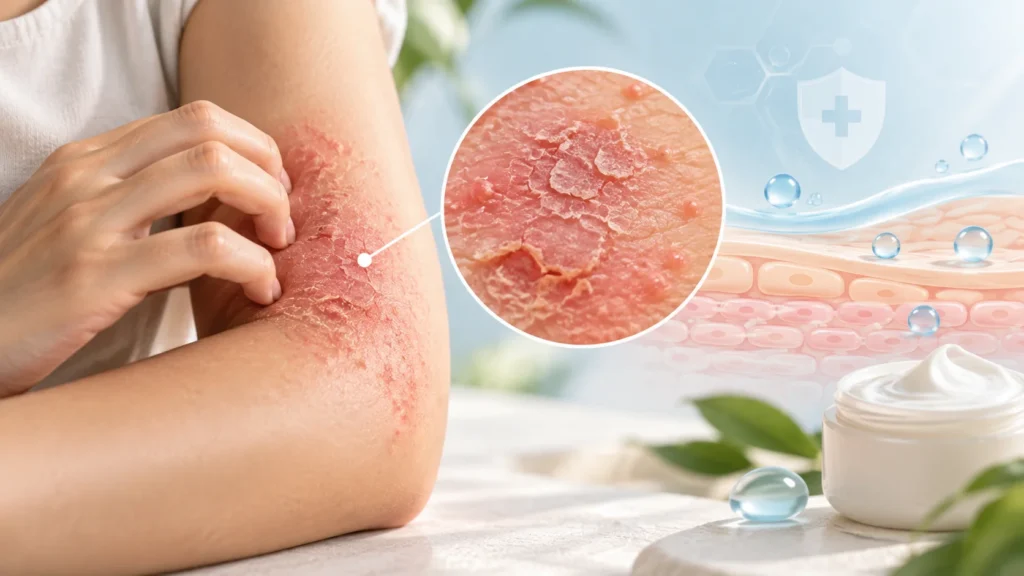
Eczema dermatitis is a common skin condition that causes dry, itchy, red, and inflamed skin. It can affect people of all ages, from infants to adults, and often comes and goes in phases. Some people have mild symptoms that appear only during certain seasons or after exposure to specific triggers. Others may have persistent or severe lesions that affects sleep, daily activities, and quality of life.
This is not contagious. It cannot be spread by touch, sharing clothes, or close contact. However, it can be frustrating and uncomfortable because the itching can be intense, and the skin may become thick, cracked, or infected if not managed properly. Many people call it “sensitive skin,” “allergic skin,” or “atopic dermatitis,” although there are different types of eczema with slightly different patterns.
What is Eczema Dermatitis?
Eczema dermatitis is a group of skin conditions that cause inflammation, itching, and changes in the skin barrier. The skin becomes more sensitive, loses moisture easily, and reacts strongly to irritants, allergens, weather changes, or stress. This leads to redness, scaling, itching, and sometimes oozing or crusting.
These lesions often starts in childhood but can begin at any age. Some children outgrow it as they get older. Others continue to have symptoms into adulthood or develop it for the first time as adults. The pattern may change over time, with periods of flare-ups and periods of calmer skin.
The condition is chronic in many people, meaning it tends to be long-term. However, with proper treatment and skin care, most patients can control symptoms, reduce flare-ups, and maintain healthy-looking skin.
Types of Eczema Dermatitis
This is not a single disease. There are several types, each with its own pattern and triggers.
Common types include:
- Atopic dermatitis, which is the most common type and often starts in childhood. It is associated with dry skin, family history of allergy, asthma, or hay fever.
- Contact dermatitis, which happens when the skin reacts to something it touches, such as soap, detergent, perfume, metal, or chemicals.
- Hand lesions, which mainly affects the hands and is common in people who frequently wash hands or work with water and chemicals.
- Discoid lesions, which appears as round or oval patches on the body, often on the legs or arms.
- Seborrheic dermatitis, which affects oily areas such as the scalp, face, and chest, and may appear as dandruff or red scaly patches.
- Stasis dermatitis, which occurs on the lower legs due to poor circulation and swelling.
- Dyshidrotic lesions, which causes small itchy blisters on the hands and feet.
Each type may need slightly different management, but the core principles of gentle skin care, trigger avoidance, and anti-inflammatory treatment remain similar.
Causes of Eczema Dermatitis
The exact cause of eczema is not fully understood, but it is believed to result from a combination of genetic, immune, and environmental factors.
Common causes and contributing factors
- Genetic tendency toward sensitive or allergic skin.
- Weak skin barrier that loses moisture easily.
- Overactive immune response to irritants or allergens.
- Family history of eczema, asthma, or allergic rhinitis.
- Exposure to harsh soaps, detergents, or chemicals.
- Frequent hand washing or wet work.
- Climate changes, especially cold and dry weather.
- Sweat and heat.
- Stress and emotional tension.
- Infections or skin colonization by certain bacteria.
Why the skin becomes sensitive
In eczema, the outer layer of the skin does not work as well as it should. It loses water more easily and allows irritants and allergens to enter. This triggers inflammation and itching. Scratching further damages the skin, creating a cycle of itch-scratch-itch that can be hard to break without proper treatment.
Triggers of Eczema Flare-Ups
Triggers are factors that make these lesions worse or cause it to flare up. Identifying and avoiding triggers is a key part of management.
Common triggers include:
- Harsh soaps, body washes, and shampoos.
- Detergents and fabric softeners.
- Perfumes and scented products.
- Wool or rough fabrics.
- Synthetic clothing that does not breathe.
- Hot water baths or long showers.
- Sweating and overheating.
- Dust mites and pet dander.
- Pollen and environmental allergens.
- Stress, anxiety, or poor sleep.
- Certain foods in some people, especially children.
- Infections or illness.
- Climate changes, especially winter dryness.
Why trigger identification matters
Not every trigger affects every person. Some people react strongly to certain products or fabrics, while others do not. Keeping a simple diary of flare-ups and exposures can help identify patterns and guide avoidance strategies.
Symptoms of Eczema Dermatitis
Symptoms can vary depending on the type of eczema, age of the patient, and severity of the condition.
Common symptoms include:
- Dry, rough, or scaly skin.
- Itching, which can be mild to severe.
- Red or inflamed patches.
- Swelling in affected areas.
- Cracking or peeling skin.
- Oozing or crusting during flare-ups.
- Thickened skin from repeated scratching.
- Darkening or lightening of skin after healing.
- Pain or burning sensation in severe cases.
Age-related patterns
- In infants, eczema often affects the face, scalp, and outer limbs.
- In children, it commonly appears in the bends of elbows, knees, and neck.
- In adults, it may affect the hands, neck, eyelids, and flexural areas.
- Hand eczema is very common in adults who frequently wash hands or work with chemicals.
Signs of infection
These skin is more prone to infection. Signs that need medical attention include:
- Increased redness and warmth.
- Pus or yellow crusting.
- Increasing pain.
- Fever or feeling unwell.
- Rapid worsening of the rash.
How is Eczema Dermatitis Diagnosed?
Diagnosis is usually based on the appearance of the skin, symptom pattern, and medical history. There is no single test that confirms eczema in all cases.
Diagnostic steps
- Detailed history of symptoms and triggers.
- Family history of allergy, asthma, or eczema.
- Examination of the skin pattern and distribution.
- Assessment of severity and impact on sleep or daily life.
- Evaluation for possible contact allergens in selected cases.
Tests that may be done if needed
- Patch testing to identify contact allergens in suspected contact dermatitis.
- Skin swab if infection is suspected.
- Blood tests for allergy markers in selected cases.
- Skin biopsy only if the diagnosis is unclear or another condition is suspected.
Why diagnosis matters
These lesions can look similar to other skin conditions such as psoriasis, fungal infection, scabies, or allergic rashes. Accurate diagnosis ensures the patient gets the right treatment rather than using random creams or steroids that may worsen the condition.
Treatment for Eczema Dermatitis
Treatment depends on the type of eczema, severity, age of the patient, and presence of triggers or infection. The main goals are to reduce inflammation, control itching, repair the skin barrier, and prevent flare-ups.
1. Skin care and moisturization
Moisturizing is the foundation of eczema management.
- Use gentle, fragrance-free moisturizers regularly.
- Apply moisturizer at least twice daily, more often in dry weather.
- Apply within a few minutes after bathing to lock in moisture.
- Use thicker creams or ointments for very dry areas.
- Avoid lotions with alcohol or strong fragrance.
2. Avoiding triggers
Identifying and avoiding triggers can significantly reduce flare-ups.
- Use mild, soap-free cleansers.
- Avoid hot water and long baths.
- Wear soft, breathable cotton clothing.
- Use gentle, fragrance-free detergents.
- Rinse clothes well to remove detergent residue.
- Avoid known allergens and irritants.
3. Topical medicines
Medicated creams and ointments are often needed during flare-ups.
- Topical corticosteroids to reduce inflammation and itching.
- Topical calcineurin inhibitors for sensitive areas such as face and folds.
- Other anti-inflammatory creams as advised by the dermatologist.
- Antibiotic creams or oral antibiotics if infection is present.
4. Oral medicines
In more severe or widespread eczema, oral treatment may be needed.
- Antihistamines to help control itching and improve sleep.
- Short courses of oral steroids in severe flare-ups under supervision.
- Other immune-modulating medicines for chronic severe eczema.
- Medicines for associated conditions such as asthma or allergic rhinitis.
5. Advanced treatment options
For patients with severe eczema not responding to standard treatment, newer options may be considered.
- Biologic injections that target specific immune pathways.
- Phototherapy or light therapy in selected cases.
- Immune-modulating tablets under specialist care.
- Structured eczema management programs with regular follow-up.
6. Treating infection
Infected lesions needs prompt treatment to prevent worsening.
- Antibiotic creams for localized infection.
- Oral antibiotics for more widespread infection.
- Antiseptic washes or baths as advised.
- Wound care for cracked or oozing areas.
Skin Care Routine for Eczema
A good daily skin care routine is essential for long-term control.
Daily routine pointers
- Bathe with lukewarm water, not hot.
- Limit bath or shower time to ten to fifteen minutes.
- Use gentle, soap-free, fragrance-free cleansers.
- Pat skin dry gently with a soft towel, do not rub.
- Apply moisturizer immediately after bathing.
- Reapply moisturizer during the day as needed.
- Use sunscreen suitable for sensitive skin when going out.
- Avoid scratching; keep nails short and clean.
Product selection tips
- Choose products labeled for sensitive or eczema-prone skin.
- Avoid products with strong fragrance, alcohol, or harsh preservatives.
- Patch test new products on a small area before full use.
- Use the same gentle products consistently rather than changing frequently.
Lifestyle Measures That Help
Lifestyle changes can support medical treatment and reduce flare-ups.
Helpful habits
- Wear loose, breathable cotton clothing.
- Avoid wool and rough fabrics directly on skin.
- Keep rooms cool and well-ventilated.
- Use a humidifier in very dry weather if needed.
- Manage stress through relaxation techniques.
- Maintain good sleep habits.
- Keep nails short to reduce skin damage from scratching.
- Wash hands gently and moisturize after washing.
Why lifestyle matters
These lesions is influenced by both internal and external factors. Even the best medicines may not work well if the skin is constantly exposed to irritants, harsh products, or extreme weather. A supportive lifestyle helps the skin barrier recover and stay stable.
Possible Complications
Untreated or poorly managed eczema can lead to complications over time.
Possible complications
- Skin infection due to bacteria entering through broken skin.
- Thickened, leathery skin from repeated scratching.
- Sleep disturbance due to nighttime itching.
- Emotional stress, anxiety, or low mood.
- Impact on school, work, or social activities.
- Scarring or long-term skin color changes.
- Increased risk of other allergic conditions in some people.
Why complications happen
Constant itching and scratching damage the skin barrier. This makes it easier for germs to enter and cause infection. Poor sleep and stress can worsen the itch-scratch cycle. Early and consistent treatment helps prevent these problems.
When Should You See a Doctor?
Medical evaluation is important if these lesions is severe, persistent, or affecting daily life.
- Severe itching that disturbs sleep.
- Widespread rash not improving with basic care.
- Frequent flare-ups despite treatment.
- Signs of infection such as pus, crusting, or fever.
- Eczema affecting the face, eyes, or genital area.
- Uncertainty about the diagnosis or triggers.
- Need for guidance on safe use of steroid creams.
Prevention of Eczema Flare-Ups
While eczema cannot always be prevented, flare-ups can often be reduced.
Prevention pointers
- Moisturize daily even when skin looks normal.
- Avoid known triggers and irritants.
- Use gentle skin and laundry products.
- Dress appropriately for weather, avoiding overheating.
- Manage stress and maintain good sleep.
- Treat early signs of flare-up promptly.
- Follow dermatologist advice consistently.
- Keep regular follow-up appointments.
Special prevention advice for high-risk groups
- Infants with family history of allergy may benefit from early skin care.
- Children with eczema need consistent moisturizing and trigger avoidance.
- Adults with hand eczema should protect hands during wet work.
- Patients with severe eczema may need long-term maintenance treatment.
Why Choose Rama Hospital for Eczema Dermatitis Treatment?
Eczema may seem like a simple skin problem, but in many patients it is complex and linked to allergy, immunity, lifestyle, and environment. A hospital-based dermatology team can provide accurate diagnosis, safe treatment, and long-term support.
- Expert evaluation by dermatology specialists.
- Accurate diagnosis to rule out other skin conditions.
- Safe use of topical and oral medicines.
- Guidance on skin care products and routines.
- Management of infection and complications.
- Access to advanced treatment options for severe eczema.
- Long-term follow-up and personalized care plans.
Frequently Asked Questions (FAQs)
Is eczema the same as allergy?
Eczema is related to allergy in many people but is not exactly the same. It involves a sensitive skin barrier and immune response. Allergens and irritants can trigger flare-ups, but eczema also depends on genetics and skin health.
Can eczema be cured completely?
Eczema is often a long-term condition, but it can be well controlled. Many people have long periods of clear skin with proper treatment and skin care. The goal is to reduce flare-ups, control symptoms, and maintain healthy skin.
Are steroid creams safe for eczema?
Yes, when used correctly under medical guidance. Steroid creams are one of the most effective treatments for eczema flare-ups. The key is using the right strength, for the right duration, on the right areas, as advised by a dermatologist.
Can diet cause or cure eczema?
Diet can be a trigger for some people, especially children, but it is not the only cause. Elimination diets should only be done under medical supervision. A balanced diet supports overall skin health but does not replace medical treatment.
Can adults develop eczema for the first time?
Yes, adults can develop eczema even if they did not have it as children. Adult-onset eczema may affect the hands, face, neck, or other areas and needs proper diagnosis and treatment.
How long does eczema treatment take to show results?
Improvement can often be seen within days to weeks of starting treatment, especially with moisturizers and anti-inflammatory creams. Long-term control depends on consistent skin care, trigger avoidance, and follow-up.
Can eczema lead to skin infection?
Yes, broken or scratched eczema skin is more prone to bacterial infection. Signs include increased redness, pain, pus, or crusting. Infected eczema needs medical treatment with antibiotics and proper wound care.
Conclusion
Eczema dermatitis is a common, chronic skin condition that causes dry, itchy, and inflamed skin. It can affect people of all ages and often follows a pattern of flare-ups and remission. While it cannot always be cured, it can be well managed with the right treatment, skin care routine, and lifestyle support.
The most important steps are accurate diagnosis, gentle daily skin care, avoidance of triggers, appropriate use of medicines, and regular follow-up. For patients with persistent itching, frequent flare-ups, or signs of infection, a dermatology evaluation can make a major difference. With consistent care, most people with eczema can achieve good control and maintain healthy, comfortable skin.
Rama Hospital can help evaluate eczema dermatitis, identify individual triggers, and provide a clear treatment plan that supports long-term skin health and quality of life.