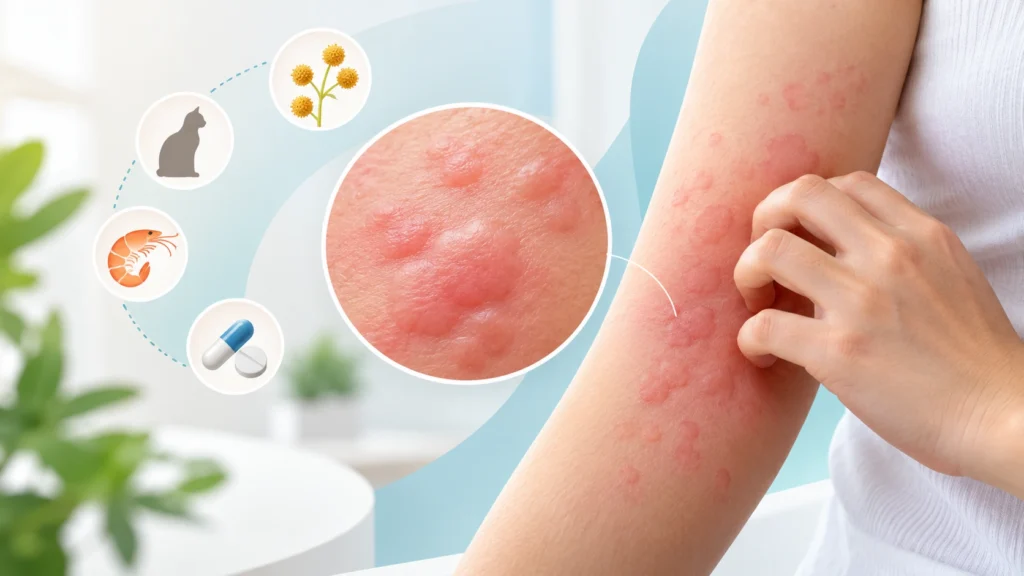
Urticaria, commonly known as hives, is a skin condition that causes itchy, raised, red or skin-colored welts on the body. These welts can appear suddenly, change shape, move around, and disappear within hours, only to reappear in another area. For some people, hives are a one-time reaction to a trigger such as food, medicine, or infection. For others, hives can recur frequently or persist for weeks to months, affecting sleep, daily activities, and quality of life.
Urticaria happens when certain cells in the skin release chemicals such as histamine. This causes small blood vessels to leak fluid into the skin, leading to swelling, redness, and itching. In many cases, the exact trigger is not found, especially in chronic urticaria. Although hives are usually not dangerous, they can be very uncomfortable. In rare cases, hives may be part of a more serious allergic reaction that needs urgent care.
What is Urticaria?
This is a skin reaction characterized by itchy, raised wheals or welts that can vary in size and shape. These welts may be small or large, round or irregular, and can appear anywhere on the body. A key feature of urticaria is that individual welts usually last less than twenty-four hours in one spot, but new ones may appear elsewhere.
Hives can occur alone or along with deeper swelling called angioedema, which affects the lips, eyelids, hands, feet, or throat. When angioedema involves the throat or tongue, it can become a medical emergency.
This is classified based on how long it lasts and what triggers it. Understanding the type helps guide evaluation and treatment.
Types of Urticaria
This can be grouped based on duration and cause.
Based on duration
- Acute urticaria, which lasts less than six weeks.
- Chronic urticaria, which lasts six weeks or more, often recurring over months or years.
Based on cause
- Spontaneous urticaria, where hives appear without a clear external trigger.
- Inducible urticaria, where hives are triggered by physical stimuli such as pressure, heat, cold, sunlight, vibration, or exercise.
Common subtypes of inducible urticaria
- Dermatographism, where hives appear after scratching or rubbing the skin.
- Cold urticaria, triggered by exposure to cold air, water, or objects.
- Heat urticaria, triggered by heat or warm temperatures.
- Solar urticaria, triggered by sunlight exposure.
- Pressure urticaria, triggered by sustained pressure on the skin.
- Cholinergic urticaria, triggered by sweating, exercise, or emotional stress.
- Aquagenic urticaria, triggered by contact with water.
- Vibratory urticaria, triggered by vibration or mechanical stimulation.
Why classification matters
Different types may need different evaluation and management. For example, cold urticaria requires caution with swimming in cold water, while chronic spontaneous urticaria may need long-term medication and investigation for underlying causes.
Causes and Triggers of Urticaria
In many cases, especially acute urticaria, a specific trigger can be identified. In chronic urticaria, the cause is often not found, and the condition may be related to immune system activity.
Common triggers of acute urticaria
- Foods such as nuts, shellfish, eggs, milk, soy, or wheat.
- Medicines such as antibiotics, painkillers, or anti-inflammatory drugs.
- Insect stings or bites.
- Infections, especially viral infections in children.
- Latex exposure.
- Food additives or preservatives.
- Contrast dyes used in imaging tests.
Common factors in chronic urticaria
- Autoimmune activity where the body mistakenly activates skin cells.
- Chronic infections or inflammation in the body.
- Thyroid disease or other autoimmune conditions.
- Stress or emotional factors that may worsen symptoms.
- Hormonal changes.
- Sometimes no clear cause is found despite evaluation.
Physical triggers in inducible urticaria
- Scratching or rubbing the skin.
- Tight clothing or pressure from straps.
- Cold air, cold water, or holding cold objects.
- Hot baths, saunas, or warm environments.
- Sunlight exposure.
- Exercise, sweating, or emotional stress.
- Vibration from tools or machinery.
- Contact with water in rare cases.
Why triggers matter
Identifying and avoiding triggers can reduce the frequency and severity of hives. In chronic cases, even when a specific trigger is not found, avoiding known aggravating factors can help control symptoms.
Symptoms of Urticaria
Symptoms can vary from mild to severe and may affect different parts of the body.
Common skin symptoms
- Itchy, raised welts on the skin.
- Welts that are red, pink, or skin-colored.
- Welts that change shape and move to different areas.
- Swelling that may be mild or extensive.
- Burning or stinging sensation in some cases.
- Skin that feels warm to touch over the affected area.
Symptoms of angioedema
- Swelling of the lips, eyelids, hands, feet, or genitals.
- Tight or stretched feeling in the swollen area.
- Swelling that may be painful rather than itchy.
- Involvement of the tongue or throat in severe cases.
Systemic symptoms in severe reactions
- Difficulty breathing or wheezing.
- Tightness in the throat.
- Hoarseness or change in voice.
- Dizziness or fainting.
- Nausea, vomiting, or abdominal pain.
- Rapid heartbeat.
- Feeling of impending doom.
Impact on daily life
- Disturbed sleep due to itching.
- Difficulty concentrating at work or school.
- Anxiety about sudden flare-ups.
- Avoidance of certain foods, activities, or environments.
- Emotional stress due to chronic symptoms.
Urticaria in Children
Children commonly develop acute urticaria, often triggered by infections or foods.
Common features in children
- Sudden onset of itchy welts.
- Association with viral fever or cold.
- Reaction to new foods or medicines.
- Symptoms that resolve within days to weeks.
- Rare progression to chronic urticaria.
Special considerations in children
- Dosing of medicines must be adjusted for age and weight.
- Parents should watch for signs of severe allergy.
- School and activity participation may be affected during flares.
- Reassurance is important as most cases are self-limiting.
Urticaria in Adults
Adults may experience both acute and chronic urticaria. Chronic urticaria is more common in adults, especially women.
Common features in adults
- Recurrent hives over weeks or months.
- Possible association with stress, thyroid disease, or autoimmune conditions.
- Impact on work, sleep, and social life.
- Need for long-term management in chronic cases.
Why adult evaluation may differ
- More likelihood of chronic spontaneous urticaria.
- Higher chance of associated autoimmune or thyroid issues.
- Need to review long-term medicine use and other health conditions.
How is Urticaria Diagnosed?
Diagnosis is usually based on the history of symptoms, physical examination, and pattern of hives. Tests are not always needed, especially in acute cases with a clear trigger.
Diagnostic steps
- Detailed history of when hives started and how long they last.
- Review of possible triggers such as food, medicine, infection, or physical factors.
- Family history of allergy or autoimmune disease.
- Physical examination of the skin and pattern of welts.
- Assessment for angioedema or systemic symptoms.
Tests that may be done in selected cases
- Complete blood count to check for infection or other issues.
- ESR or CRP to assess inflammation.
- Thyroid function tests in chronic urticaria.
- Allergy testing if a specific trigger is suspected.
- Autoimmune markers in selected chronic cases.
- Challenge tests for physical urticaria under medical supervision.
When tests are more likely
- Chronic urticaria lasting more than six weeks.
- Frequent recurrences without clear trigger.
- Suspicion of underlying thyroid or autoimmune disease.
- Severe or atypical presentations.
- Poor response to standard treatment.
Treatment for Urticaria
Treatment depends on the type, severity, and duration of urticaria. The main goals are to relieve itching, reduce hives, prevent recurrence, and manage any serious reactions.
1. Avoidance of triggers
Identifying and avoiding triggers is the first step when possible.
- Avoid known food or medicine triggers.
- Reduce exposure to heat, cold, pressure, or sunlight if these provoke hives.
- Wear loose clothing to reduce friction and pressure.
- Manage stress through relaxation techniques.
- Treat underlying infections or thyroid issues if present.
2. Antihistamines
Antihistamines are the mainstay of treatment for most patients.
- Non-sedating antihistamines are preferred for daily use.
- Dose may be increased under medical supervision in chronic cases.
- Sedating antihistamines may be used at night if sleep is disturbed.
- Long-term use may be needed for chronic urticaria.
3. Short-term steroids
Oral steroids may be used for short periods in severe flares.
- Used only when antihistamines are not enough.
- Given for a few days to reduce severe swelling and itching.
- Not suitable for long-term use due to side effects.
- Always prescribed and monitored by a doctor.
4. Advanced therapies for chronic urticaria
For patients who do not respond to high-dose antihistamines, other treatments may be considered.
- Biologic injections that target specific immune pathways.
- Immune-modulating medicines in selected cases.
- These are used under specialist supervision with regular monitoring.
5. Emergency treatment for severe reactions
If hives are part of a severe allergic reaction with breathing difficulty or throat swelling, emergency care is needed.
- Immediate use of injectable adrenaline in anaphylaxis.
- Emergency hospital care for monitoring and support.
- Observation for several hours to ensure stability.
- Education on avoidance and emergency action plan.
Home Care and Self-Management
Many patients can manage mild urticaria at home with simple measures.
Helpful home care steps
- Take cool or lukewarm baths instead of hot showers.
- Use gentle, fragrance-free soaps and moisturizers.
- Apply cool compresses to itchy areas.
- Wear loose, breathable cotton clothing.
- Avoid scratching to prevent skin damage.
- Keep a diary of possible triggers and flare-ups.
- Take medicines as prescribed regularly.
Lifestyle measures that help
- Manage stress through yoga, meditation, or counseling.
- Ensure adequate sleep and rest.
- Avoid alcohol if it worsens symptoms.
- Maintain a balanced diet without unnecessary restrictions.
- Stay hydrated and avoid overheating.
What to avoid
- Hot baths, saunas, or excessive heat exposure.
- Tight clothing or heavy backpacks that press on skin.
- Known food or medicine triggers.
- Overuse of painkillers such as NSAIDs if they worsen hives.
- Self-medication with steroids or random antibiotics.
Diet Advice for Urticaria
Diet plays a role in some patients, especially when food triggers are suspected.
General diet pointers
- Maintain a balanced diet with adequate nutrients.
- Avoid unnecessary food restrictions without medical advice.
- Keep a food diary to identify possible triggers.
- Be cautious with processed foods and additives.
Foods that may trigger hives in some people
- Nuts and peanuts.
- Shellfish and certain fish.
- Eggs and milk.
- Soy and wheat.
- Food colorings and preservatives.
- Fermented or aged foods in sensitive individuals.
Important dietary points
- Not all patients need strict avoidance diets.
- Unnecessary restrictions can lead to nutritional deficiency.
- Diet changes should be guided by history and, if needed, allergy testing.
- Focus on overall healthy eating rather than extreme elimination.
Possible Complications
Most cases of this lesion are not dangerous, but some complications can occur.
Possible complications
- Sleep disturbance due to nighttime itching.
- Anxiety or depression due to chronic symptoms.
- Skin infection from excessive scratching.
- Severe angioedema involving the throat or tongue.
- Anaphylaxis in rare cases with systemic allergic reaction.
- Reduced quality of life and social withdrawal.
Why complications happen
Chronic itching and unpredictable flare-ups can affect mental health and daily functioning. Severe allergic reactions, although rare, can be life-threatening if not treated promptly.
When Should You See a Doctor?
Medical evaluation is important for persistent, recurrent, or severe lesions.
- Hives lasting more than a few days without improvement.
- Recurrent hives over weeks or months.
- Swelling of lips, eyelids, or other areas.
- Symptoms that interfere with sleep or daily activities.
- Suspicion of a medicine or food trigger.
- Chronic lesion not controlled with over-the-counter medicines.
Prevention of Urticaria
Not all cases can be prevented, but risk can be reduced.
Prevention pointers
- Identify and avoid known triggers.
- Take medicines regularly as prescribed for chronic cases.
- Wear loose clothing to reduce friction.
- Avoid extreme temperatures and sudden temperature changes.
- Manage stress and ensure adequate sleep.
- Treat infections promptly.
- Carry emergency medication if you have a history of severe allergy.
- Inform doctors about any past reactions to medicines or foods.
For patients with physical urticaria
- Avoid cold water swimming if you have cold lesion.
- Use sunscreen and protective clothing for solar lesion.
- Avoid prolonged pressure on skin for pressure lesion.
- Modify exercise intensity if cholinergic lesion is triggered by sweating.
Why Choose Rama Hospital for Urticaria Treatment?
This may seem like a simple skin problem, but chronic or severe cases need expert evaluation. A hospital-based approach helps identify triggers, rule out underlying conditions, and provide safe, effective treatment.
- Accurate diagnosis based on history and examination.
- Appropriate testing when needed for chronic or atypical cases.
- Safe use of antihistamines, steroids, and advanced therapies.
- Emergency care for severe allergic reactions.
- Long-term follow-up for chronic lesion.
- Coordination with allergy, dermatology, and internal medicine teams.
Frequently Asked Questions (FAQs)
Is urticaria contagious?
No, this is not contagious. It cannot spread from one person to another through contact. It is an allergic or immune-mediated reaction, not an infection.
Can stress cause hives?
Yes, stress can trigger or worsen hives in some people, especially in chronic lesion. Emotional stress may not be the only cause, but it can make symptoms more frequent or severe.
How long do hives last?
Individual welts usually last less than twenty-four hours in one spot, but new ones may appear elsewhere. Acute lesion lasts less than six weeks, while chronic lesion lasts six weeks or more.
Can food cause urticaria?
Yes, certain foods can trigger hives in sensitive individuals. Common triggers include nuts, shellfish, eggs, milk, and food additives. Not all hives are food-related, so evaluation is important before making diet changes.
Are antihistamines safe for long-term use?
Non-sedating antihistamines are generally safe for long-term use when prescribed by a doctor. They are the main treatment for chronic lesion. Regular follow-up ensures the dose is appropriate and side effects are monitored.
When is urticaria an emergency?
This becomes an emergency when it is associated with breathing difficulty, throat swelling, dizziness, or fainting. These may be signs of anaphylaxis and require immediate medical attention.
Can urticaria be cured?
Many cases of acute urticaria resolve completely once the trigger is removed. Chronic urticaria may not have a permanent cure but can often be well controlled with treatment and trigger management.
Conclusion
These lesions, or hives, is a common skin condition that can range from mild and temporary to chronic and disruptive. While most cases are not dangerous, they can cause significant discomfort, sleep disturbance, and anxiety. Identifying triggers, using appropriate medicines, and following self-care measures can greatly improve symptoms.
The most important steps are proper diagnosis, avoidance of known triggers, regular use of prescribed treatment, and seeking urgent care for severe reactions. For patients with recurrent hives, swelling, or symptoms affecting daily life, a medical evaluation can make a major difference. With the right care, most people can control their symptoms and maintain good quality of life.
Rama Hospital can help evaluate lesions, identify possible triggers, and provide a clear treatment plan that supports symptom control, safety, and long-term skin health.