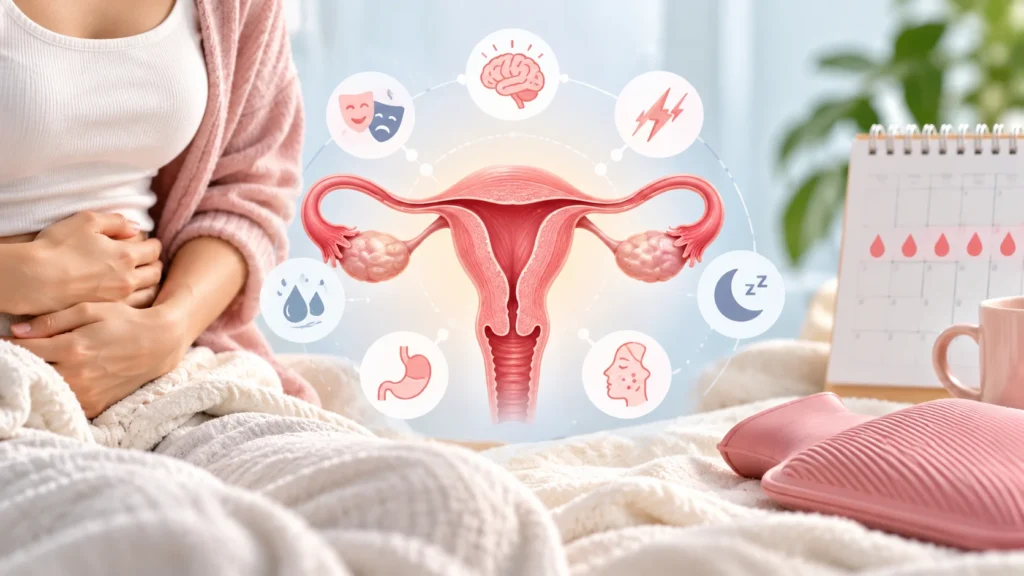
Premenstrual syndrome, commonly known as PMS, refers to a group of physical and emotional symptoms that occur in the days or weeks before a woman’s period. These symptoms usually improve once bleeding starts. For many women, PMS is mild and manageable. For others, it can be severe enough to affect daily life, relationships, work, and overall well-being.
A more serious form of premenstrual symptoms is called premenstrual dysphoric disorder, or PMDD. PMDD involves intense mood changes, irritability, anxiety, or depression before periods. It is less common than PMS but can be very distressing and may require medical treatment.
What is Premenstrual Syndrome (PMS)?
Premenstrual syndrome is a collection of symptoms that happen in the luteal phase of the menstrual cycle, which is the time between ovulation and the start of the next period. These symptoms may affect the body, emotions, and behavior.
PMS is very common. Many women experience some degree of premenstrual symptoms at some point in their lives. The severity can vary from mild discomfort to significant disruption of daily activities. Symptoms typically begin a few days to two weeks before the period and improve within a few days after bleeding starts.
PMS is not a sign of weakness or emotional instability. It is a real, biologically based condition linked to hormonal changes, brain chemistry, and individual sensitivity to these changes.
What is PMDD?
Premenstrual dysphoric disorder, or PMDD, is a more severe form of premenstrual symptoms. It involves intense mood and emotional symptoms that significantly affect quality of life.
PMDD is less common than premenstrual syndrome but can be very distressing. Women with PMDD may feel extreme irritability, sadness, hopelessness, anxiety, or anger before their periods. These symptoms often improve after the period starts but can cause major problems in relationships, work, and daily functioning.
PMDD is recognized as a medical condition that may need treatment with lifestyle changes, counseling, and sometimes medicines. It is not simply “bad PMS.” It is a distinct disorder that deserves proper evaluation and care.
Causes of PMS and PMDD
The exact cause of premenstrual syndrome and PMDD is not fully understood, but it is linked to normal hormonal changes during the menstrual cycle and how the brain responds to these changes.
Common contributing factors
- Normal fluctuations in estrogen and progesterone during the cycle.
- Sensitivity of the brain to hormonal changes.
- Changes in serotonin, a brain chemical that affects mood, sleep, and appetite.
- Genetic or family history of PMS or mood disorders.
- Stress and poor coping mechanisms.
- Poor sleep or irregular routines.
- Nutritional factors such as low calcium, magnesium, or vitamin B6.
- Underlying anxiety or depression that worsens before periods.
- Lifestyle factors such as high caffeine, alcohol, or salt intake.
- Lack of regular physical activity.
Why symptoms vary from person to person
Not all women respond to hormonal changes in the same way. Some have mild symptoms, while others have severe symptoms even with normal hormone levels. This suggests that individual sensitivity, brain chemistry, and life circumstances all play a role.
Risk Factors for PMS and PMDD
Some women are more likely to experience significant premenstrual symptoms than others.
Higher-risk groups
- Women in their late twenties to forties.
- Women with a family history of premenstrual syndrome or PMDD.
- Women with a history of depression, anxiety, or mood disorders.
- Women with high stress levels.
- Women with poor sleep or irregular routines.
- Women with unhealthy diet or low physical activity.
- Women who smoke or consume alcohol regularly.
- Women with thyroid problems or other hormonal conditions.
- Women who have had traumatic life events or chronic stress.
Why risk increases in these groups
- Hormonal sensitivity may be higher in some individuals.
- Stress and poor sleep can worsen mood and physical symptoms.
- Existing mental health conditions can amplify premenstrual mood changes.
- Lifestyle factors can affect energy, sleep, and emotional balance.
Common Symptoms of PMS
PMS symptoms can be physical, emotional, or behavioral. They usually occur in the days or weeks before the period and improve after bleeding starts.
Physical symptoms
- Bloating or water retention.
- Breast tenderness or swelling.
- Headache or migraine.
- Abdominal cramps.
- Back pain.
- Joint or muscle pain.
- Acne or skin changes.
- Changes in appetite or food cravings.
- Fatigue or low energy.
- Sleep disturbances.
- Weight gain due to fluid retention.
- Digestive changes such as constipation or diarrhea.
Emotional and behavioral symptoms
- Mood swings.
- Irritability or anger.
- Anxiety or nervousness.
- Sadness or tearfulness.
- Difficulty concentrating.
- Low motivation.
- Social withdrawal.
- Increased sensitivity to rejection or criticism.
- Changes in libido.
- Feeling overwhelmed or out of control.
Symptoms of PMDD
PMDD involves more severe emotional and mood symptoms.
- Marked irritability or anger.
- Severe sadness or hopelessness.
- Increased anxiety or tension.
- Mood swings that affect relationships.
- Loss of interest in usual activities.
- Difficulty concentrating.
- Fatigue or low energy.
- Changes in sleep or appetite.
- Feeling overwhelmed or out of control.
- In some cases, thoughts of self-harm or suicide.
How PMS and PMDD Affect Daily Life
PMS and PMDD can affect many areas of life.
Impact on work and productivity
- Difficulty concentrating.
- Low energy and motivation.
- Increased errors or reduced efficiency.
- Need for time off during severe symptoms.
Impact on relationships
- Increased arguments or tension with family or partners.
- Withdrawal from social activities.
- Misunderstanding from others who may not recognize the condition.
Impact on mental health
- Worsening of existing anxiety or depression.
- Feelings of hopelessness in severe PMDD.
- Reduced self-esteem due to recurring symptoms.
Impact on physical well-being
- Pain and discomfort affecting daily tasks.
- Sleep problems leading to fatigue.
- Changes in eating patterns and weight.
Diagnosis of PMS and PMDD
Diagnosis is based on symptoms, their timing in relation to the menstrual cycle, and their impact on daily life. There is no single blood test for premenstrual syndrome or PMDD.
Diagnostic steps
- Detailed history of symptoms and their timing.
- Menstrual cycle tracking for at least two to three cycles.
- Assessment of how symptoms affect work, relationships, and daily life.
- Physical examination if needed.
- Blood tests to rule out other conditions such as thyroid problems, anemia, or hormonal disorders.
- Evaluation for underlying depression or anxiety.
Symptom tracking
Doctors often ask patients to keep a daily symptom diary for two to three cycles. This helps confirm that symptoms occur before periods and improve after bleeding starts. It also helps distinguish premenstrual syndrome and PMDD from other conditions.
When further evaluation is needed
- Symptoms are severe or disabling.
- Mood symptoms suggest possible PMDD.
- There is uncertainty about the diagnosis.
- Other medical or psychiatric conditions are suspected.
Treatment for PMS and PMDD
Treatment depends on the severity of symptoms, their impact on daily life, and the patient’s preferences. Many women benefit from a combination of lifestyle changes, counseling, and medical treatment.
1. Lifestyle and self-care measures
Lifestyle changes are often the first step in managing premenstrual syndrome and PMDD.
- Regular physical activity such as walking, yoga, or light exercise.
- Balanced diet with adequate protein, fiber, fruits, and vegetables.
- Reduced intake of salt, sugar, caffeine, and alcohol before periods.
- Adequate sleep and regular sleep schedule.
- Stress management through relaxation, breathing exercises, or meditation.
- Hydration with water and healthy fluids.
- Avoiding smoking and recreational drugs.
2. Nutritional support
Some nutrients may help reduce symptoms.
- Calcium-rich foods or supplements if advised.
- Magnesium for muscle cramps and mood support.
- Vitamin B6 for mood and energy.
- Omega-3 fatty acids from fish, flaxseed, or supplements.
- Balanced meals to stabilize blood sugar and reduce cravings.
3. Pain and physical symptom relief
- Over-the-counter pain relievers for cramps, headache, or body pain.
- Heat application for abdominal or back pain.
- Gentle stretching or yoga for muscle tension.
- Supportive bras for breast tenderness.
- Adequate rest during severe symptom days.
4. Hormonal treatment
Hormonal options may help regulate the cycle and reduce symptoms.
- Combined oral contraceptive pills to stabilize hormones.
- Progestin-only options in selected cases.
- Other hormonal therapies based on individual needs.
- These should always be prescribed and monitored by a doctor.
5. Medicines for mood symptoms
For moderate to severe premenstrual syndrome or PMDD, medicines may be needed.
- Antidepressants, especially SSRIs, which can help mood, anxiety, and irritability.
- Anti-anxiety medicines in selected cases.
- Mood stabilizers for severe mood swings if advised by a specialist.
- These medicines may be taken continuously or only during the luteal phase, depending on the plan.
6. Counseling and psychological support
Counseling can be very helpful, especially for PMDD.
- Cognitive behavioral therapy to manage mood and stress.
- Coping strategies for irritability and relationship stress.
- Support for underlying anxiety or depression.
- Family or partner counseling to improve understanding and support.
7. Treatment for severe PMDD
Severe PMDD may need a more intensive approach.
- Combination of antidepressants and hormonal treatment.
- Regular follow-up with a gynecologist or psychiatrist.
- Safety planning if there are thoughts of self-harm.
- Strong social and family support.
Home Care and Daily Management
Daily habits can make a big difference in symptom control.
Helpful daily practices
- Keep a regular sleep and meal schedule.
- Plan lighter activities during expected symptom days.
- Use a symptom diary to identify patterns.
- Communicate needs to family or workplace when possible.
- Practice relaxation or mindfulness daily.
- Stay physically active even with mild exercise.
- Avoid self-medication with random supplements or hormones.
What to avoid
- Excess caffeine, especially before periods.
- High salt intake that worsens bloating.
- Alcohol that can worsen mood and sleep.
- Skipping meals or extreme dieting.
- Overuse of pain medicines without medical advice.
When Should You See a Doctor?
Not every case of premenstrual syndrome needs medical treatment, but some situations require professional evaluation.
- Severe mood changes before periods.
- Symptoms that affect work, studies, or relationships.
- Physical symptoms that do not improve with self-care.
- Suspected PMDD with intense irritability or sadness.
- Symptoms that continue after periods end.
- Concerns about hormonal imbalance or other conditions.
Prevention and Long-Term Management
While premenstrual syndrome cannot always be prevented, its impact can be reduced with consistent care.
Prevention pointers
- Maintain a healthy weight and regular activity.
- Eat a balanced diet throughout the month.
- Manage stress with relaxation or counseling.
- Keep regular sleep and daily routines.
- Limit caffeine, alcohol, and high-salt foods.
- Track symptoms to identify patterns and triggers.
- Follow medical advice for hormonal or mood treatment.
- Attend regular gynecological check-ups.
Long-term management
- Continue lifestyle measures even when symptoms improve.
- Review treatment plans regularly with a doctor.
- Adjust medicines or hormones as needed over time.
- Seek support early if symptoms worsen again.
Why Choose Rama Hospital for PMS and PMDD Care?
Premenstrual syndrome and PMDD can affect physical health, mental well-being, relationships, and quality of life. A hospital-based approach ensures proper diagnosis, safe treatment, and coordinated care between gynecology, mental health, and primary care teams.
- Accurate diagnosis to distinguish premenstrual syndrome, PMDD, and other conditions.
- Safe use of hormonal and mood medicines under supervision.
- Support for both physical and emotional symptoms.
- Counseling and psychological support when needed.
- Long-term follow-up to adjust treatment over time.
- Care that respects privacy and individual needs.
Frequently Asked Questions (FAQs)
1. What is the difference between PMS and PMDD?
Premenstrual syndrome involves mild to moderate physical and emotional symptoms before periods. PMDD is a more severe form with intense mood symptoms that significantly affect daily life. PMDD often needs medical and psychological treatment.
2. Is PMS a normal part of having periods?
Some premenstrual symptoms are common, but severe or disabling symptoms are not “normal” and should be evaluated. Effective treatment is available for women whose symptoms affect their quality of life.
3. Can PMS cause depression?
Premenstrual syndrome can worsen mood and may unmask underlying depression. PMDD is closely linked with severe mood symptoms. Proper evaluation helps distinguish PMS-related mood changes from independent depression.
4. Can lifestyle changes really help PMS?
Yes, regular exercise, better sleep, stress management, and a balanced diet can significantly reduce premenstrual syndrome symptoms. Many women notice improvement within a few cycles of consistent lifestyle changes.
5. Are hormonal pills safe for PMS?
Hormonal pills can be safe and effective for many women when prescribed by a doctor. They help regulate cycles and reduce symptoms. Suitability depends on individual health, age, and risk factors.
6. Can PMS occur in teenagers?
Yes, teenagers can experience premenstrual syndrome, especially after their cycles become more regular. Severe symptoms in adolescents should be evaluated to rule out other conditions and provide support.
7. Do symptoms stop after childbirth or with age?
Symptoms may change after childbirth, breastfeeding, or with age. Some women improve, while others may notice new patterns. Perimenopause can also affect symptom severity.
8. When should I consider seeing a specialist?
Consider seeing a specialist if symptoms are severe, affect daily life, suggest PMDD, or do not improve with self-care. Early evaluation can prevent long-term distress and complications.
Conclusion
Premenstrual syndrome and premenstrual dysphoric disorder are common but often underrecognized conditions that affect physical health, mood, and quality of life. Premenstrual syndrome involves a range of physical and emotional symptoms before periods, while PMDD is a more severe form with intense mood changes. Both conditions are real, biologically based, and treatable.
The most important steps are proper diagnosis, lifestyle support, and, when needed, medical and psychological treatment. For women with recurring symptoms, mood changes, or difficulty functioning before periods, a medical evaluation can make a major difference. With the right care, most women can manage symptoms effectively and improve their well-being.
Rama Hospital can help evaluate premenstrual syndrome and PMDD, identify individual needs, and provide a clear treatment plan that supports hormonal balance, mood stability, and overall women’s health.