Rosacea is a common yet often misunderstood chronic inflammatory skin condition that causes persistent facial redness, visible blood vessels, and, in some cases, acne-like bumps. Because its symptoms often resemble acne, allergies, or sunburn, many people mistake it for another skin problem, delaying proper diagnosis and treatment.
Although there is no permanent cure, early diagnosis and a personalized treatment plan can effectively control symptoms, reduce flare-ups, and improve overall skin health. Understanding the causes, triggers, symptoms, and treatment options is the first step toward managing this long-term condition successfully.
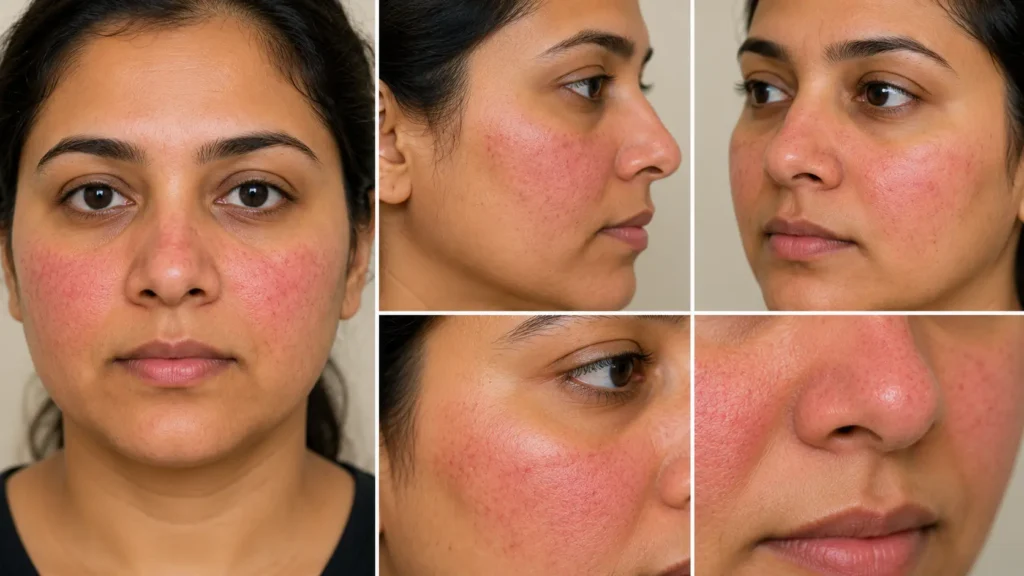
Rosacea is a chronic inflammatory skin disorder that primarily affects the central face, including the cheeks, nose, chin, and forehead. It is characterized by persistent redness, frequent flushing, visible blood vessels, and, in some individuals, acne-like bumps or skin thickening.
By definition, it is a long-term condition that tends to improve and worsen in cycles. Unlike a temporary rash, it requires ongoing care and trigger management to keep symptoms under control.
Although it most commonly develops between the ages of 30 and 60, this condition can occur in people of any age or skin tone. Individuals with fair skin and a family history are generally at higher risk, but anyone can develop it.
One of the most frequently asked questions is, “Is rosacea an autoimmune disease?”
The answer is no. It is not classified as a traditional autoimmune disorder. However, researchers believe that abnormalities in the immune system contribute significantly to its development.
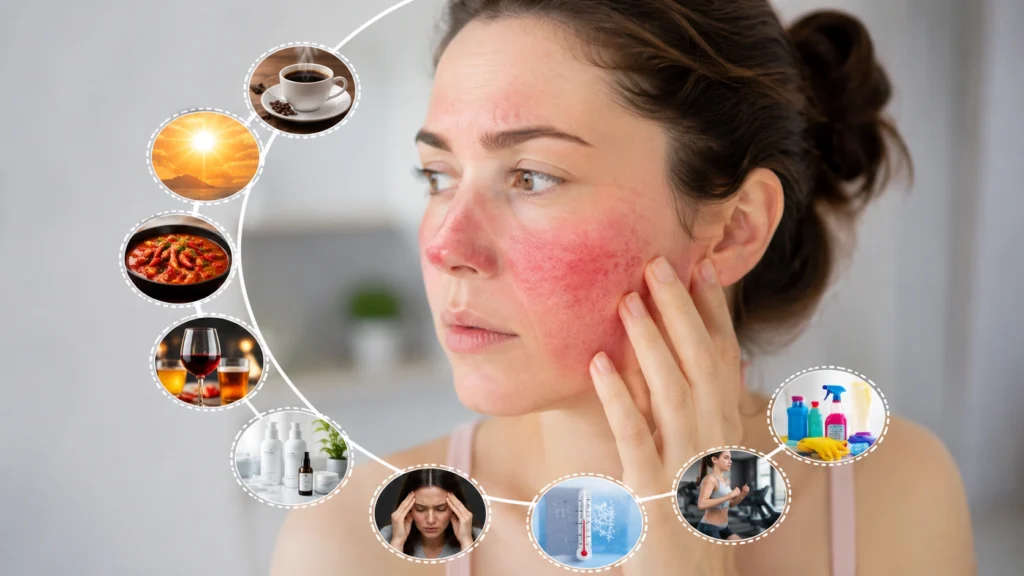
People affected by this condition often have an exaggerated inflammatory response to everyday triggers such as sunlight, heat, spicy foods, or emotional stress. This heightened response increases blood vessel activity and leads to facial redness and irritation.
Current research suggests that several factors work together, including:
Because inflammation plays such an important role, many prescribed medications work by calming inflammatory pathways rather than suppressing the immune system itself.
There are several recognized subtypes, each with unique clinical features. While some individuals experience only one subtype, others develop symptoms from multiple forms simultaneously.
Identifying the correct subtype helps dermatologists recommend the most effective treatment strategy and improve long-term symptom control.
The pre-rosacea stage represents the earliest phase before persistent symptoms become obvious.
People may notice:
Common triggers include:
Recognizing these early warning signs allows treatment to begin sooner, which may slow disease progression and reduce future flare-ups.
Many people ask, “What are the signs of rosacea?” or “How do I know if I have rosacea?”
Symptoms vary depending on the subtype and severity but commonly include:
Persistent redness across the cheeks, nose, forehead, and chin that does not completely fade is one of the most recognizable warning signs.
Because several skin disorders share similar symptoms, consulting a dermatologist is essential for an accurate diagnosis and appropriate treatment.
The exact cause remains unknown, but researchers believe it develops due to a combination of genetic, immune, vascular, and environmental factors rather than a single underlying cause.
Several mechanisms contribute to the condition.
Chronic inflammation is one of the major driving forces behind this condition.
An overactive immune response causes inflammatory chemicals to be released into the skin, resulting in redness, swelling, irritation, and increased sensitivity.
Researchers continue to investigate the role of microorganisms in triggering symptoms.
Studies suggest that an increased number of Demodex mites, which naturally live on human skin, may contribute to inflammation in susceptible individuals. Scientists are also examining whether gut bacteria and changes in the skin microbiome influence disease activity.
People affected by this condition often have highly reactive blood vessels that expand more easily than normal.
Common triggers include:
Repeated dilation of facial blood vessels contributes to persistent redness and the appearance of visible capillaries over time.
Several factors increase the likelihood of developing this chronic skin condition:
Having one or more risk factors does not necessarily mean a person will develop the condition, but it increases susceptibility.
Environmental exposures frequently trigger or worsen symptoms.
Common contributors include:
Understanding these environmental influences makes it easier to avoid flare-ups and maintain healthier skin over time.
Triggers vary from person to person, but identifying and avoiding them is one of the most effective ways to reduce flare-ups. Keeping a symptom diary can help you recognize patterns between daily activities and skin reactions. Once personal triggers are identified, simple lifestyle adjustments can significantly improve long-term symptom control.
Many people ask, “What foods should I avoid?” While dietary triggers differ among individuals, certain foods and drinks are frequently associated with increased redness and flushing.
Common dietary triggers include:
Rather than eliminating every possible trigger, work with your dermatologist or dietitian to identify the foods that specifically affect your skin.
Changes in temperature are among the most common causes of flare-ups. Sensitive facial blood vessels react quickly to heat and cold, leading to persistent redness and flushing.
Common weather-related triggers include:
Using a broad-spectrum sunscreen, wearing protective clothing, and avoiding excessive heat can help minimize symptoms.
Stress is a well-recognized trigger for facial flushing. Emotional responses such as anxiety, embarrassment, anger, or excitement can cause blood vessels to dilate, making redness more noticeable.
Helpful stress-management techniques include:
Managing stress consistently may reduce both the frequency and intensity of flare-ups.
Certain everyday activities raise body temperature and increase blood flow, temporarily worsening symptoms.
Common lifestyle triggers include:
Regular exercise remains important for overall health. Choosing cooler environments, staying hydrated, and cooling down gradually after workouts can help reduce exercise-related flare-ups.
Sensitive skin is more likely to react to harsh skincare products and cosmetics.
Products that commonly cause irritation include:
Choose fragrance-free, non-irritating formulations designed for sensitive skin, and introduce new products one at a time.
Certain medications and environmental factors may also worsen symptoms.
These include:
If you suspect a medication is contributing to flare-ups, consult your healthcare provider before making any changes.
Several skin conditions can closely resemble this chronic inflammatory disorder. Because treatment differs for each condition, an accurate diagnosis is essential.
Dermatologists evaluate medical history, symptoms, and skin appearance before confirming the diagnosis.
Acne and this condition often look similar because both can produce red bumps and pimples. However, there are several important differences.
| Rosacea | Acne |
| Persistent facial redness | Blackheads and whiteheads are common |
| Frequent flushing | Oily skin |
| Visible blood vessels | Deep pimples and cysts |
| Sensitive skin | Can affect the face, chest, shoulders, and back |
| No blackheads or whiteheads | More common during adolescence |
Unlike acne, this condition primarily affects the central face and is usually accompanied by flushing and visible blood vessels.
Facial redness caused by lupus can resemble this condition, but several distinguishing features help differentiate them.
| Rosacea | Lupus Rash |
| Persistent redness across the cheeks, nose, forehead, and chin | Butterfly-shaped rash across the cheeks and bridge of the nose |
| Frequent flushing | Usually spares the nasolabial folds |
| Visible blood vessels | Often accompanied by fatigue, joint pain, and other systemic symptoms |
| Acne-like bumps may develop |
Recognizing these differences is important because lupus is an autoimmune disease that requires a completely different treatment approach.
Although these two conditions may occur together, they have distinct characteristics.
| Rosacea | Seborrheic Dermatitis |
| Persistent redness | Greasy scales |
| Frequent flushing | Yellowish flakes |
| Burning or stinging | Itching |
| Visible blood vessels | Commonly affects the eyebrows, scalp, sides of the nose, and beard area |
| Acne-like bumps |
A dermatologist can determine whether one or both conditions are present and recommend appropriate treatment.
Despite the similar names, these are entirely different skin disorders.
| Rosacea | Pityriasis Rosacea |
| Chronic condition | Temporary skin rash |
| Primarily affects the face | Begins with a herald patch |
| Persistent redness and flushing | Rash spreads in a Christmas-tree pattern |
| Requires long-term management | Usually resolves within several weeks |
Unlike this chronic condition, pityriasis rosea is generally self-limiting and often resolves without specific treatment.
Both conditions may cause redness, but the underlying causes and symptoms differ significantly.
| Rosacea | Allergic Dermatitis |
| Central facial redness | Severe itching |
| Frequent flushing | Swelling |
| Burning sensation | Blistering |
| Visible blood vessels | Clearly defined borders |
| Minimal itching | Triggered by contact with an allergen |
Correct diagnosis ensures the most appropriate treatment plan.
Many people mistakenly believe this condition is caused by bacteria.
In reality, it is not a bacterial infection.
Although antibiotics are commonly prescribed, they work primarily because of their anti-inflammatory effects rather than by eliminating bacteria.
Unlike bacterial skin infections, this condition:
Inflammation plays a central role in this condition. An overactive immune response causes redness, swelling, irritation, and increased skin sensitivity.
If left untreated, repeated inflammation may eventually lead to persistent redness, enlarged blood vessels, and thickened skin. Managing inflammation through medication, gentle skincare, and trigger avoidance is essential for long-term control.
Persistent facial inflammation can result from several skin disorders, including eczema, acne, lupus, allergic dermatitis, seborrheic dermatitis, and this chronic inflammatory condition.
Common warning signs include:
An early evaluation by a dermatologist helps establish the correct diagnosis and prevents symptoms from progressing.
Managing this chronic skin condition usually requires a combination of medical care, gentle skincare, and lifestyle modifications. Because symptoms vary from person to person, treatment plans are tailored according to the subtype, severity, and individual triggers.
The primary goals are to reduce inflammation, control redness, prevent flare-ups, and maintain healthy skin over the long term.
Treatment depends on the subtype, symptom severity, and personal triggers. Most patients benefit from a combination of therapies rather than relying on a single approach.
A comprehensive treatment plan may include:
The objective is not only to reduce redness and acne-like bumps but also to strengthen the skin barrier and prevent future flare-ups.
Different subtypes respond better to specific treatment options.
| Type | Common Treatments |
| Redness-predominant | IPL, laser therapy, brimonidine |
| Papulopustular (acne-like) | Azelaic acid, ivermectin, doxycycline |
| Phymatous | Laser resurfacing, surgery |
| Ocular | Artificial tears, eyelid hygiene, oral doxycycline (when required) |
A dermatologist will recommend the most appropriate treatment based on symptoms and disease severity.
Many people search for the best rosacea treatment or the best treatment for rosacea redness. In reality, there is no single solution that works for everyone.
The best outcomes usually come from combining:
Consistency is often more important than trying multiple treatments in a short period.
Successful management begins with an accurate diagnosis and a personalized care plan.
A typical treatment strategy includes:
Treatment may need adjustment over time depending on symptom control and changes in skin condition.
A consistent skincare routine plays an essential role in reducing irritation and protecting sensitive skin. Simple routines are generally more effective than using multiple active ingredients.
A healthy daily routine should focus on:
Consistency and patience are key to achieving long-term improvement.
Proper skin care helps strengthen the skin barrier while minimizing irritation and dryness.
Choose products that are:
Introduce one new product at a time so that any irritation can be identified easily.
Selecting the right cleanser is essential for maintaining healthy skin.
A gentle cleanser should:
Wash your face twice daily with lukewarm water and avoid scrubbing or using abrasive cleansing tools.
A high-quality moisturizer helps repair the skin barrier while reducing dryness, irritation, and sensitivity.
Look for ingredients such as:
For best results, apply moisturizer immediately after cleansing while the skin is still slightly damp.
Daily sun protection is one of the most effective ways to prevent flare-ups.
Ultraviolet (UV) exposure is a common trigger for facial redness. Dermatologists recommend applying a broad-spectrum sunscreen with SPF 30 or higher every morning, regardless of the weather.
Additional protective measures include:
Mineral sunscreens containing zinc oxide or titanium dioxide are generally well tolerated by sensitive skin.
Moderate to severe symptoms often require prescription medications and regular medical supervision.
Treatment aims to:
Most patients achieve better results when prescription therapies are combined with proper skincare and healthy lifestyle habits.
Oral antibiotics are commonly prescribed when inflammatory bumps and pustules are present.
The medication used most frequently is low-dose doxycycline, which works mainly because of its anti-inflammatory properties rather than its antibacterial effects.
Depending on symptom severity, your dermatologist may recommend other oral medications.
Always complete the prescribed course and attend follow-up appointments so treatment can be adjusted if necessary.
Diet does not directly cause this condition, but certain foods and beverages may trigger flare-ups in susceptible individuals.
Keeping a food diary helps identify personal dietary triggers and makes long-term management easier.
Although triggers vary, the following foods are commonly associated with facial flushing and redness:
Instead of eliminating every possible trigger, focus on identifying foods that consistently worsen your symptoms.
A balanced anti-inflammatory diet supports overall skin health.
Helpful foods include:
Although these foods cannot cure the condition, they may help reduce inflammation and improve overall skin function.
Although there is no guaranteed way to prevent this chronic condition, flare-ups can often be minimized through healthy daily habits.
Helpful preventive measures include:
Early diagnosis and treatment also reduce the risk of long-term complications.
Stress is one of the most common triggers for facial flushing.
Helpful stress-management techniques include:
Practicing these techniques consistently may reduce the frequency of flare-ups.
Exercise benefits overall health, but intense workouts may temporarily worsen symptoms by increasing body temperature.
To minimize exercise-induced flare-ups:
Walking, swimming, cycling, and yoga are often well tolerated by individuals with sensitive skin.
Sun exposure remains one of the most common triggers for persistent facial redness.
Dermatologists recommend:
Consistent sun protection helps reduce flare-ups while preventing premature skin aging and sun
The severity of this chronic skin condition varies from person to person. While some individuals experience only occasional flushing, others develop persistent redness, visible blood vessels, acne-like bumps, or thickened skin. Without timely treatment, symptoms may gradually worsen and become more difficult to manage.
Early diagnosis, consistent treatment, and regular follow-up can help prevent complications and improve long-term outcomes.
Dermatologists classify the condition into different severity levels based on symptom intensity and skin involvement.
| Mild Rosacea | Moderate Rosacea | Severe Rosacea | Very Severe Rosacea |
| Occasional flushing | Persistent redness | Extensive facial redness | Significant skin thickening (especially around the nose) |
| Mild facial redness | Frequent flare-ups | Numerous inflammatory lesions | Severe inflammation |
| Minimal visible blood vessels | Visible blood vessels | Pronounced visible blood vessels | Ocular involvement |
| Few or no inflammatory bumps | Papules and pustules | Burning and stinging sensations | Long-standing facial redness |
| Increased skin sensitivity | Early skin thickening | Reduced quality of life |
Understanding disease severity helps dermatologists recommend the most appropriate treatment plan.
Although this condition most commonly develops between the ages of 30 and 60, it can occur at any stage of life.
Early recognition and treatment can slow disease progression regardless of age.
Both men and women can develop this condition, although the presentation may differ.
Regardless of gender, early treatment significantly improves long-term outcomes.
Several misconceptions surround this chronic inflammatory skin disorder.
Myth: It is caused by poor hygiene.
Fact: It is unrelated to cleanliness and cannot be prevented by excessive washing.
Myth: Only fair-skinned individuals develop it.
Fact: It can affect people of every skin tone, although symptoms may appear differently.
Myth: Alcohol causes the disease.
Fact: Alcohol is a common trigger for some individuals but is not the underlying cause.
Myth: It is contagious.
Fact: The condition cannot spread through skin-to-skin contact.
Myth: Nothing can improve the symptoms.
Fact: Modern treatments, trigger management, and proper skincare can successfully control symptoms in most patients.
Living with rosacea can be challenging, but it is a highly manageable condition with the right approach. Understanding its causes, recognizing personal triggers, following a gentle skincare routine, and seeking timely medical care can significantly reduce flare-ups and improve quality of life.
Since every individual experiences different symptoms and triggers, treatment should always be personalized. Working closely with a dermatologist allows you to develop a plan that addresses your specific concerns while protecting the skin over the long term.
If you notice persistent facial redness, frequent flushing, visible blood vessels, or acne-like bumps that do not improve, consult a dermatologist for an accurate diagnosis. Early intervention can prevent progression and help maintain healthier, more comfortable skin.
Is rosacea contagious?
No. This condition is not contagious and cannot spread through direct contact.
Does rosacea get worse with age?
Without proper treatment, symptoms may gradually progress over time. Early diagnosis and consistent management help slow disease progression.
Can men get rosacea?
Yes. Although women are diagnosed more frequently, men often develop more severe forms, particularly skin thickening around the nose (rhinophyma).
Is rosacea linked to diet?
Diet does not directly cause the condition. However, spicy foods, alcohol, hot beverages, and certain other foods may trigger flare-ups in susceptible individuals.
Can rosacea be cured permanently?
There is currently no permanent cure. However, most people achieve excellent symptom control with appropriate treatment, trigger avoidance, and a consistent skincare routine.
Rosacea is a common condition characterized by symptoms of facial flushing and a spectrum of clinical signs, including erythema, telangiectasia, coarseness of skin, and an inflammatory papulopustular eruption resembling acne.
Rosacea (roe-ZAY-she-uh) is a common skin condition that causes flushing or long-term redness on your face. It also may cause enlarged blood vessels and small, pus-filled bumps. Some symptoms may flare for weeks to months and then go away for a while.
Rosacea is a skin condition that causes redness on your face. The most common places to find symptoms of rosacea include your nose, cheeks and forehead. Rosacea can flare throughout your life and usually starts after age 30. Medicines, creams and lotions help reduce symptoms.
No rows found.