
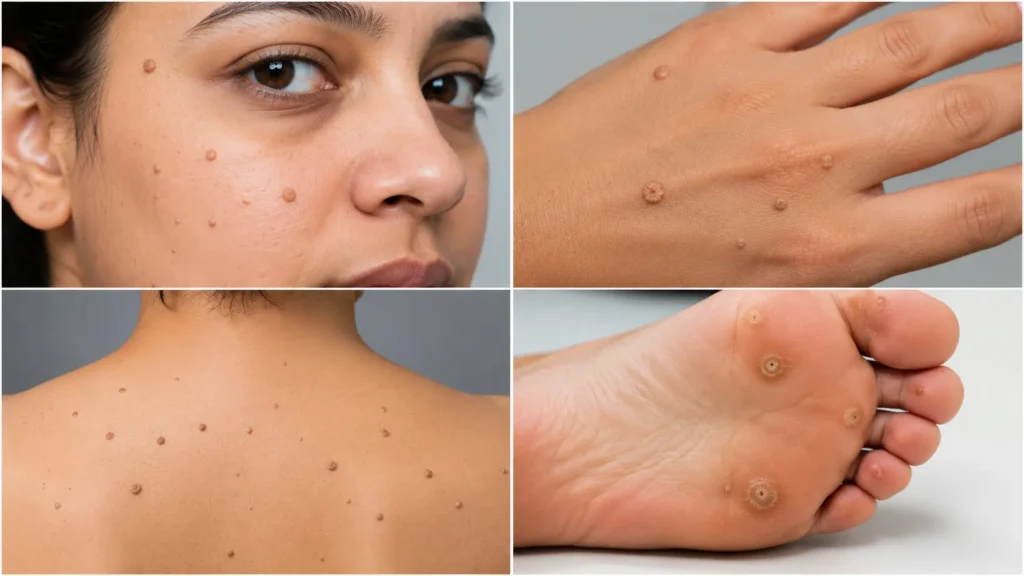
If you’re looking for the best wart treatment, choosing a hospital with experienced dermatologists and advanced treatment facilities is essential for accurate diagnosis and effective care. A leading dermatology hospital provides comprehensive evaluation and personalized treatment plans based on the type, size, location, and severity of the skin growth.
Whether you have common, plantar, facial, or genital growths caused by the human papillomavirus (HPV), specialists offer advanced treatment options such as cryotherapy, laser therapy, electrocautery, immunotherapy, topical medications, and minor surgical procedures for safe and effective removal. Early diagnosis and timely care not only eliminate existing lesions but also reduce the risk of recurrence, prevent the spread of HPV, and help restore healthy skin through appropriate follow-up and preventive care.
Warts are small, rough skin growths caused by infection with the human papillomavirus (HPV), which affects the outer layer of the skin. In simple terms, they are benign (non-cancerous) bumps that develop when HPV triggers rapid growth of skin cells.
These viral skin growths are extremely common. Most people develop at least one during their lifetime, with children and young adults being more susceptible because their immune systems have not yet built strong resistance to common HPV strains.
In most cases, they are harmless and may disappear without treatment. However, depending on their location, they can become painful, uncomfortable, or cosmetically concerning. Some people search for “watts disease” when referring to this condition, but there is no medical condition by that name—it is simply a common misspelling of warts.
There are several types of warts, and identifying the specific type helps determine the most appropriate treatment.
Common Warts: Rough, raised bumps that usually develop on the hands and fingers.
Flat Warts: Smaller, smoother growths that commonly appear on the face and hands. Verruca plana, the medical term for flat warts, often requires gentler treatment because the skin in these areas is thinner and more sensitive.
Filiform Warts: Thread-like, finger-shaped growths that typically develop around the mouth, nose, or eyes. While online images may help with general identification, a dermatologist should always confirm the diagnosis.
Plantar Warts: These develop on the soles of the feet and can become painful due to pressure from standing or walking.
Genital Warts: Caused by specific strains of HPV, these growths occur in the genital region and require professional medical evaluation and treatment.
For flat wart treatment, especially on the face, dermatologists commonly recommend topical retinoids, carefully performed cryotherapy, or salicylic acid formulations designed for sensitive skin.
Facial Warts: Facial warts require extra care because the skin is thin and highly visible. They may appear on the eyebrow, under the eye, around the eyes, or even on the eyelids. Because of the delicate nature of these areas, removal should always be performed by a qualified dermatologist to avoid injury or scarring.
Professional eye wart removal is usually carried out using precision techniques rather than home remedies. Laser treatment is often preferred for facial lesions because it allows controlled removal with minimal damage to surrounding skin and a lower risk of scarring.
Hand & Finger Warts: Common and flat warts frequently develop on the fingers and hands. Some grow around or beneath the nails, a condition known as periungual warts. If left untreated, these lesions can damage the nail, leading to ridging, splitting, or even nail detachment.
For persistent growths around the nails, consult an experienced dermatologist instead of attempting home remedies, as professional treatment offers better outcomes and lowers the risk of recurrence.
Lip & Mouth Warts: A wart on the lip may result from HPV transmission through direct skin contact. Some people describe an unfamiliar bump as a “muss on skin” when trying to identify a lesion near the mouth.
Because the lips and surrounding tissues are sensitive and highly visible, dermatologists usually recommend gentle in-clinic procedures rather than harsh topical acids for safe removal.
Plantar Warts (Foot Warts): Plantar warts develop on the soles of the feet and are often pushed inward because of body weight, making them particularly uncomfortable. Walking barefoot in damp public areas such as locker rooms, swimming pools, and communal showers increases the risk of infection.
Common symptoms include a hard, grainy skin growth with tiny black dots (clotted blood vessels) and pain while standing or walking. Treatment options range from over-the-counter medications to professional removal using cryotherapy, laser therapy, or minor surgical procedures.
If left untreated, these growths can spread to other parts of the foot or become infected due to repeated picking or scratching.
Red & Pigmented Warts: Red warts on the skin may appear inflamed because of irritation or increased blood vessel activity within the lesion. In most cases, the redness is not a sign of a serious problem. However, darker or pigmented skin growths should always be examined by a dermatologist, as they may resemble other benign or potentially concerning skin conditions.
Periungual & Subungual Warts: Periungual warts develop around the nails, while subungual warts grow underneath the nail plate. These types are often difficult to treat because the nail protects the HPV infection from topical medications.
Without timely treatment, they can lead to long-term nail damage, including ridging, splitting, or abnormal nail growth. Early intervention by a dermatologist usually provides the best results.
Genital Warts: Genital warts are small flesh-colored or gray growths that develop on or around the genital area due to specific low-risk strains of HPV. Treatment may include prescription medications, cryotherapy, laser therapy, electrocautery, or minor surgical removal, depending on their size and location.
Although these lesions are generally not dangerous, they should always be evaluated by a healthcare professional. Some cases resolve naturally, particularly in people with strong immune systems, while others require treatment to clear the infection and reduce transmission.
HPV Connection
Genital warts are primarily caused by low-risk HPV types, most commonly types 6 and 11. The virus spreads through direct skin-to-skin contact, especially during sexual activity.
HPV testing is not always required for diagnosis, but healthcare providers may recommend it as part of routine sexual health screening, depending on individual risk factors.
Alternative Names
In medical terminology, genital warts are also called anogenital warts or condyloma acuminatum. Both terms refer to the same HPV-related condition affecting the genital and anal regions.
|
Genital Warts in Men |
Genital Warts in Women |
|
In men, these growths commonly appear on the penis, scrotum, groin, or around the anus. They may be flat, raised, or have a cauliflower-like appearance. |
In women, they may develop on the vulva, vaginal walls, cervix, or around the anus. In some cases, they are discovered only during a routine pelvic examination because they produce few or no noticeable symptoms. |
Visual Identification
Searching for genital wart images or photos may provide general awareness, but self-diagnosis is not reliable. Many skin conditions resemble HPV-related lesions, making a clinical examination the most accurate way to confirm the diagnosis.
Risk Assessment
Two of the most common questions are whether genital warts are dangerous and whether they are contagious.
Yes, they are contagious and can spread even when no visible growths are present because HPV may remain active on the skin without causing symptoms. Although complications are uncommon, untreated cases may cause discomfort, emotional distress, and, in rare situations, complications during childbirth if the lesions become extensive.
A wart usually appears as a raised, rough-textured bump that may contain tiny black dots. Depending on the type, the color may be skin-toned, gray, brown, or pink.
Appearance varies according to location, but most forms share similar characteristics that help dermatologists distinguish them from other skin conditions.
Flat warts usually appear as smooth, slightly raised, skin-colored bumps, while genital lesions often form soft, flesh-colored clusters. Red growths may look inflamed because of increased blood supply.
Comparing the texture, color, and location of a skin lesion can provide useful clues, but a professional examination is always recommended for an accurate diagnosis.
Plantar warts typically present as thickened, callus-like patches on the sole of the foot with tiny black pinpoints. Because they develop on weight-bearing areas, they frequently cause discomfort while walking or standing for long periods.
Growths on the face, especially around the eyes, eyelids, and cheeks, are generally smaller and flatter than those found elsewhere on the body. Although they may appear less noticeable, they can spread more easily through scratching or shaving.
The incubation period for HPV varies from a few weeks to several months. As a result, many people find it difficult to determine exactly when or where they acquired the infection, since visible skin growths often appear long after exposure.
Warts develop when the human papillomavirus (HPV) enters the skin through tiny cuts, cracks, or abrasions. The virus infects the outer layer of the skin, triggering rapid cell growth that results in a raised skin lesion. Several factors can increase the risk of developing this common viral skin infection.
HPV is the primary cause of all types of warts. Different strains of the virus are responsible for different forms of the condition.
Touching an infected person’s skin or your own existing lesion can spread HPV to other areas of the body.
Contact with Contaminated Surfaces: Walking barefoot in public showers, locker rooms, gyms, or swimming pool areas increases the risk of developing plantar warts.
Broken or Damaged Skin: Cuts, scratches, and cracked skin provide an easy entry point for the virus.
Weakened Immune System: People with reduced immunity are more susceptible to HPV infection and recurrent skin growths.
Nail Biting or Cuticle Picking: These habits increase the likelihood of developing periungual lesions around the fingernails.
Sharing Personal Items: Using contaminated towels, razors, socks, shoes, or nail care tools may spread HPV from one person to another.
Close Physical Contact: Skin-to-skin contact, including sexual contact, can transmit HPV strains responsible for genital warts.
Early diagnosis and timely treatment help prevent the infection from spreading to other parts of the body or to other individuals.
Treatment depends on the type, size, location, and number of lesions, as well as the patient’s age and overall health. Options range from simple home therapies to advanced dermatological procedures.
Many people begin treatment with over-the-counter products containing salicylic acid. Depending on the condition, dermatologists may also prescribe stronger topical medications to gradually remove the infected tissue.
Common options include:
Topical therapy is often the first choice for common, flat, and smaller skin growths.
Laser treatment uses focused light energy to destroy infected tissue while preserving the surrounding healthy skin. It is particularly useful for stubborn, recurrent, facial, or difficult-to-treat lesions.
Laser therapy offers several advantages:
It is also commonly recommended for larger genital growths and cases that do not respond to conventional treatment. Multiple sessions may be required for complete clearance.
Cryotherapy involves applying liquid nitrogen to freeze and destroy infected tissue.
The freezing process causes the abnormal cells to die, after which the treated area forms a blister and gradually falls away. Most patients require several treatment sessions scheduled a few weeks apart.
Cryotherapy is highly effective for:
Although highly successful, the number of sessions depends on the size and depth of the affected area.
Minor surgery may be recommended when conservative treatments fail or when the lesion is large, deeply rooted, painful, or located in a difficult area.
Common surgical techniques include:
These procedures usually provide faster removal but may carry a slightly higher risk of scarring than non-surgical treatments.
Overall, surgical outcomes are excellent, with most patients achieving complete clearance after healing.
Before the procedure, your dermatologist will review your medical history, medications, allergies, and overall health.
Preparation generally includes:
Following these instructions helps improve treatment outcomes and supports smooth healing.
Following surgery, mild redness, swelling, and temporary discomfort are normal.
Post-procedure care typically includes:
Recovery generally takes one to three weeks, depending on the location and size of the treated area. Most people can resume normal daily activities within a few days.
Depending on the severity of the infection, dermatologists may recommend additional procedures, including:
These treatments are often reserved for persistent, multiple, or recurrent cases that do not respond to first-line therapies.
Common Warts: Usually treated with topical salicylic acid, cryotherapy, laser therapy, or electrocautery. Resistant cases may require minor surgical removal.
Plantar Warts: Growths on the soles of the feet are commonly managed with salicylic acid, cryotherapy, laser treatment, or minor surgery. Protective padding may help reduce discomfort while walking.
Flat Warts: These lesions generally respond well to prescription topical medications, chemical peels, cryotherapy, or laser therapy. Multiple sessions may be necessary when numerous growths are present.
Filiform Warts: Filiform warts commonly appear on the face or neck and are usually removed using cryotherapy, laser treatment, electrocautery, or surgical excision for precise cosmetic results.
Periungual Warts: Growths around the fingernails or toenails often require cryotherapy, laser treatment, or surgical removal, particularly when nail growth is affected.
Genital Warts: These should always be evaluated by a healthcare professional. Depending on their size and location, treatment may include prescription medications, cryotherapy, laser therapy, electrocautery, or surgical removal.
Recurrent or Multiple Warts: Patients with recurrent or widespread lesions often benefit from a combination of topical medications, cryotherapy, laser therapy, and immunotherapy to strengthen the body’s immune response against HPV.
The most appropriate treatment plan depends on the type, location, number, and severity of the lesions. An experienced dermatologist can recommend the most effective approach for complete removal while minimizing the risk of recurrence.
Yes. Many warts disappear naturally as the body’s immune system gradually fights off the human papillomavirus (HPV). However, this process may take several months or even years. In some cases, the growths may persist, enlarge, or spread to other areas of the body or to other people.
Treatment is recommended if the lesion:
Early evaluation by a dermatologist helps determine the most effective treatment while reducing the risk of recurrence and transmission.
Most warts respond well to treatment, with success rates ranging from 70% to 90%, depending on the type, location, and treatment method used.
Common treatment options including cryotherapy, salicylic acid, laser therapy, electrocautery, and minor surgical removal are highly effective. However, some patients require multiple sessions to achieve complete clearance.
Even after successful treatment, recurrence is possible because HPV may remain in the surrounding skin. The risk is higher in people with weakened immunity, untreated nearby lesions, or repeated exposure to the virus.
With timely diagnosis, appropriate treatment, and preventive care, most cases can be successfully managed while minimizing the chance of recurrence.
Although most warts are harmless, untreated lesions can occasionally lead to complications, particularly when they are large, painful, or located in sensitive areas.
Although the low-risk HPV strains that cause genital warts differ from cancer-causing strains, professional evaluation is important because some HPV infections are associated with cervical, anal, penile, and other genital cancers.
Consult a dermatologist if the growth:
Prompt diagnosis and treatment help prevent complications, reduce recurrence, and limit the spread of HPV.
Although warts cannot always be prevented, good hygiene and reducing exposure to HPV significantly lower the risk of infection and recurrence.
Tips to Prevent Warts
Following these preventive measures can reduce the likelihood of developing new lesions, prevent transmission, and minimize recurrence after treatment.
Several misconceptions continue to surround this common skin condition.
The time required for complete removal depends on the type, size, location, immune response, and treatment method.
Initial Consultation: Your dermatologist examines the affected area and recommends the most appropriate treatment plan.
Treatment Begins: Depending on the diagnosis, treatment may include topical medications, cryotherapy, laser therapy, electrocautery, immunotherapy, or minor surgery.
Healing Phase: Most treated areas heal within 1–3 weeks, depending on the procedure performed.
Multiple Sessions: Larger or stubborn lesions may require 2–6 sessions, usually spaced 2–4 weeks apart.
Follow-Up: Regular follow-up appointments help monitor healing and detect any signs of recurrence early.
Treatment timelines vary between individuals. Early diagnosis and timely care generally lead to better outcomes and reduce the risk of HPV spreading or returning.
Successful treatment does not always eliminate HPV completely, so following proper aftercare and preventive measures is important to reduce the risk of recurrence.
Proper care after treatment supports faster healing and lowers the chance of infection or new lesions developing.
Follow these recommendations:
Depending on the treatment method used, temporary activity restrictions may be recommended until healing is complete.
Although no treatment can completely eliminate HPV from the body, healthy lifestyle habits can help reduce the risk of future outbreaks.
To lower your chances of recurrence:
Regular self-examination helps detect new skin growths at an early stage.
You should:
Early detection allows prompt treatment and reduces the likelihood of HPV spreading.
Maintaining healthy skin and a strong immune system is the best long-term strategy for preventing recurrence.
A comprehensive maintenance plan includes:
These measures help reduce future outbreaks while supporting overall skin health.
Choosing the best wart treatment hospital is essential for accurate diagnosis, effective treatment, and long-term prevention of recurrence. At a best dermatology hospital experienced dermatologists provide personalized care using advanced treatments such as cryotherapy, laser therapy, immunotherapy, and minor surgical procedures. Whether you need treatment for common, plantar, facial, or genital warts, consulting the dermatologist for Warts ensures safe removal, faster recovery, reduced recurrence, and healthier skin with comprehensive follow-up care.
Warts are small, non-cancerous skin growths caused by infection with the human papillomavirus (HPV).
Yes. HPV spreads through direct skin-to-skin contact and by touching contaminated surfaces or personal items.
Yes. Many cases resolve naturally as the immune system clears the virus, although this may take several months or even years.
Genital warts are usually caused by low-risk HPV strains and are not considered dangerous. However, they should always be evaluated by a healthcare professional because other HPV types are associated with certain cancers.
Treatment depends on the type, size, and location of the lesion. Options include:
A dermatologist can recommend the most appropriate treatment based on your individual condition.
You can reduce your risk by:
Warts are skin growths that develop due to strains of the human papillomavirus (HPV). There are several types, like plantar warts, common warts and flat warts. Warts can be stubborn, but many treatment options can help get rid of them.
What Are They? These small, noncancerous growths appear when your skin is infected with one of the many viruses of the human papillomavirus (HPV) family. The virus triggers extra cell growth, which makes the outer layer of skin thick and hard in that spot. While they can grow anywhere you have skin, you're more likely to get one on your hands or feet. The type of wart depends on where it is and what it looks like.
What is a viral wart? A viral wart is a very common benign lesion caused by infection with human papillomavirus (HPV). Viral warts can be classified by site as being cutaneous or mucosal as the HPV types are quite distinct [see Anogenital wart and Sexually acquired human papillomavirus for further information on mucosal HPV infection]. A cutaneous wart is also called a verruca or papilloma, and warty-looking lesions of any cause may be described as verrucous or papillomatous.
No rows found.