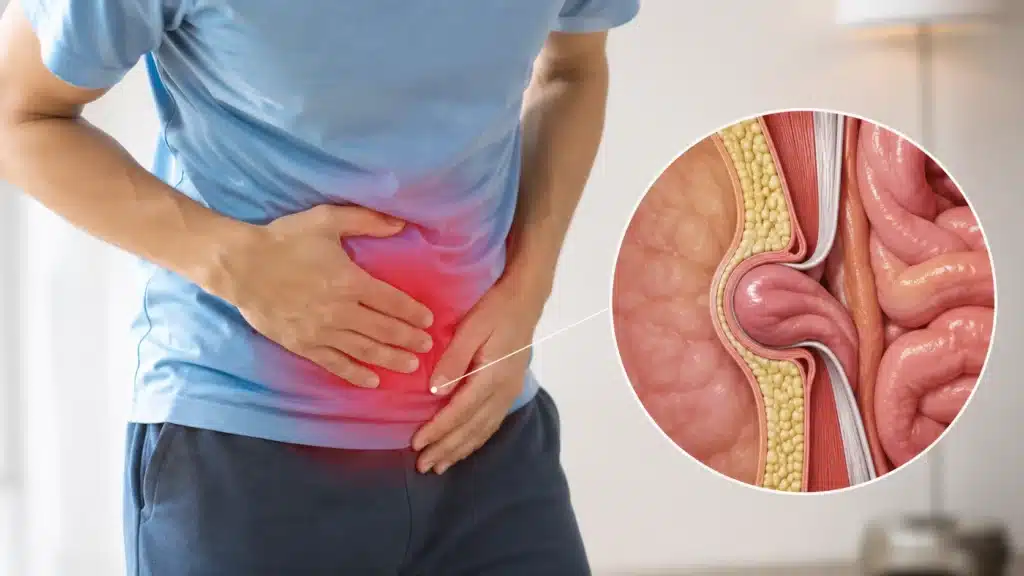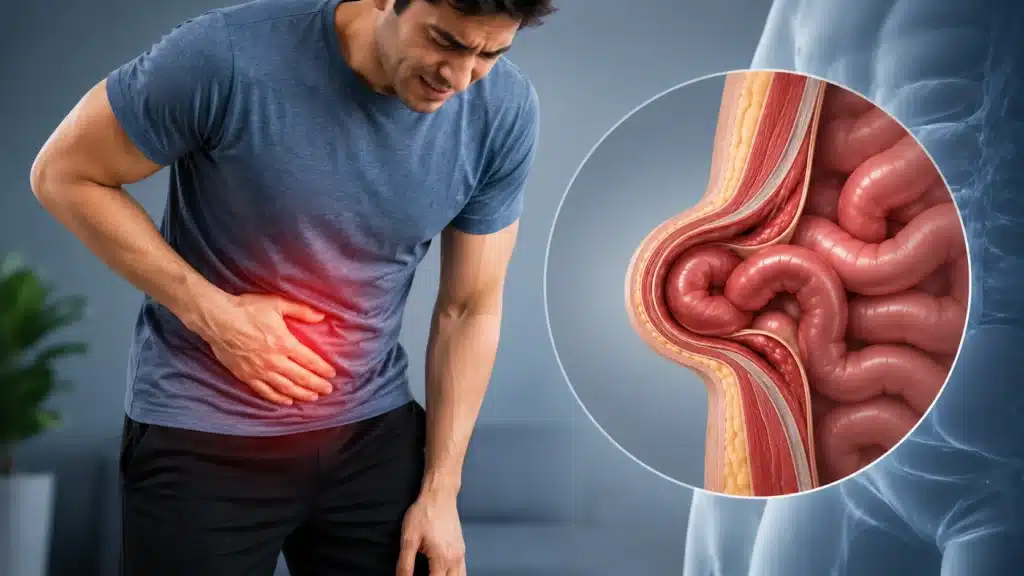
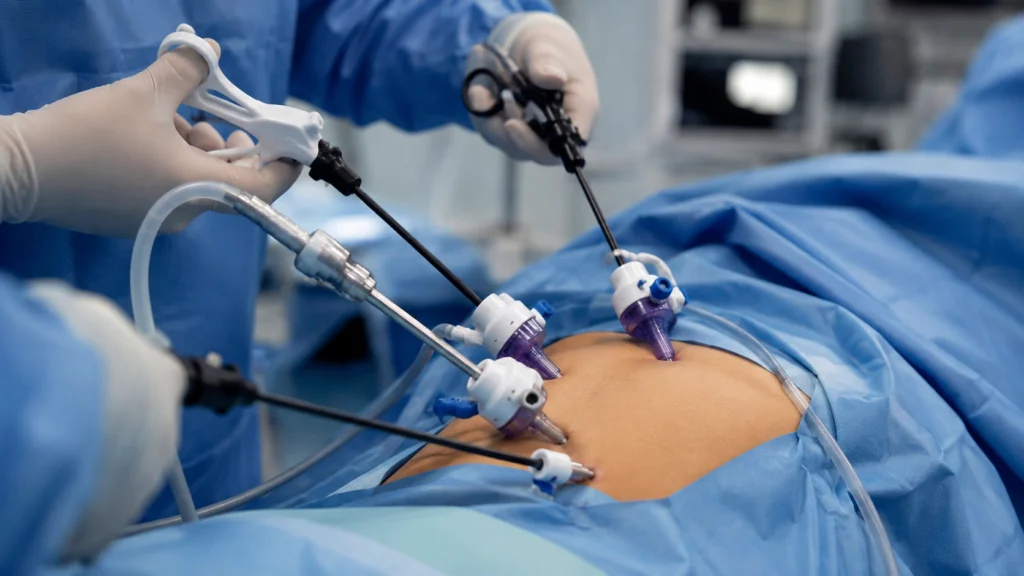
Open hernia repair is a proven surgical treatment used to fix a hernia through a direct incision over the affected area. It is commonly recommended when a hernia is large, painful, recurrent, complicated, or not suitable for minimally invasive surgery. In simple terms, it helps move the displaced tissue back to its proper place and strengthens the weak area of the abdominal wall so the hernia does not come out again.
A hernia happens when an internal organ or tissue pushes through a weak spot in the muscle or connective tissue that normally holds it in place. This may cause a visible bulge, discomfort, heaviness, pain during movement, or symptoms that worsen with coughing, lifting, standing, or straining. If not treated in time, a hernia may enlarge or lead to serious complications such as obstruction or strangulation.
At Rama Hospital, open hernia repair is planned carefully after a complete evaluation of the hernia type, size, location, symptoms, and patient health. The goal is to provide a safe, durable repair with the right surgical approach for each patient.
Open hernia repair is also known as herniorrhaphy when the weak tissue is repaired using sutures, and hernioplasty when a mesh is used to reinforce the repair. Both methods are widely used in modern surgical practice, and the best option depends on the type of hernia, the condition of surrounding tissue, and the surgeon’s assessment.
Open hernia repair is a surgical procedure in which the doctor makes an incision near the hernia site, gently pushes the protruding tissue back into the abdomen, and repairs the weak area. The repair may be done using stitches alone or with the help of a surgical mesh that supports the weak tissue and lowers the chance of the hernia returning.
The operation is usually performed under spinal, general, or local anesthesia depending on the type of hernia and the patient’s condition. It remains an important option even today because it offers direct access to the hernia site and can be especially useful in complex or recurrent cases.
Unlike laparoscopic surgery, which uses keyhole cuts and a camera, open repair gives the surgeon a direct view of the weakened area. This can be helpful in patients who have large defects, scar tissue from earlier surgery, or hernias that are difficult to treat through minimally invasive methods.
Open hernia repair can be used for many common hernia types, including inguinal hernia, umbilical hernia, ventral hernia, incisional hernia, and femoral hernia. In selected cases, it may also be used for recurrent hernias or hernias with complications.
Open hernia repair is recommended for patients who have a hernia that causes symptoms, continues to grow, or carries a risk of complications. The decision is based on the type of hernia, its size, location, and how much it affects daily life.
You may need open hernia repair if you have:
Open hernia repair may also be preferred when the surgeon wants direct access to the area for a stronger repair or when the patient has medical or surgical factors that make an open approach safer.
A hernia is a condition in which an organ, tissue, or part of the intestine pushes through a weak area in the muscle wall. This weak spot can be present from birth or can develop later due to pressure, strain, surgery, or gradual tissue weakness.
The most common signs of a hernia include:
Some hernias are small and may not cause much trouble at first. Others become painful, enlarge over time, or interfere with movement and daily activities. In such cases, surgery is often the best treatment.
Open hernia repair is used for several common hernia types.
Hernias develop when pressure inside the abdomen combines with weakness in the muscle or tissue wall. In some people, the weakness is congenital, while in others it appears over time. In many cases, more than one factor is involved. For example, a patient may have a weak tissue wall and repeated pressure from coughing or straining, which gradually leads to hernia formation.
Common causes and risk factors include:
The symptoms of a hernia can vary depending on its type and severity. Some people notice a bulge but little pain, while others feel significant discomfort. These urgent symptoms may indicate strangulation or obstruction and require immediate medical care.
Common symptoms include:
Emergency symptoms include:
Hernia diagnosis usually begins with a physical examination. In many cases, the surgeon can identify the hernia simply by looking and feeling the bulge while the patient coughs or strains.
Diagnostic steps may include:
The doctor will also check whether the hernia is reducible, meaning it can be gently pushed back in, or irreducible, meaning it is trapped and may need urgent treatment. Imaging tests are especially useful when the hernia is small, internal, recurrent, or difficult to examine.
Open hernia repair is often considered when:
In many hospitals, both laparoscopic and open options are available. The final decision depends on the type of hernia, the patient’s condition, and the surgeon’s recommendation.
Both open and laparoscopic hernia repair are effective, but they differ in how the surgery is done and which patients may benefit most. Open hernia repair remains important because it is highly effective and sometimes the safest or most practical choice for difficult cases.
Open repair
Laparoscopic repair
| Hernia type | Common location | Typical symptoms | Common repair approach |
| Inguinal hernia | Groin | Bulge, discomfort, heaviness | Open or laparoscopic |
| Umbilical hernia | Near belly button | Swelling, pain, pressure | Open repair often used |
| Incisional hernia | Previous surgical scar | Bulge at scar, pain, weakness | Open repair often used |
| Ventral hernia | Front abdominal wall | Bulge, strain discomfort | Open or laparoscopic |
| Femoral hernia | Upper thigh/groin | Lump, pain, higher complication | Often open repair |
| Recurrent hernia | Previous repair site | Repeat bulge, pain, weakness | Open repair consider |
Before recommending open hernia repair, the surgical team usually evaluates the patient thoroughly. This helps confirm the diagnosis and plan the safest repair method. This preparation is important because a good surgical outcome begins with correct planning. It also helps the patient understand what to expect before and after surgery.
The evaluation may include:
| Situation | Why open repair may be better |
| Large hernia | Easier direct access and stronger repair |
| Recurrent hernia | Helps manage scar tissue and previous mesh issues |
| Complex anatomy | Surgeon can see and repair the area directly |
| Severe symptoms | Fast and reliable repair of the defect |
| Complicated hernia | Useful when obstruction or trapped tissue is suspected |
| Not fit for laparoscopy | Open surgery may be safer in selected patients |
Not every hernia needs immediate surgery, especially if it is small and not causing symptoms. In some cases, the doctor may recommend observation and symptom control for a short period. However, non-surgical care does not repair the defect. If the hernia is growing, painful, or high-risk, surgery is usually the definitive treatment.
Non-surgical management may include:
| Warning sign | What it may mean |
| Sudden severe pain | Possible trapped hernia |
| Bulge cannot be pushed back | Irreducible hernia |
| Redness or dark discoloration | Reduced blood flow to tissue |
| Vomiting or bloating | Possible bowel obstruction |
| Fever with hernia pain | Possible infection or complication |
| Inability to pass gas or stool | Possible strangulation or obstruction |
Open hernia repair is performed in the operating room and may vary slightly based on the type of hernia. The goal is always the same: reduce the hernia, repair the defect, and strengthen the weak area.
1. Preoperative preparation: The patient is assessed for fitness for surgery. This includes checking medical history, medications, anesthesia risk, and any previous operations. Some medicines may need adjustment before surgery.
2. Anesthesia: Depending on the case, the patient may receive general, spinal, or local anesthesia. The choice depends on the hernia type, the size of the repair, and the patient’s overall health.
3. Surgical incision: The surgeon makes an incision over or near the hernia. This gives direct access to the hernia sac and surrounding tissue.
4. Identification of hernia sac: The surgeon carefully identifies the protruding tissue or sac and separates it from nearby structures. This is an important step because precision helps reduce complications.
5. Reduction of hernia contents: The displaced tissue, fat, or bowel is gently moved back into the abdomen if it is safe to do so. If the tissue is trapped or damaged, the surgeon manages it accordingly.
6. Repair of the defect: Mesh use depends on the hernia type, tissue strength, risk of recurrence, and the surgeon’s judgment. The weak area is then repaired in one of two ways:
7. Mesh placement if needed: When mesh is used, it acts like a strong support layer over the weak area. It helps reduce tension on the tissues and lowers the risk of the hernia returning.
8. Closure of the incision: The surgeon closes the layers of tissue and the skin with stitches or staples. A dressing is placed over the wound.
9. Recovery monitoring: The patient is observed in the recovery area for pain control, walking ability, food intake, and any early complications. Most patients can go home the same day or after a short hospital stay, depending on the case.
| Feature | Herniorrhaphy | Hernioplasty |
| Repair method | Stitches used to close defect | Mesh used to reinforce repair |
| Best for | Smaller or selected defects | Larger, weaker, or recurrent hernias |
| Strength | Depends on tissue quality | Adds extra support |
| Recovery | May be similar, depending on case | May offer lower recurrence in many cases |
| Surgeon decision | Based on tissue and hernia type | Based on risk of recurrence and anatomy |
Open hernia repair offers several important benefits, especially for patients with complex hernias. It is a dependable operation with long-term value when performed for the right indication. For patients struggling with repeated hernia symptoms, surgery can significantly improve quality of life.
Benefits include:
Open hernia repair is generally safe, but like all operations, it carries some risks. These are usually manageable when surgery is done by an experienced team. The surgeon will discuss these risks before surgery and explain how they are minimized.
Possible risks include:
| Complication | Description | Usual management |
| Pain | Common after surgery | Medicines, rest, gradual activity |
| Infection | Redness, discharge, fever | Antibiotics and wound care |
| Seroma | Fluid collection under skin | Observation or drainage |
| Recurrence | Hernia returns later | May need further evaluation |
| Numbness | Temporary nerve irritation | Often improves with time |
| Mesh issue | Rare problem with mesh | Specialist review and treatment |
Recovery after open hernia repair depends on the size of the surgery, the hernia type, and the patient’s overall health. Most patients recover well when they follow their doctor’s advice closely. Patients should also watch for warning signs such as fever, severe pain, redness, pus, vomiting, or increasing swelling. These symptoms should be reported promptly.
Helpful recovery tips include:
Recovery time varies depending on the hernia size and the complexity of surgery. Some patients return to light activity within days, while others may need several weeks for full recovery. Your surgeon will give personalized instructions based on the exact procedure performed. Following these instructions carefully helps reduce the chance of recurrence and supports a smoother recovery.
In general:
Most patients return to a normal and active life after successful hernia repair. The surgery is meant to relieve discomfort, prevent complications, and allow the patient to move more freely. These habits can lower the chance of another hernia developing later.
After recovery, it helps to:
Rama Hospital provides structured, patient-centered care for hernia treatment and surgery. The surgical plan is made after a careful evaluation of the hernia and the patient’s health needs. The hospital aims to combine surgical expertise with a smooth and reassuring patient experience.
Reasons patients choose Rama Hospital include:
You should see a doctor if you notice a bulge, pain, or discomfort in the groin or abdominal area that does not go away. Even a small hernia can become larger over time and should be checked before it causes complications. Seek emergency care immediately if the hernia becomes very painful, cannot be pushed back, or is associated with vomiting, fever, or redness. These may be signs of strangulation or obstruction.
See a doctor if you have:
Open hernia repair is a standard surgical procedure, but the extent depends on the size and type of hernia. It is more invasive than keyhole surgery, yet it is widely performed and considered safe when done for the right indication.
Some pain and soreness are expected after surgery, especially in the first few days. Pain is usually controlled with medicines, and most patients improve steadily as the wound heals.
Most hernia repairs heal well, but recurrence can still happen in some cases. The risk depends on factors like hernia type, tissue quality, surgical method, and how well post-surgery advice is followed.
No, mesh is not always required. Some hernias are repaired with stitches alone, while others benefit from mesh reinforcement for added strength and lower recurrence risk.
The hospital stay depends on the hernia type, the complexity of the operation, and the patient’s recovery after anesthesia. Many patients go home the same day or after a short stay.
Return to work depends on the nature of your job and your healing speed. Desk jobs may be resumed earlier, while jobs involving lifting or physical effort usually need a longer rest period.
Yes, walking is usually encouraged early after surgery. Gentle walking supports circulation, helps recovery, and lowers the risk of complications like blood clots.
You should avoid heavy lifting, straining, and sudden twisting movements until your doctor says it is safe. It is also important to prevent constipation and follow all wound care instructions carefully.
Open hernia repair remains an important and effective treatment for patients with symptomatic, large, recurrent, or complex hernias. It gives the surgeon direct access to the defect, allowing a strong repair that can be tailored to the patient’s condition. For many patients, this surgery helps relieve pain, restore comfort, and prevent serious complications like obstruction or strangulation.
At Rama Hospital, open hernia repair is approached with careful planning, precise surgical technique, and clear post-operative guidance. Whether the repair is done with stitches, mesh, or a combination of both, the focus remains on safety, durability, and long-term patient well-being.
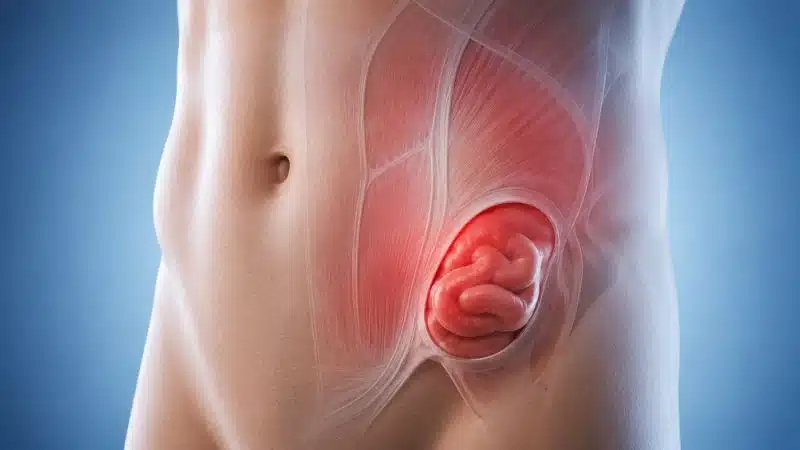

Surgery is the most common treatment for a hernia. The three main types of hernia surgery are open, laparoscopic (minimally invasive) and robotic repair.
No rows found.