Esophageal manometry is a specialized test that measures how well the esophagus, or food pipe, works. It checks the strength and coordination of the muscles that push food and liquid from the mouth to the stomach. The test also measures how well the lower esophageal sphincter, a valve at the bottom of the esophagus, opens and closes.
This test is often recommended for people who have trouble swallowing, chest pain, heartburn that does not improve with treatment, or unexplained regurgitation. It helps doctors understand whether the problem is due to weak muscles, uncoordinated contractions, or a valve that does not relax properly.
What is Esophageal Manometry?
Esophageal manometry is a diagnostic test that measures the pressure and movement inside the esophagus. The esophagus is a muscular tube that connects the mouth to the stomach. When you swallow, muscles in the esophagus contract in a coordinated wave to push food downward. This movement is called peristalsis.
At the bottom of the esophagus is a ring of muscle called the lower esophageal sphincter. This valve stays closed most of the time to prevent stomach acid from flowing back up. When you swallow, it relaxes to let food pass into the stomach. Esophageal manometry checks both the muscle contractions and the sphincter function.
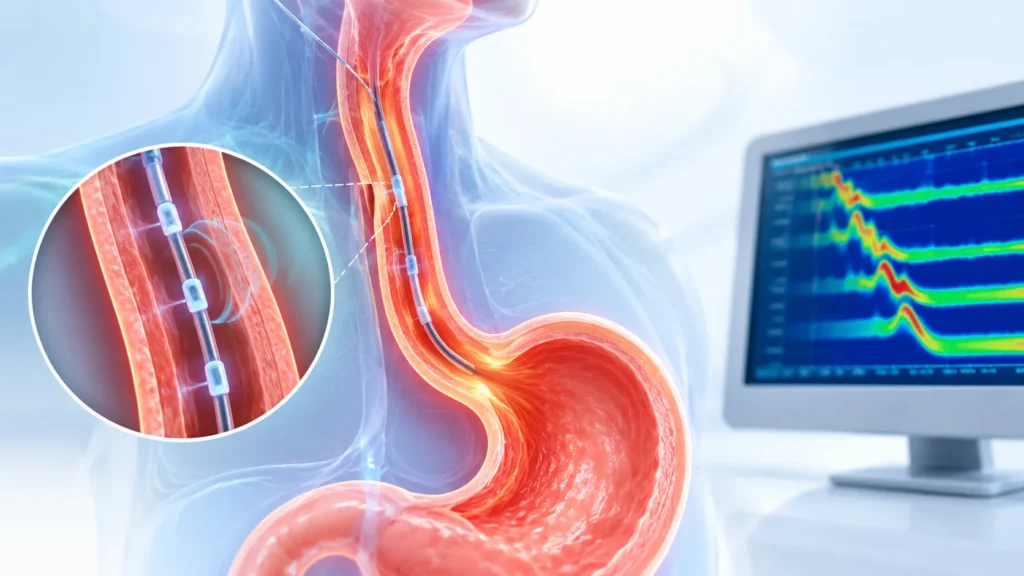
The test uses a thin, flexible tube that is passed through the nose into the esophagus. The tube has sensors that measure pressure at different points. As you swallow small sips of water, the sensors record how the muscles respond. This gives the doctor a detailed picture of how the esophagus is working.
Why is Esophageal Manometry Done?
Esophageal manometry is done to find the cause of swallowing problems and other esophageal symptoms. It helps doctors diagnose conditions that affect esophageal movement.
Common reasons for the test
- Difficulty swallowing food or liquids.
- Feeling of food getting stuck in the chest or throat.
- Chest pain that is not due to heart problems.
- Heartburn or acid reflux that does not respond to medicines.
- Regurgitation of food or liquid.
- Chronic cough or throat clearing.
- Evaluation before anti-reflux surgery.
- Follow-up after treatment for achalasia or other motility disorders.
- Unexplained weight loss due to swallowing problems.
What the test helps diagnose
- Achalasia, where the lower sphincter does not relax properly.
- Esophageal spasms, where muscles contract abnormally.
- Ineffective esophageal motility, where contractions are weak or uncoordinated.
- Scleroderma-related esophageal problems.
- Other motility disorders affect swallowing.
Who Needs Esophageal Manometry?
Not everyone with heartburn or swallowing issues needs this test. It is recommended when symptoms are persistent, unusual, or not explained by other tests.
People who may need the test
- Patients with long-term difficulty swallowing.
- Those who feel food sticking in the chest.
- People with chest pain after ruling out heart causes.
- Patients with reflux not improving despite medicines.
- Those being evaluated for anti-reflux surgery.
- People with suspected achalasia or motility disorder.
- Patients with unexplained chronic cough or throat symptoms.
When the test may not be needed
- Mild, occasional heartburn that responds to treatment.
- Symptoms clearly due to infection or temporary irritation.
- Patients who cannot tolerate the tube due to severe nasal or throat problems.
- Those with certain anatomical blockages that need different evaluation.
How to Prepare for the Test
Preparation is simple but important for accurate results.
Before the test
- Do not eat or drink for at least 6 to 8 hours before the test.
- Inform the doctor about all medicines you take.
- Some medicines may need to be stopped temporarily, especially those affecting esophageal movement.
- Avoid smoking on the day of the test.
- Wear comfortable, loose clothing.
- Arrange for someone to accompany you if sedation is used.
Medicines to discuss with the doctor
- Acid-reducing medicines.
- Medicines that affect gut movement.
- Pain medicines.
- Blood thinners if any procedure is planned.
- Any herbal or over-the-counter supplements.
What to bring
- List of current medicines.
- Previous test reports if available.
- Photo ID and insurance details if needed.
- A companion if sedation is planned.
How is the Test Performed?
Esophageal manometry is usually done in a gastroenterology lab or endoscopy suite. It takes about 20 to 30 minutes.
Step-by-step procedure
- The patient is seated or lying slightly upright.
- A numbing spray or gel may be applied to the nose or throat.
- A thin, flexible tube is gently passed through one nostril into the esophagus.
- The tube is advanced until it reaches the stomach.
- The patient is asked to swallow small sips of water.
- Sensors in the tube record muscle pressure and sphincter function.
- The tube is slowly removed after the test is complete.
What the patient feels
- Mild discomfort or gagging when the tube is inserted.
- A feeling of fullness in the nose or throat.
- Mild throat irritation after the test.
- No pain in most cases.
- Ability to breathe and talk normally during the test.
Duration and comfort
- The test usually takes 20 to 30 minutes.
- Most patients tolerate it well.
- Sedation is not always needed.
- The patient can usually go home the same day.
Types of Esophageal Manometry
There are different ways to perform the test depending on the technology used.
Conventional manometry
- Uses a tube with pressure sensors at fixed points.
- Measures pressure at specific locations in the esophagus.
- Still used in many centers.
High-resolution manometry
- Uses a tube with many more sensors.
- Gives a detailed, color-coded map of esophageal pressure.
- More accurate for diagnosing complex motility disorders.
- Now the preferred method in most modern hospitals.
Solid-state vs perfused systems
- Solid-state sensors are built into the tube.
- Perfused systems use water-filled channels.
- Both measure pressure but differ in technology.
Understanding the Results
The test results show how well the esophagus muscles and sphincter are working.
Normal results
- Coordinated muscle contractions after each swallow.
- The lower sphincter relaxes properly to let food pass.
- No abnormal pressure patterns.
Abnormal results
- Weak or absent contractions.
- Uncoordinated or simultaneous contractions.
- The lower sphincter does not relax.
- High pressure in the sphincter.
- Patterns suggesting achalasia, spasm, or ineffective motility.
What abnormal results mean
- Achalasia, where the sphincter fails to relax.
- Diffuse esophageal spasm, where contractions are abnormal.
- Ineffective motility, where contractions are too weak.
- Scleroderma esophagus, where the lower esophagus loses function.
- Other motility disorders need specific treatment.
Conditions Diagnosed by Esophageal Manometry
The test helps diagnose several conditions that affect swallowing and esophageal function.
Achalasia
- The lower sphincter does not relax.
- Food and liquid build up in the esophagus.
- Causes difficulty swallowing, regurgitation, and weight loss.
Esophageal spasm
- Muscles contract abnormally and uncoordinated.
- Causes chest pain and difficulty swallowing.
- Can be intermittent and confusing.
Ineffective esophageal motility
- Contractions are weak or poorly coordinated.
- May cause slow clearance of food and reflux symptoms.
- Often associated with GERD.
Scleroderma esophagus
- Lower esophagus loses muscle function.
- The lower sphincter becomes weak.
- Leads to severe reflux and swallowing problems.
Other motility disorders
- Jackhammer esophagus, where contractions are too strong.
- Absent contractility, where no contractions occur.
- Distal esophageal spasm patterns.
Risks and Side Effects
Esophageal manometry is very safe, but some mild side effects can occur.
Common side effects
- Mild throat irritation.
- Nose discomfort or minor bleeding.
- Gagging during tube insertion.
- Temporary feeling of fullness.
Rare complications
- Nosebleed.
- Minor injury to the esophagus.
- Aspiration if the patient vomits.
- Discomfort lasting a few hours.
When to seek help after the test
- Severe chest pain.
- Difficulty breathing.
- Vomiting blood.
- Severe or persistent throat pain.
- Fever or chills.
After the Test
Most patients recover quickly and can resume normal activities.
What to expect after the test
- Mild sore throat or nose irritation.
- Ability to eat and drink normally after a short rest.
- Return to work or daily activities the same day.
- Results discussed with the doctor after analysis.
When to resume normal activities
- Eating and drinking is usually allowed within an hour.
- Normal activities can be resumed the same day.
- Avoid very hot or spicy food if your throat is irritated.
Follow-up
- The doctor will discuss results and next steps.
- Further tests or treatment may be planned based on findings.
- Regular follow-up if a motility disorder is diagnosed.
Treatment After Diagnosis
Once the cause is identified, treatment can be planned.
Treatment for achalasia
- Medicines to relax the sphincter.
- Endoscopic procedures to stretch or cut the muscle.
- Surgery in severe cases.
Treatment for esophageal spasm
- Medicines to relax muscles.
- Dietary changes.
- Treatment of underlying reflux if present.
Treatment for ineffective motility
- Acid suppression medicines.
- Dietary and lifestyle changes.
- Treatment of underlying reflux.
Treatment for scleroderma esophagus
- Aggressive acid suppression.
- Monitoring for complications.
- Treatment of the underlying autoimmune condition.
Why Choose Rama Hospital for Esophageal Manometry?
Esophageal manometry is a specialized test that needs experienced gastroenterologists and modern equipment. A hospital with advanced diagnostic facilities can provide accurate results and clear guidance.
- Experienced gastroenterology team.
- High-resolution manometry equipment.
- Comfortable and safe procedure environment.
- Clear explanation of results and next steps.
- Coordinated care for further treatment if needed.
Frequently Asked Questions (FAQs)
Why is esophageal manometry done?
It is done to find the cause of difficulty swallowing, chest pain, reflux, or regurgitation. It helps diagnose conditions like achalasia, esophageal spasm, and ineffective motility. It is also used before anti-reflux surgery.
How long does the test take?
The test usually takes 20 to 30 minutes. Most patients can go home the same day. The tube is removed after the test is complete.
Is esophageal manometry painful?
Most patients do not find it painful. There may be mild discomfort or gagging when the tube is inserted. A numbing spray or gel can reduce this discomfort.
How should I prepare for the test?
Do not eat or drink for 6 to 8 hours before the test. Inform the doctor about all medicines, as some may need to be stopped temporarily. Avoid smoking on the day of the test.
What happens during the test?
A thin, flexible tube is passed through the nose into the esophagus. You will be asked to swallow small sips of water while sensors record muscle pressure. The tube is removed after the test.
What do abnormal results mean?
Abnormal results may show weak contractions, uncoordinated movement, or a sphincter that does not relax. This can indicate conditions like achalasia, spasm, or ineffective motility. The doctor will explain the findings and next steps.
Are there any risks?
The test is very safe. Mild throat irritation, nose discomfort, or gagging can occur. Serious complications are rare. Seek help if you have severe chest pain, breathing difficulty, or vomiting blood after the test.
Conclusion
Esophageal manometry is a valuable test for understanding how the esophagus works. It helps diagnose conditions that cause difficulty swallowing, chest pain, reflux, and regurgitation. The test is safe, quick, and does not involve surgery or radiation.
The most important steps are proper preparation, a skilled gastroenterology team, and clear communication of results. For patients with persistent swallowing problems or unexplained chest pain, this test can provide answers and guide the right treatment. With accurate diagnosis and appropriate care, most esophageal motility disorders can be managed effectively.
Rama Hospital can provide esophageal manometry testing with experienced gastroenterologists, modern equipment, and clear guidance on results and next steps. The goal is to help patients understand their condition and receive the right treatment for better digestive health.