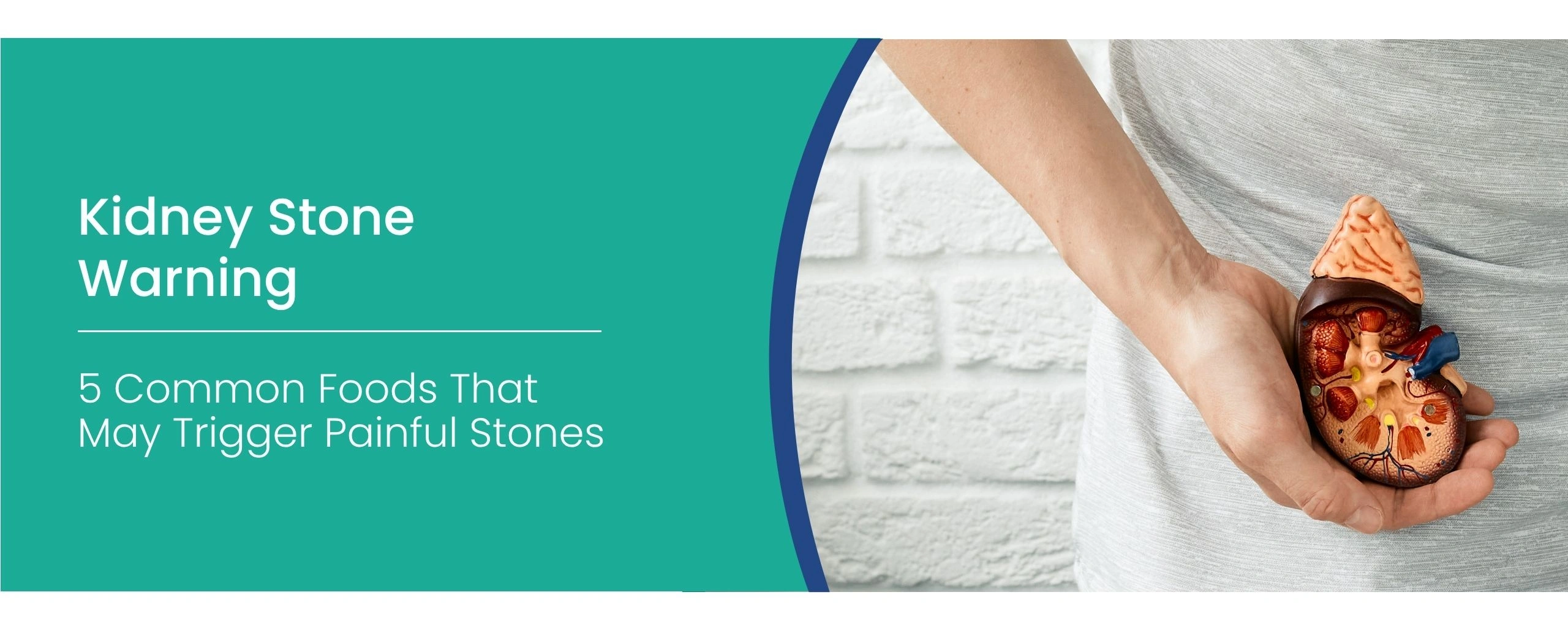
Kidney stones are more common than most people think. In India, nearly 12% of the population will develop a kidney stone at some point in their lifetime. And in cities like Noida, where processed food, low water intake, and sedentary lifestyles are increasingly common, that number is rising.
Here’s what most patients don’t realize: what you eat every single day plays a direct role in whether stones form.
Foods that cause kidney stones are not exotic or rare. They’re items sitting in your kitchen right now.
Why does food matter for kidney stones?
Your kidneys filter waste from your blood. When certain minerals and salts build up faster than urine can flush them out, crystals form. Over time, those crystals become stones.
Understanding which foods that cause kidney stones are part of your regular diet is the first step to prevention.
The connection is simple:
- Certain foods raise the concentration of stone-forming minerals in urine.
- Poor hydration makes it worse.
- Some food combinations are especially dangerous.
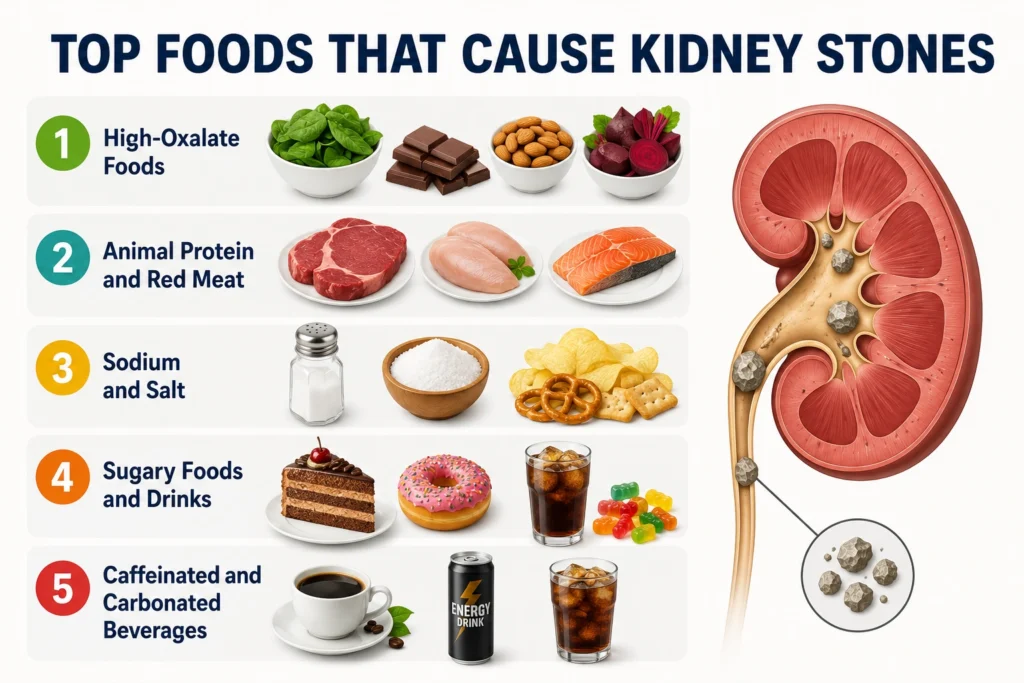
Top foods that cause kidney stones
1. High-Oxalate Foods
Oxalate is a naturally occurring compound found in many healthy foods. But in people prone to kidney stones, excess oxalate binds with calcium in the urine to form calcium oxalate stones, the most common type.
High-oxalate foods to watch:
- Spinach (palak), very high oxalate content.
- Beets and beetroot juice.
- Nuts, especially almonds and cashews.
- Chocolate and cocoa powder.
- Soy products, tofu.
- Sweet potatoes.
- Black tea (chai consumed multiple times daily).
Important: This does not mean you can never eat spinach. It means portion control and pairing these foods with calcium-rich items helps reduce absorption of oxalate. Speak to a urologist in Noida before eliminating entire food groups.
2. Animal Protein and Red Meat
High animal protein consumption is one of the most well-documented foods that cause kidney stones, particularly uric acid stones.
Why it happens:
- Animal proteins increase uric acid levels in urine.
- They reduce urinary citrate, which normally prevents stone formation.
- They increase calcium excretion from the kidneys.
Problematic foods:
- Red meat (mutton, beef, pork).
- Organ meats (liver, kidney, brain).
- Seafood (especially sardines, anchovies, and shrimp).
- Processed meats (salami, sausages, ham).
- Excessive chicken consumption.
A practical tip: Patients who eat non-vegetarian food at every meal are at significantly higher risk. Reducing animal protein to once a day, or substituting with plant-based proteins, can make a measurable difference.
3. Sodium and Salt
Salt is one of the most overlooked stone-forming foods because its connection to kidney stones is indirect but powerful.
How sodium triggers stones:
- High sodium causes kidneys to excrete more calcium into urine.
- Excess calcium in urine combines with oxalate or phosphate to form stones.
- Most Indians consume 2–3 times the recommended daily sodium limit.
High-sodium culprits:
- Packaged snacks (chips, namkeen, biscuits).
- Pickles and papadams.
- Restaurant and fast food.
- Instant noodles and soups.
- Packaged chutneys and sauces.
- Canned foods.
Guideline: The ideal sodium intake is below 2,300 mg per day. One packet of most Indian namkeen snacks can have 600–900 mg alone.
4. Sugary Foods and Drinks
Fructose, found in table sugar and high-fructose corn syrup, is a direct contributor to uric acid stone formation and is increasingly recognized as one of the key foods that cause kidney stones in urban Indian populations.
Even fruit juices consumed in large quantities, particularly orange juice in excess, can raise oxalate levels in certain individuals.
Foods to limit:
- Cold drinks and packaged juices (including “real fruit” versions).
- Mithais and Indian sweets (especially during festivals).
- Packaged cereals with added sugar.
- Flavored yogurt and sweetened lassi.
- Energy drinks.
5. Caffeinated and Carbonated Beverages
If you drink tea 4–5 times a day, you’re likely consuming significant oxalate through black tea alone. This is a pattern seen very commonly in Noida and NCR patients presenting with kidney stones.
How caffeine contributes:
- Increases calcium excretion from kidneys.
- Causes mild dehydration, concentrating stone-forming minerals.
- Regular high-dose caffeine = higher long-term risk.
Carbonated drinks:
- Colas contain phosphoric acid, which raises stone risk.
- Carbonation does not cause stones directly, but most fizzy drinks contain other risky ingredients.
Foods that increase risk: a quick reference table
| Food Category | Why It’s Risky | Stone Type It Promotes |
| Spinach, beets, nuts | High oxalate content | Calcium oxalate |
| Red meat, seafood, organ meats | High purines increase uric acid | Uric acid stones |
| Packaged snacks, pickles | High sodium means more calcium in urine | Calcium phosphate |
| Sugary drinks, mithais | Fructose raises uric acid | Uric acid stones |
| Black tea (excess) | Oxalate, mild dehydration | Calcium oxalate |
| Colas and fizzy drinks | Phosphoric acid, dehydration | Multiple types |
| Processed meats | Sodium + purines combined | Calcium + uric acid |
How kidney stone formation actually happens
Breaking this chain at any point, usually through diet and hydration, is how prevention works.
- High intake of oxalate-rich foods, sodium, animal protein, and sugar increases the risk of kidney stone formation.
- Excess minerals accumulate in the urine.
- Low water intake leads to concentrated urine.
- Minerals begin to form crystals inside the kidneys.
- Crystals gradually grow and combine to form kidney stones.
- The stone may block the urinary tract, causing pain, bleeding, or difficulty passing urine.
- Medical evaluation and treatment may be required to manage the condition.
What you should eat instead
Foods that protect against kidney stones:
- Water: 2.5 to 3 liters daily is the single most effective prevention.
- Lemon water: Citrate in lemons prevents stone formation.
- Low-fat dairy: Calcium from food (not supplements) actually reduces oxalate absorption.
- Coconut water: Natural diuretic, good hydration support.
- Fruits with high water content: watermelon, cucumber, lauki.
- Whole grains and fiber-rich foods: Reduce calcium absorption in the gut.
When to see a doctor
Diet alone isn’t always enough. You need professional evaluation if:
- You’ve already had one kidney stone (recurrence rate is 50% in 5 years without intervention).
- You have a family history of kidney stones.
- You experience blood in urine and persistent back or lower abdominal pain.
- You’re a diabetic or have gout, both significantly raise kidney stone risk.
- You’ve been advised to follow a special diet by a doctor but need clarity.
If you’re in Noida or NCR and looking for expert guidance, our urology team at Rama Hospital, recognized as one of the best hospitals in Noida, provides comprehensive kidney stone evaluation, dietary counseling, and advanced treatment options. Our best urologists in Noida use the latest minimally invasive techniques, including ESWL, URS, and PCNL for stone treatment. For kidney stone treatment in Noida, Rama Hospital offers same-day OPD consultation, diagnostic imaging, and personalized management plans.
Frequently Asked Questions (FAQs)
Q1. I had a kidney stone removed. Do I still need to watch my diet?
Yes, absolutely. Kidney stones have a 50% chance of recurring within 5 years if dietary habits don’t change. Removing a stone treats the immediate problem; diet changes prevent the next one.
Q2. Is milk bad for kidney stones? I’ve heard calcium causes stones.
This is one of the most common myths. Calcium from food, like milk and curd, actually reduces stone risk by binding oxalate in the gut before it reaches the kidneys. The risk comes from excess calcium supplements, not food calcium.
Q3. My doctor told me to drink more water. How much exactly?
The general recommendation is 2.5 to 3 liters of water per day. Your urine should look pale yellow, almost clear. Dark yellow urine means you’re not drinking enough.
Q4. I eat a lot of palak (spinach) because I thought it was healthy. Should I stop?
Not completely, but limit it if you’ve had calcium oxalate stones. Portion control matters more than elimination. Having it occasionally and pairing it with a calcium-rich food (like curd) reduces the risk.
Q5. Can kidney stones be managed without surgery?
Small stones (below 5–6 mm) often pass on their own with increased fluid intake and pain management. Larger stones may need procedures like ESWL or ureteroscopy. A urologist in Noida can evaluate your specific case and recommend the right approach.
Q6. Does eating fast food regularly cause kidney stones?
Fast food is high in sodium, animal protein, and often fructose, three of the biggest contributors to kidney stone formation. Regular fast food consumption is a known risk factor, especially combined with low water intake.
Q7. Is there a specific diet plan I should follow after having a kidney stone?
Yes. Diet recommendations vary based on your stone type. Calcium oxalate stone patients need different guidelines than uric acid stone patients. Always get a dietary plan from a qualified urologist or dietitian based on your stone analysis report.
Conclusion
Kidney stones symptoms don’t see overnight. They’re built, slowly, by years of daily food choices and hydration habits. The good news is that they’re largely preventable.
Knowing which foods that cause kidney stones are part of your regular diet gives you real power to reduce your risk. Small, consistent changes, drinking more water, cutting down on packaged food, and moderating animal protein make a significant difference over time.
If you’ve already experienced a kidney stone or want a proper evaluation, visit Rama Hospital in Noida. Our expert urology team offers complete kidney stone treatment in Noida, from diagnosis to dietary counseling and advanced procedures. Don’t wait for the pain to return. Take action now.