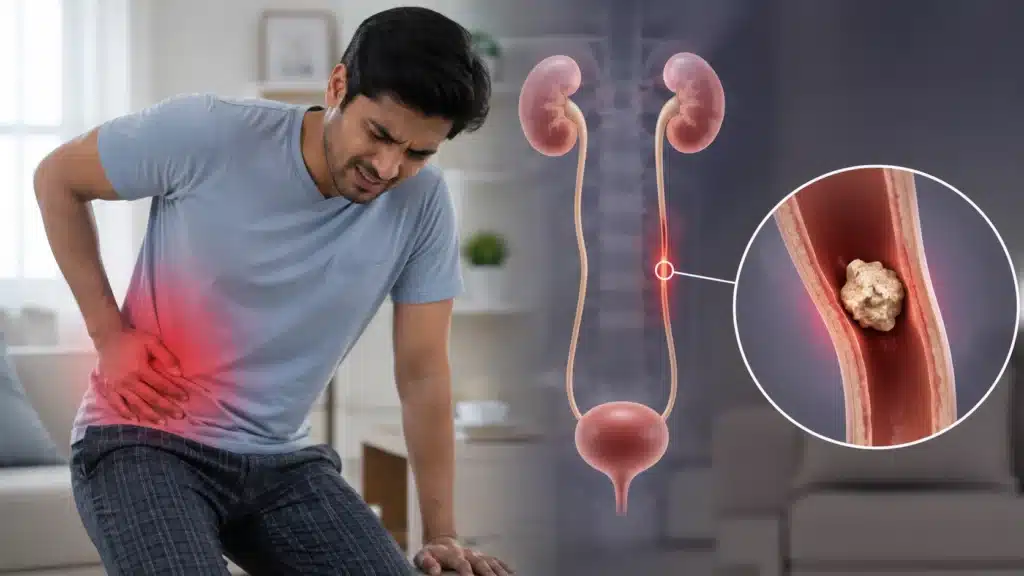
Most kidney stones can be treated without surgery, passed naturally, broken up with lasers, or shattered with shock waves. But some stones are simply too large, too hard, too numerous, or sitting in locations where gentler treatments just won’t get the job done.
That’s where PCNL (Percutaneous Nephrolithotomy), comes in.
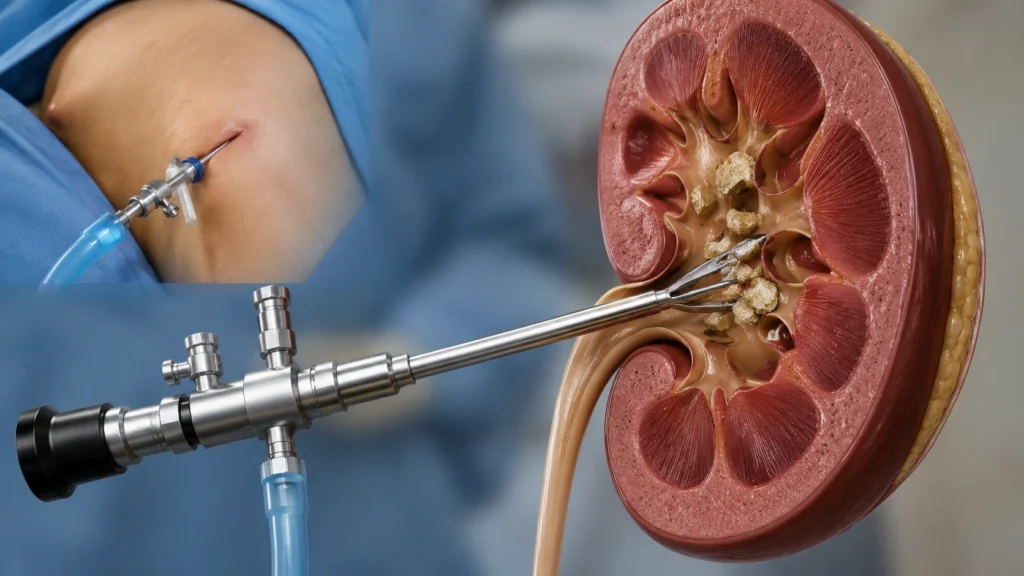
PCNL is the gold standard surgical treatment for large, complex kidney stones. Through a small keyhole incision in the back, about the size of a pencil, a surgeon creates a direct access channel into the kidney, breaks the stones into pieces, and removes them completely. No long open cuts, no prolonged hospital stay, and dramatically better outcomes than any other approach for stones of this size and complexity.
What is PCNL (Percutaneous Nephrolithotomy)?
PCNL stands for “Percutaneous Nephrolithotomy,” a surgical procedure that removes kidney stones through a small, direct access channel created through the skin and into the kidney.
Breaking it down simply:
- Percutaneous: through the skin
- Nephro: relating to the kidney
- Lithotomy: removal of a stone
How is the stone removed during PCNL?
- A small 1–3 cm incision is made in the back or side.
- A thin tube is guided directly into the kidney using imaging technology.
- A special instrument called a nephroscope is inserted through this channel.
- The kidney stone is broken into smaller pieces using laser, ultrasound, or other energy sources.
- The stone fragments are then removed through the same opening.
What makes PCNL different from RIRS or laser lithotripsy?
- RIRS and laser lithotripsy treat kidney stones through the natural urinary passage, making them ideal for small to medium-sized stones.
- PCNL removes stones through a small opening in the back, allowing doctors to treat large, hard, or complex kidney stones more effectively.
- For kidney stones larger than 2 cm, PCNL usually offers the highest stone clearance rate and often removes the stone in a single procedure.
What conditions can be treated with PCNL?
PCNL (percutaneous nephrolithotomy) is usually recommended for large, complex, or difficult-to-treat kidney stones that cannot be removed effectively with other treatments.
Common indications for PCNL include:
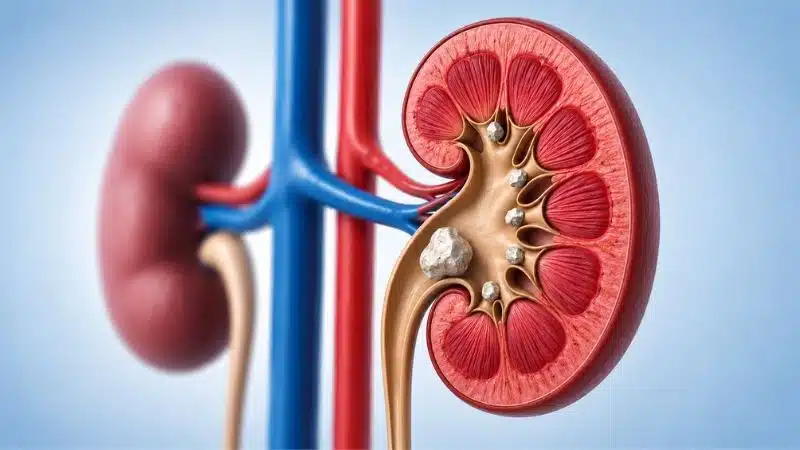
- Large kidney stones (more than 2 cm) that are unlikely to pass naturally.
- Staghorn stones that fill a large part of the kidney.
- Hard kidney stones that do not respond well to ESWL (shock wave treatment).
- Large lower pole kidney stones, where other treatments may be less effective.
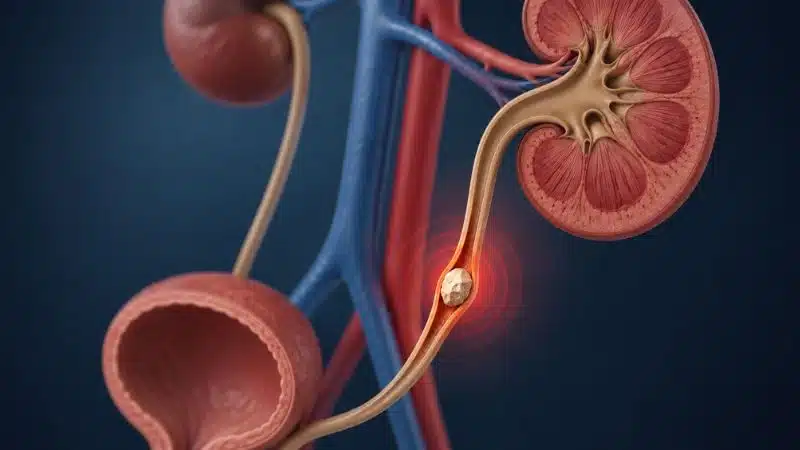
- Kidney stones causing urinary blockage or affecting kidney function.
- Failed previous treatments, such as ESWL, RIRS, or laser lithotripsy.
- Kidney stones associated with UPJ obstruction (narrowing between the kidney and ureter).
- Large calyceal diverticulum stones trapped within kidney pockets.
- Infundibular stenosis, where narrowed kidney passages contribute to stone formation.
Other specialized uses of percutaneous kidney access include:
PCNL remains one of the most effective treatments for removing large and complex kidney stones, often achieving high stone-clearance rates in a single procedure.
- Selected kidney tumor procedures, such as biopsy or tumor ablation.
- Drainage of kidney abscesses or severe kidney infections.
Who needs PCNL treatment?
PCNL is the treatment of choice when kidney stones are simply too large, complex, or resistant to be managed with less invasive approaches.
In these situations, PCNL often provides the highest chance of complete stone removal and long-term relief.
- You have a kidney stone larger than 2 cm.
- You have a staghorn kidney stone occupying a large part of the kidney.
- You have hard kidney stones that are unlikely to respond to ESWL.
- You have a large lower pole kidney stone that is difficult to clear naturally.
- Previous treatments such as ESWL or RIRS have not been successful.
- The stone is causing urinary blockage or affecting kidney function.
- You have multiple large kidney stones in the same kidney.
- The stone is associated with a structural abnormality, such as UPJ obstruction.
- You experience recurrent kidney infections due to a large stone.
- You have a large calyceal diverticulum stone that cannot be treated with ureteroscopy.
What are the causes and risk factors?
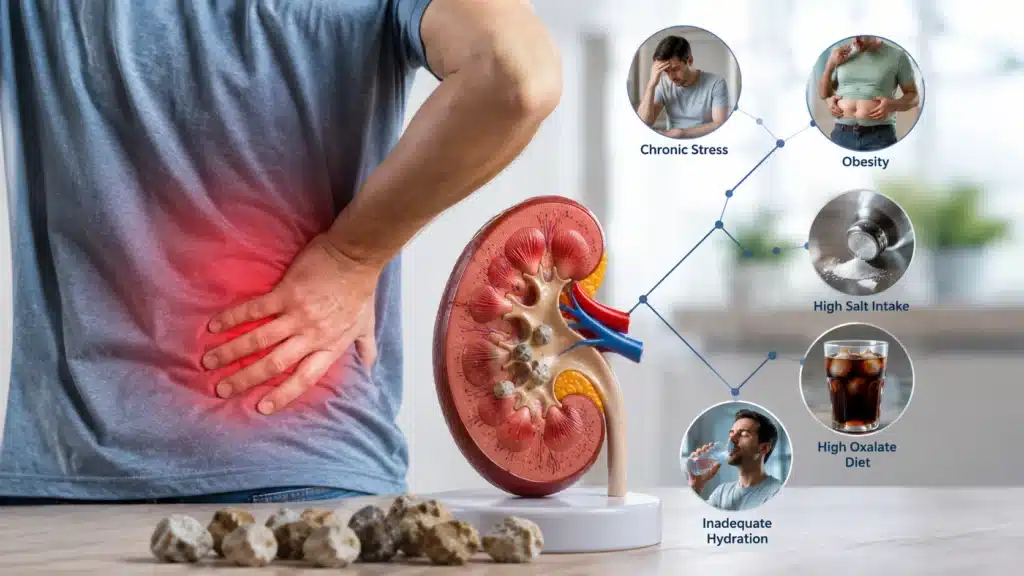
Understanding the causes of kidney stones is essential, not just for treatment, but for preventing them from returning. Stones that require PCNL are typically large, meaning they’ve often been forming and growing for years.
Large kidney stones usually develop over time when smaller stones continue to grow without treatment.
Common causes include:
- Chronic dehydration and low water intake.
- Metabolic disorders that increase calcium, uric acid, or oxalate levels.
- A diet high in salt, animal protein, and oxalate-rich foods.
- Recurrent urinary tract infections (UTIs).
- Structural kidney problems such as UPJ obstruction or other anatomical abnormalities.
- Hyperparathyroidism, which increases calcium levels in the urine.
Risk Factors for Large Kidney Stones
Understanding these causes and risk factors can help prevent kidney stones from growing larger and reduce the chances of future stone formation. Your risk of developing large kidney stones may be higher if:
- You have had kidney stones before.
- You do not drink enough water regularly.
- You have a family history of kidney stones.
- You are overweight or obese.
- You have a sedentary lifestyle.
- You live in a hot climate or sweat excessively.
- You have conditions like gout, Crohn’s disease, renal tubular acidosis, or hyperparathyroidism.
- You regularly consume a high-salt or high-protein diet.
- You are male, as kidney stones are more common in men.
- You are between 30 and 60 years of age, the age group most commonly affected.
Diagnosis Before PCNL
Before PCNL (Percutaneous Nephrolithotomy), several tests are performed to understand the size, location, and complexity of the kidney stone and to ensure the procedure is safe.
Imaging Tests
- Non-Contrast CT KUB (Gold Standard)
- Most important test before PCNL.
- Shows the stone’s size, number, location, and hardness.
- Helps plan the safest and most effective treatment approach.
- Ultrasound KUB
- Detects kidney swelling caused by blockage.
- Assesses kidney size and overall health.
- Often used during the procedure for guidance.
- X-Ray KUB
- Helps identify calcium-containing stones.
- Useful for monitoring large and staghorn stones.
- CT Urogram / IVU
- Provides detailed images of the kidney and urinary tract.
- Helps doctors plan the best access route for stone removal.
- Renal Isotope Scan
- Measures how well each kidney is functioning.
- Useful when stones have caused long-term blockage or kidney damage.
Laboratory Tests
These investigations help doctors plan the procedure accurately, improve stone clearance rates, and reduce the risk of complications.
- Urine Analysis and Urine Culture
- Checks for urinary tract infections.
- Any infection must be treated before surgery.
- Blood Tests
- Evaluate kidney function.
- Check blood counts and overall health.
- Assess calcium and uric acid levels.
- Clotting Profile
- Ensures blood clotting is normal before surgery.
- Helps reduce bleeding risks during PCNL.
- 24-Hour Urine Test
- Identifies factors that contribute to kidney stone formation.
- Helps create a prevention plan after treatment.
- Stone Analysis
- Examines the composition of previous or removed stones.
- Helps determine the cause of stone formation and prevent recurrence.
Treatment procedure: how is PCNL done?
Living with a large kidney stone can be painful and disruptive. PCNL provides a highly effective way to remove complex stones, restore kidney health, and relieve symptoms. Using advanced technology and a patient-centered approach, Rama Hospital delivers safe, precise, and minimally invasive kidney stone care.
Before the Procedure
Before surgery, the medical team performs a detailed evaluation to ensure you are ready for treatment.
- Blood tests and urine tests.
- CT scan and imaging review.
- Anesthesia assessment.
- Treatment of any urinary infection before surgery.
- Fasting for a few hours before the procedure.
- Preventive antibiotics before surgery.
- Procedure performed under general anesthesia.
During the Procedure
Step 1: Creating Access to the Kidney
- A small puncture is made through the skin of the back
- Ultrasound or X-ray guidance helps the surgeon reach the kidney safely
- A guidewire is inserted to create a pathway to the stone
Step 2: Expanding the Working Channel
- The pathway is gently widened
- A small tube (sheath) is placed to allow access to the kidney
Step 3: Inserting the Nephroscope
- A special camera called a nephroscope is passed through the channel
- The surgeon directly visualizes the kidney stone
Step 4: Breaking the Stone
The stone is fragmented using advanced technologies such as the following:
- Holmium Laser
- Ultrasonic Lithotripsy
- Pneumatic Lithotripsy
- Combination stone-fragmentation devices
Step 5: Removing Stone Fragments
- Large fragments are removed directly
- Smaller pieces are suctioned or flushed out
- The kidney is carefully checked to ensure maximum stone clearance
Step 6: Temporary Drainage
- A nephrostomy tube or ureteral stent may be placed temporarily
- This helps the kidney drain properly during recovery
Recovery after PCNL procedure
Most patients experience significant relief after successful stone removal and can gradually return to their normal activities as advised by their doctor.
Recovery is usually smooth, and patients are closely monitored after surgery.
After the Procedure:
- Recovery monitoring as anesthesia wears off.
- A kidney drainage tube may remain for 24–48 hours.
- Urine output and recovery progress are monitored.
- Follow-up imaging checks stone clearance.
- Hospital stay is usually 3–5 days.
- Drainage tubes are removed once healing is satisfactory.
What are the different types of PCNL?
Standard PCNL
- Used for very large or staghorn kidney stones
- Provides excellent stone clearance in a single procedure
Mini-PCNL
- Uses a smaller access channel
- Less bleeding and faster recovery
- Suitable for medium-sized stones
Ultra-Mini PCNL & Micro-PCNL
- Minimally invasive options with very small access tracts
- Reduced tissue trauma and quicker recovery
- Ideal for selected smaller stones
What are the benefits of PCNL?
PCNL remains one of the most effective treatments for large kidney stones, offering excellent outcomes with less pain, smaller incisions, and a quicker return to normal life.
For large and complex kidney stones, PCNL offers several important advantages:
- High stone clearance rates, especially for stones larger than 2 cm.
- Often removes large or multiple stones in a single procedure.
- Direct stone removal, reducing the need to pass fragments naturally.
- Effective for all types of kidney stones, including very hard stones.
- Minimally invasive (keyhole surgery) with a small incision in the back.
- Can treat certain structural urinary tract problems alongside stone removal.
- Helps protect kidney function by relieving obstruction.
- Reduces the risk of recurrent kidney infections caused by large stones.
- Allows a second-look procedure if needed without creating a new access point.
- Faster recovery and shorter hospital stay compared to traditional open surgery.
What are the risks and complications of PCNL?
PCNL is a safe and well-established procedure, but because it involves a direct puncture into the kidney, the risk profile is slightly higher than purely endoscopic approaches. At Rama Hospital, every precaution is taken to minimize these risks.
Common risk:
- Blood in urine (haematuria): Expected for several days; gradually clears.
- Pain and discomfort at the puncture site: Managed with prescribed pain relief; settles within days.
- Fever: A mild temperature in the first 24 to 48 hours is not uncommon; monitored carefully.
- Nephrostomy tube discomfort: Temporary while the tube is in place.
Less common risk:
Most complications are manageable, and careful planning, imaging guidance, and post-procedure monitoring help ensure a safe recovery.
- Bleeding: Mild bleeding is common and usually settles on its own. In rare cases, a blood transfusion or additional procedure may be required.
- Infection: A urinary tract infection or fever can occur after surgery, which is why infections are treated before the procedure and antibiotics are given.
- Residual Stone Fragments: Sometimes small stone pieces may remain and require an additional procedure for complete clearance.
- Urine Leakage: Temporary urine leakage can occur but usually resolves with proper drainage and healing.
Rare but serious risk:
Most complications are manageable, and careful planning, imaging guidance, and post-procedure monitoring help ensure a safe recovery.
- Bleeding: Mild bleeding is common and usually settles on its own. In rare cases, a blood transfusion or additional procedure may be required.
- Infection: A urinary tract infection or fever can occur after surgery, which is why infections are treated before the procedure and antibiotics are given.
- Residual Stone Fragments: Sometimes small stone pieces may remain and require an additional procedure for complete clearance.
- Urine Leakage: Temporary urine leakage can occur but usually resolves with proper drainage and healing.
Tips for better recovery after PCNL
A smooth recovery plays an important role in healing and preventing future kidney stones. Following your doctor’s instructions can help you recover faster and reduce complications.
Good hydration, regular follow-ups, and long-term stone prevention measures are key to maintaining kidney health after PCNL.
- Get adequate rest and avoid heavy lifting or strenuous activities for 2–3 weeks.
- Drink 2.5–3 litres of water daily unless advised otherwise by your doctor.
- Take all prescribed medications exactly as directed.
- Keep the nephrostomy tube site clean and dry if a tube has been placed.
- Expect mild blood in the urine for a few days after surgery.
- Contact your doctor if bleeding increases, large clots appear, or symptoms worsen.
- Watch for fever, chills, or signs of infection and seek medical attention promptly.
- Attend all follow-up appointments, including nephrostomy tube or stent removal if required.
- Eat a balanced, nutritious diet and gradually return to your normal routine.
- Complete follow-up imaging tests to confirm stone clearance.
- Follow your kidney stone prevention plan, including dietary and lifestyle changes.
- Return to work gradually, based on your recovery and your doctor’s advice.
Why choose Rama Hospital for PCNL?
Successful PCNL requires experienced specialists, advanced technology, and comprehensive kidney stone care. Rama Hospital offers all three under one roof.
From diagnosis to recovery, every step is focused on achieving complete stone removal and long-term kidney health.
- Experienced urologists skilled in treating large and complex kidney stones.
- Advanced PCNL, Mini-PCNL, and Ultra-Mini PCNL treatment options.
- Real-time imaging guidance for safe and precise stone removal.
- Modern laser and lithotripsy technology for effective stone fragmentation.
- High stone-clearance rates, even for challenging cases.
- Personalized kidney stone treatment and prevention plans.
- Multidisciplinary care for complex kidney conditions.
- Dedicated post-operative monitoring and follow-up support.
When should you see a doctor for PCNL treatment?
Early evaluation can help prevent complications and protect your kidney function. Consult a urologist if.
- You have a kidney stone larger than 2 cm.
- You have a history of staghorn or recurrent kidney stones.
- You experience persistent pain in the side or back.
- You have recurrent urinary tract infections (UTIs).
- Tests show reduced kidney function.
- Previous treatments such as ESWL or RIRS have not worked.
- You have been advised to undergo open kidney stone surgery and want to explore minimally invasive options like PCNL.
Frequently Asked Questions (FAQs)
How is PCNL different from RIRS or laser lithotripsy?
RIRS, laser lithotripsy, and PCNL all treat kidney stones but use different approaches. RIRS and laser lithotripsy remove stones through the natural urinary passage and are best for small to medium-sized stones. PCNL removes stones through a small opening in the back, making it the preferred option for large kidney stones (over 2 cm) and complex staghorn stones with higher stone-clearance rates.
Is PCNL painful?
PCNL is performed under general anesthesia, so you remain asleep and do not feel any pain during the procedure. After surgery, mild discomfort or soreness around the treatment area is normal and is usually well controlled with pain medication. Most patients notice significant improvement within a few days.
How long will I be in the hospital after PCNL?
Most patients are discharged 3 to 5 days after PCNL, once the nephrostomy tube is removed, kidney drainage is confirmed clear, and they are comfortable and mobile. This is dramatically shorter than the 10 to 14 days typical after traditional open kidney surgery.
What is the nephrostomy tube, and how long will it stay?
A nephrostomy tube is a small drainage tube temporarily placed in the kidney after PCNL. It helps drain urine, monitors healing, and may provide access for additional stone removal if needed. The tube is usually removed within 24–48 hours after surgery.
What is a “second-look nephroscopy”?
If small stone fragments remain after PCNL, a second-look nephroscopy may be performed through the same access track, without creating a new puncture. This helps achieve more complete stone clearance with minimal additional intervention.
What is mini-PCNL, and is it better than standard PCNL?
Mini-PCNL uses a smaller access tract than standard PCNL, resulting in less bleeding, reduced tissue trauma, and faster recovery. It is highly effective for kidney stones measuring 1.5–3 cm, while standard PCNL remains the preferred option for very large or staghorn stones. The choice depends on the size, location, and complexity of your stone.
Can PCNL treat staghorn stones completely?
Yes. PCNL is considered the gold standard treatment for staghorn kidney stones. It is the most effective minimally invasive procedure for removing these large, complex stones and achieving high stone-clearance rates. In some cases, more than one session may be needed to ensure complete removal.
How long before I can return to normal activities?
Most patients return to light daily activities in 1 to 2 weeks and desk-based work in 1 to 2 weeks. Physically demanding work and exercise are typically resumed at 3 to 4 weeks, subject to your surgeon’s clearance. Recovery from Mini-PCNL or Ultra-Mini PCNL tends to be faster than standard PCNL.
Will my kidney function improve after PCNL?
If the stone was causing significant urinary obstruction, removing it through PCNL often leads to meaningful improvement in kidney function, particularly if obstruction has not been present for too long. The sooner a large obstructing stone is treated, the better the chance of kidney function recovery. This is one of the most compelling reasons not to delay treatment for large stones.
How do I prevent large kidney stones from recurring after PCNL?
Stone recurrence prevention starts with understanding why the stone formed in the first place. At Rama Hospital, we routinely arrange:
- Stone composition analysis of removed fragments.
- 24-hour urine metabolic evaluation to identify your specific stone-forming tendency.
- Personalized dietary guidance, reducing salt, protein, and oxalate-rich foods.
- Adequate daily fluid intake of 2.5 to 3 liters, permanently.
- Regular follow-up imaging to catch any new stones early.
- Medical treatment if a specific metabolic disorder is identified.
Conclusion
Large kidney stones can do more than cause pain; they can gradually affect kidney function and lead to recurrent infections if left untreated. Conditions such as staghorn stones, multiple kidney stones, or stones that have not responded to previous treatments often require a more advanced approach.
PCNL (Percutaneous Nephrolithotomy) is one of the most effective treatments for removing large and complex kidney stones, offering high stone-clearance rates through a minimally invasive procedure. With experienced urologists, advanced imaging guidance, and modern stone-removal technology, Rama Hospital provides comprehensive care tailored to each patient’s needs.
If you have a large kidney stone or have been advised to consider PCNL, seeking timely specialist evaluation can help protect your kidney health and prevent future complications.