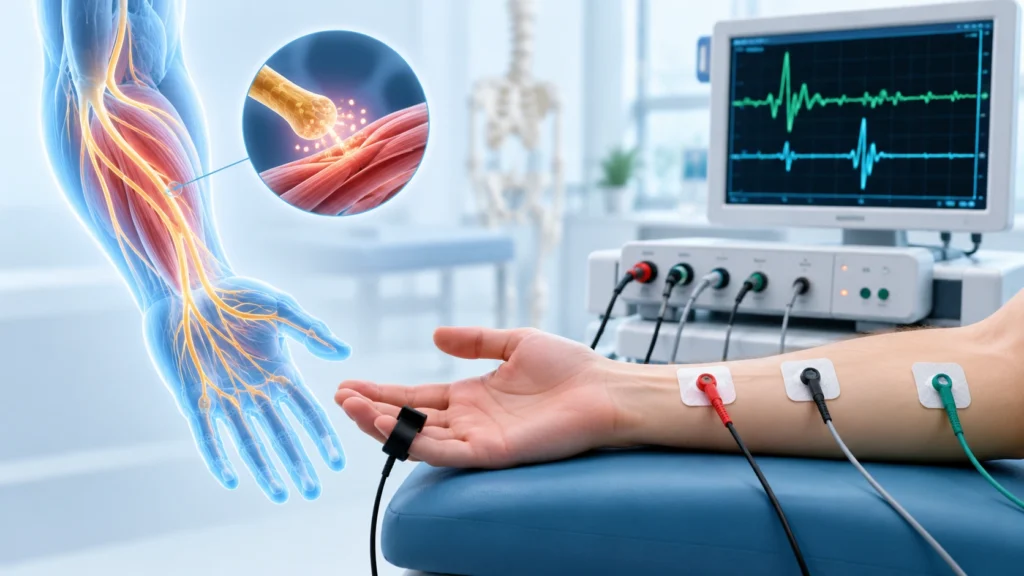
Electromyography, commonly known as EMG, is a specialized diagnostic test that evaluates the health of muscles and the nerve cells that control them. It is often recommended when a person has symptoms such as muscle weakness, numbness, tingling, pain, cramps, or unexplained fatigue. This helps doctors determine whether these symptoms are caused by nerve damage, muscle disease, or problems at the junction between nerve and muscle.
The test is usually done in two parts. The first part is called nerve conduction study, which measures how well and how fast electrical signals travel through the nerves. The second part is the needle EMG, which records the electrical activity of muscles at rest and during contraction. Together, these tests provide detailed information about the function of the peripheral nervous system and muscles.
What is Electromyography (EMG)?
Electromyography is a diagnostic procedure that assesses the electrical activity of muscles and the nerves that control them. It helps identify whether muscle weakness or other symptoms are due to nerve problems, muscle disorders, or issues at the neuromuscular junction.
This is typically performed by a neurologist or a trained neurophysiologist. The test uses small electrodes and fine needles to record electrical signals. These signals are displayed on a monitor and analyzed to detect abnormalities.
The test is safe, generally well-tolerated, and provides critical information for diagnosing conditions such as peripheral neuropathy, radiculopathy, carpal tunnel syndrome, motor neuron disease, myopathy, and neuromuscular junction disorders.
Why is EMG Done?
This is recommended when a patient has symptoms suggesting nerve or muscle dysfunction.
Common reasons for EMG
- Muscle weakness in the arms, legs, hands, or feet.
- Numbness, tingling, or burning sensations.
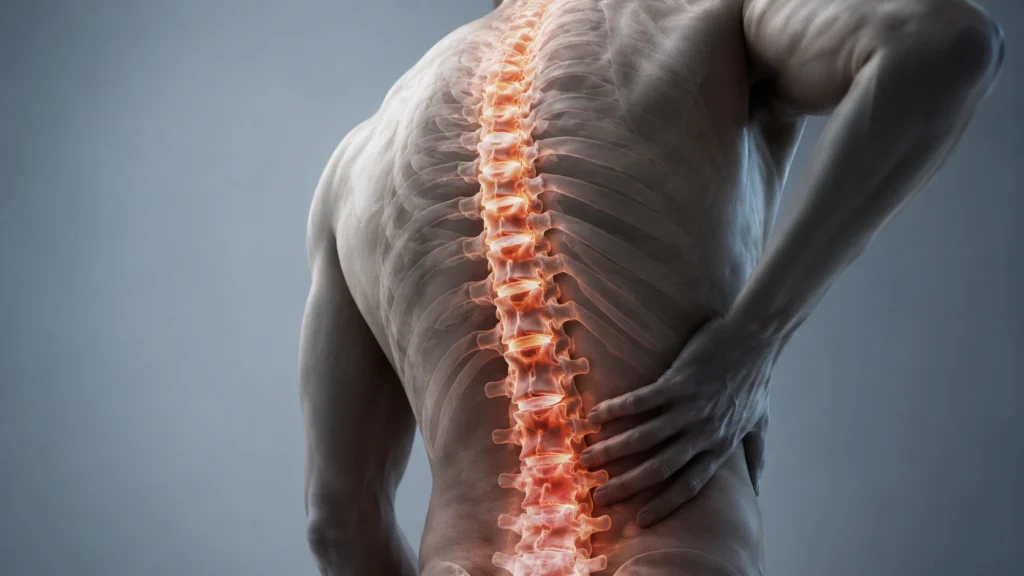
- Pain radiating from the neck or back into the limbs.
- Muscle cramps, twitching, or spasms.
- Difficulty walking or gripping objects.
- Suspected nerve compression such as carpal tunnel syndrome.
- Suspected radiculopathy from spine problems.
- Evaluation of peripheral neuropathy.
- Assessment of motor neuron disease such as ALS.
- Diagnosis of muscle disorders or myopathy.
- Evaluation of neuromuscular junction disorders such as myasthenia gravis.
- Unexplained fatigue or muscle wasting.
What EMG can detect
- Nerve damage or compression.
- Location and severity of nerve injury.
- Muscle disease or inflammation.
- Problems at the nerve-muscle junction.
- Differentiation between nerve and muscle causes of weakness.
Types of EMG Tests
This is usually performed as part of a broader electrodiagnostic evaluation.
Nerve conduction study (NCS)
- Measures the speed and strength of electrical signals in nerves.
- Surface electrodes are placed on the skin over the nerve.
- A small electrical impulse is applied to stimulate the nerve.
- The response is recorded and analyzed.
- Helps detect nerve damage, compression, or demyelination.
Needle EMG
- A fine needle electrode is inserted into specific muscles.
- Records electrical activity at rest and during contraction.
- Helps detect muscle disease, nerve damage, or neuromuscular junction problems.
- Performed on selected muscles based on symptoms.
Combined EMG and NCS
- Most patients undergo both tests in the same session.
- Provides a complete picture of nerve and muscle function.
- Helps localize the problem and guide treatment.
How is EMG Performed?
The test is performed in a specialized neurophysiology lab. It usually takes thirty to sixty minutes, depending on the number of nerves and muscles tested.
Before the test
- The patient is asked to lie comfortably on an examination table.
- The skin is cleaned where electrodes will be placed.
- The doctor explains the procedure and answers questions.
Nerve conduction study procedure
- Surface electrodes are placed on the skin over specific nerves.
- A small electrical impulse is applied to stimulate the nerve.
- The patient may feel a brief tingling or tapping sensation.
- The response is recorded and measured.
- Multiple nerves may be tested on both sides for comparison.
Needle EMG procedure
- A fine sterile needle is inserted into specific muscles.
- The patient is asked to relax and then contract the muscle.
- Electrical activity is recorded at rest and during movement.
- The needle is moved to different areas of the muscle as needed.
- Multiple muscles may be tested depending on symptoms.
After the test
- Electrodes and needles are removed.
- The patient can usually resume normal activities immediately.
- Minor soreness or bruising may occur at needle sites.
- Results are interpreted by the specialist and shared with the treating doctor.
Preparation for EMG
Proper preparation helps ensure accurate results and a smooth procedure.
Preparation pointers
- Inform the doctor about all medicines, especially blood thinners.
- Mention any bleeding disorders or infections.
- Avoid applying creams, oils, or lotions on the skin on the day of the test.
- Wear loose, comfortable clothing that allows access to arms and legs.
- Take a bath or shower before the test to keep skin clean.
- Eat normally unless advised otherwise.
- Inform the doctor if you have a pacemaker or implanted device.
- Let the doctor know if you are pregnant or have any medical conditions.
Medicines and EMG
- Some medicines may affect test results.
- Do not stop any medicine without consulting your doctor.
- Blood thinners may increase bruising risk but are not always a contraindication.
- The doctor will advise based on individual risk.
Risks and Side Effects of EMG
This is generally safe, but like any medical procedure, it has some risks.
Common side effects
- Mild discomfort during nerve stimulation.
- Temporary soreness at needle sites.
- Minor bruising or bleeding at needle insertion points.
- Temporary tingling after the test.
Rare risks
Infection at needle sites, which is very uncommon with sterile technique.
- Injury to nearby structures, which is rare with experienced operators.
- Allergic reaction to electrodes or adhesives, which is uncommon.
Special considerations
- Patients on blood thinners may have more bruising.
- Patients with lymphedema or severe swelling may need modified testing.
- Patients with pacemakers should inform the doctor, though this is usually safe.
- Pregnant patients can usually undergo EMG with appropriate precautions.
What Do EMG Results Show?
EMG results help doctors understand whether symptoms are due to nerve damage, muscle disease, or other causes.
Normal EMG findings
- Normal nerve conduction speed and amplitude.
- Normal muscle electrical activity at rest and during contraction.
- No evidence of nerve compression or damage.
- No signs of muscle disease or neuromuscular junction disorder.
Abnormal EMG findings
- Slowed nerve conduction suggesting nerve compression or demyelination.
- Reduced amplitude suggesting nerve damage or loss.
- Abnormal muscle activity at rest suggesting muscle disease or nerve irritation.
- Changes during contraction suggesting neuropathy or myopathy.
- Specific patterns suggesting motor neuron disease or neuromuscular junction disorder.
How results are used
- To confirm or rule out suspected diagnoses.
- To localize the site of nerve or muscle problem.
- To assess severity and guide treatment.
- To monitor progression or response to therapy.
Conditions Diagnosed with EMG
This is useful for diagnosing a wide range of neurological and muscular conditions.
Nerve-related conditions
- Peripheral neuropathy due to diabetes, vitamin deficiency, or other causes.
- Carpal tunnel syndrome and other nerve compression syndromes.
- Radiculopathy from cervical or lumbar spine problems.
- Brachial plexus or lumbosacral plexus injuries.
- Guillain-Barré syndrome and other acute neuropathies.
- Chronic inflammatory demyelinating polyneuropathy (CIDP).
Muscle-related conditions
- Myopathy due to inflammation, infection, or metabolic causes.
- Muscular dystrophy and other genetic muscle disorders.
- Muscle weakness due to electrolyte imbalance or thyroid disease.
Neuromuscular junction disorders
- Myasthenia gravis.
- Lambert-Eaton syndrome.
Motor neuron diseases
- Amyotrophic lateral sclerosis (ALS).
- Other motor neuron disorders.
EMG in Different Patient Groups
This can be performed on different age groups and patient populations with appropriate modifications.
In adults
- Most common group for EMG testing.
- Used for evaluation of weakness, numbness, pain, and suspected nerve or muscle disease.
- Helps guide treatment and prognosis.
In elderly patients
- May have multiple contributing factors such as spine disease, diabetes, or vitamin deficiency.
- This helps differentiate between causes of weakness.
- Results guide rehabilitation and symptom management.
In children
- Performed when nerve or muscle disease is suspected.
- Requires specialized technique and cooperation.
- Often done in centers with pediatric neurophysiology expertise.
In patients with chronic illness
- Helps evaluate weakness in diabetes, kidney disease, or thyroid disorders.
- Assists in distinguishing between metabolic, nerve, and muscle causes.
- Guides long-term management and rehabilitation.
After the EMG Test
Most patients can resume normal activities immediately after the test.
Post-test care
- Mild soreness at needle sites is common and usually resolves within a day or two.
- Apply a warm compress if there is discomfort.
- Avoid heavy exercise of tested muscles for the rest of the day if sore.
- Report any unusual swelling, redness, or persistent pain to the doctor.
When to seek medical attention
- Severe pain at needle sites.
- Increasing swelling, redness, or warmth.
- Fever or signs of infection.
- New or worsening weakness or numbness.
Limitations of EMG
While this is a powerful diagnostic tool, it has some limitations.
Limitations to understand
- EMG cannot detect all types of nerve or muscle problems.
- Some conditions may require additional tests such as MRI, blood tests, or muscle biopsy.
- Results must be interpreted in the context of clinical symptoms and examination.
- Patient cooperation and comfort affect test quality.
Why limitations exist
- Some nerves or muscles are difficult to test.
- Early or mild disease may not show clear changes.
- Other conditions may mimic nerve or muscle disease.
- A comprehensive evaluation is often needed for accurate diagnosis.
Why Choose Rama Hospital for EMG Testing?
This requires specialized equipment, trained neurophysiologists, and a comfortable environment for accurate results. A hospital with experienced staff can provide high-quality testing and interpretation.
- Expert neurologists and neurophysiologists.
- Modern EMG and nerve conduction equipment.
- Comfortable and hygienic testing environment.
- Accurate interpretation and correlation with clinical findings.
- Coordination with other departments for comprehensive care.
Frequently Asked Questions (FAQs)
Why is EMG recommended?
This is recommended for symptoms such as muscle weakness, numbness, tingling, pain, or cramps. It helps determine whether these symptoms are due to nerve or muscle problems.
Is EMG painful?
EMG may cause mild discomfort. Nerve conduction involves small electrical impulses that feel like tingling. Needle EMG involves fine needles that may cause brief pain or soreness.
How long does the EMG test take?
The test usually takes thirty to sixty minutes, depending on the number of nerves and muscles tested. Complex cases may take longer.
Do I need to prepare for EMG?
Yes, you should avoid creams or lotions on the skin, wear loose clothing, and inform the doctor about medicines and medical conditions. Specific instructions will be provided.
Are there any risks with EMG?
EMG is generally safe. Minor soreness, bruising, or tingling may occur. Serious complications are rare with experienced operators and sterile technique.
When will I get the results?
Results are usually available within a few days. The specialist will interpret the findings and share them with your treating doctor.
Can EMG detect all nerve problems?
EMG is very useful but cannot detect all nerve or muscle problems. Some conditions may require additional tests such as MRI, blood tests, or biopsy for complete evaluation.
Conclusion
Electromyography (EMG) is a valuable diagnostic tool for evaluating nerve and muscle function. It helps identify the cause of symptoms such as weakness, numbness, tingling, pain, and cramps. By distinguishing between nerve and muscle disorders, EMG guides accurate diagnosis and appropriate treatment.
The test is safe, generally well-tolerated, and provides critical information for managing conditions such as neuropathy, radiculopathy, carpal tunnel syndrome, myopathy, and motor neuron disease. For patients with persistent neurological symptoms, EMG can make a major difference in understanding the problem and planning care.
Rama Hospital offers expert EMG and nerve conduction studies with experienced neurophysiologists, modern equipment, and comprehensive reporting. Patients receive clear guidance before, during, and after the test to ensure comfort and accurate results.