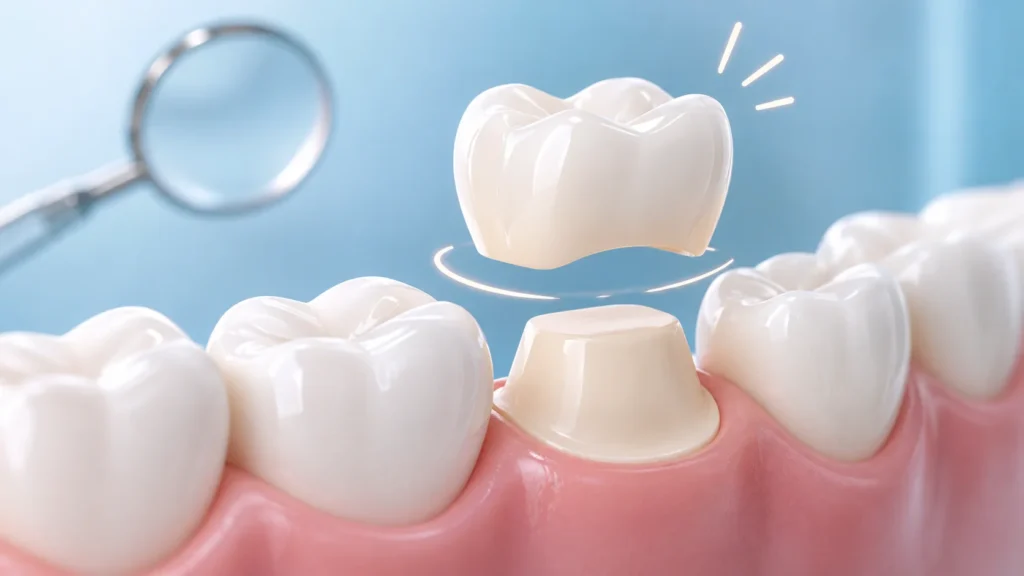
Dental crowns are one of the most common and effective treatments in modern dentistry. A crown is a custom-made cap that covers a damaged, weak, or discolored tooth. It restores the tooth’s shape, strength, size, and appearance. Many people get crowns after a root canal, a large filling, a cracked tooth, or severe wear. Others choose crowns for cosmetic reasons to improve the look of their smile.
A dental crown is not just a cosmetic fix. It protects the tooth from further damage, helps with chewing, and can prevent the need for extraction in many cases. When done properly, a crown can last many years and function like a natural tooth. This is why crowns are often recommended after treatments that weaken the tooth structure.
What is a Dental Crown?
A dental crown is a tooth-shaped cap that is placed over a damaged or weakened tooth. It covers the entire visible part of the tooth above the gum line. The crown restores the tooth’s natural shape, size, and strength while protecting it from further damage.
Crowns can be made from different materials such as porcelain, ceramic, metal, or a combination of these. The choice depends on the location of the tooth, the amount of damage, cosmetic needs, and budget. A well-made crown blends with the surrounding teeth and functions like a natural tooth.
Why Dental Crowns are Needed
Crowns are recommended when a tooth is too damaged to be fixed with a simple filling but still strong enough to be saved.
Common reasons for a crown
- Tooth decay that is too large for a filling.
- Cracked or broken tooth.
- Tooth weakened after root canal treatment.
- Large filling that has weakened the tooth.
- Worn-down tooth due to grinding or acid erosion.
- Discolored or misshapen tooth.
- Tooth that needs extra support after a large restoration.
- Tooth that is part of a dental bridge.
- Tooth that needs protection after trauma.
Why crowns are important
- Protect the tooth from further damage.
- Restore chewing function.
- Improve appearance.
- Prevent tooth extraction.
- Support dental bridges.
- Cover dental implants.
- Improve bite alignment.
Types of Dental Crowns
There are different types of crowns based on the material used. Each has its own advantages and is suited for different situations.
Porcelain crowns
- Natural tooth-like appearance.
- Good for front teeth.
- Stain-resistant.
- Biocompatible and metal-free.
- May be less strong than metal crowns.
Ceramic crowns
- Aesthetic and natural-looking.
- Suitable for front and back teeth.
- Metal-free option.
- Good for people with metal allergies.
- Strong and durable.
Zirconia crowns
- Very strong and durable.
- Natural appearance.
- Suitable for back teeth and heavy chewing.
- Long-lasting.
- Metal-free.
Metal crowns
- Very strong and long-lasting.
- Good for back teeth where strength is needed.
- Less aesthetic due to metallic color.
- Often used for molars.
Porcelain-fused-to-metal crowns
- Combination of strength and appearance.
- Metal base with porcelain outer layer.
- Good for both front and back teeth.
- May show a dark line near the gum over time.
Gold crowns
- Very durable and gentle on opposing teeth.
- Less common due to appearance.
- Long-lasting.
- Often used for back teeth.
Who Needs a Dental Crown?
Not every tooth problem needs a crown. A dentist will assess the tooth and recommend the best option.
You may need a crown if:
- You have a large cavity that cannot be fixed with a filling.
- Your tooth is cracked or broken.
- You had a root canal and the tooth is weak.
- You have a large filling that is failing.
- Your tooth is worn down from grinding.
- You want to improve the appearance of a discolored tooth.
- You need a crown to support a bridge.
- You have a dental implant that needs a crown.
When a crown may not be needed
- Small cavity that can be fixed with a filling.
- Minor chip that can be repaired with bonding.
- Tooth that is too damaged and needs extraction.
- Tooth that can be treated with veneers for cosmetic purposes only.
The Dental Crown Procedure
Getting a crown usually takes two visits, though some clinics offer same-day crowns using advanced technology.
First visit: Preparation
- Examination and X-rays to assess the tooth.
- Numbing the area with local anesthesia.
- Removing decay or old filling.
- Shaping the tooth to make room for the crown.
- Taking impressions or digital scans.
- Placing a temporary crown to protect the tooth.
Second visit: Crown placement
- Removing the temporary crown.
- Checking the fit and color of the permanent crown.
- Making small adjustments if needed.
- Cementing the crown in place.
- Polishing and final bite check.
Same-day crowns
- Some clinics use CAD/CAM technology to make crowns in one visit.
- Digital scans replace traditional impressions.
- Crown is milled in the clinic and placed the same day.
- Convenient for patients who want faster treatment.
Benefits of Dental Crowns
Crowns offer many benefits beyond just fixing a damaged tooth.
Functional benefits
- Restore chewing ability.
- Improve bite alignment.
- Protect weak teeth from breaking.
- Support dental bridges.
- Cover implants.
- Prevent further decay or damage.
Aesthetic benefits
- Improve tooth color and shape.
- Cover stains or discoloration.
- Fix misshapen teeth.
- Create a more uniform smile.
- Boost confidence.
Long-term benefits
- Save the natural tooth.
- Avoid extraction.
- Prevent more expensive treatments later.
- Last many years with proper care.
- Improve overall oral health.
Aftercare and Recovery
Proper aftercare is important to make the crown last long.
Immediately after the procedure
- Avoid chewing hard foods until numbness wears off.
- Be careful with hot foods and drinks.
- Do not bite your cheek or tongue.
- Take prescribed medicines if any.
- Avoid sticky or hard foods on the crowned tooth for a few days.
Long-term care
- Brush twice daily with fluoride toothpaste.
- Floss daily, especially around the crown.
- Avoid chewing ice, hard candy, or very hard foods.
- Do not use teeth as tools.
- Visit the dentist regularly for check-ups.
- Get professional cleaning every six months.
What to avoid
- Very hard or sticky foods.
- Chewing on the crowned side immediately after placement.
- Grinding or clenching teeth.
- Smoking, which can affect gum health.
- Ignoring pain or sensitivity.
Possible Complications
Crowns are generally safe, but some issues can occur.
Possible problems
- Sensitivity to hot or cold.
- Loose crown.
- Chipped or cracked crown.
- Decay under the crown.
- Gum irritation.
- Allergic reaction in rare cases.
- Bite discomfort.
When to contact the dentist
- Pain that does not go away.
- Crown feels loose or falls off.
- Sharp edges or rough spots.
- Sensitivity that lasts more than a few weeks.
- Signs of infection such as swelling or pus.
Cost Factors for Dental Crowns
The cost of a crown depends on several factors.
Factors that affect cost
- Type of material used.
- Location of the tooth.
- Complexity of the case.
- Need for additional treatments like root canal.
- Technology used, such as digital scanning.
- Experience of the dentist.
- Location of the clinic.
Why cost varies
- Porcelain and zirconia crowns may cost more than metal crowns.
- Back teeth may need stronger materials.
- Additional treatments increase overall cost.
- Advanced technology may add to the price.
Recovery Timeline
Most people recover quickly after getting a crown.
First few days
- Mild sensitivity is normal.
- Avoid hard foods on the crowned tooth.
- Take medicines if prescribed.
- Follow soft diet if advised.
First few weeks
- Sensitivity should reduce.
- Bite should feel comfortable.
- Crown should feel like a natural tooth.
Long-term
- Crown should last many years with proper care.
- Regular dental visits help maintain it.
- Good oral hygiene prevents decay under the crown.
Why Choose Rama Hospital for Dental Crowns?
Getting a crown is not just about fixing a tooth. It is about restoring function, protecting oral health, and improving confidence. A hospital with experienced dentists and modern technology can make a big difference.
Why hospital care matters
- Expert evaluation by dental specialists.
- Advanced imaging and digital scanning.
- Wide range of crown materials.
- Comfortable and painless procedure.
- Follow-up care to ensure long-term success.
- Coordinated care if other treatments are needed.
Trust and authority points
- Experienced dental team.
- Modern technology for accurate fit.
- Patient education about aftercare.
- Natural-looking results.
- Comprehensive care from diagnosis to placement.
Frequently Asked Questions (FAQs)
1. What is a dental crown?
A dental crown is a cap that covers a damaged or weakened tooth. It restores the tooth’s shape, strength, and appearance. Crowns are often used after root canals, large fillings, or cracks.
2. How long does a dental crown last?
With proper care, a crown can last 10 to 15 years or more. The lifespan depends on the material, oral hygiene, and habits like grinding or chewing hard foods.
3. Is getting a crown painful?
The procedure is usually not painful because local anesthesia is used. Some sensitivity may occur after the procedure, but it usually goes away in a few days.
4. Can a crown fall off?
Yes, a crown can become loose or fall off due to decay, poor fit, or chewing hard foods. If this happens, contact your dentist immediately to avoid further damage.
5. How do I care for my crown?
Brush and floss daily, avoid hard or sticky foods, and visit the dentist regularly. Good oral hygiene prevents decay under the crown and helps it last longer.
6. Can I eat normally with a crown?
Yes, once the crown is fully set, you can eat normally. Avoid very hard or sticky foods initially, and do not chew ice or use teeth as tools.
7. Is a crown better than a filling?
A crown is better when the tooth is too damaged for a filling. Fillings are for small cavities, while crowns cover and protect the entire tooth.
8. Can a crown be whitened?
No, crowns cannot be whitened like natural teeth. If you plan to whiten your teeth, do it before getting a crown so the color can be matched.
Conclusion
Dental crowns are a reliable and effective way to restore damaged, weak, or discolored teeth. They protect the tooth, improve function, and enhance appearance. With proper care, a crown can last many years and help you avoid more serious dental problems.
The most important steps are proper diagnosis, choosing the right material, and following good aftercare. For patients with cracked teeth, large cavities, or teeth weakened after root canals, a crown can make a major difference. With the right care, crowns can restore both function and confidence.
Rama Hospital can help evaluate your dental needs, recommend the best crown option, and provide a comfortable, natural-looking result that supports long-term oral health.