Have you ever finished a meal only to experience a burning sensation in your chest, a heavy stomach, repeated burping or uncomfortable bloating? Perhaps you feel perfectly fine before eating, but within minutes of finishing your food, your stomach starts feeling full, tight or uncomfortable.
These problems are common, but experiencing them regularly is not something you should ignore.
Acidity and gas symptoms after eating can occur when stomach acid moves towards the food pipe, excess gas builds up in the digestive tract, or the digestive system has difficulty processing certain foods. Sometimes, the discomfort is temporary and related to eating habits. In other cases, it may be associated with acid reflux, gastritis, food intolerance, constipation or other digestive conditions.
The problem is that acidity, gas and indigestion often feel similar, making it difficult to understand what is actually happening inside your digestive system.
What Happens in Your Stomach After Eating?
After you eat, your digestive system starts breaking down food into smaller components that the body can absorb and use for energy.
Your stomach produces digestive juices containing hydrochloric acid and enzymes to help break down food. The stomach muscles also contract to mix food with these digestive juices before gradually moving it into the small intestine.
Meanwhile, the lower oesophageal sphincter (LES), a muscular valve between the food pipe and stomach, helps prevent stomach contents from travelling backwards.
When this process works properly, digestion usually happens without significant discomfort.
According to the National Institute of Diabetes and Digestive and Kidney Diseases (NIDDK), indigestion can involve upper abdominal discomfort, early fullness, bloating, nausea and belching.
However, certain factors can interfere with digestion. The stomach may become overly sensitive, stomach contents may flow back into the food pipe, or intestinal bacteria may produce excess gas while breaking down undigested carbohydrates.
This is when acidity and gas symptoms may start appearing after meals.
What Are the Common Acidity and Gas Symptoms After Eating?
Not everyone experiences digestive discomfort in the same way. Some people feel a burning sensation in the chest, while others experience abdominal pressure, excessive burping or a feeling of fullness even after eating a small meal.
Recognising the pattern of acidity and gas symptoms can help you understand whether the discomfort is more likely related to acid reflux, indigestion or excess intestinal gas.
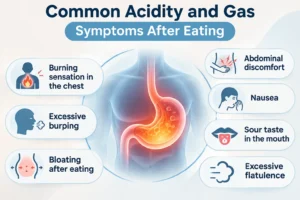
Common symptoms include:
- Burning sensation in the chest: A feeling of heat or burning behind the breastbone, particularly after meals.
- Excessive burping: Repeated release of air from the stomach, sometimes accompanied by a sour taste.
- Bloating after eating: A feeling of fullness, tightness or swelling in the abdomen.
- Abdominal discomfort: Mild cramps, pressure or pain around the upper or lower stomach.
- Nausea: Feeling sick or uncomfortable after consuming food.
- Sour taste in the mouth: Stomach contents travelling back towards the throat.
- Excessive flatulence: Passing gas more frequently than usual.
Some people may also experience symptoms when bending forward or lying down shortly after eating.
It is important to understand that these symptoms can overlap. Experiencing several of them together does not automatically indicate one particular digestive condition.
Why Do You Have Acidity and Gas After Eating?
There isn’t always one specific reason behind digestive discomfort after meals. Your eating habits, food choices, digestive health and certain medical conditions can all contribute.
Understanding the possible acidity causes is the first step towards managing recurring digestive problems.
Let’s look at some common reasons.
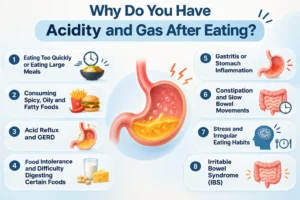
1. Eating Too Quickly or Eating Large Meals
One of the simplest explanations for post-meal discomfort is the way you eat.
When you eat too quickly, you may swallow more air than usual. This additional air can contribute to burping, bloating and abdominal discomfort.
Large meals can also make the stomach feel excessively full and may increase the likelihood of reflux, particularly in people who are already prone to it.
You may notice more acidity and gas symptoms when you:
- Eat large portions in one sitting.
- Chew food very quickly.
- Skip meals and eat heavily later.
- Talk continuously while eating.
- Lie down immediately after finishing a meal.
Eating slowly and choosing smaller, balanced portions may help reduce discomfort.
2. Consuming Spicy, Oily and Fatty Foods
Indian meals often include spices, fried snacks, rich gravies and foods prepared with generous amounts of oil.
Although these foods do not cause acidity in everyone, certain individuals find that particular meals trigger their digestive discomfort.
High-fat meals may delay stomach emptying in some people and can worsen reflux symptoms. Spicy foods may also aggravate symptoms in people who are sensitive to them.
Some commonly reported food triggers include:
- Deep-fried snacks and fast food.
- Heavy, oily gravies.
- Excessively spicy preparations.
- Chocolate.
- Coffee and strong tea.
- Carbonated beverages.
3. Acid Reflux and GERD
Acid reflux occurs when stomach contents flow backwards into the oesophagus.
Normally, the lower oesophageal sphincter prevents this backward movement. However, when it relaxes inappropriately or does not close effectively, stomach acid can travel towards the food pipe.
This can produce acid reflux symptoms, including heartburn, sour-tasting fluid in the mouth and discomfort after meals.
If reflux occurs frequently and causes troublesome symptoms, it may be diagnosed as gastro-oesophageal reflux disease (GERD).
People with GERD may experience:
- Burning in the chest after eating.
- Sour or bitter taste in the mouth.
- Food or liquid coming back into the throat.
- Difficulty swallowing.
- Persistent cough or throat irritation.
4. Food Intolerance and Difficulty Digesting Certain Foods
Have you noticed that drinking milk, eating certain vegetables or consuming specific foods makes your stomach uncomfortable?
Sometimes, the problem is not excessive stomach acid but difficulty digesting particular food components.
For example, lactose intolerance occurs when the small intestine does not produce enough lactase, the enzyme required to digest lactose (the natural sugar in milk).
Undigested lactose travels into the large intestine, where bacteria break it down and produce gas.
This can lead to:
- Abdominal bloating.
- Excessive gas.
- Stomach cramps.
- Loose stools or diarrhoea.
Other carbohydrate intolerances can also contribute to digestive discomfort.
If acidity and gas symptoms repeatedly occur after consuming particular foods, maintaining a food diary may help identify possible triggers.
5. Gastritis or Stomach Inflammation
Gastritis refers to inflammation of the stomach lining.
It may develop due to several reasons, including Helicobacter pylori (H. pylori) infection, frequent use of certain pain-relieving medicines and other irritants.
Some people with gastritis experience upper abdominal discomfort, nausea, early fullness and indigestion.
The discomfort may become noticeable after meals, although symptoms vary depending on the underlying cause.
Common factors associated with gastritis include:
- H. pylori infection.
- Regular use of NSAID painkillers, such as ibuprofen.
- Excessive alcohol consumption.
- Certain autoimmune conditions.
Persistent digestive discomfort should be evaluated rather than managed repeatedly with over-the-counter acidity medicines.
6. Constipation and Slow Bowel Movements
Constipation can also contribute to abdominal pressure and bloating.
When stools move slowly through the large intestine, more water is absorbed from them, making them harder to pass. This can lead to gas retention, abdominal discomfort and a feeling of heaviness.
You may experience acidity and gas symptoms alongside constipation, although the two problems do not necessarily have the same underlying cause.
Common signs include:
- Passing stools less frequently than usual.
- Hard or dry stools.
- Straining during bowel movements.
- Feeling that the bowel has not emptied completely.
- Abdominal fullness and bloating.
Increasing dietary fibre gradually, drinking sufficient water and maintaining physical activity may help, depending on the cause.
7. Stress and Irregular Eating Habits
Your digestive system and brain communicate continuously through what is known as the gut-brain connection.
Stress, anxiety and irregular eating patterns may influence digestive function and make some people more sensitive to normal digestive sensations.
For example, someone experiencing prolonged stress may notice increased abdominal discomfort, nausea, bloating or changes in bowel movements.
This does not mean that digestive symptoms are imaginary. The gut and nervous system interact in ways that can affect how digestion feels and functions.
Maintaining regular meal timings, getting adequate sleep and managing stress can support overall digestive health.
8. Irritable Bowel Syndrome (IBS)
Irritable bowel syndrome is a functional gastrointestinal disorder that affects how the intestines work.
It commonly involves recurring abdominal pain associated with changes in bowel habits, including diarrhoea, constipation or both.
People with IBS may also experience excessive gas, abdominal bloating and discomfort after meals.
Certain foods, stress and changes in gut sensitivity can trigger symptoms.
However, IBS should not be confused with ordinary acidity. If you experience frequent abdominal discomfort alongside persistent changes in bowel movements, a medical evaluation can help identify the cause.
How Are Acidity, Gas and Indigestion Different?
Many people use the terms acidity, gas and indigestion interchangeably. However, they describe different digestive problems.
Understanding the difference between indigestion symptoms and acid reflux can help you explain your discomfort more accurately during a medical consultation.
| Condition | What happens | Common symptoms |
| Acidity / Acid reflux | Stomach contents move towards the food pipe | Heartburn, sour taste, regurgitation |
| Gas | Air or digestive gases accumulate in the digestive tract | Burping, flatulence, abdominal pressure |
| Indigestion (Dyspepsia) | A group of symptoms involving upper abdominal discomfort | Fullness, burning, nausea, bloating |
| Gastritis | Inflammation of the stomach lining | Upper abdominal discomfort, nausea, indigestion |
| IBS | Altered gut function and sensitivity | Abdominal pain, bloating, constipation or diarrhoea |
These conditions can overlap, which is why identifying the underlying problem matters.
For example, someone may experience indigestion symptoms and heartburn together, while another person may have bloating without any acid reflux.
Why Do You Experience Bloating After Eating Even Small Meals?
Feeling full after a heavy meal is normal. However, experiencing uncomfortable fullness after eating a small amount of food deserves attention, especially when it happens regularly.
Persistent bloating after eating may be associated with several digestive issues.

Some possible explanations include:
- Delayed stomach emptying: Food may remain in the stomach longer than expected, contributing to prolonged fullness, nausea and bloating.
- Functional dyspepsia: The stomach may have difficulty relaxing and accommodating food comfortably, or the digestive system may become unusually sensitive.
- Food intolerance: Certain carbohydrates may not be properly digested, leading to gas production in the intestine.
- Constipation: Slower bowel movements may contribute to abdominal pressure and discomfort.
- Irritable bowel syndrome: Changes in intestinal movement and gut sensitivity can contribute to recurring bloating.
If you regularly feel full after only a few bites, do not dismiss it as ordinary gas. An evaluation can help determine whether further investigation is necessary.
When Does Frequent Stomach Pain After Eating Become a Concern?
Occasional stomach discomfort after eating may not indicate a serious problem. However, recurring or unexplained pain should not be ignored.
Frequent stomach pain may be associated with gastritis, peptic ulcers, gallbladder problems, functional dyspepsia or other gastrointestinal conditions.
Pay attention if your discomfort:
- Occurs after most meals.
- Continues for several weeks.
- Interferes with your daily activities.
- Is accompanied by repeated nausea or vomiting.
- Is associated with unexplained weight loss.
- Becomes progressively more severe.
The location of pain also matters. Upper abdominal discomfort, pain around the right side of the abdomen and lower abdominal cramps can have different causes.
Seek urgent medical attention if you experience severe or sudden abdominal pain, vomiting blood, black stools, chest pain or difficulty breathing. Difficulty swallowing, persistent vomiting and unexplained weight loss also require prompt medical assessment.
How Are Acidity and Gas Problems Diagnosed?
If you regularly experience digestive discomfort, a doctor will first try to understand your symptoms, eating habits and medical history.
A gastroenterologist may recommend different investigations depending on your symptoms and examination findings.
1. Medical History and Physical Examination
Your doctor may ask:
- When does the discomfort usually begin?
- Does it happen after every meal or only after specific foods?
- Do you experience burning, bloating or abdominal pain?
- How frequently do you have bowel movements?
- Are you taking any medicines regularly?
A physical examination may also help identify abdominal tenderness, swelling or other signs that require investigation.
2. Blood Tests
Blood investigations may be recommended to check for anaemia, inflammation, liver-related abnormalities or other possible causes, depending on your symptoms.
3. H. pylori Testing
If a stomach infection is suspected, your doctor may recommend a stool antigen test, urea breath test or another appropriate investigation. H. pylori is a bacterium associated with gastritis and peptic ulcer disease.
4. Ultrasound of the Abdomen
An abdominal ultrasound may be useful when the doctor suspects gallstones, liver-related problems or certain other abdominal conditions. It does not directly diagnose acid reflux or most causes of indigestion.
5. Upper GI Endoscopy
An upper gastrointestinal endoscopy allows the doctor to examine the lining of the oesophagus, stomach and upper part of the small intestine.
A thin, flexible tube with a camera is gently guided through the mouth to view the digestive tract.
An endoscopy may help identify:
- Gastritis.
- Peptic ulcers.
- Oesophageal inflammation.
- Certain structural abnormalities.
- Other conditions affecting the upper digestive tract.
A biopsy may also be taken when necessary.
An endoscopy is not required for everyone experiencing acidity. The decision depends on the patient’s symptoms, age, medical history and clinical findings.
If your doctor recommends this investigation, you can consult an appropriate endoscopy centre in Noida for further evaluation.
How Can You Reduce Acidity and Gas After Eating?

Managing digestive discomfort starts with understanding your triggers and making practical changes to your daily routine.
Although lifestyle changes may help reduce occasional acidity and gas symptoms, they cannot replace medical treatment when an underlying condition is present.
Here are some habits worth following.
1. Eat Smaller, Balanced Meals
Instead of consuming very large meals, try eating moderate portions at regular intervals.
Avoid skipping meals throughout the day and then eating excessively at night.
2. Chew Your Food Properly
Eating slowly gives you more time to chew and may reduce the amount of air you swallow.
Avoid rushing through meals, particularly when you are working or travelling.
3. Identify Your Food Triggers
Different people react differently to certain foods.
Keep a simple food diary to record:
- What you eat.
- When you experience discomfort.
- How long the symptoms last.
- Whether a particular food repeatedly triggers symptoms.
This can help you and your doctor identify possible dietary triggers.
4. Avoid Lying Down Immediately After Meals
If you experience acid reflux, avoid lying down immediately after eating.
Try to maintain an upright position and leave approximately three hours between your evening meal and bedtime, particularly if nighttime reflux is a problem.
5. Stay Physically Active
Regular physical activity supports general digestive health and may help with bowel regularity.
A gentle walk after meals can be a practical habit, provided you feel comfortable.
6. Maintain Adequate Hydration
Drink sufficient water throughout the day.
Adequate fluid intake also supports normal bowel movements, particularly when you are increasing dietary fibre.
7. Manage Stress and Sleep Better
Poor sleep and prolonged stress may worsen digestive discomfort in some individuals.
Try to maintain consistent sleep timings and include relaxing activities in your daily routine.
What Is the Treatment for Acidity and Gas?
Treatment depends on the underlying cause, the severity of symptoms and the patient’s medical history.
There is no single medicine that treats every type of digestive discomfort.
A doctor may recommend:
- Antacids: These medicines provide short-term relief by neutralising stomach acid.
- Acid-reducing medicines: Proton pump inhibitors (PPIs) and H2-receptor blockers reduce stomach acid production and may be prescribed for certain conditions.
- Medicines for H. pylori: If an infection is confirmed, the doctor may prescribe a combination of antibiotics and acid-reducing medication.
- Treatment for constipation: Depending on the cause, dietary changes or appropriate medicines may help improve bowel movements.
- Dietary management: If a food intolerance or particular dietary trigger is identified, targeted changes may help control symptoms.
- Treatment for underlying digestive conditions: Conditions such as GERD, gastritis, peptic ulcers and IBS require management based on their specific diagnosis.
Avoid taking acidity medicines repeatedly without medical advice, particularly when symptoms keep returning or are becoming more frequent.
When Should You Consult a Gastroenterologist?
Occasional digestive discomfort after a heavy or spicy meal may settle with simple dietary changes. However, recurring symptoms deserve proper evaluation.
A gastroenterologist specialises in diagnosing and managing conditions affecting the digestive system, including the oesophagus, stomach, intestines, liver, gallbladder and pancreas.
During consultation, the doctor can assess your symptoms, identify possible triggers and determine whether tests or further treatment are required.
For patients searching for a gastroenterology hospital in Noida, choosing a facility with appropriate specialist consultation and diagnostic support can make the evaluation process more convenient.
If your symptoms require further investigation, a gastroenterologist in Noida can help determine whether tests such as H. pylori screening, abdominal imaging or upper GI endoscopy are appropriate.
Frequently Asked Questions (FAQs)
1. Why do I experience acidity and gas immediately after eating?
Eating too quickly, consuming large meals, food intolerance, acid reflux and functional indigestion can contribute to post-meal discomfort. If symptoms occur repeatedly, consult a doctor to identify the underlying cause.
2. Can drinking water reduce acidity and gas?
Drinking water supports normal digestion and hydration, but it does not directly treat every cause of acidity or gas. Avoid drinking excessive amounts at once if that makes you feel uncomfortably full.
3. Which foods should I avoid if I have acidity and gas?
Common triggers include fried foods, high-fat meals, carbonated drinks, coffee and certain spicy foods. However, triggers vary between individuals. Identifying your own food sensitivities is more useful than avoiding every potentially triggering food.
4. Is frequent burping a sign of a stomach problem?
Occasional burping is normal, particularly during and after meals. However, excessive or persistent burping accompanied by abdominal discomfort, heartburn or changes in bowel habits may require medical evaluation.
5. Can acidity and gas indicate GERD?
Yes, some people with GERD experience heartburn, regurgitation, bloating and discomfort after meals. However, gas and bloating alone do not confirm GERD. A medical assessment helps establish the diagnosis.
6. When is an endoscopy required for acidity?
An endoscopy may be recommended when symptoms persist, do not respond to appropriate treatment or are accompanied by warning signs such as difficulty swallowing, bleeding, unexplained weight loss or repeated vomiting. It is not necessary for every patient with occasional acidity.
7. Which doctor should I consult for frequent acidity and gas?
A gastroenterologist is the appropriate specialist for recurring digestive problems, including acid reflux, indigestion, gastritis, bloating and unexplained abdominal discomfort.
Conclusion
Experiencing digestive discomfort occasionally after a heavy meal is common. However, if you regularly notice burning sensations, excessive burping, bloating or abdominal pain after eating, it is worth understanding what is causing the problem.
Acidity and gas symptoms may be linked to everyday eating habits, but they can also indicate conditions such as GERD, gastritis, food intolerance or functional digestive disorders.
The most important step is to recognise recurring patterns instead of relying on temporary relief from medicines.
At Rama Hospital, Noida, patients looking for appropriate digestive health consultation can explore specialist evaluation for gastrointestinal concerns. If you are searching for a gastroenterology hospital in Noida or a gastroenterologist in Noida, consult a qualified specialist to understand your symptoms and discuss suitable investigations and treatment options.
Remember, better digestion begins with understanding what your body is telling you.