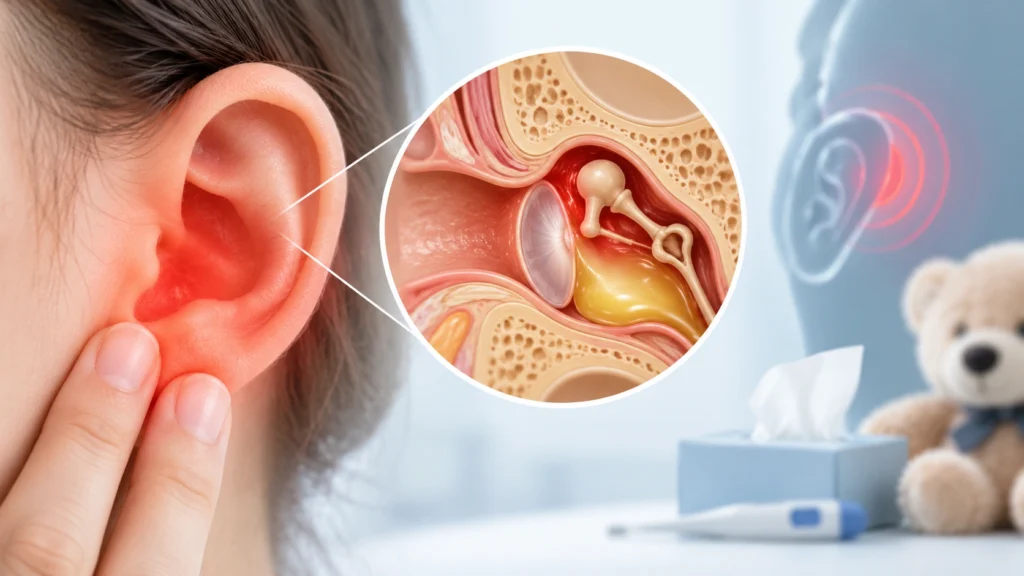
Otitis media, commonly known as a middle ear infection, is one of the most frequent infections in children and also occurs in adults. It happens when the space behind the eardrum, called the middle ear, becomes inflamed and often fills with fluid or pus. This can cause ear pain, fever, hearing difficulty, irritability, and sometimes discharge from the ear. In many cases, it follows a cold, cough, or throat infection.
Most episodes of otitis media are mild and improve with time, rest, and simple treatment. However, some cases can become severe, recur frequently, or lead to complications such as persistent fluid, hearing loss, or damage to the ear structures. Because the ear is connected to the nose and throat through a small tube called the Eustachian tube, infections in the upper respiratory tract can easily spread to the middle ear, especially in young children.
What is Otitis Media?
Otitis media is an inflammation of the middle ear, the air-filled space behind the eardrum that contains the tiny vibrating bones of the ear. This space is connected to the back of the nose and throat by the Eustachian tube. When this tube becomes blocked due to a cold, allergy, or swelling, fluid can build up in the middle ear. This fluid can then become infected by bacteria or viruses.
The condition is very common in children because their Eustachian tubes are shorter, more horizontal, and easier to block. In adults, otitis media is less common but can still occur, especially after severe upper respiratory infections, travel, or in people with nasal or sinus problems.
Otitis media can be a single episode or can keep coming back. Some children have several episodes in a year, which can affect hearing, speech development, sleep, and school performance. That is why proper diagnosis and management are important, especially in young children.
Types of Otitis Media
Otitis media can be classified in different ways based on duration, presence of fluid, and whether there is active infection.
Based on duration and pattern
- Acute otitis media, which is a sudden infection with ear pain, fever, and fluid behind the eardrum.
- Otitis media with effusion, where fluid remains in the middle ear after an infection has settled, often without significant pain.
- Chronic otitis media, which is long-standing or recurrent infection, sometimes with persistent discharge or eardrum damage.
- Recurrent acute otitis media, where a person has multiple separate episodes over a year.
Based on infection status
- Infectious otitis media, caused by bacteria or viruses.
- Non-infectious otitis media with effusion, where fluid is present but active infection may not be present.
Based on age group
- Pediatric otitis media, which is very common in infants and young children.
- Adult otitis media, which is less common but can be associated with sinus disease, allergies, or structural issues.
Causes of Otitis Media
Otitis media usually starts with swelling or blockage of the Eustachian tube. This prevents normal drainage and ventilation of the middle ear. Fluid builds up, and germs can grow in this fluid.
Common causes include:
- Viral upper respiratory infections such as cold or flu.
- Bacterial infection following a viral cold.
- Swelling of the nasal passages and throat.
- Allergies causing nasal congestion.
- Enlarged adenoids blocking the Eustachian tube opening.
- Smoke exposure irritating the airways.
- Bottle feeding in a lying-down position in infants.
- Frequent use of pacifiers in some children.
- Structural differences in the Eustachian tube.
- Immune system weakness making infections more likely.
Why children are more affected
- Shorter and more horizontal Eustachian tubes.
- Larger adenoids relative to the airway size.
- More frequent colds and viral infections.
- Developing immune systems.
- More exposure to infections in daycare or school settings.
Risk Factors for Otitis Media
Some children and adults are more likely to develop middle ear infections than others.
Higher-risk groups
- Infants and children under five years of age.
- Children attending daycare or group settings.
- Children exposed to cigarette smoke.
- Babies who are bottle-fed rather than breastfed.
- Children with enlarged adenoids.
- People with frequent colds or allergies.
- Individuals with cleft palate or certain facial structural differences.
- People with weak immunity or chronic illness.
- Those with a family history of recurrent ear infections.
- Children who use pacifiers frequently beyond infancy.
Why risk increases in these groups
- More exposure to viruses and bacteria.
- Greater nasal congestion and Eustachian tube blockage.
- Immature immune response in young children.
- Smoke exposure irritates the lining of the nose and ear.
- Feeding position can allow milk to enter the Eustachian tube area.
- Structural issues can impair normal drainage.
Symptoms of Otitis Media
Symptoms can vary depending on age, severity, and whether the infection is acute or chronic.
Common symptoms in children
- Ear pain, often worse at night.
- Pulling or tugging at the ear.
- Crying more than usual.
- Irritability and restlessness.
- Fever.
- Difficulty sleeping.
- Reduced appetite or trouble feeding.
- Fluid draining from the ear.
- Hearing difficulty or not responding to sounds.
- Balance problems or clumsiness.
Common symptoms in adults
- Ear pain or pressure.
- Feeling of fullness in the ear.
- Muffled hearing.
- Fluid discharge from the ear.
- Mild fever or general discomfort.
- Pain that worsens with swallowing or lying down.
- Sometimes dizziness or imbalance.
Signs that need medical attention
- Severe ear pain.
- High fever.
- Pus or blood coming from the ear.
- Symptoms lasting more than two to three days.
- Hearing loss that does not improve.
- Repeated episodes of ear infection.
- Severe headache, neck stiffness, or confusion.
- Swelling or redness behind the ear.
Otitis Media in Children
Children are the most commonly affected group. In many cases, parents notice symptoms after a cold or cough.
Typical pattern in children
- Child has a runny nose or cough for a few days.
- Then develops fever and ear pain.
- Sleep is disturbed due to pain.
- Child may refuse feeds or cry during feeding.
- Hearing may seem reduced temporarily.
Why it matters in children
- Repeated infections can affect hearing.
- Hearing loss can impact speech and language development.
- Pain and poor sleep affect behavior and school performance.
- Some children may need closer monitoring or additional treatment.
Otitis Media in Adults
Adults can also get otitis media, though it is less common.
Typical features in adults
- Often follows a severe cold, sinus infection, or air travel.
- Ear pain and pressure are prominent.
- Hearing may feel blocked or muffled.
- Fever may be mild or absent.
- Symptoms may be mistaken for jaw pain or dental issues.
Why evaluation is important in adults
- Persistent fluid in one ear needs assessment.
- Underlying nasal or sinus disease may need treatment.
- Rarely, other conditions can mimic ear infection.
- Proper treatment prevents complications and chronic issues.
How is Otitis Media Diagnosed?
Diagnosis is based on symptoms, history of recent cold or infection, and examination of the ear.
Diagnostic steps
- Detailed history of symptoms and recent illnesses.
- Review of past ear infections or hearing issues.
- Physical examination of the ear using an otoscope.
- Assessment of the eardrum for redness, bulging, or fluid.
- Examination of the nose and throat.
- Hearing assessment if there is concern about hearing loss.
- Additional tests if infections are frequent or severe.
Tests that may be done in selected cases
- Tympanometry to assess middle ear pressure and fluid.
- Hearing test or audiometry if hearing loss is suspected.
- Culture of ear discharge if there is persistent drainage.
- Imaging such as CT scan only in complicated or chronic cases.
- Allergy evaluation if allergies are contributing.
Why diagnosis matters: Correct diagnosis helps distinguish between viral and bacterial infection, fluid without infection, and other ear conditions. This guides whether antibiotics are needed or whether observation and symptom relief are sufficient.
Treatment for Otitis Media
Treatment depends on the age of the patient, severity of symptoms, whether the infection is bacterial or viral, and whether there are complications.
1. Observation and supportive care
In many mild cases, especially in older children and adults, doctors may recommend watching the symptoms for a short period.
- Pain relief with appropriate medicines.
- Fever management.
- Rest and fluids.
- Monitoring for improvement within 48 to 72 hours.
2. Pain and fever management
Ear pain can be significant, so pain control is an important part of treatment.
- Age-appropriate pain relief medicines.
- Warm compress over the ear for comfort.
- Keeping the head slightly elevated during sleep.
- Avoiding insertion of objects or oils into the ear without medical advice.
3. Antibiotics when needed
Antibiotics are used when a bacterial infection is likely or when symptoms are severe.
- More commonly prescribed in young children with severe symptoms.
- Used in cases with high fever, significant pain, or ear discharge.
- May be delayed in mild cases to see if the body clears the infection on its own.
- Important to complete the full course if prescribed.
4. Treatment for otitis media with effusion
When fluid remains after infection but there is no active infection:
- Observation for a period, as fluid often clears on its own.
- Treatment of nasal congestion or allergies if present.
- Hearing monitoring if fluid persists.
- Further intervention if fluid remains for many months or affects hearing.
5. Management of recurrent or chronic cases
For children with frequent infections or persistent fluid:
- Closer follow-up with an ENT specialist.
- Assessment of adenoids and nasal airway.
- Consideration of minor surgical options in selected cases.
- Attention to risk factors such as smoke exposure and allergies.
6. Care for ear discharge
If there is discharge from the ear:
- Keep the outer ear clean and dry.
- Avoid putting water inside the ear during bathing.
- Use prescribed ear drops if recommended.
- Do not insert cotton buds or other objects into the ear.
Home Care for Mild Otitis Media
Many mild cases can be supported at home along with medical advice.
Helpful home care steps
- Give pain and fever medicines as advised by a doctor.
- Encourage rest and adequate sleep.
- Offer plenty of fluids to prevent dehydration.
- Use a warm cloth over the ear for comfort.
- Keep the child’s head slightly elevated while sleeping.
- Avoid exposure to cigarette smoke.
- Do not put oils, drops, or objects in the ear unless prescribed.
- Monitor for worsening symptoms or new warning signs.
When home care is not enough
- If pain is severe and not relieved.
- If fever remains high beyond two days.
- If the child becomes very irritable, sleepy, or difficult to wake.
- If there is persistent ear discharge.
- If hearing seems significantly reduced.
Possible Complications
Most cases of otitis media resolve without long-term problems. However, complications can occur, especially with recurrent or severe infections.
Possible complications include:
- Persistent fluid in the middle ear.
- Temporary or sometimes prolonged hearing loss.
- Speech and language delay in young children with chronic fluid.
- Rupture of the eardrum with discharge.
- Chronic ear infection with ongoing drainage.
- Damage to the small bones of the middle ear.
- Spread of infection to nearby structures in rare cases.
- Mastoiditis, which is infection of the bone behind the ear.
- Rare but serious complications such as meningitis or brain abscess.
Why complications happen: Repeated inflammation and fluid can affect the eardrum and tiny hearing bones. If infection spreads beyond the middle ear, it can involve nearby bone and tissues. That is why persistent or severe symptoms need proper evaluation.
When Should You See a Doctor?
Medical evaluation is important for many cases of ear infection, especially in young children.
- Ear pain is moderate to severe.
- Fever is high or lasts more than two days.
- Symptoms do not improve after two to three days.
- There is fluid or pus coming from the ear.
- The child is very irritable, sleepy, or not feeding well.
- Hearing seems reduced after an infection.
- Infections keep coming back.
- There is swelling or redness behind the ear.
- The patient has other medical conditions or weak immunity.
Prevention of Otitis Media
Not all ear infections can be prevented, but risk can be reduced.
- Breastfeed infants when possible, as it supports immunity.
- Hold babies in a more upright position during feeding.
- Avoid bottle propping or feeding while lying flat.
- Keep up with recommended vaccinations.
- Reduce exposure to cigarette smoke.
- Practice good hand hygiene to reduce colds.
- Manage allergies and nasal congestion properly.
- Limit pacifier use after six months of age.
- Treat colds and upper respiratory infections promptly.
- Seek early care for recurrent ear symptoms.
For children with recurrent infections
- Discuss prevention strategies with a pediatrician or ENT specialist.
- Consider evaluation of adenoids and nasal airway.
- Review daycare exposure and smoke exposure.
- Ensure vaccinations are up to date.
- Monitor hearing and speech development regularly.
Why Choose Rama Hospital for Otitis Media Treatment?
Otitis media may seem like a simple infection, but in young children and recurrent cases, it needs careful assessment. Proper diagnosis, appropriate use of antibiotics, hearing monitoring, and prevention of complications are all important. A hospital with experienced ENT specialists, pediatric support, and audiology services can provide comprehensive care.
- Accurate diagnosis using proper ear examination tools.
- Age-appropriate treatment plans for children and adults.
- Hearing assessment when needed.
- Management of recurrent or complicated cases.
- Coordination with pediatric, allergy, and ENT teams.
- Clear guidance for parents on home care and warning signs.
Frequently Asked Questions (FAQs)
Is otitis media contagious?
The ear infection itself is not directly contagious, but the cold or virus that leads to it can spread from person to person. Good hand hygiene and avoiding close contact when sick can reduce the risk of spreading infection.
Do all ear infections need antibiotics?
No, not all ear infections need antibiotics. Many mild cases, especially in older children and adults, improve with pain relief and observation. Antibiotics are used when bacterial infection is likely or symptoms are severe.
Can otitis media cause hearing loss?
Yes, fluid in the middle ear can cause temporary hearing loss during and after an infection. In most cases, hearing returns as the fluid clears. Persistent fluid or recurrent infections may need closer monitoring to protect hearing.
How long does otitis media last?
Acute symptoms often improve within two to three days, and most infections resolve within a week. Fluid behind the eardrum may take several weeks to clear completely. Recurrent or chronic cases may last longer and need specialist care.
Can adults get otitis media?
Yes, adults can get middle ear infections, though it is less common than in children. It often follows a severe cold, sinus infection, or pressure changes. Persistent symptoms in adults should be evaluated to rule out other causes.
When is surgery considered for ear infections?
Surgery may be considered for children with frequent infections, persistent fluid affecting hearing, or complications. Minor procedures can help drain fluid or improve Eustachian tube function in selected cases under specialist guidance.
How can I reduce my child’s risk of ear infections?
Breastfeeding, avoiding smoke exposure, good hand hygiene, timely vaccinations, proper feeding position, and managing allergies can all reduce risk. Limiting pacifier use after infancy and treating colds promptly also help.
Conclusion
Otitis media, or middle ear infection, is a common condition that affects children and adults. It can cause significant ear pain, fever, hearing difficulty, and sleep disturbance, especially in young children. Most cases improve with proper care, but some need medical treatment to prevent complications and protect hearing.
The most important steps are early recognition of symptoms, appropriate medical evaluation, correct use of medicines when needed, and attention to warning signs. For parents and caregivers, understanding when to observe at home and when to seek medical help can make a major difference in recovery and long-term ear health.
Rama Hospital can help evaluate ear infections in children and adults, provide safe and effective treatment, monitor hearing when needed, and guide families on prevention and follow-up care for healthy ears.