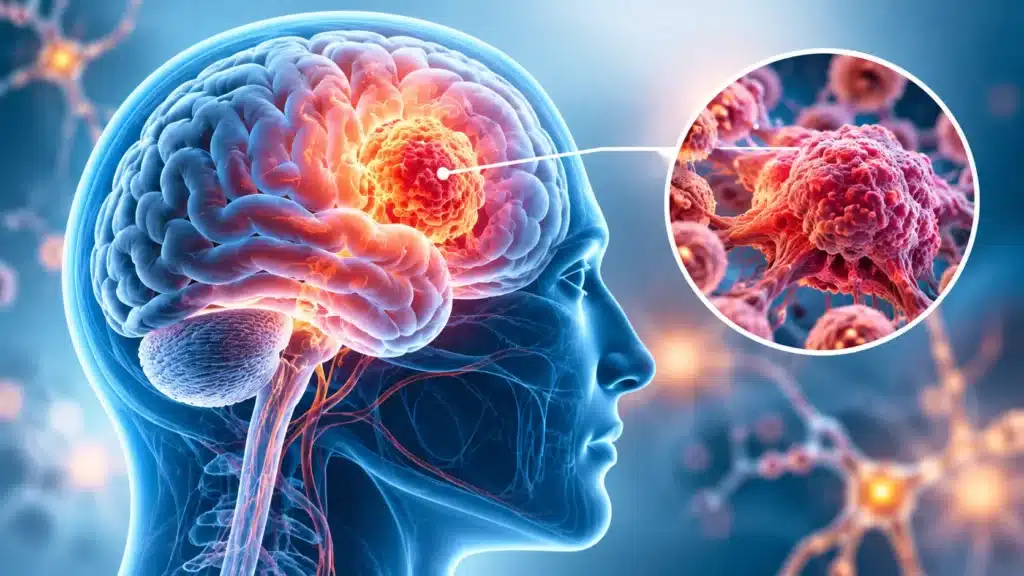
Glioma is a type of tumor that starts in the brain or spinal cord. It arises from cells called glial cells, which support and protect the nerve cells in the brain. Gliomas are among the most common primary brain tumors. Some grow slowly and may be managed for a long time. Others grow faster and need urgent treatment. The exact behavior depends on the type, grade, location, and genetic features of the tumor.
A person with glioma may experience headaches, seizures, weakness, speech problems, vision changes, balance issues, or personality changes. In some cases, symptoms develop slowly and are mistaken for stress, migraine, or aging. In other cases, they appear suddenly and require emergency evaluation. Because this condition affect critical areas of the brain, early diagnosis and expert care are very important.
What is Glioma?
This is a tumor that begins in the glial cells of the brain or spinal cord. Glial cells are support cells that help nerve cells function properly. When these cells grow in an uncontrolled way, they form a mass called a glioma.
Gliomas can occur in different parts of the brain. Some are located in the cerebral hemispheres, which control thinking, movement, and sensation. Others may be in the cerebellum, which controls balance and coordination, or in the brainstem, which controls breathing and vital functions. The location of the tumor affects the symptoms and the treatment approach.
Not all gliomas behave the same way. Some are low grade and grow slowly over years. Others are high grade and grow quickly. The grade and type of glioma help doctors plan treatment and estimate prognosis.
Types of Glioma
These are classified based on the type of glial cell involved and the grade of the tumor.
Based on cell type
- Astrocytoma, which arises from star-shaped astrocyte cells.
- Oligodendroglioma, which arises from oligodendrocyte cells that produce myelin.
- Ependymoma, which arises from cells lining the fluid spaces in the brain.
- Glioblastoma, which is a high-grade, aggressive form of astrocytoma.
- Mixed glioma, which has features of more than one cell type.
Based on grade
- Low-grade glioma, which grows slowly and may be more manageable.
- Intermediate-grade glioma, which has features between low and high grade.
- High-grade glioma, which grows quickly and needs urgent treatment.
- Glioblastoma, which is the most aggressive and common high-grade glioma in adults.
Based on location
- Cerebral glioma, located in the main part of the brain.
- Cerebellar glioma, located in the balance and coordination center.
- Brainstem glioma, located in the area controlling vital functions.
- Spinal cord glioma, located in the spinal cord.
Each type and location has different implications for symptoms, treatment, and recovery.
Causes and Risk Factors
The exact cause of this condition is not fully understood. Most cases occur without a clear reason. However, certain factors may increase the risk.
Possible causes and risk factors
- Genetic changes in brain cells that lead to uncontrolled growth.
- Inherited genetic syndromes that increase tumor risk.
- Previous radiation therapy to the head or neck.
- Family history of brain tumors in some cases.
- Age, as some types are more common in certain age groups.
- Gender, with some gliomas more common in men.
- Exposure to certain chemicals or environmental factors, though evidence is limited.
What does not cause glioma
- Head injury has not been proven to cause glioma.
- Mobile phone use has not been clearly linked to glioma in large studies.
- Diet and lifestyle factors have not shown a strong direct link.
Most people with this condition have no known risk factor. The tumor often develops due to random genetic changes in brain cells.
Symptoms of Glioma
Symptoms depend on the size, location, and growth rate of the tumor. Some people have mild symptoms at first. Others develop more severe problems as the tumor grows.
Common symptoms
- Headache, often worse in the morning or with coughing.
- Seizures or fits, which may be the first sign.
- Weakness or numbness on one side of the body.
- Difficulty speaking or understanding speech.
- Vision changes such as blurred or double vision.
- Balance problems or dizziness.
- Memory problems or confusion.
- Personality or behavior changes.
- Nausea or vomiting without stomach cause.
- Drowsiness or reduced alertness.
Symptoms based on location
- Frontal lobe glioma may cause personality changes, weakness, or speech problems.
- Temporal lobe glioma may cause memory issues, seizures, or language problems.
- Parietal lobe glioma may cause sensory changes or coordination issues.
- Occipital lobe glioma may cause vision problems.
- Cerebellar glioma may cause balance and coordination difficulties.
- Brainstem glioma may cause double vision, swallowing problems, or weakness.
Emergency warning signs
- New-onset seizure in an adult.
- Sudden severe headache with vomiting.
- Sudden weakness or numbness on one side.
- Difficulty speaking or understanding.
- Sudden vision loss or severe double vision.
- Increasing drowsiness or confusion.
Glioma in Different Age Groups
This can affect people of different ages, but the pattern may vary.
In children
- Gliomas are among the most common brain tumors in children.
- Symptoms may include headache, vomiting, balance problems, or seizures.
- Treatment plans are adjusted for growth and development.
In young adults
- Low-grade gliomas are more common in this group.
- Seizures may be the first symptom.
- Long-term planning for work, family, and quality of life is important.
In older adults
- High-grade gliomas such as glioblastoma are more common.
- Symptoms may progress more quickly.
- Treatment considers overall health and other medical conditions.
How is Glioma Diagnosed?
Diagnosis is based on symptoms, neurological examination, and imaging tests. A tissue sample may be needed to confirm the type and grade.
Diagnostic steps
- Detailed history of symptoms and their progression.
- Neurological examination to check strength, reflexes, vision, speech, and coordination.
- Imaging tests to visualize the brain and tumor.
- Biopsy or surgery to obtain tissue for analysis.
- Genetic and molecular testing of the tumor tissue.
Common tests that may be done
- MRI of the brain with contrast to see the tumor in detail.
- CT scan of the head if MRI is not available or in emergency.
- Functional MRI to map important brain areas before surgery.
- MR spectroscopy to assess tumor metabolism.
- PET scan in selected cases.
- Biopsy during surgery to confirm diagnosis.
- Blood tests to assess overall health before treatment.
Why diagnosis matters
Accurate diagnosis helps determine the type, grade, and genetic features of this condition. This information guides treatment decisions and helps estimate prognosis. Early diagnosis also allows timely intervention to control symptoms and prevent complications.
Treatment for Glioma
Treatment depends on the type, grade, location, and size of the tumor, as well as the patient’s age and overall health. A multidisciplinary team including neurosurgeons, neuro-oncologists, radiation oncologists, and rehabilitation specialists is often involved.
1. Surgery
Surgery is often the first step in treatment when possible. The goal is to remove as much of the tumor as safely possible.
- Craniotomy to access and remove part or all of the tumor.
- Awake brain surgery in selected cases to protect speech or movement areas.
- Biopsy if the tumor cannot be safely removed.
- Surgery to relieve pressure if the tumor causes swelling.
2. Radiation therapy
Radiation uses high-energy beams to destroy tumor cells. It is often used after surgery or when surgery is not possible.
- External beam radiation to the brain.
- Stereotactic radiosurgery for small, well-defined tumors.
- Fractionated radiation over several weeks.
- Proton therapy in selected centers for certain cases.
3. Chemotherapy
Chemotherapy uses medicines to kill or slow tumor cells. It may be given orally or through injection.
- Temozolomide is commonly used for many gliomas.
- Other chemotherapy agents may be used based on tumor type.
- Chemotherapy may be combined with radiation.
- Some patients receive chemotherapy through wafers placed during surgery.
4. Targeted therapy
Targeted therapy focuses on specific molecular changes in the tumor.
- Medicines that target specific genetic mutations.
- Used in selected cases based on tumor testing.
- May be part of clinical trials in some centers.
5. Supportive care
Supportive care helps manage symptoms and improve quality of life.
- Medicines to control seizures.
- Steroids to reduce brain swelling.
- Pain management for headache or discomfort.
- Rehabilitation for weakness, speech, or balance issues.
- Psychological support for anxiety, depression, or adjustment.
Recovery After Treatment
Recovery depends on the type and grade of glioma, the extent of surgery, and the patient’s overall health.
Recovery after surgery
- Hospital stay for monitoring after brain surgery.
- Gradual improvement in energy and function.
- Wound care and follow-up for healing.
- Rehabilitation if weakness or speech issues are present.
Recovery after radiation and chemotherapy
- Regular follow-up to monitor response and side effects.
- Management of fatigue, nausea, or blood count changes.
- Imaging tests to assess tumor control.
- Adjustment of treatment plan based on response.
Rehabilitation support
- Physical therapy for strength and mobility.
- Occupational therapy for daily activities.
- Speech therapy if speech or swallowing is affected.
- Cognitive therapy for memory or concentration issues.
- Psychological support for emotional well-being.
Possible Complications
This condition and its treatment can lead to various complications.
Complications from the tumor
- Seizures.
- Weakness or paralysis.
- Speech or vision problems.
- Memory or thinking difficulties.
- Increased pressure in the brain.
- Hydrocephalus or fluid buildup.
Complications from treatment
- Infection or bleeding after surgery.
- Fatigue from radiation or chemotherapy.
- Nausea or appetite changes.
- Blood count changes.
- Hair loss in the treatment area.
- Cognitive changes in some cases.
Why complications happen
The brain controls many vital functions. A tumor or its treatment can affect these functions. Careful planning, expert surgery, and supportive care help reduce risks and manage complications.
When to See a Doctor
Medical evaluation is important for people with persistent or progressive neurological symptoms.
- New or worsening headaches.
- Seizures or fits.
- Weakness or numbness on one side.
- Speech or vision problems.
- Balance or coordination issues.
- Memory or personality changes.
- Nausea or vomiting without stomach cause.
Prevention of Complications
Not all conditions can be prevented, but complications can be reduced with proper care.
Prevention pointers
- Seek early evaluation for persistent neurological symptoms.
- Follow treatment plans and medications as prescribed.
- Attend regular follow-up appointments.
- Report new or worsening symptoms promptly.
- Maintain good nutrition and hydration.
- Avoid smoking and limit alcohol.
- Manage stress and sleep well.
- Participate in rehabilitation and therapy.
For people with a history of brain tumor
- Keep regular imaging and clinical follow-up.
- Take seizure medicines regularly if prescribed.
- Inform doctors about all symptoms and medicines.
- Seek support for emotional and cognitive changes.
Why Choose Rama Hospital for Glioma Treatment?
This is a complex condition that requires expert neurosurgical care, advanced imaging, and coordinated oncology support. A hospital with experienced neurosurgeons, neuro-oncologists, and rehabilitation teams can make a major difference in outcomes.
- Expert evaluation by neurosurgery and neuro-oncology specialists.
- Advanced imaging for accurate diagnosis and surgical planning.
- Safe and precise brain tumor surgery.
- Radiation and chemotherapy support.
- Intensive care and monitoring when needed.
- Rehabilitation and long-term follow-up.
Frequently Asked Questions (FAQs)
Is glioma the same as brain cancer?
This is a type of primary brain tumor. Some gliomas are low grade and grow slowly, while others are high grade and more aggressive. High-grade gliomas are considered malignant brain cancers.
Can glioma be cured?
Some low-grade gliomas can be managed for many years with treatment. High-grade gliomas are more challenging but can be treated to control growth and symptoms. Outcomes depend on type, grade, and response to therapy.
What are the common symptoms of glioma?
Common symptoms include headache, seizures, weakness, speech problems, vision changes, balance issues, and memory or personality changes. Symptoms vary based on the tumor location and size.
How is glioma diagnosed?
Diagnosis is done using MRI or CT scan of the brain, followed by biopsy or surgery to obtain tissue. Genetic and molecular testing of the tumor helps guide treatment decisions.
What is the treatment for glioma?
Treatment may include surgery, radiation therapy, chemotherapy, and targeted therapy. Supportive care such as seizure control and rehabilitation is also important. The plan depends on tumor type and patient health.
Can glioma come back after treatment?
Yes, this can recur even after treatment. Regular follow-up with imaging and clinical evaluation is important to detect recurrence early and adjust treatment as needed.
Is surgery safe for brain tumors?
Brain tumor surgery is performed by experienced neurosurgeons using advanced techniques to maximize safety. Risks are discussed beforehand, and the goal is to remove as much tumor as possible while protecting brain function.
Conclusion
This is a serious brain tumor that affects glial cells and can cause a range of neurological symptoms. Some conditions grow slowly and can be managed for years, while others are more aggressive and need urgent treatment. Early diagnosis, expert neurosurgical care, and coordinated oncology support are essential for the best outcomes.
The most important steps are proper diagnosis, personalized treatment planning, and long-term follow-up. For patients with persistent headaches, seizures, weakness, speech or vision changes, or other neurological symptoms, a medical evaluation can make a major difference. With a structured plan and consistent care, patients can improve symptoms, control tumor growth, and maintain quality of life.
Rama Hospital can help evaluate this condition, provide advanced surgical and medical treatment, and support patients and families through diagnosis, treatment, and recovery.