Esophageal cancer is a serious cancer that develops in the esophagus, the long muscular tube that carries food and liquids from the mouth to the stomach. It can affect the upper, middle, or lower part of the esophagus, and in many cases, it develops slowly over years before symptoms become obvious. Because early symptoms are often mild and easily ignored, many patients are diagnosed at a later stage, which makes early awareness and timely evaluation very important.
This cancer can affect anyone, but it is more common in people over the age of fifty, especially those with long-term acid reflux, smoking, alcohol use, obesity, or a diet low in fruits and vegetables. In some patients, a condition called Barrett’s esophagus, which develops after chronic acid reflux, can increase the risk. Understanding the warning signs and risk factors can help people seek medical attention early and improve the chance of successful treatment.
What is Esophageal Cancer?
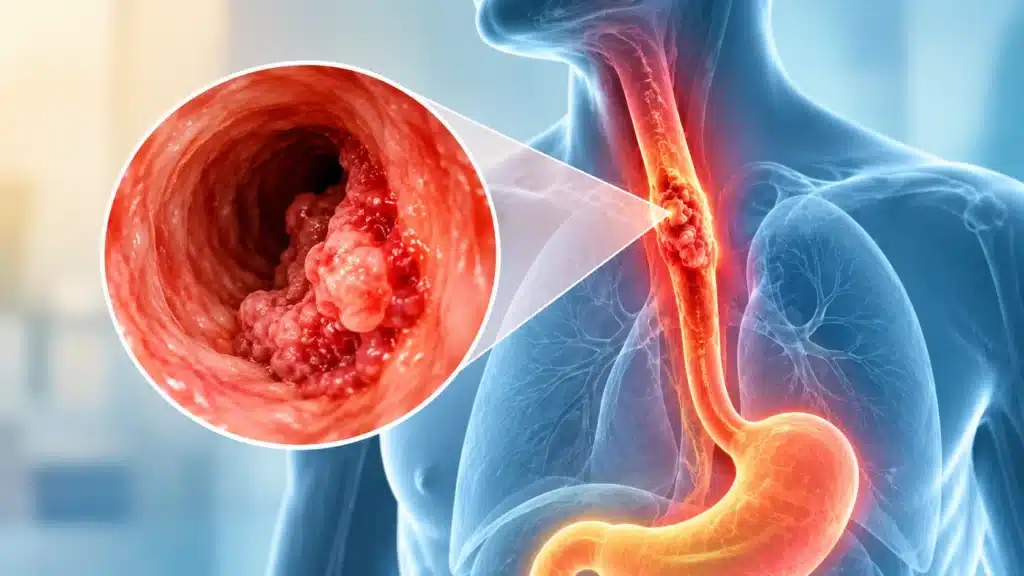
Esophageal cancer is a type of cancer that begins in the cells lining the esophagus. The esophagus is a muscular tube about twenty-five to thirty centimeters long that connects the throat to the stomach. Its main job is to push food and liquids down into the stomach through rhythmic muscle contractions.
When normal cells in the esophageal lining begin to grow abnormally and uncontrollably, they can form a tumor. Over time, this tumor may grow into the wall of the esophagus, block the passage of food, or spread to nearby lymph nodes and other organs. Esophageal cancer can be aggressive, but early detection and the right treatment can improve outcomes significantly.
The disease is more common in men than women and is often diagnosed in people over the age of fifty. It is also more common in people with long-term acid reflux, smoking, heavy alcohol use, or obesity. In some regions, dietary habits and chronic irritation of the esophagus also play a role.
Types of Esophageal Cancer
Esophageal cancer is classified based on the type of cell where it begins.
Squamous cell carcinoma
- Begins in the flat cells lining the upper and middle esophagus.
- More common in certain regions and linked to smoking, alcohol, and dietary factors.
- Can occur anywhere along the esophagus but often in the upper or middle part.
Adenocarcinoma
- Begins in the glandular cells near the lower esophagus and stomach junction.
- More common in people with long-term acid reflux and Barrett’s esophagus.
- Often linked to obesity and chronic irritation from stomach acid.
Other rare types
- Small cell carcinoma.
- Sarcoma.
- Lymphoma.
- Melanoma of the esophagus.
Causes and Risk Factors
The exact cause of esophageal cancer is not always clear, but several factors increase the risk.
Common risk factors
- Chronic acid reflux or GERD.
- Barrett’s esophagus.
- Smoking.
- Heavy alcohol use.
- Obesity.
- Diet low in fruits and vegetables.
- Diet high in processed or pickled foods.
- Long-term exposure to very hot beverages.
- Age over fifty.
- Male sex.
- Family history of esophageal cancer.
- Previous radiation therapy to the chest or neck.
- Certain inherited conditions affecting the esophagus.
Why risk increases
- Acid reflux damages the lining of the esophagus over time.
- Smoking and alcohol irritate and weaken esophageal cells.
- Obesity increases pressure on the stomach, worsening reflux.
- Poor diet reduces the body’s ability to repair damaged cells.
- Chronic irritation leads to abnormal cell changes that may become cancerous.
Symptoms of Esophageal Cancer
Early esophageal cancer may cause no symptoms or only mild discomfort. As the tumor grows, symptoms become more noticeable.
Early symptoms
- Difficulty swallowing solid food.
- Feeling of food getting stuck.
- Mild pain or burning behind the breastbone.
- Indigestion or heartburn that does not improve.
- Unexplained weight loss.
- Loss of appetite.
Advanced symptoms
- Difficulty swallowing liquids as well as solids.
- Severe pain when swallowing.
- Vomiting or regurgitation of food.
- Chronic cough.
- Hoarseness.
- Chest pain or pressure.
- Coughing or choking while eating.
- Fatigue and weakness.
- Black stools if there is bleeding.
- Vomiting blood in advanced cases.
Warning signs that need urgent attention
- Sudden inability to swallow.
- Severe chest pain.
- Vomiting blood.
- Black or tarry stools.
- Rapid weight loss.
- Difficulty breathing.
- Severe pain that does not go away.
Esophageal Cancer in Different Age Groups
Esophageal cancer can affect different age groups, but the pattern and risk may vary.
In younger adults
- Less common, but may occur in people with genetic conditions or severe reflux.
- Often linked to lifestyle factors such as smoking or alcohol.
- Symptoms may be ignored or mistaken for acid reflux or indigestion.
In middle-aged adults
- More common, especially in people with long-term reflux, obesity, or smoking.
- Often detected during evaluation for persistent swallowing difficulty or heartburn.
- Risk increases with age and uncontrolled risk factors.
In older adults
- Highest risk group, especially over the age of sixty.
- More likely to have advanced disease at diagnosis due to delayed symptoms.
- Treatment may be more complex due to other health conditions.
How is Esophageal Cancer Diagnosed?
Diagnosis is based on symptoms, physical examination, and specialized tests. Since many symptoms overlap with acid reflux or other digestive problems, accurate testing is important.
Diagnostic steps
- Detailed history of symptoms.
- Review of risk factors such as smoking, alcohol, reflux, and diet.
- Physical examination.
- Endoscopy to visualize the esophagus.
- Biopsy to confirm cancer.
- Imaging tests to check spread.
Common tests that may be done
- Upper endoscopy, which uses a thin tube with a camera to view the esophagus.
- Biopsy, where a small tissue sample is taken for testing.
- CT scan of the chest and abdomen to check tumor size and spread.
- PET scan to detect cancer in other parts of the body.
- Endoscopic ultrasound to assess depth of tumor invasion.
- Blood tests to check overall health and organ function.
Why diagnosis matters
Early diagnosis can improve treatment options and outcomes. Many patients are diagnosed late because symptoms are ignored or mistaken for common digestive issues. Timely endoscopy and biopsy are key to confirming the disease and planning treatment.
Staging of Esophageal Cancer
Staging tells doctors how far the cancer has spread and helps guide treatment.
Stages of esophageal cancer
- Stage 0, where abnormal cells are present but have not invaded deeper tissue.
- Stage I, where cancer is limited to the lining or superficial layers of the esophagus.
- Stage II, where cancer has grown into deeper layers or nearby lymph nodes.
- Stage III, where cancer has spread to nearby structures or more lymph nodes.
- Stage IV, where cancer has spread to distant organs such as the liver, lungs, or bones.
Why staging matters
Staging helps doctors decide the best treatment plan. Early-stage cancer may be treated with surgery or endoscopic methods, while advanced cancer may need a combination of chemotherapy, radiation, and surgery.
Treatment for Esophageal Cancer
Treatment depends on the stage, location, type of cancer, and the patient’s overall health.
Treatment for early-stage cancer
- Endoscopic resection for very early tumors limited to the lining.
- Surgery to remove part of the esophagus.
- Close follow-up and monitoring.
Treatment for locally advanced cancer
- Chemotherapy before surgery to shrink the tumor.
- Radiation therapy to reduce tumor size.
- Surgery to remove the affected part of the esophagus.
- Combination of chemotherapy and radiation in some cases.
Treatment for advanced cancer
- Chemotherapy to control cancer growth.
- Radiation therapy to relieve symptoms.
- Targeted therapy for certain types of cancer.
- Immunotherapy in selected patients.
- Palliative care to improve quality of life.
1. Surgery
Surgery is often used for early or locally advanced cancer. The goal is to remove the tumor and part of the esophagus.
- Esophagectomy, where part or all of the esophagus is removed.
- The stomach is often pulled up and connected to the remaining esophagus.
- Recovery can take several weeks.
- May be combined with chemotherapy or radiation.
2. Chemotherapy
Chemotherapy uses medicines to kill cancer cells or stop them from growing.
- Often given before surgery to shrink the tumor.
- May be given after surgery to reduce risk of recurrence.
- Used in advanced cancer to control disease.
- Can be combined with radiation therapy.
3. Radiation therapy
Radiation uses high-energy beams to destroy cancer cells.
- Often combined with chemotherapy.
- Used before surgery to shrink tumors.
- Used after surgery to reduce recurrence risk.
- Used in advanced cancer to relieve symptoms.
4. Targeted therapy
Targeted therapy uses medicines that attack specific proteins or genes in cancer cells.
- Used in certain types of esophageal cancer.
- May be combined with chemotherapy.
- Requires testing of the tumor for specific markers.
5. Immunotherapy
Immunotherapy helps the body’s immune system fight cancer.
- Used in advanced or recurrent esophageal cancer.
- May be combined with chemotherapy.
- Requires testing for specific biomarkers.
6. Palliative care
For advanced cancer, palliative care focuses on comfort and quality of life.
- Pain management.
- Nutritional support.
- Treatment of swallowing difficulty.
- Emotional and psychological support.
- Support for family and caregivers.
Recovery After Treatment
Recovery depends on the type of treatment, stage of cancer, and overall health.
Recovery after surgery
- Hospital stay of one to two weeks.
- Gradual return to normal eating.
- Dietary changes may be needed.
- Follow-up visits to monitor healing.
- Rehabilitation for strength and nutrition.
Recovery after chemotherapy or radiation
- Side effects such as fatigue, nausea, or mouth sores.
- Gradual improvement as treatment ends.
- Regular follow-up to monitor response.
- Supportive care for side effects.
Rehabilitation and support
- Nutritional counseling.
- Speech and swallowing therapy if needed.
- Physical therapy for strength.
- Psychological support for anxiety or depression.
- Family education and support.
Possible Complications
Esophageal cancer and its treatment can lead to complications.
Complications of the disease
- Difficulty swallowing.
- Malnutrition.
- Weight loss.
- Bleeding.
- Fistula formation.
- Spread to other organs.
Complications of treatment
- Infection after surgery.
- Leakage at the connection site.
- Narrowing of the esophagus.
- Side effects of chemotherapy or radiation.
- Nutritional deficiencies.
- Fatigue and weakness.
Why complications happen
The esophagus is a delicate structure, and treatment can affect swallowing, nutrition, and healing. Close monitoring and supportive care help reduce complications and improve recovery.
When to See a Doctor
Medical evaluation is important for people with persistent or severe symptoms.
- Difficulty swallowing that does not improve.
- Persistent heartburn or acid reflux.
- Unexplained weight loss.
- Chest pain or discomfort.
- Chronic cough or hoarseness.
- Vomiting or regurgitation of food.
- Black stools or vomiting blood.
- A history of Barrett’s esophagus or chronic reflux.
Prevention of Esophageal Cancer
Not all cases can be prevented, but risk can be reduced.
Prevention pointers
- Quit smoking completely.
- Limit or avoid alcohol.
- Maintain a healthy weight.
- Eat a diet rich in fruits and vegetables.
- Avoid very hot beverages.
- Treat acid reflux and GERD early.
- Get regular check-ups if you have Barrett’s esophagus.
- Follow medical advice for chronic digestive issues.
For people with Barrett’s esophagus
- Regular endoscopic surveillance.
- Treatment of reflux.
- Lifestyle changes to reduce irritation.
- Early detection of abnormal cell changes.
Why Choose Rama Hospital for Esophageal Cancer Treatment?
Esophageal cancer requires expert oncology care, advanced diagnostics, and coordinated treatment. A hospital with experienced oncologists, surgeons, and supportive care teams can make a major difference in outcomes
- Expert evaluation by oncology and surgical specialists.
- Advanced imaging and endoscopy for accurate diagnosis.
- Multidisciplinary treatment planning.
- Access to surgery, chemotherapy, radiation, and targeted therapy.
- Nutritional and supportive care.
- Rehabilitation and long-term follow-up.
Frequently Asked Questions (FAQs)
What are the early symptoms of esophageal cancer?
Early symptoms may include difficulty swallowing solid food, mild chest discomfort, or persistent heartburn. Many people ignore these signs, thinking they are due to acid reflux. If symptoms persist, medical evaluation is important.
Is esophageal cancer the same as acid reflux?
No, acid reflux is a common digestive problem, but chronic reflux can increase the risk of esophageal cancer over time. Barrett’s esophagus, which develops from long-term reflux, is a known risk factor.
How is esophageal cancer diagnosed?
Diagnosis is done using endoscopy, biopsy, CT scan, PET scan, and endoscopic ultrasound. These tests help confirm the cancer, assess its size, and check for spread.
What are the treatment options for esophageal cancer?
Treatment may include surgery, chemotherapy, radiation therapy, targeted therapy, or immunotherapy. The choice depends on the stage, location, and type of cancer.
Can esophageal cancer be cured?
Early-stage esophageal cancer can often be cured with surgery or endoscopic treatment. Advanced cancer may not be curable but can often be controlled with treatment to improve quality of life.
What is Barrett’s esophagus?
Barrett’s esophagus is a condition where the lining of the esophagus changes due to chronic acid reflux. It increases the risk of esophageal cancer and requires regular monitoring.
Can esophageal cancer be prevented?
Not all cases can be prevented, but risk can be reduced by quitting smoking, limiting alcohol, maintaining a healthy weight, and treating acid reflux early. Regular check-ups are important for high-risk individuals.
Conclusion
Esophageal cancer is a serious disease that affects the tube carrying food from the mouth to the stomach. It often develops slowly and may not cause symptoms until it is advanced. Early recognition of warning signs such as difficulty swallowing, persistent heartburn, or unexplained weight loss can make a major difference in outcomes.
The most important steps are timely evaluation, accurate diagnosis, and a treatment plan tailored to the stage and type of cancer. With advances in surgery, chemotherapy, radiation, and targeted therapy, many patients can achieve better outcomes and improved quality of life. For patients with risk factors or persistent symptoms, medical evaluation should not be delayed.
Rama Hospital can help evaluate esophageal cancer symptoms, provide accurate diagnosis, and offer comprehensive treatment and supportive care to improve outcomes and quality of life.