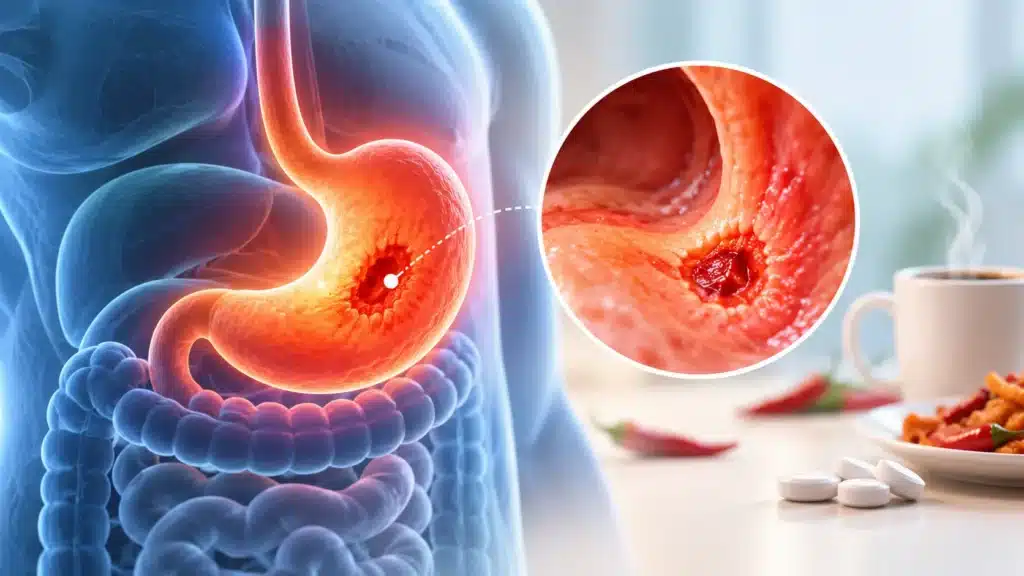
Peptic ulcer disease is a common digestive problem that affects the lining of the stomach or the first part of the small intestine. It happens when the protective layer of the digestive tract gets damaged, allowing stomach acid to injure the tissue underneath. This leads to pain, burning sensation, bloating, nausea, and sometimes bleeding. Many people call it a “stomach ulcer” or “gastric ulcer,” but the condition can affect different parts of the upper digestive system.
Peptic ulcers are often caused by an infection with a bacteria called Helicobacter pylori, or by long-term use of pain-relieving medicines such as NSAIDs. Stress, spicy food, and alcohol can worsen symptoms, but they are not always the main cause. Many people ignore early signs and continue to self-medicate with antacids or painkillers, which can delay proper treatment and increase the risk of complications.
What is Peptic Ulcer Disease?
Peptic ulcer disease is a condition where an open sore or ulcer forms in the lining of the stomach or the duodenum, which is the first part of the small intestine. The ulcer develops when the balance between protective factors and harmful factors in the digestive system gets disturbed. Normally, the stomach produces acid to help digest food, but it also has a protective mucus layer that prevents the acid from damaging the stomach wall. When this protection breaks down, acid starts to injure the tissue and an ulcer forms.
Peptic ulcer disease can be acute or chronic. Acute ulcers may develop quickly after injury, infection, or medicine use. Chronic ulcers develop slowly over time and may keep coming back if the underlying cause is not treated. The condition is more common in adults but can affect younger people too, especially if they have risk factors such as smoking, alcohol use, or regular painkiller use.
Types of Peptic Ulcer
Peptic ulcers can be classified based on their location and cause.
Based on location
- Gastric ulcer, which occurs in the stomach lining.
- Duodenal ulcer, which occurs in the first part of the small intestine.
- Esophageal ulcer, which occurs in the food pipe in some cases.
Based on cause
- H. pylori-related ulcer, caused by bacterial infection.
- NSAID-related ulcer, caused by long-term use of pain-relieving medicines.
- Stress ulcer, which can develop after major illness, surgery, or trauma.
- Drug-induced ulcer, caused by certain medicines other than NSAIDs.
- Idiopathic ulcer, where no clear cause is found.
Based on severity
- Mild ulcer, which causes discomfort but no major complications.
- Moderate ulcer, which causes more pain and may affect daily life.
- Severe ulcer, which may bleed, perforate, or cause obstruction.
Causes of Peptic Ulcer Disease
Peptic ulcer disease has many possible causes, but the two most common are H. pylori infection and NSAID use.
Common causes include:
- Infection with Helicobacter pylori bacteria.
- Long-term use of NSAIDs such as ibuprofen, aspirin, or naproxen.
- Excess stomach acid production.
- Smoking, which reduces healing and increases acid.
- Alcohol use, which irritates the stomach lining.
- Stress, which can worsen symptoms and delay healing.
- Certain medicines such as steroids or blood thinners.
- Rare conditions like Zollinger-Ellison syndrome that cause excess acid.
- Family history of ulcers.
- Poor diet and irregular eating habits in some cases.
Why the protective layer breaks down
The stomach lining has a natural defense system made of mucus, bicarbonate, and good blood flow. When this defense is weakened by infection, medicines, or lifestyle factors, acid can damage the tissue. Over time, this damage becomes an ulcer.
Risk Factors for Peptic Ulcer
Some people are more likely to develop peptic ulcer disease than others.
Higher-risk groups
- People infected with H. pylori.
- Regular users of NSAIDs or aspirin.
- Smokers.
- People who drink alcohol regularly.
- Older adults.
- People with a family history of ulcers.
- Those under high stress or with poor sleep.
- Patients with chronic illness or major surgery.
- People with irregular eating habits.
- Those with other digestive disorders.
Why risk increases in these groups
- H. pylori directly damages the stomach lining.
- NSAIDs reduce protective prostaglandins that keep the lining safe.
- Smoking and alcohol weaken the mucus barrier.
- Stress increases acid production and slows healing.
- Older age reduces the ability of the stomach to repair itself.
Symptoms of Peptic Ulcer Disease
Symptoms can vary from person to person. Some people have mild discomfort, while others have severe pain or bleeding.
Common symptoms include:
- Burning pain in the upper abdomen.
- Pain that improves after eating or taking antacids.
- Pain that wakes the person at night.
- Bloating or fullness after meals.
- Nausea or vomiting.
- Loss of appetite.
- Indigestion or acid reflux.
- Belching or gas.
- Feeling of heaviness in the stomach.
- Weight loss in some cases.
Symptoms that suggest complications
- Vomiting blood or material that looks like coffee grounds.
- Black, tarry stools.
- Severe or sudden abdominal pain.
- Dizziness or fainting.
- Pale skin or weakness.
- Difficulty swallowing.
- Persistent vomiting.
- Unexplained weight loss.
Peptic Ulcer in Different Age Groups
Peptic ulcer disease can affect people of all ages, but the pattern and risk may vary.
In younger adults
- Often linked to H. pylori infection, smoking, or NSAID use.
- Symptoms may be mild and ignored for a long time.
- Stress and irregular eating can worsen the condition.
In middle-aged adults
- More likely to have chronic ulcers due to long-term medicine use or lifestyle factors.
- May develop complications if not treated properly.
- Often need regular follow-up and lifestyle changes.
In older adults
- Higher risk of bleeding and complications.
- May have fewer classic symptoms, making diagnosis harder.
- Often need careful medication review and monitoring.
How is Peptic Ulcer Disease Diagnosed?
Diagnosis is based on symptoms, medical history, and tests to confirm the ulcer and identify the cause.
Diagnostic steps
- Detailed history of pain, eating habits, and medicine use.
- Physical examination of the abdomen.
- Assessment of risk factors such as smoking, alcohol, and NSAID use.
- Tests to check for H. pylori infection.
- Endoscopy to directly view the ulcer.
Common tests that may be done
- Urea breath test to detect H. pylori.
- Stool antigen test for H. pylori.
- Blood test for H. pylori antibodies.
- Upper GI endoscopy to see the ulcer directly.
- Biopsy during endoscopy to check for infection or cancer risk.
- Complete blood count to check for anemia from bleeding.
- Stool test for occult blood.
Why diagnosis matters
Not all abdominal pain is due to an ulcer. Conditions like acid reflux, gallstones, pancreatitis, or gastritis can cause similar symptoms. Proper testing ensures the right treatment and prevents complications.
Treatment for Peptic Ulcer Disease
Treatment depends on the cause, severity, and whether there are complications. The main goals are to heal the ulcer, relieve symptoms, and prevent recurrence.
1. Eradication of H. pylori
If H. pylori infection is present, treatment includes a combination of medicines to kill the bacteria.
- Antibiotics to eliminate the infection.
- Proton pump inhibitor to reduce acid.
- Sometimes bismuth-based therapy for resistant cases.
- Treatment usually lasts 10 to 14 days.
- Follow-up testing to confirm eradication.
2. Acid suppression
Reducing acid helps the ulcer heal and relieves pain.
- Proton pump inhibitors such as omeprazole, pantoprazole, or rabeprazole.
- H2 blockers in some cases.
- Antacids for quick symptom relief.
- Treatment usually continues for 4 to 8 weeks depending on severity.
3. Stopping or reducing NSAIDs
If NSAIDs are the cause, the doctor may advise stopping or changing the medicine.
- Switching to a safer pain-relief option.
- Using the lowest effective dose if NSAIDs are necessary.
- Adding a protective medicine to reduce risk.
- Reviewing other medicines that may irritate the stomach.
4. Lifestyle changes
Lifestyle plays an important role in healing and prevention.
- Stop smoking completely.
- Limit or avoid alcohol.
- Eat regular meals and avoid long gaps.
- Reduce stress through relaxation or counseling.
- Avoid very spicy, oily, or acidic foods if they worsen symptoms.
- Maintain a healthy weight.
5. Treatment of complications
If the ulcer causes bleeding, perforation, or obstruction, urgent treatment is needed.
- Endoscopy to stop bleeding.
- Blood transfusion if there is significant blood loss.
- Surgery in cases of perforation or obstruction.
- Hospital admission for close monitoring.
- IV fluids and medicines to stabilize the patient.
Diet Advice for Peptic Ulcer
Diet does not cause ulcers directly, but certain foods can worsen symptoms or delay healing.
Foods that are usually easier to tolerate
- Plain rice or khichdi.
- Boiled vegetables.
- Banana.
- Curd or yogurt if tolerated.
- Toast or plain crackers.
- Soups and broths.
- Lean protein like chicken or fish.
Foods to avoid or limit
- Very spicy or oily food.
- Coffee and strong tea.
- Alcohol.
- Carbonated drinks.
- Citrus fruits if they cause discomfort.
- Very acidic or fried food.
- Large meals late at night.
Eating habits that help
- Eat small, frequent meals.
- Do not skip meals.
- Avoid eating right before bedtime.
- Chew food slowly.
- Keep a food diary to identify triggers.
Possible Complications
If left untreated, peptic ulcer disease can lead to serious complications.
Complications may include:
- Bleeding, which can cause anemia or severe blood loss.
- Perforation, where the ulcer makes a hole in the stomach or intestinal wall.
- Obstruction, where swelling or scarring blocks the passage of food.
- Penetration into nearby organs.
- Increased risk of stomach cancer in some cases with chronic H. pylori infection.
- Recurrent ulcers if the cause is not treated.
Why complications happen
When the ulcer becomes deep, it can damage blood vessels or create a hole in the wall of the digestive tract. This leads to bleeding, infection, or leakage of stomach contents into the abdomen, which is a medical emergency.
When to See a Doctor
Medical evaluation is important if symptoms are persistent or severe.
- Burning pain in the upper abdomen that keeps coming back.
- Nausea, bloating, or indigestion that does not improve.
- Pain that wakes you at night.
- Loss of appetite or weight loss.
- Symptoms that do not improve with antacids.
- History of H. pylori infection or NSAID use.
Prevention of Peptic Ulcer Disease
Prevention is possible in many cases by reducing risk factors and protecting the stomach lining.
Prevention pointers
- Avoid unnecessary NSAID use.
- Use the lowest effective dose if painkillers are needed.
- Take NSAIDs with food or protective medicine if advised.
- Stop smoking.
- Limit alcohol.
- Treat H. pylori infection promptly.
- Eat regular, balanced meals.
- Manage stress.
- Get regular check-ups if you have risk factors.
For people with H. pylori
- Complete the full course of treatment.
- Get follow-up testing to confirm eradication.
- Avoid re-infection by maintaining good hygiene.
- Inform family members if multiple people have symptoms.
Why Choose Rama Hospital for Peptic Ulcer Treatment?
Peptic ulcer disease requires accurate diagnosis, proper treatment, and follow-up to prevent recurrence and complications. A hospital with experienced gastroenterologists, endoscopy facilities, and emergency care can make a major difference.
- Expert evaluation by gastroenterology specialists.
- Endoscopy and testing for H. pylori.
- Safe and effective treatment plans.
- Emergency care for bleeding or perforation.
- Diet and lifestyle counseling.
- Long-term follow-up to prevent recurrence.
Frequently Asked Questions (FAQs)
Is peptic ulcer the same as gastritis?
No, gastritis is inflammation of the stomach lining, while peptic ulcer is an open sore or ulcer. Both can cause similar symptoms, but an ulcer is deeper and may lead to bleeding or perforation.
Can peptic ulcer be cured?
Yes, most peptic ulcers can be cured with proper treatment. If H. pylori is the cause, eradication therapy can heal the ulcer and prevent recurrence. Lifestyle changes and avoiding NSAIDs also help.
Can stress cause peptic ulcer?
Stress alone does not usually cause an ulcer, but it can worsen symptoms and delay healing. Stress increases acid production and may make the stomach lining more vulnerable, especially if other risk factors are present.
Can peptic ulcer cause bleeding?
Yes, bleeding is one of the most serious complications of peptic ulcer. It can cause vomiting blood, black stools, dizziness, or weakness. Immediate medical care is needed if bleeding is suspected.
How is H. pylori infection treated?
H. pylori is treated with a combination of antibiotics and acid-reducing medicines for 10 to 14 days. Follow-up testing is important to confirm the infection is gone.
Can diet alone cure peptic ulcer?
Diet helps manage symptoms and supports healing, but it usually cannot cure the ulcer alone. Medical treatment, especially for H. pylori or NSAID-related ulcers, is needed for complete healing.
When is surgery needed for peptic ulcer?
Surgery is rarely needed and is usually reserved for complications like perforation, severe bleeding that cannot be controlled by endoscopy, or obstruction. Most ulcers heal with medicines and lifestyle changes.
Conclusion
Peptic ulcer disease is a common but treatable digestive condition. It can cause significant discomfort and, if ignored, may lead to serious complications such as bleeding or perforation. The most important steps are early diagnosis, proper treatment of the cause, and lifestyle changes to support healing.
For patients with recurring abdominal pain, indigestion, or symptoms that do not improve with antacids, a medical evaluation is important. With the right care, most people recover fully and can prevent future ulcers. Rama Hospital can provide expert evaluation, endoscopy, treatment, and follow-up care for peptic ulcer disease, along with guidance on diet and prevention to reduce the risk of recurrence.