

Ear pain can be difficult to ignore. Sometimes it feels like a sharp stab that comes and goes. At other times, it may feel like pressure, fullness, throbbing or a dull ache deep inside the ear.
But ear pain does not always mean you have an ear infection.
A blocked ear after a cold, excess earwax, pressure changes during a flight, an irritated ear canal, sinus problems, a dental issue or even jaw problems can cause pain that feels as though it is coming from the ear. In some cases, the actual source of the pain is somewhere nearby, such as the throat, teeth or jaw.
So, why does your ear hurt?
The answer depends on where the pain starts, what other symptoms you have and how long it has been present.
In this guide, we explain 9 common causes of ear pain, how to recognise them, what you can do, and when it is time to see an ENT specialist.
What Is Ear Pain?
Ear pain, medically called otalgia, is discomfort that occurs in or around the ear. It may affect one ear or both ears and can range from mild irritation to severe pain.
Ear pain can be classified into two broad categories:
- Primary ear pain: The problem begins inside the ear.
- Referred ear pain: The pain comes from another area, such as the teeth, jaw, throat or sinuses, but is felt in the ear.
This distinction matters because treating the ear alone will not solve the problem if the actual cause is somewhere else.
For example, someone with a dental infection may feel pain around the ear even though the ear itself is healthy. Similarly, a person with a temporomandibular joint (TMJ) problem may experience aching around the ear while chewing.
9 Common Causes of Ear Pain
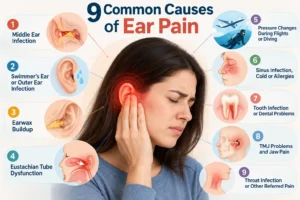
1. Middle Ear Infection
One of the most common answers to “why does my ear hurt?” is a middle ear infection, also known as otitis media.
The middle ear is the air-filled space behind the eardrum. It connects with the back of the nose and throat through narrow passages called Eustachian tubes.
When you develop a cold, flu or another upper respiratory infection, swelling can block these tubes. Fluid may then build up behind the eardrum, creating pressure and sometimes allowing an infection to develop.
Common symptoms may include:
- Ear pain or pressure
- Muffled hearing
- Fever
- Irritability in children
- Difficulty sleeping
- Fluid coming from the ear
- Feeling of fullness in the ear
Ear infections are particularly common in children because their Eustachian tubes are smaller and positioned differently from those in adults. However, adults can also develop middle ear infections.
Not every ear infection needs antibiotics. Treatment depends on the person’s age, symptoms, severity and the underlying cause. Some infections improve with observation and pain management, while others require medication.
2. Swimmer’s Ear or Outer Ear Infection
If the pain is particularly noticeable when you touch, pull or move your outer ear, an infection of the ear canal could be responsible.
This condition is commonly called swimmer’s ear, or otitis externa.
It occurs when the skin lining the ear canal becomes irritated or infected. Water remaining in the ear after swimming can create an environment where bacteria or fungi can grow. However, swimming is not the only cause.
Scratching the ear, using cotton swabs or putting objects into the ear canal can damage the delicate skin and increase the risk of infection.
You may notice:
- Ear pain
- Itching inside the ear
- Redness or swelling
- Ear discharge
- A feeling of fullness
- Reduced hearing
The pain can sometimes become worse when chewing, swallowing or touching the ear.
If you have these symptoms, avoid putting anything inside the ear until it has been examined.
3. Earwax Buildup
Earwax is not necessarily a bad thing. Your ears naturally produce wax to protect the ear canal from dust, debris and irritation.
The problem occurs when too much wax accumulates and becomes impacted.
Earwax buildup can cause more than a blocked feeling. It may also lead to earache, hearing difficulty, ringing in the ear or a sensation of fullness.
A common mistake is trying to remove impacted wax using cotton buds, hairpins or other objects.
This can push the wax deeper into the ear canal or injure the skin and eardrum.
If you suspect earwax buildup:
Do not insert objects into the ear.
An ENT doctor in Noida can examine the ear and determine whether wax is responsible for the symptoms. If necessary, the wax can be removed using an appropriate clinical technique.
4. Eustachian Tube Dysfunction
Have you ever experienced a blocked or painful ear after a flight, during a cold or when travelling to a higher altitude?
Your Eustachian tubes may be involved. These narrow tubes connect the middle ear with the upper throat. They help equalise pressure and drain fluid from the middle ear.
When the tubes become blocked or do not open properly, you may experience Eustachian tube dysfunction.
Typical symptoms include:
- Ear pressure
- Ear pain
- Muffled hearing
- Feeling that the ear is blocked
- Clicking or popping sounds
- Ringing in the ear
- Sometimes dizziness or balance problems
Colds, allergies, flu and changes in altitude can contribute to Eustachian tube problems.
For many people, the symptoms improve as the underlying congestion settles. But persistent symptoms should be evaluated, particularly when hearing changes or significant pain is present.
5. Pressure Changes During Flights or Diving
Sometimes your ear hurts simply because the pressure outside your body changes faster than the pressure inside your middle ear.
This is known as barotrauma.
It commonly happens during:
- Take-off or landing during a flight
- Scuba diving
- Rapid changes in altitude
- Travelling through mountainous areas
Normally, your Eustachian tubes open when you swallow, yawn or chew, helping balance the pressure on both sides of the eardrum.
If the tubes are blocked because of a cold, allergy or congestion, pressure may not equalise properly. This can result in pain, fullness and muffled hearing.
If ear pain repeatedly occurs during flights or diving, especially if it is severe or accompanied by hearing loss, discuss it with an ENT specialist.
6. Sinus Infection, Cold or Allergies
Your ears, nose and throat are closely connected.
That is why a problem that begins in your nose or sinuses can sometimes make your ears hurt.
A cold, sinus infection or allergy can cause swelling and congestion around the Eustachian tubes. This can interfere with normal drainage and pressure regulation in the middle ear.
You may have ear pain along with:
- Stuffy nose
- Runny nose
- Facial pressure
- Sore throat
- Cough
- Sneezing
- Muffled hearing
In these cases, the ear may not have a direct infection. Instead, the discomfort may be related to congestion and pressure changes.
This is one reason why simply using ear drops without knowing the cause may not solve the problem.
7. Tooth Infection or Dental Problems
Not all ear pain starts in the ear.
The nerves supplying your teeth, jaw and ear have connections that can cause pain to be felt in a nearby area. As a result, a dental infection, impacted tooth or other dental problem may sometimes feel like an earache.
You may suspect a dental source if your ear pain occurs along with:
- Toothache
- Gum swelling
- Pain while chewing
- Sensitivity to hot or cold foods
- Facial pain
- A painful or infected tooth
If the ear examination is normal but the pain continues, your doctor may consider whether the source is outside the ear.
Treating the actual cause is important. Taking repeated painkillers without identifying the source may only temporarily mask the problem.
8. TMJ Problems and Jaw Pain
Your temporomandibular joints (TMJs) connect your jawbone to your skull and sit very close to your ears.
Problems affecting these joints can therefore cause pain that feels like an earache.
TMJ disorders may cause aching around or inside the ear, particularly when you chew or move your jaw.
You may also notice:
- Jaw tenderness
- Pain while chewing
- Clicking or popping of the jaw
- Difficulty opening the mouth
- Headache
- Facial pain
- Tooth or jaw discomfort
Teeth clenching and grinding can also contribute to TMJ symptoms.
If your ear pain is closely linked to chewing or jaw movement and an ear examination does not show an obvious problem, your doctor may consider TMJ or another source of referred pain.
9. Throat Infection or Other Referred Pain
A sore throat, tonsillitis or another throat problem can sometimes cause pain that you feel in the ear.
This happens because the ear and nearby structures share nerve pathways. Your brain may interpret pain from the throat as discomfort in or around the ear.
You may notice ear pain along with:
- Sore throat
- Pain while swallowing
- Enlarged or inflamed tonsils
- Fever
- Swollen glands
- Difficulty swallowing
This is particularly important when your ear hurts when swallowing.
If your ear examination is normal but swallowing is painful, the throat and surrounding structures may need to be evaluated.
Why Does My Ear Hurt When I Swallow?
Ear pain that occurs specifically when swallowing can have several causes.
An ear infection may cause pressure and inflammation that becomes more noticeable when the Eustachian tubes open during swallowing.
However, throat infections, tonsillitis and other problems affecting the nose and throat can also cause referred pain in the ear.
Pay attention to the symptoms that occur alongside the pain.
For example: These patterns are helpful clues, but they cannot replace an examination.
- Ear pain + fever + hearing changes may suggest an infection.
- Ear pain + sore throat + painful swallowing may point toward a throat-related cause.
- Ear pain + jaw pain + pain while chewing may suggest a TMJ or dental problem.
Why Does My Ear Hurt Without an Infection?
This is another common question.
Yes, ear pain can occur without an ear infection.
Earwax buildup, Eustachian tube dysfunction, pressure changes, dental problems, TMJ disorders, sinus problems and throat conditions can all cause ear pain.
This is why diagnosing the cause matters.
If there is no infection, taking antibiotics will not necessarily solve the problem. Likewise, using ear drops without knowing whether the eardrum is intact or whether the problem is actually in the ear canal may not be appropriate.
A proper examination helps determine what needs to be treated.
What Other Symptoms Can Occur With Ear Pain?
Ear pain can appear on its own, but additional symptoms may provide useful clues.
You may experience:
- Hearing loss or muffled hearing
- Ear pressure or fullness
- Ringing in the ear
- Fever
- Ear discharge
- Itching
- Dizziness or balance problems
- Headache
- Sore throat
- Jaw pain
- Tooth pain
For example, ear discharge may occur with certain ear infections or a perforated eardrum, while dizziness and balance problems may indicate involvement of the inner ear or another part of the balance system.
The combination of symptoms is often more informative than ear pain alone.
When Should You See an ENT Doctor for Ear Pain?
A mild earache may sometimes improve on its own, particularly when it is associated with a temporary cold or pressure change.
But persistent or severe symptoms should not be ignored.
Consider seeing an ENT specialist in Noida if:
- Your ear pain lasts for more than a few days.
- The pain keeps coming back.
- You notice hearing loss.
- There is fluid, pus or blood coming from the ear.
- You have fever along with ear pain.
- Your ear feels blocked for a prolonged period.
- You experience dizziness or balance problems.
- Pain is severe or getting worse.
- Symptoms develop after an injury.
- You have recurrent ear infections.
When Is Ear Pain an Emergency?

Most earaches are not emergencies, but certain symptoms need prompt medical attention.
Seek urgent medical care if ear pain is accompanied by:
- Sudden hearing loss
- Blood or significant fluid discharge
- Severe dizziness
- Facial weakness
- Significant swelling around the ear
- Severe or rapidly worsening pain
- A serious head injury
- Sudden neurological symptoms
Sudden changes in hearing or neurological symptoms should not be treated as an ordinary earache.
If you are unsure whether the symptoms are urgent, it is safer to seek professional medical advice.
What Can You Do at Home for Mild Ear Pain?
If the pain is mild and you are waiting for medical evaluation, a few simple measures may provide comfort.
You can:
- Keep the ear dry.
- Avoid putting cotton buds or objects inside the ear.
- Avoid scratching the ear canal.
- Follow appropriate over-the-counter pain-relief directions.
- Stay hydrated.
- Rest if you have an accompanying cold or viral illness.
- Avoid flying or diving when you have significant congestion, if possible.
Do not insert oil, sharp objects or unprescribed substances into the ear.
Also avoid using ear drops without medical advice if you have ear discharge, a known or suspected perforated eardrum, or a history of ear surgery.
How Can You Prevent Ear Pain?
Not every cause of ear pain can be prevented, but some everyday habits can reduce the risk.
- Protect the ear canal: Avoid inserting cotton buds, fingers, pins or other objects into the ear.
- Keep ears dry: After swimming or bathing, gently dry the outer ear. Avoid aggressively inserting anything into the canal.
- Treat nasal congestion appropriately: Colds and allergies can affect Eustachian tube function. Managing the underlying problem may help reduce ear pressure.
- Protect your ears from excessive noise: Long-term exposure to loud sounds can damage hearing. Use appropriate hearing protection in noisy environments.
- Do not ignore recurring ear problems: Repeated ear pain, infections or hearing changes deserve proper evaluation rather than repeated self-treatment.
Frequently Asked Questions (FAQs)
Can ear pain go away on its own?
Yes, some causes of ear pain can improve without specific treatment. For example, certain mild ear infections and temporary Eustachian tube problems may settle as the underlying illness improves. However, persistent, severe or worsening pain should be evaluated.
Why does my ear hurt but I don’t have a fever?
Ear pain does not always come with fever. Earwax buildup, Eustachian tube dysfunction, pressure changes, TMJ problems, dental issues and several other conditions can cause ear pain without fever.
Why does my ear hurt when I swallow?
Ear pain when swallowing may be associated with an ear infection, Eustachian tube problems or a throat infection. Because the ear and throat share nerve pathways, throat problems can sometimes cause referred ear pain.
Can sinus problems cause ear pain?
Yes. Sinus congestion and upper respiratory infections can contribute to Eustachian tube blockage, which can cause ear pressure, fullness and pain.
Can a tooth infection cause ear pain?
Yes. Dental infections and other tooth problems can cause referred pain that is felt around the ear.
Can earwax cause severe ear pain?
Earwax buildup can cause discomfort, fullness and hearing problems, but significant or severe pain should not automatically be blamed on wax. An examination can determine whether wax is actually responsible.
Should I use ear drops for ear pain?
Not necessarily. The right treatment depends on the cause. Some ear drops are appropriate for specific ear canal conditions, while others may be unsuitable if there is a perforated eardrum or another problem. It is better to identify the cause before using medicated ear drops.
Conclusion
So, why does your ear hurt?
It could be an ear infection, but that is only one possibility.
Earwax buildup, swimmer’s ear, Eustachian tube dysfunction, pressure changes, sinus congestion, dental problems, TMJ disorders and throat infections can all cause ear pain.
The most important clue is often not the pain itself, but what comes with it.
Ear pain with hearing loss is different from ear pain with a sore throat. Pain that worsens when you touch the ear is different from pain that appears while chewing. And pain after a flight may have a very different cause from pain accompanied by fever and ear discharge.
If your symptoms are persistent, recurrent or concerning, an evaluation by an ENT specialist in Noida can help identify the underlying cause and guide appropriate treatment.
At Rama Hospital, Noida, patients can seek evaluation for ear pain, ear infections, hearing concerns and other ENT conditions from an appropriate ENT specialist.