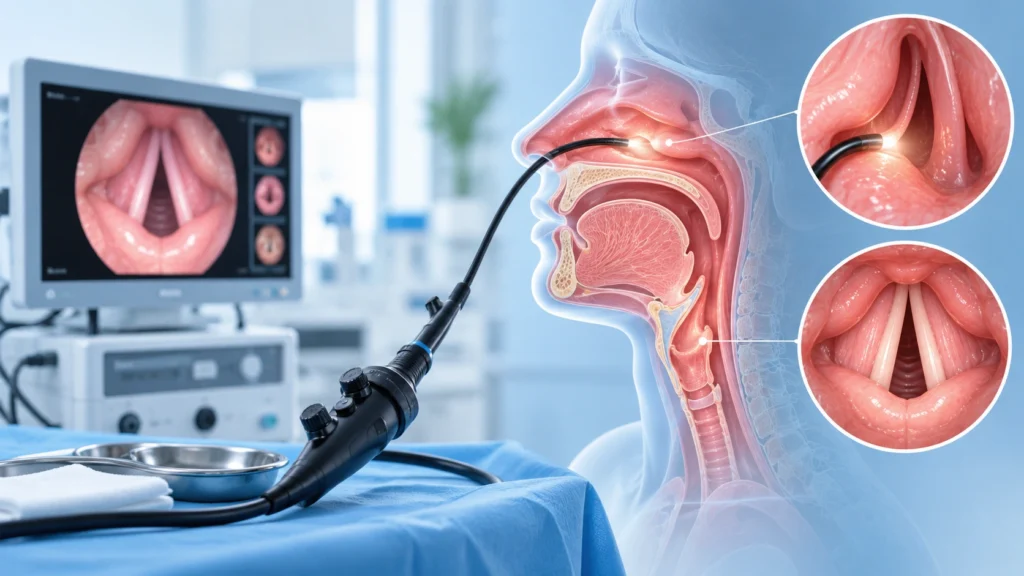
Endoscopy is a modern medical procedure that allows doctors to see inside the body using a thin, flexible tube with a camera and light. In ENT care, nasal endoscopy and laryngeal endoscopy are commonly used to examine the nose, sinuses, throat, voice box, and upper airway. These procedures help diagnose conditions such as nasal blockage, sinus infection, polyps, voice problems, throat pain, swallowing difficulties, and suspected growths.
Nasal endoscopy involves passing a small scope through the nostril to view the nasal passages and sinuses. Laryngeal endoscopy involves examining the voice box and surrounding structures, either through the nose or mouth. Both procedures are usually quick, well tolerated, and done in a clinic or procedure room. They provide clear, magnified images that help the doctor make an accurate diagnosis and plan treatment.
What is Nasal Endoscopy?
Nasal endoscopy is a procedure where a thin, flexible or rigid tube with a camera and light is passed through the nostril to examine the inside of the nose and sinuses. The tube is called an endoscope. It is connected to a monitor that displays magnified images in real time.
The procedure allows the doctor to see the nasal passages, nasal septum, turbinates, sinus openings, adenoids, and the back of the nose near the throat. It helps identify inflammation, infection, polyps, structural abnormalities, bleeding points, or growths that cannot be seen with a simple torch examination.
Nasal endoscopy is commonly done in an ENT clinic. It usually takes only a few minutes. Most patients tolerate it well with minimal discomfort. It is a key tool for diagnosing chronic sinusitis, nasal polyps, recurrent nosebleeds, nasal obstruction, and suspected tumors.
What is Laryngeal Endoscopy?
Laryngeal endoscopy is a procedure where a thin scope is used to examine the voice box, also called the larynx, and surrounding structures. This includes the vocal cords, epiglottis, and upper part of the windpipe. The procedure helps assess voice problems, throat pain, difficulty swallowing, chronic cough, and suspected lesions.
There are two main types of laryngeal endoscopy. Flexible laryngoscopy is done through the nose using a flexible scope. Rigid laryngoscopy is done through the mouth using a rigid scope, often in an operating room under anesthesia. For most routine evaluations, flexible laryngoscopy in the clinic is sufficient.
Laryngeal endoscopy provides a clear view of the vocal cords in action. The doctor can see how the cords move during breathing and speaking. This helps diagnose vocal cord nodules, polyps, paralysis, inflammation, reflux-related changes, and other conditions affecting the voice and airway.
Why are These Procedures Done?
Nasal and laryngeal endoscopy are done to investigate symptoms, confirm diagnoses, and guide treatment.
Common reasons for nasal endoscopy
- Persistent nasal blockage or congestion.
- Chronic sinusitis or recurrent sinus infections.
- Suspected nasal polyps.
- Frequent nosebleeds.
- Loss of smell.
- Suspected structural abnormalities such as deviated septum.
- Evaluation before and after sinus surgery.
- Suspected growths or tumors in the nasal cavity.
- Assessment of adenoids in children.
- Unexplained facial pain or pressure.
Common reasons for laryngeal endoscopy
- Hoarseness or voice changes lasting more than a few weeks.
- Chronic throat pain or irritation.
- Difficulty swallowing or sensation of something stuck in the throat.
- Chronic cough not responding to treatment.
- Suspected vocal cord nodules, polyps, or cysts.
- Vocal cord paralysis or weakness.
- Evaluation of reflux-related throat changes.
- Suspected growths or lesions in the voice box.
- Assessment before and after voice or airway surgery.
- Unexplained breathing difficulty related to the upper airway.
How is Nasal Endoscopy Performed?
Nasal endoscopy is usually done in an ENT clinic or procedure room. The procedure is quick and does not require hospital admission.
Step-by-step overview
- The patient sits upright in a comfortable chair.
- The doctor explains the procedure and answers questions.
- A decongestant spray may be applied to the nose to reduce swelling.
- A local anesthetic spray may be used to numb the nasal lining.
- A thin flexible or rigid endoscope is gently passed through one nostril.
- The doctor examines the nasal passages, septum, turbinates, and sinus openings.
- The scope may be passed to the back of the nose to view the adenoids and throat area.
- Images are displayed on a monitor for detailed evaluation.
- The scope is removed gently after the examination is complete.
- The procedure usually takes five to ten minutes.
What the patient may feel
- Mild pressure or tickling in the nose.
- Temporary urge to sneeze.
- Slight discomfort during scope passage.
- Watery eyes or mild tearing.
- Brief sensation of blockage that resolves quickly.
How is Laryngeal Endoscopy Performed?
Laryngeal endoscopy is also usually done in an ENT clinic for routine evaluation.
Step-by-step overview
- The patient sits upright in a comfortable chair.
- The doctor explains the procedure and answers questions.
- A decongestant and local anesthetic spray may be applied to the nose and throat.
- A thin flexible endoscope is gently passed through one nostril.
- The scope is guided down to the back of the throat and voice box.
- The doctor examines the vocal cords and surrounding structures.
- The patient may be asked to speak, breathe deeply, or swallow during the exam.
- Images are displayed on a monitor for detailed evaluation.
- The scope is removed gently after the examination is complete.
- The procedure usually takes five to ten minutes.
What the patient may feel
- Mild pressure in the nose and throat.
- Temporary gagging sensation that settles quickly.
- Slight discomfort during scope passage.
- Watery eyes or mild tearing.
- Brief change in voice or throat sensation that resolves soon after.
Preparation for Nasal and Laryngeal Endoscopy
Preparation is simple and minimal for most patients.
Before the procedure
- Inform the doctor about all medicines, especially blood thinners.
- Mention any allergies to sprays or anesthetic agents.
- Share history of nosebleeds, bleeding disorders, or previous nasal surgery.
- Avoid heavy meals immediately before the procedure if throat spray is used.
- Remove glasses or facial jewelry if needed for comfort.
- Arrive a few minutes early to complete any paperwork.
On the day of the procedure
- Wear comfortable clothing.
- Avoid strong perfumes or nasal sprays not prescribed by the doctor.
- Bring any previous reports or imaging if available.
- Inform the staff if you feel anxious or have had difficult procedures before.
Special considerations
- Children may need additional reassurance or distraction.
- Patients with severe nasal blockage may require extra decongestant.
- Those with bleeding disorders may need special precautions.
- Pregnant women should inform the doctor before any sprays are used.
Benefits of Nasal and Laryngeal Endoscopy
These procedures offer several advantages over traditional examination methods.
Diagnostic benefits
- Clear, magnified view of internal structures.
- Ability to see areas not visible with a torch.
- Real-time assessment of nasal and throat function.
- Accurate identification of inflammation, polyps, or growths.
- Better planning for medical or surgical treatment.
Patient benefits
- Quick procedure with minimal discomfort.
- No need for hospital admission in most cases.
- Immediate results and explanation by the doctor.
- Helps avoid unnecessary imaging in some cases.
- Guides targeted treatment rather than trial and error.
Treatment planning benefits
- Helps decide if medical therapy is enough or if surgery is needed.
- Assists in planning sinus or voice box surgery.
- Allows monitoring of treatment response over time.
- Helps detect early changes that may need attention.
Risks and Side Effects
Nasal and laryngeal endoscopy are generally safe, but like any medical procedure, they carry some risks.
Common minor side effects
- Mild nasal discomfort or irritation.
- Temporary sneezing or runny nose.
- Slight sore throat after laryngeal examination.
- Watery eyes during the procedure.
- Minor nosebleed in sensitive individuals.
Less common risks
- Significant nosebleed requiring treatment.
- Allergic reaction to sprays or anesthetic.
- Severe gagging or vomiting in sensitive patients.
- Injury to nasal lining or throat in rare cases.
- Infection is extremely rare with proper sterilization.
Why risks are low
- The scopes are thin and designed for gentle passage.
- Local anesthetic reduces discomfort and reflexes.
- Procedures are done by trained ENT specialists.
- Sterile technique minimizes infection risk.
- Serious complications are very uncommon.
Recovery After the Procedure
Recovery is usually quick and straightforward.
Immediate recovery
- Most patients can resume normal activities immediately.
- Mild nasal or throat discomfort may last a few hours.
- Avoid blowing the nose forcefully for a few hours.
- Drink water to soothe the throat if spray was used.
- Rest briefly if you feel lightheaded.
Home care advice
- Use saline nasal spray if recommended by the doctor.
- Avoid hot or spicy food if the throat feels sore.
- Do not insert anything into the nose for the rest of the day.
- Follow any specific instructions given by the doctor.
- Report any unusual symptoms such as heavy bleeding or severe pain.
When to seek medical help
- Persistent heavy nosebleed that does not stop.
- Severe throat pain or difficulty breathing.
- High fever after the procedure.
- Worsening symptoms instead of improvement.
- Any concern that feels unusual or worrying.
What to Expect During the Procedure?
Knowing what to expect can reduce anxiety and improve cooperation.
During nasal endoscopy
- You will be seated comfortably with your head slightly tilted.
- The doctor will apply sprays to prepare the nose.
- You may feel pressure as the scope passes through.
- You can breathe normally through your mouth if needed.
- The doctor may ask you to lean forward or turn your head slightly.
- The procedure is over within minutes.
During laryngeal endoscopy
- You will be seated comfortably with your head supported.
- The doctor will apply sprays to the nose and throat.
- You may feel the scope at the back of the throat.
- You will be asked to speak or breathe in certain ways.
- Try to relax your throat and breathe slowly.
- The procedure is over within minutes.
Tips for a smoother experience
- Breathe slowly and steadily through your mouth.
- Avoid sudden head movements.
- Inform the doctor if you feel significant discomfort.
- Focus on relaxing your face and throat muscles.
- Remember that the procedure is brief and well tolerated.
Who Should Avoid or Delay the Procedure?
Most people can safely undergo nasal and laryngeal endoscopy. However, some situations require caution.
Situations requiring caution
- Active severe nosebleed at the time of examination.
- Recent major nasal or throat surgery.
- Severe bleeding disorder without proper management.
- Known severe allergy to local anesthetic sprays.
- Unstable medical condition requiring emergency care first.
What to do in these cases
- Inform the doctor about your full medical history.
- The procedure may be postponed until it is safer.
- Alternative evaluation methods may be considered.
- Special precautions can be taken if the procedure is essential.
Why Choose Rama Hospital for Endoscopy Care?
Nasal and laryngeal endoscopy require skill, experience, and the right equipment. A hospital with a dedicated ENT department can provide high-quality care.
- Experienced ENT specialists trained in endoscopy.
- Modern endoscopy equipment with clear imaging.
- Proper sterilization and infection control.
- Comfortable procedure rooms with patient support.
- Ability to proceed to further treatment if needed.
Frequently Asked Questions (FAQs)
Is endoscopy painful?
Most patients feel only mild discomfort, pressure, or tickling during the procedure. Local anesthetic sprays reduce pain and gagging. The procedure is brief and does not require injections or general anesthesia in most cases.
How long does the procedure take?
Both nasal and laryngeal endoscopy usually take five to ten minutes. The actual examination time may be even shorter. Patients can typically resume normal activities immediately afterward.
Do I need to fast before endoscopy?
Fasting is usually not required for routine nasal or laryngeal endoscopy. However, if throat spray is used, the doctor may advise avoiding a heavy meal just before the procedure. Follow the specific instructions given by your doctor.
Can children undergo endoscopy?
Yes, children can undergo nasal and laryngeal endoscopy when needed. The approach is adjusted for age and comfort. Parents are usually present to provide reassurance during the procedure.
Are there any side effects after endoscopy?
Most side effects are mild and temporary, such as slight nasal irritation, runny nose, or sore throat. Serious complications are very rare. Inform your doctor if you experience heavy bleeding or severe symptoms.
When will I get the results?
The doctor can usually explain the findings immediately after the procedure. If biopsies or additional tests are needed, those results may take a few days. A clear plan for treatment is discussed based on the findings.
Conclusion
Nasal and laryngeal endoscopy are safe, effective, and essential tools in modern ENT care. They allow doctors to see inside the nose, sinuses, throat, and voice box with clarity and precision. These procedures help diagnose the cause of symptoms such as nasal blockage, sinus infection, voice changes, throat pain, and swallowing difficulties. With minimal preparation and quick recovery, they provide valuable information for accurate treatment planning.
For patients with persistent nasal or throat symptoms, endoscopy can make a major difference in diagnosis and management. With the right expertise and equipment, the procedure is comfortable and informative. Rama Hospital can provide expert nasal and laryngeal endoscopy, clear explanation of findings, and a personalized treatment plan for better ENT health.