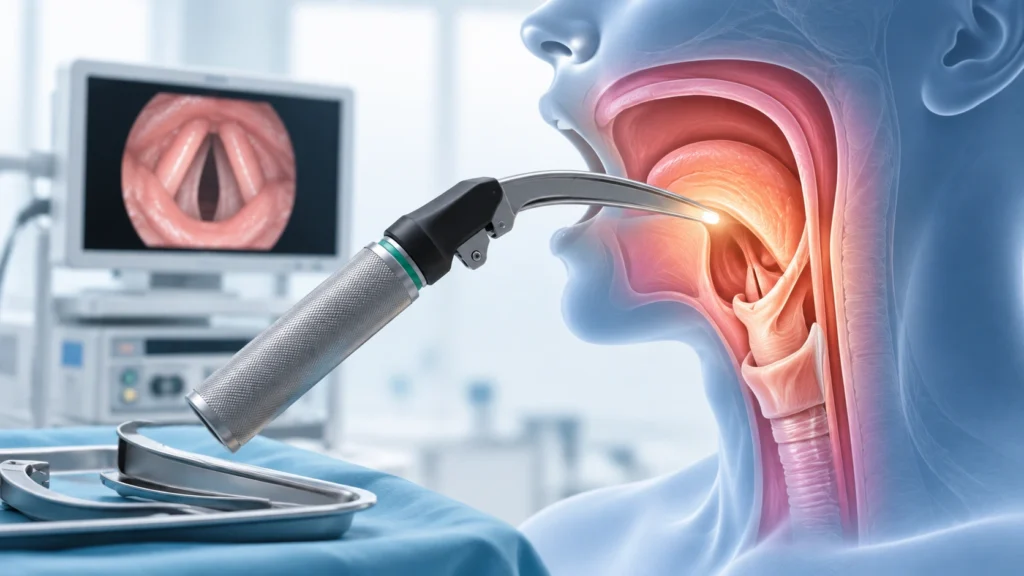
Laryngoscopy is a medical procedure used to examine the voice box, also called the larynx, and the surrounding areas of the throat. It helps doctors see the vocal cords, airway, and upper part of the windpipe. This procedure is commonly done by ENT specialists to evaluate voice problems, breathing difficulties, throat pain, swallowing issues, persistent cough, or suspected growths in the throat.
Laryngoscopy can be done in different ways. Some types are quick and done in the clinic with a small flexible tube. Others are more detailed and done in an operation theatre with the patient under anesthesia. The choice depends on the reason for the test, the patient’s age, comfort level, and the findings needed.
What is Laryngoscopy?
Laryngoscopy is a procedure that allows doctors to directly visualize the larynx and vocal cords. The larynx is the part of the throat that contains the vocal cords and helps with speaking, breathing, and swallowing. When there is a problem in this area, a simple throat examination may not be enough. Laryngoscopy gives a clear, magnified view of the structures.
The procedure is done using a special instrument called a laryngoscope. This may be a small flexible tube with a camera, a rigid tube with a lens, or a mirror system depending on the type. The doctor can see the vocal cords moving, check for swelling, nodules, polyps, paralysis, growths, or other abnormalities.
Laryngoscopy is both a diagnostic and sometimes a therapeutic procedure. It helps diagnose the cause of voice or throat symptoms. In some cases, small treatments such as biopsy, removal of foreign bodies, or minor procedures can be done during the same session.
Types of Laryngoscopy
Laryngoscopy can be performed in different ways depending on the purpose and patient comfort.
Indirect laryngoscopy
- Done in the clinic using a small mirror and light.
- The patient sits upright and opens the mouth.
- The doctor gently places a mirror at the back of the throat.
- Quick and simple, but view may be limited in some patients.
- Often used for initial evaluation of voice or throat symptoms.
Flexible laryngoscopy
- Done in the clinic using a thin, flexible tube with a camera.
- The tube is passed through the nose into the throat.
- Local anesthetic spray may be used to reduce discomfort.
- Provides a clear view of the vocal cords and surrounding areas.
- Well tolerated by most adults and older children.
Rigid laryngoscopy
- Done in an operation theatre under general anesthesia.
- Uses a rigid metal tube with a lens and light source.
- Provides a wider and more detailed view.
- Allows for procedures such as biopsy or removal of growths.
- Suitable for complex cases or when more intervention is needed.
Direct laryngoscopy
- Refers to any method where the larynx is viewed directly.
- Can be done with rigid or flexible instruments.
- Often used when detailed examination or surgery is planned.
- Allows better access for instruments during procedures.
- Commonly done under anesthesia for patient comfort.
Reasons for Doing Laryngoscopy
Laryngoscopy is recommended when symptoms suggest a problem in the voice box or upper airway.
Common reasons include:
- Persistent hoarseness or voice changes.
- Weak or breathy voice.
- Loss of voice lasting more than a few weeks.
- Chronic throat pain or discomfort.
- Sensation of something stuck in the throat.
- Difficulty swallowing or choking on food.
- Persistent cough without clear cause.
- Noisy breathing or stridor.
- Breathing difficulty related to the upper airway.
- Suspected vocal cord nodules, polyps, or cysts.
- Evaluation of vocal cord paralysis.
- Assessment of throat growths or tumors.
- Removal of foreign bodies from the throat.
- Biopsy of suspicious areas.
- Pre-operative assessment before certain throat surgeries.
- Follow-up after treatment for throat conditions.
Why laryngoscopy is important
Many throat and voice symptoms can have multiple possible causes. A direct view of the vocal cords helps identify the exact problem. This guides treatment decisions such as voice therapy, medicines, injections, or surgery. Early evaluation can also detect serious conditions at a stage when treatment is more effective.
Preparation for Laryngoscopy
Preparation depends on the type of laryngoscopy planned.
For clinic-based laryngoscopy
- No special fasting is usually needed.
- Inform the doctor about all medicines and allergies.
- Mention any history of nose bleeding or nasal blockage.
- Remove dentures if advised before the procedure.
- Try to stay relaxed and breathe normally through the nose.
For laryngoscopy under anesthesia
- Fasting for several hours before the procedure as advised.
- Stop certain medicines such as blood thinners if instructed.
- Inform the doctor about heart, lung, or bleeding disorders.
- Arrange for someone to accompany you home.
- Follow all pre-procedure instructions given by the hospital.
General preparation tips
- Wear comfortable clothing.
- Bring previous test reports if available.
- Inform the doctor about pregnancy or possible pregnancy.
- Ask questions if you are unsure about any step.
- Plan to rest for a short time after the procedure.
How is Laryngoscopy Done?
The procedure steps vary depending on the type, but the overall process is similar.
Steps for indirect laryngoscopy
- The patient sits upright in a chair.
- The doctor uses a headlight or external light source.
- A small mirror is warmed and placed at the back of the throat.
- The patient is asked to say certain sounds to move the vocal cords.
- The doctor observes the larynx and vocal cord movement.
Steps for flexible laryngoscopy
- The patient sits comfortably in the clinic.
- A local anesthetic spray may be applied in the nose and throat.
- A thin flexible scope is gently passed through the nose.
- The camera sends images to a monitor for clear viewing.
- The doctor examines the nasal passage, throat, and vocal cords.
- The patient may be asked to speak, swallow, or breathe in certain ways.
- The procedure usually takes only a few minutes.
Steps for rigid or direct laryngoscopy
- The patient is taken to the operation theatre.
- General anesthesia is given so the patient is asleep.
- A rigid laryngoscope is carefully passed through the mouth.
- The doctor examines the larynx in detail using magnification.
- Biopsy, removal of growths, or other procedures may be done.
- The patient is monitored in recovery after the procedure.
What the patient may feel
- Mild discomfort or pressure in the nose or throat for flexible scope.
- Temporary gagging sensation during the examination.
- Numbness in the throat if anesthetic spray is used.
- Drowsiness or grogginess if anesthesia is given.
- Most patients tolerate the procedure well with minimal discomfort.
Recovery After Laryngoscopy
Recovery depends on the type of laryngoscopy and whether any additional procedures were done.
After clinic-based laryngoscopy
- Most patients can resume normal activities immediately.
- Throat numbness may last for a short time if spray was used.
- Avoid eating or drinking until throat sensation returns fully.
- Mild throat irritation or nasal discomfort may occur briefly.
- No special restrictions are usually needed.
After laryngoscopy under anesthesia
- Patient is monitored in the recovery area until fully awake.
- Throat may feel sore or dry for a day or two.
- Voice may be slightly hoarse temporarily.
- Avoid driving or operating machinery on the same day.
- Follow all discharge instructions given by the team.
General recovery tips
- Drink plenty of fluids to soothe the throat.
- Avoid very hot, spicy, or rough foods initially.
- Rest the voice if advised by the doctor.
- Take prescribed medicines as directed.
- Report any severe pain, bleeding, or breathing difficulty.
Risks and Side Effects
Laryngoscopy is generally safe, but like any medical procedure, it has some risks.
Possible risks and side effects
- Mild throat irritation or soreness.
- Temporary hoarseness or voice change.
- Nose bleeding or discomfort with flexible scope.
- Gagging or coughing during the procedure.
- Reaction to local anesthetic spray in rare cases.
- Bleeding if biopsy or removal of tissue is done.
- Infection risk is very low but possible.
- Breathing difficulty in rare complex cases.
- Dental or lip injury in rigid procedures if not careful.
- Anesthesia-related risks in procedures done under sedation.
When to seek medical help
- Severe or worsening throat pain.
- Heavy bleeding from the nose or mouth.
- Difficulty breathing or noisy breathing.
- High fever after the procedure.
- Persistent voice change beyond expected time.
- Signs of allergic reaction such as rash or swelling.
Results and What They Mean
The results of laryngoscopy help guide diagnosis and treatment.
Common findings
- Normal vocal cords with no significant abnormality.
- Swelling or inflammation of the vocal cords.
- Vocal cord nodules or polyps.
- Vocal cord cysts or scarring.
- Vocal cord paralysis or weakness.
- Signs of reflux affecting the throat.
- Growths or tumors requiring further evaluation.
- Foreign body or structural abnormality.
Next steps after results
- Voice therapy for nodules or muscle tension.
- Medicines for reflux, infection, or inflammation.
- Injection or surgical treatment for certain lesions.
- Biopsy report review for growths or tumors.
- Further imaging if deeper evaluation is needed.
- Regular follow-up to monitor progress.
Aftercare and Voice Care
Proper aftercare helps recovery and protects the voice.
Aftercare pointers
- Follow all instructions given by the ENT specialist.
- Take prescribed medicines regularly.
- Attend follow-up appointments as scheduled.
- Report any new or worsening symptoms promptly.
- Keep the throat hydrated with adequate fluids.
Voice care tips
- Avoid shouting or straining the voice.
- Limit prolonged talking in noisy environments.
- Take breaks during long conversations.
- Avoid whispering, which can strain the vocal cords.
- Use amplification devices if needed for work.
- Stay away from smoke and irritants.
- Manage reflux with diet and medicines if advised.
- Practice good vocal hygiene as guided by a therapist.
Why Choose Rama Hospital for Laryngoscopy?
Laryngoscopy requires skill, experience, and the right equipment to ensure accurate diagnosis and patient comfort. A hospital with dedicated ENT specialists and modern endoscopy facilities can provide high-quality care.
- Expert ENT doctors with specialization in voice and airway.
- Advanced flexible and rigid laryngoscopy equipment.
- Comfortable clinic and operation theatre setup.
- Proper monitoring and safety protocols.
- Coordinated care with speech therapists and other specialists.
- Clear explanation of findings and treatment options.
Frequently Asked Questions (FAQs)
1. What is laryngoscopy used for?
Laryngoscopy is used to examine the voice box, vocal cords, and upper airway. It helps diagnose causes of hoarseness, throat pain, swallowing difficulty, breathing problems, and suspected growths in the throat.
2. Is laryngoscopy painful?
Most patients find laryngoscopy tolerable with minimal discomfort. Local anesthetic spray is often used to reduce sensation. Procedures under anesthesia are done while the patient is asleep and feel no pain during the test.
3. How long does the procedure take?
Clinic-based laryngoscopy usually takes only a few minutes. More detailed procedures in the operation theatre may take longer depending on what needs to be done. The doctor will explain the expected time beforehand.
4. Can I eat after laryngoscopy?
For clinic-based procedures, you can usually eat once throat numbness wears off. After anesthesia, you may be advised to start with liquids and soft foods. Follow the specific instructions given by your care team.
5. Will I be able to speak after laryngoscopy?
Yes, most people can speak normally after the procedure. Some may have temporary hoarseness or throat soreness. If biopsy or treatment was done, voice rest may be advised for a short period.
6. Are there any risks of laryngoscopy?
Laryngoscopy is generally safe. Minor side effects such as throat irritation, nasal discomfort, or temporary voice change may occur. Serious complications are rare but can include bleeding, infection, or breathing issues.
7. Do I need to fast before laryngoscopy?
Fasting is usually not needed for clinic-based flexible or indirect laryngoscopy. Fasting is required for procedures done under general anesthesia. Your doctor will give clear instructions based on your specific case.
8. When will I get the results?
The doctor can often explain the findings immediately after the procedure. If biopsy was taken, the report may take a few days. A follow-up appointment is usually scheduled to discuss results and next steps.
Conclusion
Laryngoscopy is a valuable and commonly performed procedure that allows doctors to directly examine the voice box and vocal cords. It plays a key role in diagnosing voice changes, throat symptoms, breathing difficulties, and suspected growths in the upper airway. With modern equipment and experienced ENT specialists, the procedure is safe, quick, and well tolerated by most patients.
The most important steps are proper indication, skilled performance, clear explanation of findings, and appropriate follow-up care. For patients with persistent hoarseness, throat discomfort, swallowing issues, or breathing problems, laryngoscopy can provide crucial information that guides effective treatment. With the right support, most patients recover quickly and benefit from accurate diagnosis and targeted care.
Rama Hospital can provide comprehensive laryngoscopy services, from clinic-based evaluation to advanced procedures in the operation theatre, along with expert voice care and long-term management for throat and airway conditions.