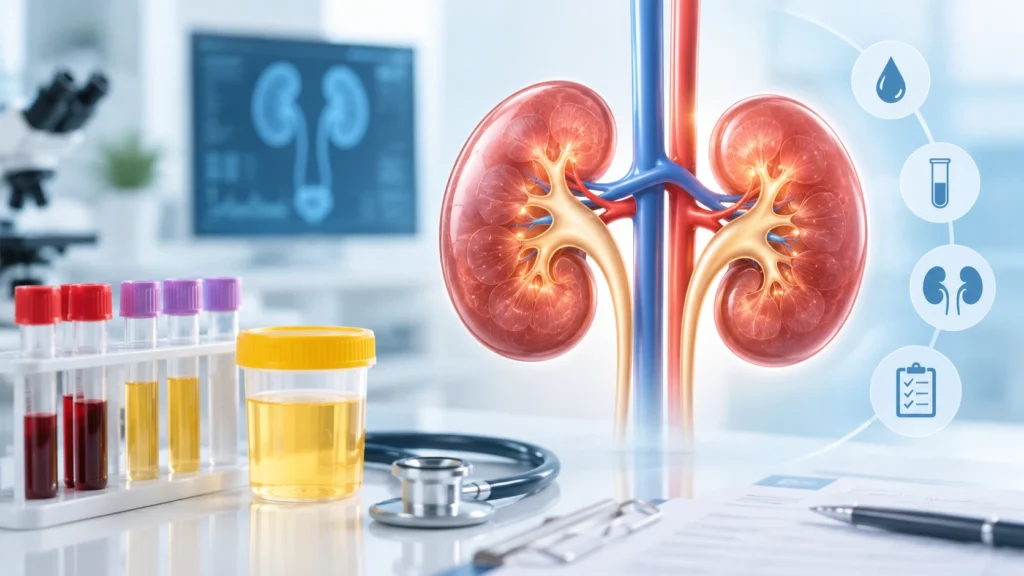
Kidney Function Test, commonly called KFT or renal function test, is a group of blood and urine tests that help evaluate how well the kidneys are working. The kidneys play a vital role in filtering waste products from the blood, balancing fluids and electrolytes, regulating blood pressure, and supporting red blood cell production. When kidney function declines, waste products and excess fluids can build up in the body, leading to serious health problems.
KFT is one of the most commonly ordered test panels in routine health check-ups, pre-operative evaluations, and monitoring of chronic conditions such as diabetes, high blood pressure, and heart disease. It helps detect early kidney damage, monitor disease progression, assess the effect of medicines on the kidneys, and guide treatment decisions.
What is Kidney Function Test (KFT)?
Kidney Function Test is a panel of laboratory tests that assesses how effectively the kidneys are filtering blood and maintaining balance in the body. It typically includes blood tests and sometimes urine tests to measure various substances that reflect kidney performance.
The test helps identify whether the kidneys are functioning normally, showing early signs of damage, or significantly impaired. It is used for screening, diagnosis, monitoring, and treatment planning in patients with suspected or known kidney problems.
KFT is especially important for people with diabetes, high blood pressure, heart disease, family history of kidney disease, or those taking medicines that can affect kidney function. Early detection through KFT can prevent progression to advanced kidney disease and reduce the risk of complications.
Why is KFT Done?
KFT is performed for multiple reasons depending on the patient’s health status and clinical needs.
Common reasons for KFT include:
- Routine health check-up to assess overall kidney health.
- Screening for kidney disease in high-risk individuals.
- Evaluation of symptoms such as swelling, fatigue, reduced urine output, or changes in urination.
- Monitoring known kidney disease or chronic conditions.
- Assessing kidney function before starting certain medicines.
- Pre-operative evaluation before surgery.
- Monitoring the effect of medicines that can affect kidneys.
- Evaluating electrolyte balance and acid-base status.
- Assessing kidney function in pregnancy.
- Follow-up after kidney injury or acute illness.
Why early testing matters: Kidney disease often develops silently without obvious symptoms in the early stages. By the time symptoms appear, significant damage may have already occurred. Regular KFT screening in at-risk individuals can detect problems early when intervention is most effective.
Parameters Included in KFT
KFT typically includes several blood and urine parameters that together provide a comprehensive picture of kidney function.
Blood test parameters
- Serum creatinine, which is a waste product from muscle metabolism filtered by the kidneys.
- Blood urea nitrogen (BUN) or urea, which reflects protein breakdown and kidney filtration.
- Estimated glomerular filtration rate (eGFR), which calculates how well the kidneys are filtering blood.
- Serum electrolytes including sodium, potassium, chloride, and bicarbonate.
- Calcium and phosphorus levels, which can be affected by kidney function.
- Uric acid, which may be elevated in kidney dysfunction.
- Serum albumin or total protein in some panels.
Urine test parameters
- Urine routine and microscopy to check for protein, blood, cells, or infection.
- Urine albumin or protein-to-creatinine ratio to detect early kidney damage.
- 24-hour urine collection for precise measurement of protein or creatinine clearance.
- Urine electrolytes in selected cases.
Additional tests that may be ordered
- Complete blood count to check for anemia related to kidney disease.
- HbA1c or blood sugar for diabetes monitoring.
- Lipid profile for cardiovascular risk assessment.
- Parathyroid hormone if calcium and phosphorus are abnormal.
- Imaging such as ultrasound if structural kidney problems are suspected.
How to Prepare for KFT?
Proper preparation helps ensure accurate test results and avoids the need for repeat testing. Always inform your healthcare provider about all medications so they can interpret results accurately.
Preparation pointers
- Follow fasting instructions if advised by your doctor.
- Drink normal amounts of water unless told otherwise.
- Avoid heavy exercise 24 hours before the test.
- Inform your doctor about all medicines and supplements you are taking.
- Avoid high-protein meals just before the test if advised.
- Do not stop prescribed medicines without medical advice.
- Wear comfortable clothing for easy blood draw.
- Arrive on time for your appointment.
Medicines that may affect results
- Some painkillers and anti-inflammatory drugs.
- Certain antibiotics and antiviral medicines.
- Diuretics or water pills.
- Blood pressure medicines.
- Supplements containing creatine or high protein.
- Contrast dyes used in imaging tests.
The Testing Process
KFT involves simple blood and sometimes urine collection procedures that are safe and well-tolerated.
Blood test procedure
- A healthcare professional will clean the area on your arm.
- A small needle will be inserted into a vein to collect blood.
- The blood sample is placed in labeled tubes.
- Pressure is applied to stop any bleeding.
- The sample is sent to the laboratory for analysis.
Urine test procedure
- You will be given a clean container for urine collection.
- A mid-stream urine sample is usually preferred.
- The sample is labeled and sent to the laboratory.
- For 24-hour urine, you collect all urine over a full day.
Time and comfort
- Blood draw takes only a few minutes.
- Most people feel minimal discomfort.
- Results are usually available within a few hours to one day.
- You can resume normal activities immediately after.
Understanding KFT Results
Interpreting KFT results requires looking at all parameters together, not just individual values. Normal ranges may vary slightly between laboratories.
Key parameters and what they indicate
- Serum creatinine: Higher levels suggest reduced kidney filtration.
- Blood urea: Elevated levels may indicate kidney dysfunction or dehydration.
- eGFR: Lower values indicate reduced kidney function.
- Electrolytes: Imbalances can affect heart, nerve, and muscle function.
- Urine protein: Presence may indicate early kidney damage.
- Urine blood or cells: May suggest infection, stones, or inflammation.
Normal range considerations
- Normal values depend on age, sex, muscle mass, and health status.
- Elderly people may have lower muscle mass and lower creatinine.
- Athletes or muscular individuals may have higher baseline creatinine.
- Pregnancy changes some kidney function parameters.
- Chronic conditions affect interpretation.
Why context matters: A single abnormal value does not always mean kidney disease. Doctors consider symptoms, medical history, other test results, and trends over time before making a diagnosis or treatment plan.
Abnormal KFT Results and What They Mean
Abnormal results can indicate various conditions affecting kidney function or other body systems.
Elevated creatinine and urea
- May suggest reduced kidney filtration.
- Can occur in dehydration or high protein intake.
- May be seen in acute or chronic kidney disease.
- Can be affected by certain medicines.
Low eGFR
- Indicates reduced kidney filtering capacity.
- Stages of kidney disease are based on eGFR levels.
- Requires further evaluation and monitoring.
- May need nephrology referral if significantly low.
Electrolyte imbalances
- High potassium can affect heart rhythm.
- Low sodium may cause confusion or weakness.
- Abnormal calcium and phosphorus affect bones and nerves.
- Requires careful management and monitoring.
Urine abnormalities
- Protein in urine suggests early kidney damage.
- Blood in urine may indicate infection, stones, or other issues.
- White blood cells suggest infection or inflammation.
- Requires follow-up testing and treatment.
Next steps after abnormal results
- Repeat testing to confirm findings.
- Additional blood and urine tests.
- Imaging such as kidney ultrasound.
- Referral to a nephrologist if needed.
- Review and adjustment of medicines.
- Lifestyle and dietary modifications.
Follow-up Care After KFT
Follow-up depends on whether results are normal, borderline, or abnormal.
For normal results
- Continue regular health check-ups.
- Maintain healthy lifestyle habits.
- Monitor risk factors such as blood pressure and sugar.
- Repeat KFT as advised based on risk profile.
For borderline or mild abnormalities
- Repeat testing after a few weeks or months.
- Review medicines and supplements.
- Improve hydration and diet.
- Control blood pressure and blood sugar.
- Avoid kidney-damaging substances.
For significant abnormalities
- Consult a nephrologist for specialized care.
- Undergo additional diagnostic tests.
- Start appropriate treatment for underlying condition.
- Monitor kidney function regularly.
- Follow dietary and lifestyle recommendations.
- Adjust medicines that affect kidney function.
Prevention of Kidney Problems
Preventing kidney damage is easier than treating advanced disease.
- Control blood pressure regularly.
- Manage blood sugar if you have diabetes.
- Drink adequate water daily.
- Avoid unnecessary painkillers and medicines.
- Limit salt intake to protect blood pressure.
- Maintain healthy weight through diet and exercise.
- Avoid smoking and limit alcohol.
- Get regular health check-ups including KFT.
- Treat urinary infections promptly.
- Inform doctors about family history of kidney disease.
For high-risk individuals
- People with diabetes should get KFT at least once a year.
- Those with high blood pressure need regular monitoring.
- Family history of kidney disease warrants earlier screening.
- Elderly individuals benefit from routine kidney assessment.
- Patients on long-term medicines need periodic KFT.
When Should You See a Doctor?
Medical evaluation is important if KFT results are abnormal or if you have symptoms suggesting kidney problems.
- Abnormal KFT results on routine testing.
- Swelling in legs, feet, or around eyes.
- Reduced urine output or changes in urination.
- Persistent fatigue or weakness.
- High blood pressure that is difficult to control.
- Diabetes with signs of kidney involvement.
- Family history of kidney disease.
- Long-term use of medicines that affect kidneys.
Why Choose Rama Hospital for KFT and Kidney Care?
Kidney health is complex and requires expert interpretation of test results along with comprehensive care. A hospital with experienced nephrologists, advanced diagnostics, and coordinated care can provide the best outcomes.
- Accurate KFT testing with quality assurance.
- Expert interpretation by nephrology specialists.
- Comprehensive evaluation including imaging and urine tests.
- Personalized treatment plans based on individual needs.
- Long-term monitoring and follow-up support.
- Coordinated care for diabetes, blood pressure, and heart disease.
Frequently Asked Questions (FAQs)
Why is KFT important?
KFT helps detect kidney problems early, monitor existing kidney disease, assess the effect of medicines on kidneys, and guide treatment decisions. Early detection can prevent progression to advanced kidney disease.
Do I need to fast for KFT?
Fasting requirements depend on your doctor’s advice and the specific tests ordered. Some KFT panels require fasting for 8 to 12 hours, while others do not. Always follow the instructions given by your healthcare provider.
What does high creatinine mean?
High creatinine usually suggests reduced kidney filtration, but it can also be affected by dehydration, high protein intake, or certain medicines. Further evaluation is needed to determine the exact cause and significance.
What is eGFR and why is it important?
eGFR stands for estimated glomerular filtration rate. It calculates how well the kidneys are filtering blood based on creatinine levels, age, sex, and other factors. Lower eGFR indicates reduced kidney function.
Can KFT detect early kidney disease?
Yes, KFT can detect early signs of kidney damage, especially when combined with urine tests for protein or albumin. Early detection allows for timely intervention to prevent progression.
How often should I get KFT done?
Frequency depends on your risk factors and health status. People with diabetes, high blood pressure, or family history may need annual testing. Others may get it as part of routine check-ups or when symptoms arise.
What should I do if my KFT results are abnormal?
Do not panic. Abnormal results need proper interpretation by a doctor. Follow-up testing, lifestyle changes, medicine review, and specialist consultation may be recommended based on the specific findings.
Conclusion
Kidney Function Test is a simple yet powerful tool for assessing kidney health and detecting problems early. The kidneys perform essential functions that keep the body balanced and healthy. When kidney function declines, it can affect multiple body systems and lead to serious complications if not addressed promptly.
The most important steps are regular screening for at-risk individuals, proper interpretation of test results, timely follow-up, and preventive care through healthy lifestyle habits. For patients with abnormal KFT results, diabetes, high blood pressure, or symptoms suggesting kidney problems, a medical evaluation can make a major difference in long-term outcomes.
Rama Hospital can provide accurate KFT testing, expert nephrology consultation, comprehensive kidney care, and personalized guidance to help patients maintain optimal kidney health and prevent complications.