Proton beam therapy is an advanced form of radiation treatment used to treat cancer and some non-cancerous conditions. Unlike traditional radiation therapy that uses X-rays, proton beam therapy uses protons, which are positively charged particles. These protons can be precisely controlled to deliver high doses of radiation directly to the tumor while sparing surrounding healthy tissues.
This precision makes proton beam therapy especially valuable for tumors located near critical structures such as the brain, spinal cord, eyes, heart, or in children whose bodies are still growing. Because it reduces radiation exposure to normal tissues, it may lower the risk of side effects during treatment and long-term complications after treatment.
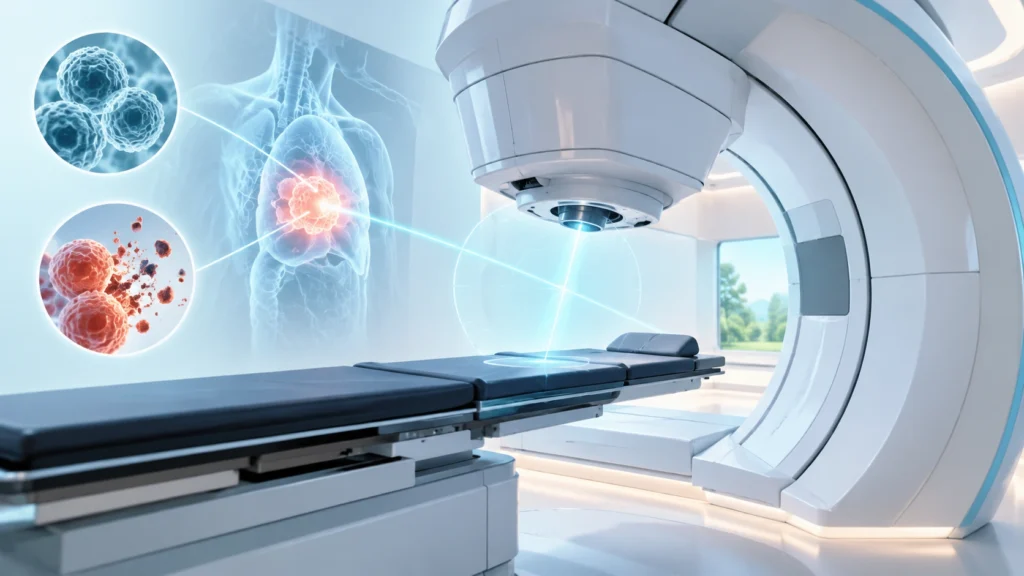
Proton beam therapy is a type of external beam radiation therapy that uses protons instead of X-rays to treat cancer. Protons are subatomic particles that have a unique physical property. They release most of their energy at a specific depth in the body, known as the Bragg peak. This means they can deliver a high dose of radiation to the tumor and then stop, with little or no exit dose beyond the target.
In conventional radiation therapy using X-rays, the beam passes through the body. It deposits radiation along the entire path, including before and after the tumor. This can expose healthy tissues to unnecessary radiation. Proton therapy reduces this exposure, which can be especially important for sensitive areas and for children.
Proton beam therapy is delivered using a large machine called a proton therapy system. The treatment is planned carefully using advanced imaging and computer modeling to ensure the protons reach the tumor precisely.
Proton beam therapy works by targeting the tumor with high-energy protons that damage the DNA of cancer cells. This damage prevents the cells from growing and dividing, leading to their death over time.
Key features of how it works
Why precision matters: Tumors near critical structures such as the brainstem, optic nerves, spinal cord, heart, or lungs require very precise radiation. Even small amounts of radiation to these areas can cause significant side effects. Proton therapy’s ability to limit exit dose makes it suitable for such cases.
Proton beam therapy offers several potential benefits compared to conventional radiation therapy.
Main benefits
Why these benefits matter: Reducing radiation to normal tissues can mean fewer problems such as fatigue, skin reactions, swallowing difficulty, lung irritation, heart exposure, or bowel symptoms. For children, it can reduce the impact on growth and development. For adults, it can lower the risk of late effects such as heart disease or secondary tumors.
Proton beam therapy is not needed for every cancer. It is most useful for certain tumor types and locations.
Common indications
When proton therapy may be preferred
Proton beam therapy involves several steps from evaluation to completion of treatment.
1. Initial evaluation
2. Treatment planning
3. Simulation session
4. Treatment sessions
5. During treatment
6. Completion and follow-up
Proton beam therapy generally has fewer side effects than conventional radiation, but side effects can still occur. They depend on the tumor location, dose, and individual factors.
Common side effects
Less common but important side effects
Why side effects happen: Radiation affects both cancer cells and some normal cells in the treatment area. Even with proton therapy, some healthy tissue receives low doses. The body’s response to radiation causes temporary inflammation and healing changes. Most side effects improve after treatment ends.
Recovery depends on the tumor type, treatment area, and overall health.
Short-term recovery
Long-term recovery
Rehabilitation and support
While proton therapy is generally safe, complications can occur in some cases.
Why complications happen: Radiation causes changes in tissues that may take months or years to fully manifest. Some tissues are more sensitive than others. The goal of proton therapy is to minimize these risks, but they cannot be eliminated completely.
Medical follow-up is essential during and after proton beam therapy.
Proper preparation helps ensure safe and effective treatment.
Proton beam therapy requires advanced technology, experienced specialists, and comprehensive supportive care. A hospital with a dedicated proton therapy center can provide high-quality treatment with careful planning and monitoring.
It depends on the tumor type and location. Proton therapy can reduce side effects and long-term risks for certain cancers, especially in children and tumors near critical structures. For other cases, conventional radiation may be equally effective.
Good candidates include children with cancer, patients with tumors near the brain, spine, eyes, heart, or lungs, and those who need re-irradiation. A radiation oncologist can assess suitability based on individual factors.
Treatment is usually given daily, five days a week, for several weeks. Each session lasts about fifteen to thirty minutes, with actual beam delivery taking only a few minutes.
No, proton therapy is not painful. The patient does not feel the protons. Some side effects such as fatigue or skin irritation may occur but are usually manageable.
Proton therapy can be curative for many cancers, especially when combined with surgery or chemotherapy. The goal depends on the tumor type, stage, and overall treatment plan.
Yes, side effects can occur but are often less severe than with conventional radiation. They depend on the treatment area and may include fatigue, skin changes, or temporary inflammation.
No, proton therapy requires specialized and expensive equipment. It is available only at select centers. Rama Hospital offers proton beam therapy with expert care and advanced technology.
Proton beam therapy is an advanced, precise form of radiation treatment that offers significant benefits for selected cancer patients. By reducing radiation to healthy tissues, it can lower side effects during treatment and long-term complications after treatment. It is especially valuable for tumors near critical structures and for children whose bodies are still developing.
The most important steps are proper evaluation, careful treatment planning, and expert delivery by a specialized team. For patients with brain tumors, spine tumors, pediatric cancers, head and neck cancers, or other complex cases, proton therapy may provide a safer and more effective option. With structured care and consistent follow-up, patients can achieve good outcomes and maintain quality of life.
Rama Hospital can help evaluate suitability for proton beam therapy, provide advanced treatment planning and delivery, and offer comprehensive supportive care throughout the cancer journey.

Radiation therapy using X-rays has long been used to treat these conditions.
No rows found.