Transurethral Resection of Bladder Tumor, commonly known as TURBT, is a surgical procedure used to remove tumors from the bladder. It is one of the most important treatments for bladder cancer, especially when the tumor is limited to the inner lining of the bladder. The procedure is done through the urethra, which means no external cut or incision is needed on the abdomen.
TURBT serves two main purposes. First, it removes the visible tumor from the bladder. Second, it allows the doctor to collect tissue samples for biopsy, which helps confirm whether the tumor is cancerous, how deep it has grown, and what further treatment may be needed. In many cases, Transurethral Resection of Bladder Tumor is both a diagnostic and therapeutic procedure at the same time.
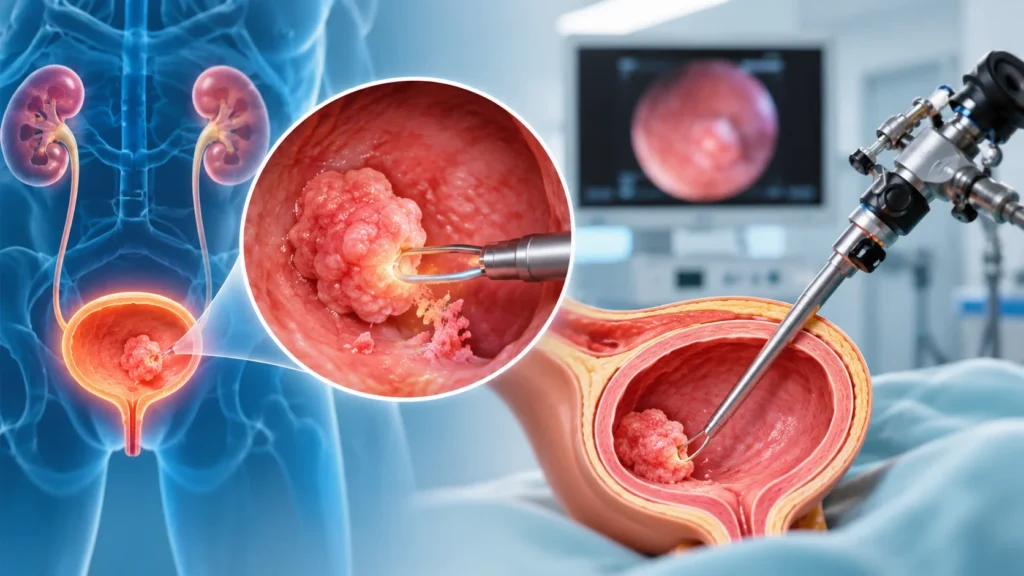
Transurethral Resection of Bladder Tumor is a minimally invasive surgical procedure used to remove tumors from the bladder. The word “transurethral” means through the urethra, which is the tube that carries urine out of the body. During the procedure, a thin instrument called a resectoscope is passed through the urethra into the bladder.
The resectoscope has a small camera and a wire loop that uses electrical energy to cut or burn away the tumor. The removed tissue is sent for biopsy to check whether it is cancerous and how deep it has grown into the bladder wall.
Transurethral Resection of Bladder Tumor is usually done under spinal or general anesthesia. It does not require any external incision, which means recovery is usually faster compared to open surgery. Most patients can go home within a day or two after the procedure.
Transurethral Resection of Bladder Tumor is done for several reasons depending on the patient’s condition.
Transurethral Resection of Bladder Tumor is often the first and most important step in managing bladder tumors. It not only removes the tumor but also provides critical information that guides the rest of the treatment plan. Without TURBT, it is difficult to know the exact nature and extent of the tumor.
Transurethral Resection of Bladder Tumor is recommended for patients who have a bladder tumor or suspicious growth in the bladder.
Transurethral Resection of Bladder Tumor is done in an operating room under anesthesia. The procedure usually takes between thirty minutes and two hours depending on the size and number of tumors.
Proper preparation helps ensure the procedure goes smoothly and safely.
Transurethral Resection of Bladder Tumor offers several benefits for patients with bladder tumors.
Transurethral Resection of Bladder Tumor is the standard first-line treatment for most bladder tumors because it is effective, minimally invasive, and provides both diagnosis and treatment in one procedure.
Recovery after TURBT is usually quick, but some care is needed in the first few days.
Transurethral Resection of Bladder Tumor is generally safe, but like any procedure, it has some risks.
Follow-up is very important after TURBT because bladder tumors can recur.
Bladder tumors have a tendency to recur, even after successful removal. Regular follow-up helps detect recurrence early and allows timely treatment.
Some simple steps can help recovery and reduce risk of recurrence.
TURBT requires expert urological care, advanced equipment, and careful follow-up. A hospital with experienced urologists and modern facilities can make a major difference in outcomes.
The procedure is done under anesthesia, so the patient does not feel pain during surgery. Mild burning or discomfort while urinating is common after the procedure and usually settles in a few days.
The procedure usually takes between thirty minutes and two hours depending on the size and number of tumors. Most patients can go home within a day or two.
Yes, TURBT is both a diagnostic and therapeutic procedure for bladder tumors. It removes the tumor and provides tissue for biopsy to confirm cancer and guide further treatment.
Yes, bladder tumors can recur even after successful removal. Regular follow-up with cystoscopy and urine tests is important to detect recurrence early.
Most patients recover within one to two weeks. Light activity can be resumed within a few days, but heavy lifting and strenuous activity should be avoided initially.
Common side effects include burning while urinating and blood in urine. Less common risks include infection, bleeding, or bladder perforation. Serious complications are rare with experienced care.
Depending on the biopsy report, further treatment such as chemotherapy or immunotherapy may be needed. The doctor will discuss the plan based on the stage and grade of the tumor.
TURBT is a key procedure for the diagnosis and treatment of bladder tumors. It is minimally invasive, effective, and provides important information that guides further care. Most patients recover quickly and can return to normal activities within a short time.
The most important steps are proper preparation, safe procedure, and regular follow-up. Since bladder tumors can recur, ongoing monitoring is essential. With the right care, most patients achieve good outcomes and maintain a good quality of life.
Rama Hospital can help evaluate bladder tumors, perform TURBT safely, and provide comprehensive follow-up care to ensure the best possible outcome for every patient.


Transurethral resection of bladder tumor (TURBT) is a procedure healthcare providers use to diagnose and treat bladder cancer.
No rows found.