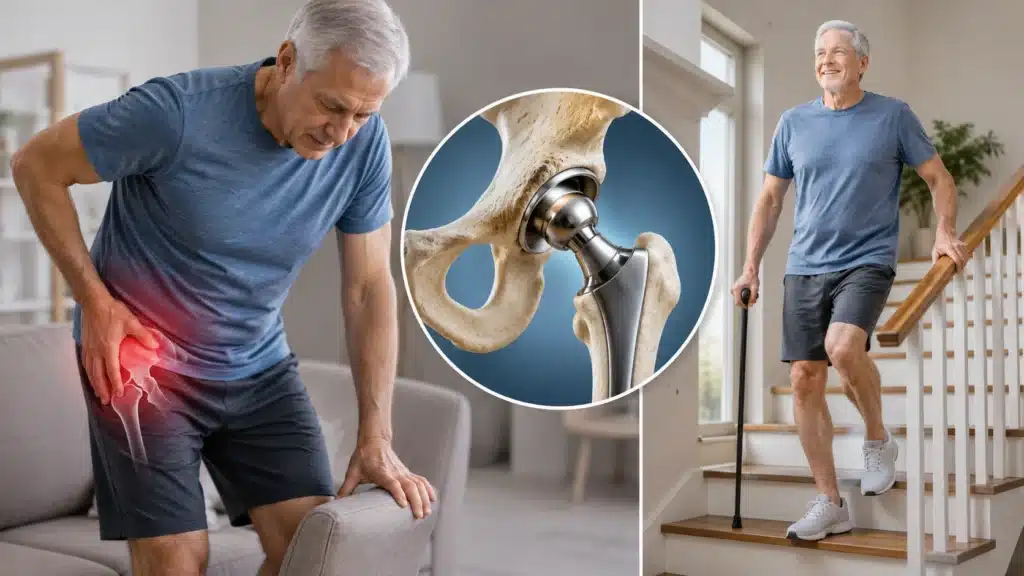
If you have been dealing with deep, grinding hip pain that makes it difficult to walk, climb stairs, put on your shoes, or even sleep comfortably and your doctor has started talking about hip replacement surgery, you are probably carrying a lot of questions along with that pain.
Hip replacement surgery is one of the most successful elective operations in the history of modern medicine. It has been performed millions of times around the world and consistently produces dramatic improvements in pain, mobility, and quality of life. Patients who had been largely immobile from hip pain describe it as giving them their lives back: the ability to walk, travel, play with their grandchildren, and sleep through the night without being woken by pain.
At the same time, it is a significant surgical procedure, and you deserve to understand it fully before making a decision.
Hip replacement surgery, medically known as total hip replacement or hip arthroplasty, is a procedure in which the damaged parts of the hip joint are removed and replaced with artificial components designed to replicate the smooth, pain-free movement of a healthy hip.
To understand why the surgery is needed, it helps to understand how the hip joint works.
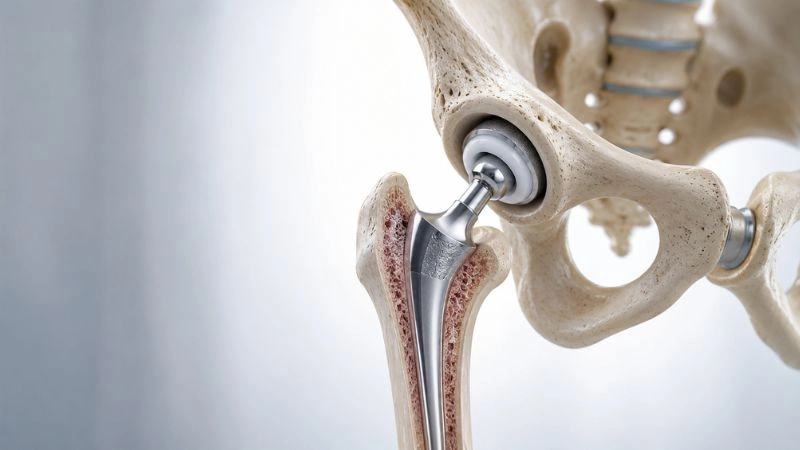
The hip is a ball-and-socket joint, one of the most stable and mobile joints in the human body. The ball is the rounded top of the thighbone (femur), called the hip ball joint or femoral head. The socket is a cup-shaped hollow in the pelvis called the acetabulum. Both surfaces are covered with articular cartilage, a smooth, slippery material that allows the ball to glide effortlessly in the socket through a full range of movement.
When this cartilage wears away, whether through arthritis, injury, or other conditions, the ball and socket begin to grind against each other. That is bone on bone. The pain is deep, constant, and relentless. No medication can restore cartilage that is gone. That is the point at which hip joint replacement becomes the most effective solution.
During total hip replacement surgery, the surgeon removes the damaged femoral head and replaces it with an artificial ball typically made of metal or ceramic fixed to a stem that is inserted into the thigh bone. The damaged socket is resurfaced with a metal cup lined with ceramic or highly durable plastic. Together, these components recreate the smooth ball-and-socket motion of a healthy hip without the pain.
The type of hip replacement surgery recommended depends on factors like your age, bone health, activity level, and the severity of hip joint damage. Today, advanced total hip replacement are available to help reduce pain, improve mobility, and help patients return to a more active and comfortable life.
The best type of hip replacement surgery depends on your individual condition. A proper evaluation helps doctors choose the safest and most effective option for long-term comfort and mobility.
Many people think hip replacement surgery is only needed because of old age, but that is not always true. Several conditions can slowly damage the hip joint over time, leading to severe pain, stiffness, and difficulty walking.
Understanding the cause of your hip problem is important because it helps doctors choose the right treatment and may also help protect the other hip joint in the future.
Early treatment of hip pain and joint problems can sometimes delay the need for hip replacement surgery. Staying active, maintaining healthy weight, and seeking timely medical care can help protect your joints for longer.
Your risk may be higher if:
Hip joint damage usually develops slowly over time. In the beginning, the symptoms may seem mild or easy to ignore. But recognizing the early warning signs can help you seek treatment before the condition becomes severe.
Early care may help reduce pain, improve movement, and sometimes delay the need for hip replacement surgery.
Do not ignore persistent hip pain or stiffness. Early treatment of hip joint problems may help slow joint damage and improve quality of life before hip replacement surgery becomes necessary.
As hip joint damage becomes more severe, the pain and stiffness start affecting everyday life. Simple activities like walking, sitting, climbing stairs, or even sleeping comfortably can become difficult.
At this stage, many people begin considering hip replacement surgery because medicines and therapy may no longer provide enough relief.
Persistent hip pain is not a normal part of aging. Early diagnosis and timely treatment can help improve mobility, reduce pain, and guide the right decision about hip replacement surgery.
Early treatment of hip joint problems can sometimes delay surgery and help maintain an active lifestyle for longer. In such cases, hip replacement surgery may become the most effective treatment to relieve pain, restore mobility, and improve overall quality of life. If:
Modern hip replacement surgery has improved greatly over the years. Today’s advanced techniques make surgery safer and more precise and help patients recover faster with less pain and smaller scars.
These newer approaches focus on improving movement, reducing recovery time, and helping patients return to daily life more comfortably.
Traditional hip replacement surgery required a large incision and more muscle cutting. Modern minimally invasive techniques use smaller cuts and aim to reduce damage to surrounding muscles and tissues.
Not every patient is suitable for this technique. Doctors decide based on body structure, bone condition, and joint damage. Possible benefits include the following:
In this advanced method, surgeons access the hip joint from the front side of the body instead of the back or side. This technique requires specialized training and may not be ideal for everyone.
Because muscles are disturbed less, patients may experience the following:
Robotic technology is now helping surgeons perform hip replacement surgery with greater accuracy. Better implant placement may improve long-term results and help the artificial hip last longer.
Advanced technology does not replace the surgeon; it supports the surgeon in delivering more accurate and personalized treatment. The best surgical approach depends on your age, bone health, lifestyle, and severity of hip joint damage.
Hearing the words “hip replacement surgery” can feel overwhelming at first. But understanding the procedure step-by-step often helps reduce fear and gives you a clearer idea of what to expect.
Modern total hip replacement surgery is a safe and commonly performed procedure designed to reduce pain, improve movement, and help patients return to daily life comfortably.
Before surgery, doctors perform a complete health check to make sure your body is ready for the procedure. Good preparation helps reduce complications and supports faster recovery after hip replacement surgery. This may include:
Patients may also be advised to:
Many patients also receive additional pain-control injections for better comfort after surgery. Hip replacement surgery is usually done under:
The goal is to create a stable, pain-free, and smooth-moving hip joint. The surgery usually takes around 1 to 2 hours. During the procedure:
Modern hip replacement implants are designed to be strong, durable, and safe for the body. These materials help the artificial hip joint move smoothly and last for many years. They are commonly made using:
Doctors may choose different ways to fix the implant to the bone. Modern hip replacement surgery is highly advanced and carefully planned. With proper treatment, rehabilitation, and follow-up care, many patients experience significant pain relief and improved mobility after surgery.
Cemented Hip Replacement: A special bone cement is used to hold the implant firmly in place. This is often preferred in older patients with weaker bones.
Uncemented Hip Replacement: The implant is designed so the natural bone gradually grows around it and holds it firmly over time. This is commonly used in younger and more active patients.
Recovering from hip replacement surgery is a gradual process, and every patient heals at their own pace. The good news is that most people notice a steady improvement in pain, movement, and daily activities as recovery progresses.
The main goal of recovery is simple: helping you walk comfortably again, move with confidence, and return to a better quality of life.
Soon after surgery, doctors and physiotherapists encourage gentle movement and walking with support.
Many patients are surprised at how quickly they can begin standing and moving again. This helps:
Pain is usually managed with a combination of medicines and physiotherapy support.
During your hospital stay, the medical team focuses on:
Simple activities like walking, sitting, dressing, and climbing stairs gradually become easier with time.
Once home, you may initially need:
Physiotherapy is one of the most important parts of recovery. Regular exercises can make a major difference in long-term recovery. It helps:
As healing improves, most patients slowly return to the following:
Recovery speed varies depending on:
Some mild pain, swelling, or stiffness after total hip replacement surgery is completely normal during recovery.
The discomfort usually improves gradually as healing continues. Doctors may recommend:
Many insurance plans cover hip replacement surgery when medically necessary. Always discuss the complete treatment plan and expected costs with your healthcare team beforehand. The hip replacement cost can vary depending on the following:
Recovery after hip replacement surgery is not about rushing; it is about healing safely and steadily. With proper care, physiotherapy, and follow-up support, most patients regain comfortable movement and enjoy a much more active life.
For many patients, hip replacement surgery feels life-changing. The constant pain that once made walking, sleeping, or even simple daily tasks difficult is finally reduced or gone.
Most people are able to return to a more active, comfortable, and independent life after recovery.
Regular movement actually helps keep the new hip joint strong and flexible. Once healing is complete, many patients comfortably return to the following:
Although modern hip replacement implants are strong and durable, some activities can increase wear on the joint over time. Low-impact exercise is generally the safest option for long-term joint health. Doctors usually advise caution with:
Living with a hip joint replacement becomes normal for most patients after recovery. A few practical things to remember:
Modern total hip replacement surgery is designed to help patients stay active and independent for many years. Many patients experience:
A successful hip replacement surgery is not just about replacing a joint; it is about helping you return to a more comfortable, active, and enjoyable life.
Modern hip replacement surgery is considered very safe and successful for most patients. Millions of people around the world undergo total hip replacement surgery every year with excellent results.
Still, like any major surgery, there are some possible risks and complications you should understand before making a decision.
The good news is that most complications are uncommon, and doctors take many precautions to prevent them.
While complications can happen, most patients recover successfully and experience major improvement in pain, movement, and quality of life after hip replacement surgery. Careful planning, experienced surgeons, physiotherapy, and proper follow-up greatly improve outcomes.
Modern hip replacement implants are designed to last for many years. But how well you care for your body after hip replacement surgery plays a big role in keeping the joint healthy and working smoothly long-term.
Small daily habits can make a big difference in protecting your new hip joint.
A successful hip replacement surgery is a long-term partnership between the patient and the healthcare team. Healthy habits, regular exercise, and proper follow-up care can help your new hip stay strong, stable, and pain-free for many years.
See an orthopedic doctor if you experience:
Modern hip implants are significantly more durable than earlier generations. Studies consistently show that over 80 to 90% of total hip replacement implants are still functioning well at 20 years after surgery. With ceramic bearing surfaces and advanced polyethylene liners, many implants last even longer. Maintaining a healthy weight and avoiding high-impact activities are the most important patient-controlled factors in implant longevity.
There is no single best age. The decision is based on symptom severity and quality of life impact, not age alone. Patients in their 50s with severe, disabling hip disease are appropriate candidates for hip joint replacement with modern implants. Older patients even into their 80s and beyond can safely undergo hip replacement surgery when their general health is adequately managed. Your surgeon will assess all relevant factors individually.
You are under anesthesia during the operation and feel nothing. Post-operative pain is real and expected, but modern pain management, including nerve blocks, spinal anesthesia, and multimodal medication, means most patients find it significantly more manageable than they anticipated. The entire purpose of the surgery is to eliminate the chronic hip pain that has been affecting your life, and in the vast majority of patients, it does exactly that.
Among the types of hip replacement surgical approaches, the posterior approach (from the back) is the most traditional and widely used. The anterior approach (from the front) is increasingly popular and may allow faster early recovery with fewer movement restrictions. The lateral approach (from the side) is also used in certain situations. Your surgeon’s training, experience, and your individual anatomy together determine which is most appropriate.
Yes, walking normally is the central goal of total hip replacement surgery. Most patients are walking with support on the day of surgery. The vast majority walk unaided and without a limp within 6 to 8 weeks. By 3 to 6 months, walking is typically comfortable, natural, and pain-free for the first time in years.
Yes. The metal components of your hip implant will trigger metal detectors. Carry a card from your surgeon confirming your implant details. Airport security staff deal with this regularly and will simply use a hand scanner instead. It is a minor practical matter, not a problem.
Most modern hip implants are MRI-compatible, but you must always inform the radiology team before any MRI scan that you have a hip joint replacement. They will check the specific implant details and adjust the scanning protocol accordingly. Never assume; always inform.
Total hip replacement replaces both the ball (femoral head) and the socket (acetabulum) with artificial components. Partial hip replacement (hemiarthroplasty) replaces only the femoral head, leaving the natural socket intact. Partial replacement is most commonly used after certain hip fractures in elderly patients where the socket is undamaged. For arthritis affecting the whole joint, total hip replacement surgery gives more durable, reliable results.


Hip arthritis and joint degeneration usually do not stop progressing. Over time, the pain, stiffness, and reduced mobility can begin affecting not only the hip joint but also your muscles, spine, knees, sleep, and overall quality of life.
For many people struggling with severe knee arthritis, knee replacement surgery feels like a second chance at life.
These numbers highlight a major shift in cardiovascular health. What was once rare is becoming alarmingly common.
Why the change? Does it mean the condition itself has changed? And most importantly, what does this mean for women living with PCOS?
Most people never think about their gallbladder until severe pain suddenly sends them to the emergency room.
No rows found.