Root canal treatment is one of the most common and effective dental procedures used to save a natural tooth that has become infected or severely damaged. Many people fear root canal because of myths and outdated information, but modern root canal therapy is usually no more uncomfortable than getting a filling. The main goal is to remove infection from inside the tooth, clean and shape the root canals, and then seal them to prevent future infection.
When the inner part of the tooth, called the pulp, becomes infected due to deep decay, repeated dental procedures, cracks, or trauma, it can cause severe pain, swelling, and eventually tooth loss if not treated. Root canal treatment removes the infected pulp, relieves pain, and allows the tooth to remain in place and function normally. Without this treatment, the only other option is often extraction of the tooth.
What is Root Canal Treatment?
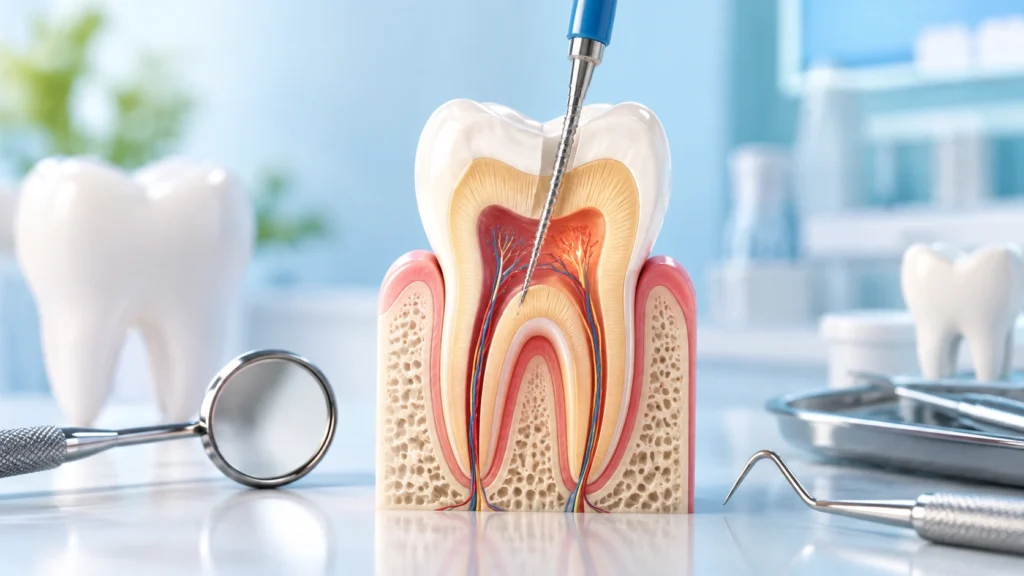
Root canal treatment, also called endodontic treatment, is a dental procedure that saves a tooth by removing infected or inflamed pulp from inside the tooth. The pulp is the soft tissue in the center of the tooth that contains nerves, blood vessels, and connective tissue. When this pulp becomes infected, it can cause pain, swelling, and damage to the surrounding bone.
During root canal treatment, the dentist or endodontist removes the infected pulp, cleans and disinfects the inside of the tooth, shapes the root canals, and then fills and seals them. After the procedure, the tooth is usually restored with a filling or crown to protect it and restore function.
Root canal treatment allows patients to keep their natural tooth, maintain proper chewing function, and avoid the need for extraction and replacement with implants or bridges. With proper care, a tooth that has had root canal treatment can last a lifetime.
Why Root Canal Treatment is Needed?
Root canal treatment is needed when the pulp inside the tooth becomes infected or inflamed and cannot heal on its own.
Common reasons include:
- Deep tooth decay that reaches the pulp.
- Repeated dental procedures on the same tooth.
- Cracks or chips in the tooth that expose the pulp.
- Trauma or injury to the tooth, even if there is no visible crack.
- Severe tooth wear from grinding or clenching.
- Advanced gum disease affecting the tooth root.
- Abscess or infection at the root tip.
What happens if treatment is delayed
- Infection can spread to surrounding bone and tissues.
- Pain and swelling may become severe.
- The tooth may become unsavable and require extraction.
- Adjacent teeth may be affected by shifting or extra load.
- Overall oral health and chewing ability may decline.
Signs and Symptoms That May Indicate Need for Root Canal
Not every toothache requires root canal, but certain signs suggest that the pulp may be infected.
Common symptoms
- Severe tooth pain, especially when chewing or applying pressure.
- Prolonged sensitivity to hot or cold temperatures.
- Pain that lingers after the hot or cold stimulus is removed.
- Swelling in the gum near the affected tooth.
- Tenderness in the gums or jaw.
- Darkening or discoloration of the tooth.
- A pimple-like bump on the gum that may drain pus.
- Bad taste or smell in the mouth due to infection.
- Fever or general discomfort in severe cases.
When to seek dental care
- Pain that does not improve with over-the-counter pain relief.
- Swelling in the face or jaw.
- Difficulty opening the mouth or swallowing.
- Signs of spreading infection such as fever or malaise.
- Trauma to a tooth followed by pain or discoloration.
The Root Canal Procedure Step by Step
Root canal treatment is usually completed in one or two visits, depending on the complexity of the tooth and the extent of infection.
Step 1: Examination and diagnosis
- The dentist examines the tooth and takes X-rays.
- Tests are done to check sensitivity and vitality of the pulp.
- The diagnosis is confirmed, and treatment options are explained.
- Local anesthesia is planned to ensure comfort during the procedure.
Step 2: Anesthesia and isolation
- Local anesthetic is given to numb the tooth and surrounding area.
- A rubber dam is placed around the tooth to keep it dry and clean.
- This ensures a sterile field and protects the patient from swallowing instruments or materials.
Step 3: Access opening
- A small opening is made in the crown of the tooth to reach the pulp chamber.
- The infected or inflamed pulp is carefully removed using special instruments.
- The root canals are located and accessed for cleaning and shaping.
Step 4: Cleaning and shaping
- The root canals are cleaned thoroughly to remove all infected tissue.
- The canals are shaped to allow proper filling and sealing.
- Disinfecting solutions are used to kill bacteria inside the canals.
- The length of each canal is measured to ensure complete treatment.
Step 5: Filling and sealing
- The cleaned canals are filled with a biocompatible material called gutta-percha.
- A sealing cement is used to close the canals and prevent re-infection.
- The access opening is sealed with a temporary or permanent filling.
- X-rays may be taken to confirm proper filling.
Step 6: Restoration
- After root canal, the tooth often needs a crown or filling for protection.
- A crown is recommended for back teeth or heavily damaged teeth.
- The restoration restores strength, function, and appearance.
- Final adjustments are made to ensure comfortable biting.
Benefits of Root Canal Treatment
Root canal treatment offers several important benefits compared to tooth extraction.
Key benefits
- Saves the natural tooth and maintains the smile.
- Relieves pain and eliminates infection.
- Restores normal chewing function.
- Prevents adjacent teeth from shifting or overloading.
- Maintains jawbone health by preserving the tooth root.
- Avoids the need for more complex replacement options.
- Cost-effective compared to extraction and implant or bridge.
- Long-lasting results with proper care and restoration.
Why saving the natural tooth matters
- Natural teeth provide the best chewing efficiency.
- They maintain proper alignment of surrounding teeth.
- They preserve the jawbone and facial structure.
- They support clear speech and confident smiling.
- They avoid the need for removable or fixed prosthetics.
Recovery After Root Canal Treatment
Recovery from root canal treatment is usually quick, with most patients resuming normal activities within a day or two.
Immediate recovery
- Numbness from anesthesia may last for a few hours.
- Mild discomfort or sensitivity is common for a few days.
- Over-the-counter pain relief is usually sufficient.
- Avoid chewing on the treated tooth until it is fully restored.
Short-term recovery
- Sensitivity to pressure or temperature may gradually improve.
- Gum tenderness around the tooth may resolve within a week.
- Follow-up visits are scheduled to monitor healing.
- Final restoration such as a crown is placed as advised.
Long-term recovery
- The tooth should feel normal once healing is complete.
- Regular dental check-ups ensure the tooth remains healthy.
- Good oral hygiene prevents future decay or infection.
- Any new symptoms should be evaluated promptly.
Aftercare Instructions for Root Canal Treated Teeth
Proper aftercare is essential to ensure the success of root canal treatment.
Immediate aftercare
- Do not eat until the numbness wears off to avoid biting your cheek or tongue.
- Avoid chewing hard or sticky foods on the treated tooth.
- Take prescribed or recommended pain relief as directed.
- Maintain gentle brushing and flossing around the area.
Ongoing aftercare
- Brush twice daily with fluoride toothpaste.
- Floss daily to remove plaque between teeth.
- Use an antibacterial mouthwash if recommended.
- Attend regular dental check-ups and cleanings.
- Report any persistent pain, swelling, or discomfort.
Restoration care
- Get the recommended crown or filling placed on time.
- Avoid delaying restoration, as the tooth is more fragile before it is fully protected.
- Follow instructions for care of the crown or filling.
- Avoid using the tooth to bite very hard objects.
Possible Complications and Risks
Root canal treatment is generally safe and successful, but like any medical procedure, there are potential risks.
Possible complications
- Persistent infection if canals are not fully cleaned or sealed.
- Fracture of the tooth before final restoration.
- Instrument breakage inside the canal in rare cases.
- Perforation of the root or surrounding tissue in complex cases.
- Failure of the treatment requiring retreatment or extraction.
- Allergic reaction to materials used, though very rare.
Why complications happen
- Complex root anatomy may make complete cleaning difficult.
- Delayed restoration may leave the tooth vulnerable.
- Severe infection may be harder to eliminate completely.
- Cracks in the tooth may extend below the gum line.
- Individual healing responses vary from patient to patient.
Managing complications
- Retreatment may be possible in some cases.
- Surgical endodontic procedures may be considered.
- Extraction and replacement may be needed if the tooth cannot be saved.
- Close follow-up ensures early detection of issues.
Alternatives to Root Canal Treatment
In some cases, root canal may not be the best option, or the patient may choose an alternative.
Main alternatives
- Tooth extraction followed by dental implant.
- Tooth extraction followed by a bridge.
- Tooth extraction followed by a removable partial denture.
- No treatment, which is generally not recommended due to risk of infection and pain.
Considerations for alternatives
- Extraction leads to loss of the natural tooth.
- Replacement options are often more expensive and time-consuming.
- Adjacent teeth may need to be prepared for a bridge.
- Implants require surgery and adequate bone support.
- Removable dentures may affect comfort and chewing efficiency.
Why root canal is often preferred
- Preserves the natural tooth structure.
- Less invasive than extraction and implant surgery.
- Maintains natural bite and alignment.
- Usually more cost-effective than replacement options.
- Faster recovery and return to normal function.
When Root Canal May Not Be Possible
There are situations where root canal treatment may not be feasible.
Situations where root canal may not be advised
- Severe fracture extending below the gum line.
- Insufficient tooth structure to support a restoration.
- Advanced gum disease with poor support.
- Vertical root fracture.
- Patient health conditions that contraindicate prolonged dental procedures.
- Patient preference for extraction and replacement.
What happens in these cases
- Extraction may be recommended.
- Discussion of replacement options such as implant, bridge, or denture.
- Planning for bone preservation if implant is considered later.
- Support for pain control and infection management.
Long-Term Care for Root Canal Treated Teeth
With proper care, a root canal treated tooth can last many years or even a lifetime.
Long-term care pointers
- Maintain excellent oral hygiene daily.
- Attend regular dental check-ups every six months or as advised.
- Get professional cleanings to remove plaque and tartar.
- Avoid habits that stress teeth, such as nail biting or chewing ice.
- Wear a night guard if you grind or clench your teeth.
- Report any new pain, swelling, or sensitivity promptly.
- Ensure the crown or filling remains intact and well-sealed.
Why long-term care matters
- Prevents new decay around the treated tooth.
- Detects any issues with the restoration early.
- Maintains gum health around the tooth.
- Ensures the tooth continues to function properly.
- Reduces the risk of future infection or failure.
Why Choose Rama Hospital for Root Canal Treatment?
Root canal treatment requires skill, precision, and modern equipment to ensure the best outcomes. A hospital-based dental department can provide comprehensive care with advanced diagnostics, sterilization, and specialist support.
- Expert endodontists and general dentists trained in root canal therapy.
- Digital X-rays and advanced imaging for accurate diagnosis.
- Modern rotary instruments for efficient and precise treatment.
- Strict sterilization and infection control protocols.
- Pain management and sedation options for anxious patients.
- Coordination with other dental specialties for complex cases.
Frequently Asked Questions (FAQs)
Is root canal treatment painful?
Modern root canal treatment is usually no more uncomfortable than getting a filling. Local anesthesia ensures the area is numb, and most patients feel relief from pain after the procedure.
How long does root canal treatment take?
Most root canal treatments are completed in one or two visits, depending on the tooth and infection. Each visit typically lasts between sixty to ninety minutes.
Can a tooth break after root canal?
A tooth can become more brittle after root canal if not properly restored. That is why a crown or strong filling is often recommended to protect the tooth from fracture.
How long does a root canal treated tooth last?
With proper care and restoration, a root canal treated tooth can last many years or even a lifetime. Regular dental check-ups and good oral hygiene are essential.
What happens if I delay root canal treatment?
Delaying treatment can lead to worsening infection, severe pain, swelling, and eventual tooth loss. Early treatment improves the chances of saving the tooth.
Are there alternatives to root canal?
The main alternative is tooth extraction followed by replacement with an implant, bridge, or denture. However, saving the natural tooth is usually the best option when possible.
Do I need a crown after root canal?
Most back teeth and heavily damaged teeth need a crown after root canal to protect them from fracture and restore full function. Front teeth may sometimes be restored with a filling.
Conclusion
Root canal treatment is a safe, effective, and tooth-saving procedure that relieves pain, eliminates infection, and preserves the natural tooth. It is often the best alternative to extraction and allows patients to maintain normal chewing function, smile confidently, and avoid more complex dental work. With modern techniques and proper aftercare, root canal treated teeth can last for many years.
The most important steps are timely diagnosis, expert treatment, proper restoration with a crown or filling, and consistent long-term care. For patients with severe tooth pain, swelling, sensitivity, or signs of infection, a dental evaluation can make a major difference in saving the tooth and preventing complications.
Rama Hospital can provide expert root canal treatment with advanced technology, experienced dentists, and comprehensive aftercare to ensure the best possible outcomes for every patient.