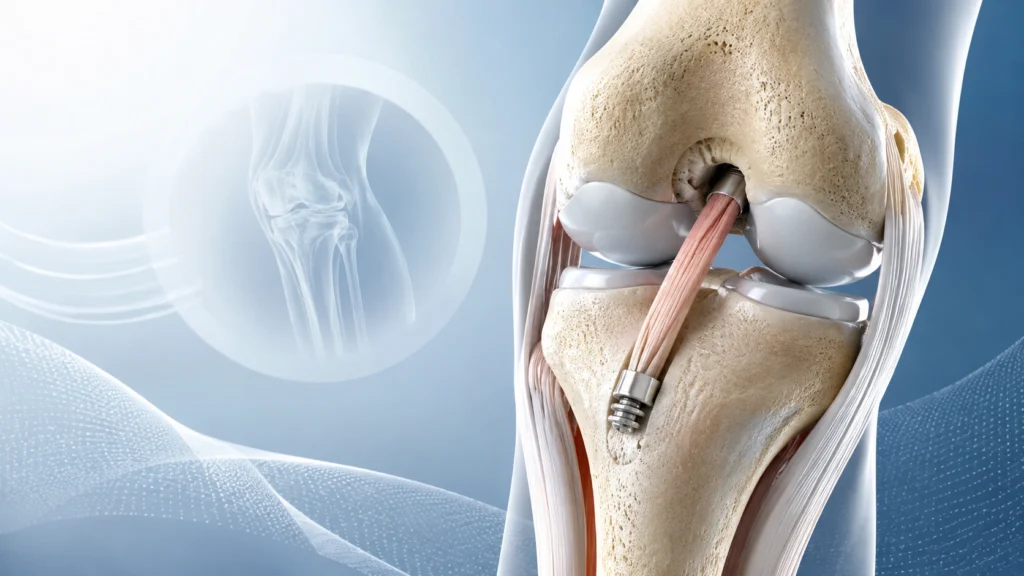
The knee is a complex joint that depends on bones, cartilage, meniscus, and multiple ligaments to move smoothly and stay stable. The PCL sits deep inside the knee and works together with the anterior cruciate ligament, or ACL, to control forward and backward movement of the tibia.
PCL injuries are less common than ACL injuries, but they can be just as serious. They often happen during high-impact trauma such as vehicle accidents, sports collisions, or direct blows to the front of the knee. Some patients develop chronic PCL deficiency over time if the injury is not treated properly.
PCL reconstruction is not needed for every patient with a PCL injury. Some mild or partial tears can be managed with physiotherapy, bracing, and activity modification. However, when the knee remains unstable, painful, or functionally weak, surgery may be recommended to restore stability and prevent long-term damage to the joint.
PCL reconstruction is a surgery in which the damaged posterior cruciate ligament is replaced with a graft. The graft may come from the patient’s own tissue, such as a hamstring or patellar tendon, or from a donor source, depending on the surgeon’s plan and the patient’s needs.
In simple terms, the surgeon rebuilds the ligament so that the knee can regain its normal stability. The torn or stretched ligament itself is usually not repaired directly because it often does not heal well on its own. Instead, a new strong band of tissue is placed in the correct position to act like a new PCL.
PCL reconstruction is also referred to as:
PCL reconstruction is not for every knee injury. It is usually recommended for patients with significant PCL damage, ongoing instability, or functional problems that do not improve with non-surgical care.
You may need PCL reconstruction if you have:
PCL surgery is often considered after a careful orthopedic evaluation, MRI review, and assessment of the patient’s lifestyle, activity level, and long-term goals.
PCL injuries often happen because of strong force applied to the front of the knee while the leg is bent. The ligament gets overstretched or torn when the shin bone is pushed backward too far.
Common causes include:
Some people are more at risk due to their activities. Athletes involved in contact sports, individuals in high-impact occupations, and people with previous knee injuries may have a higher chance of PCL damage.
PCL injuries may cause different symptoms depending on how severe the tear is and whether other structures in the knee are also affected.
Common symptoms include:
Some patients may ignore early symptoms because the pain is not as sharp as in ACL injuries. However, over time, untreated PCL deficiency can lead to worsening instability and joint damage.
Diagnosis begins with a detailed history and physical examination by an orthopedic specialist. The doctor will ask about the injury, symptoms, activity level, and how the knee feels during daily tasks.
Common diagnostic steps
| Test or Check | Why it is done | What it can show |
| Physical exam | Checks knee stability. | Laxity, tenderness, range of motion. |
| X-ray | Reviews bone structure. | Fractures, alignment issues, arthritis. |
| MRI | Assesses ligament and soft tissue. | PCL tear, associated injuries, cartilage damage. |
| Clinical history | Understands the injury pattern. | Type of trauma, symptom duration, activity impact. |
Not every PCL injury needs surgery. Mild or partial tears may be managed with conservative treatment, especially if the knee remains stable and functional.
Non-surgical options may include:
Non-surgical treatment is usually tried first in partial tears or low-grade injuries. If the knee continues to feel unstable or weak, surgery may then be considered.
PCL reconstruction is a specialized orthopedic surgery that requires careful planning and execution. The exact technique may vary depending on the surgeon, the graft choice, and the patient’s anatomy.
Step 1: Pre-surgical evaluation and planning
Step 2: Pre-operative preparation
Step 3: Anesthesia
Step 4: Graft selection and harvest
Step 5: Surgical access to the knee
Step 6: Tunnel creation and graft placement
Step 7: Joint stabilization and checking
Step 8: Closure and dressing
Step 9: Immediate recovery after surgery
Step 10: Recovery and rehabilitation
Step 11: Return to daily activity
| Topic | What it means |
| Purpose | Restore knee stability by replacing a damaged PCL. |
| Main use | Severe PCL tears, chronic instability, or failed non-surgical care. |
| Grafts used | Hamstring, patellar tendon, or allograft depending on the case. |
| Hospital stay | Usually a short stay or day-care procedure in many cases. |
| Recovery | Gradual recovery over months with physiotherapy and follow-up. |
| Feature | PCL Injury | ACL Injury |
| Common cause | Direct blow to front of bent knee. | Twisting or pivoting injury. |
| Main symptom | Pain at back of knee, instability. | Pain, swelling, “pop” sensation, instability. |
| Surgery frequency | Less common than ACL surgery. | Very common ligament surgery. |
| Recovery focus | Posterior stability and strength. | Anterior stability and rotational control. |
| Return to sports | Possible with proper rehab. | Possible with proper rehab. |
The choice of graft depends on the patient’s age, activity level, surgeon preference, and associated injuries.
| Graft Type | Source | Advantages |
| Hamstring autograft | Patient’s own hamstring tendon. | Good strength, less donor site pain. |
| Patellar tendon autograft | Patient’s own patellar tendon. | Strong fixation, good for some patients. |
| Allograft | Donor tissue. | No harvest needed, shorter surgery |
PCL reconstruction offers several important benefits for patients with significant PCL deficiency. For patients with chronic PCL deficiency, surgery can restore function that non-surgical care may not be able to achieve.
Benefits include:
PCL reconstruction is a major orthopedic surgery, so it carries risks that should be discussed clearly before the operation. The actual risk depends on age, overall health, severity of injury, and adherence to rehabilitation. That is why detailed pre-operative evaluation and post-operative guidance matter so much.
Possible risks include:
Recovery after PCL reconstruction is gradual and structured. Patients usually need several weeks to months of rehabilitation before returning to full activity.
Early recovery
Mid-term recovery
Long-term recovery
A good recovery depends on both surgery and aftercare. Patients who follow the medical plan closely generally do better.
Helpful tips include:
Rama Hospital provides expert orthopedic care for patients who need PCL reconstruction for knee instability and ligament injury. The focus is on accurate diagnosis, careful surgical planning, and structured rehabilitation.
You should see an orthopedic specialist if you have:
PCL reconstruction is a surgical procedure to replace a damaged posterior cruciate ligament in the knee using a graft. It helps restore stability and function in patients with significant PCL injury.
There is pain after surgery, but medicines and physiotherapy help manage it. Most patients find that discomfort improves gradually as healing progresses.
The surgery usually takes a few hours depending on the complexity and whether other structures are also repaired. Hospital stay and recovery time vary by case.
Recovery happens in stages and may take several months before full activity is allowed. Most patients need structured physiotherapy and gradual return to sports.
Walking is usually allowed with support such as crutches or a brace in the early phase. Full weight-bearing is increased gradually as advised by the surgeon.
Many patients use a knee brace for protection in the early recovery period. The duration depends on the surgeon’s protocol and the patient’s progress.
Some mild or partial PCL injuries can improve with non-surgical treatment such as physiotherapy and bracing. However, severe or chronic PCL deficiency often needs surgery for stability.
Common grafts include hamstring tendon, patellar tendon, or allograft. The choice depends on the patient’s age, activity level, and surgeon’s recommendation.
Yes, many patients can return to sports after proper rehabilitation and surgeon clearance. The timeline depends on the sport, healing progress, and strength recovery.
Untreated PCL deficiency can lead to ongoing instability, pain, difficulty with activities, and increased stress on other knee structures over time.
PCL reconstruction is an important treatment for patients with significant posterior cruciate ligament injuries that cause instability, pain, or functional limitation. While not every PCL injury requires surgery, severe tears and chronic PCL deficiency often benefit from reconstruction to restore knee stability and protect long-term joint health.
At Rama Hospital, PCL reconstruction is planned with detailed orthopedic evaluation, personalized surgical technique, and structured post-operative care. The goal is to help patients regain confidence in their knee, return to daily activities safely, and reduce the risk of future joint damage.

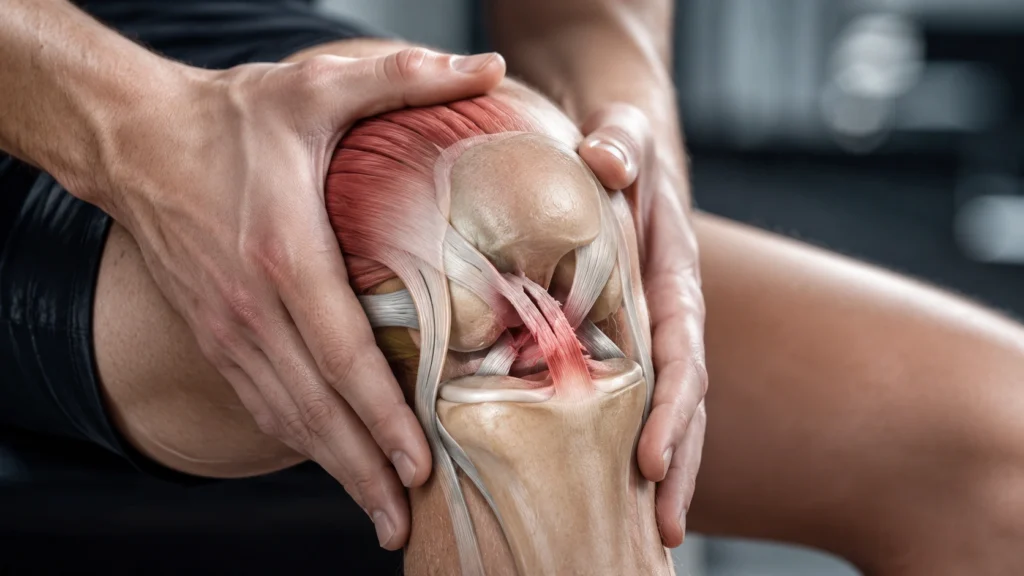
The posterior cruciate ligament (PCL) reconstruction is a technically demanding surgical procedure that requires optimal identification of both the femoral and the tibial anatomical footprints.
No rows found.