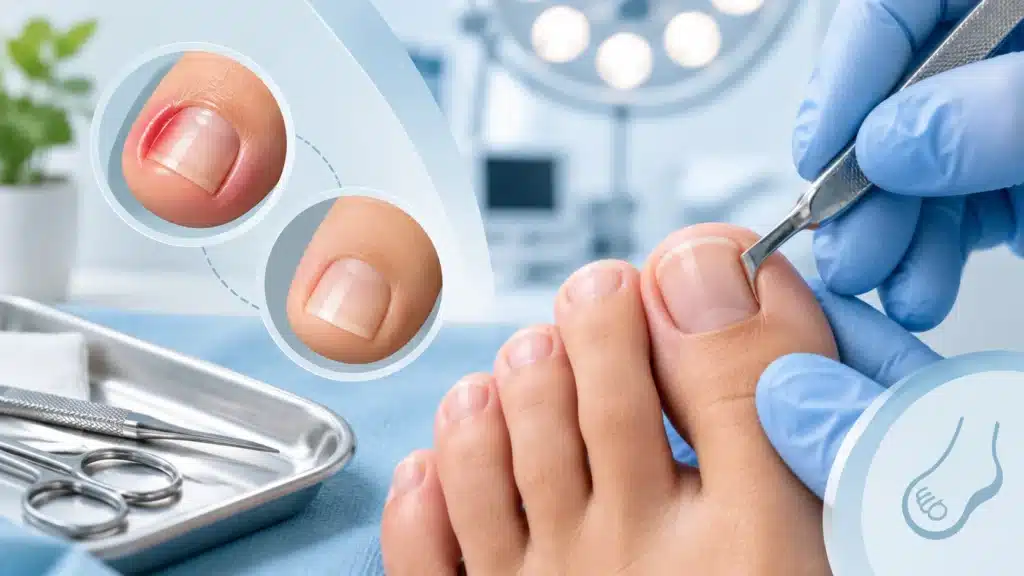
Nail surgery refers to a group of minor surgical procedures performed on the fingernails or toenails to treat painful, infected, deformed, or diseased nails. Many people think of nail problems as minor cosmetic issues, but in reality, conditions like ingrown toenails, chronic fungal infections, recurrent paronychia, or suspicious nail lesions can cause significant pain, infection, and disability if not treated properly.
Nail surgery is usually a day-care procedure done under local anesthesia. It is designed to relieve pain, remove diseased nail tissue, correct deformity, prevent recurrence, and in some cases, obtain tissue for diagnosis. Common procedures include partial or total nail avulsion, matrixectomy for ingrown nails, nail biopsy for suspicious lesions, drainage of nail bed abscess, and surgical management of severe fungal nail disease.
What is Nail Surgery?
Nail surgery is a minor surgical intervention on the nail unit, which includes the nail plate, nail bed, nail matrix, and surrounding skin. The goal is to treat conditions that have not responded to conservative measures or that are too severe for medicines alone.
These procedures are typically quick, safe, and done in an outpatient setting. Most patients can walk in and walk out the same day with immediate pain relief and a clear aftercare plan. Nail surgery is performed by dermatologists, podiatrists, or general surgeons with experience in nail disorders.
Types of Nail Surgery Procedures
Different nail problems require different surgical approaches.
Partial nail avulsion
- Removal of a portion of the nail plate, usually the edge that is digging into the skin.
- Commonly done for ingrown toenails.
- Provides immediate relief from pain and pressure.
- Often combined with matrixectomy to prevent regrowth of the problematic edge.
Total nail avulsion
- Removal of the entire nail plate.
- Done for severe fungal infection, traumatic nail damage, or extensive deformity.
- Allows the nail bed to heal and sometimes a new nail to grow.
- May be temporary or permanent depending on the goal.
Matrixectomy
- Destruction or removal of part of the nail matrix, the tissue that produces the nail.
- Prevents the removed portion of the nail from growing back.
- Used for recurrent ingrown nails.
- Can be chemical, surgical, or laser-assisted.
Nail biopsy
- Removal of a small piece of nail or nail bed tissue for laboratory examination.
- Done when there is a suspicious lesion, pigmented streak, or unclear diagnosis.
- Helps rule out conditions like nail melanoma or other tumors.
- Important for early diagnosis of serious conditions.
Incision and drainage
- Small cut to drain pus from an infected nail fold or nail bed.
- Done for acute paronychia or subungual abscess.
- Provides quick pain relief and reduces infection.
- Usually combined with antibiotics and warm soaks.
Nail bed repair
- Surgical repair of the nail bed after trauma or laceration.
- Helps prevent permanent nail deformity.
- Done under local anesthesia with fine sutures.
- Important for preserving normal nail growth after injury.
Surgical treatment of fungal nail disease
- Debridement or removal of thick, diseased nail to reduce fungal load.
- Often combined with topical or oral antifungal treatment.
- Improves penetration of medicines and reduces pain.
- Used when medicines alone are not effective.
Indications for Nail Surgery
Nail surgery is considered when conservative treatment fails or when the condition is severe.
Common indications include:
- Recurrent ingrown toenail causing pain and infection.
- Chronic paronychia with persistent swelling and discharge.
- Severe fungal nail infection with thick, painful, or deformed nails.
- Traumatic nail injury with nail bed laceration.
- Suspicious pigmented lesion or streak in the nail.
- Nail tumors or growths affecting the nail unit.
- Painful nail deformity interfering with walking or daily activities.
- Recurrent subungual hematoma or abscess.
- Nail problems in diabetic patients at risk of infection.
Why surgery may be preferred
- Provides faster and more definitive relief than medicines alone.
- Reduces risk of recurrent infection.
- Corrects structural problems that cause repeated issues.
- Allows tissue diagnosis when malignancy is suspected.
Pre-Procedure Preparation
Proper preparation helps ensure a smooth procedure and recovery.
Before the procedure
- Detailed evaluation by a dermatologist or podiatrist.
- Review of medical history, including diabetes, bleeding disorders, and medications.
- Discussion of the type of procedure, benefits, and risks.
- Informed consent after understanding the plan.
- Arrangement for someone to accompany the patient if needed.
- Wearing comfortable, open-toed footwear for toenail procedures.
Medication review
- Blood thinners may need to be adjusted under medical supervision.
- Diabetes medicines should be taken as advised.
- Antibiotics may be prescribed if there is active infection.
- Pain relief medicines may be given before or after the procedure.
On the day of procedure
- Wash the affected hand or foot thoroughly.
- Avoid applying nail polish or creams on the area.
- Arrive early to complete paperwork and preparation.
- Inform the team of any allergies, especially to local anesthetics.
How Nail Surgery is Performed?
Most nail surgeries are done under local anesthesia, meaning the area is numbed but the patient is awake.
Step-by-step overview
- The area is cleaned with an antiseptic solution.
- Local anesthetic is injected around the nail to numb the area.
- The chosen procedure is performed, such as partial nail removal, matrixectomy, or biopsy.
- Bleeding is controlled with pressure or cautery.
- A dressing is applied to protect the area.
- Aftercare instructions are explained before discharge.
Duration and setting
- Most procedures take 15 to 45 minutes.
- Done in a minor procedure room or day-care setup.
- No general anesthesia is needed in most cases.
- Patients can usually go home immediately after.
Recovery and Aftercare
Proper aftercare is essential for healing and preventing complications.
Immediate post-procedure care
- Keep the dressing clean and dry for the first 24 to 48 hours.
- Avoid soaking the hand or foot in water initially.
- Take prescribed pain relief and antibiotics as directed.
- Elevate the limb if there is swelling or throbbing.
- Wear loose, comfortable footwear for toenail procedures.
Wound care at home
- Change dressings as advised by the doctor.
- Clean the area gently with saline or prescribed solution.
- Apply topical antibiotic ointment if recommended.
- Avoid picking at scabs or removing sutures yourself.
- Keep the area protected from trauma and pressure.
Activity restrictions
- Avoid strenuous activity for a few days.
- Limit prolonged standing or walking after toenail surgery.
- Avoid tight shoes or pressure on the operated toe.
- Gradually resume normal activity as pain allows.
Follow-up
- A follow-up visit is usually scheduled within one to two weeks.
- Sutures are removed if non-dissolvable stitches were used.
- Healing is assessed and further advice is given.
- Additional treatment may be planned if needed.
Pain and Discomfort Management
Some discomfort is normal after nail surgery, but it can be managed effectively.
Pain control measures
- Oral pain relief medicines as prescribed.
- Cold packs around the area for short periods.
- Elevation to reduce throbbing and swelling.
- Avoiding pressure on the operated nail.
- Using cushioned footwear or protective padding.
What to expect
- Mild to moderate pain for the first few days.
- Gradual improvement over one to two weeks.
- Some tenderness may persist until full healing.
- Severe or worsening pain should be reported.
Possible Complications
Nail surgery is generally safe, but complications can occur.
Common complications
- Bleeding from the wound site.
- Infection if aftercare is not followed properly.
- Delayed healing in diabetic or immunocompromised patients.
- Temporary numbness around the nail.
- Regrowth of nail in an abnormal shape if matrix is not fully treated.
Less common complications
- Damage to the nail matrix leading to permanent nail change.
- Allergic reaction to anesthetic or dressing materials.
- Excessive scarring or granulation tissue.
- Need for repeat procedure in recurrent cases.
Why follow-up matters
- To detect and treat infection early.
- To ensure proper healing and nail regrowth.
- To address any concerns about pain or appearance.
- To plan further treatment if needed.
Special Considerations for High-Risk Patients
Some patients need extra care and monitoring.
Diabetic patients
- Higher risk of infection and delayed healing.
- Blood sugar control is important before and after surgery.
- Close monitoring of the wound is essential.
- Early reporting of any redness, swelling, or discharge.
Patients on blood thinners
- May have increased bleeding during or after the procedure.
- Medication adjustment should only be done under medical supervision.
- Pressure dressing and careful technique help control bleeding.
- Longer observation may be needed in some cases.
Elderly patients
- May have slower healing and fragile skin.
- Need careful footwear and pressure protection.
- Assistance with dressing changes may be required.
- Regular follow-up to ensure proper recovery.
Prevention of Nail Problems
Good nail care can reduce the need for surgery in the future.
Prevention pointers
- Trim nails straight across and not too short.
- Avoid rounding the corners of toenails.
- Wear properly fitted shoes with adequate toe space.
- Keep feet clean and dry, especially between toes.
- Treat fungal infections early to prevent thickening.
- Avoid trauma to nails during sports or activities.
- Do not ignore persistent nail pain or deformity.
- Seek medical advice for recurrent ingrown nails.
For people with diabetes
- Inspect feet and nails daily.
- Avoid self-cutting of thick or ingrown nails.
- Visit a specialist for regular foot and nail care.
- Report any wound, redness, or swelling immediately.
When Should You See a Doctor?
Medical evaluation is important for persistent or severe nail problems.
- Recurrent ingrown toenail with pain and swelling.
- Persistent nail infection not improving with medicines.
- Thick, deformed, or discolored nails suggestive of fungus.
- Nail injury with bleeding or deformity.
- Suspicious dark streak or lesion in the nail.
- Chronic pain around the nail fold.
- Nail problems along with diabetes or poor circulation.
Why Choose Rama Hospital for Nail Surgery?
Nail surgery may seem minor, but it requires precision, proper technique, and good aftercare to prevent recurrence and complications. A hospital-based dermatology or podiatry service ensures safe, standardized care with proper sterilization, experienced doctors, and structured follow-up.
- Accurate diagnosis of the underlying nail problem.
- Appropriate selection of procedure based on condition.
- Safe sterile environment for minor surgery.
- Proper pain control and anesthesia.
- Clear aftercare instructions and follow-up.
- Coordination with other specialties for high-risk patients.
Frequently Asked Questions (FAQs)
Is nail surgery painful?
The area is numbed with local anesthesia, so the procedure itself is not painful. Some discomfort is normal after the procedure, but it can be managed with pain relief medicines and proper aftercare.
How long does it take to recover?
Most patients feel significant relief within a few days. Complete healing usually takes one to three weeks, depending on the procedure and individual healing. Toenails may take months to grow back fully if removed.
Can ingrown toenail come back after surgery?
It can, but the risk is much lower when matrixectomy is performed. Partial removal alone may have a higher chance of recurrence. Proper nail trimming and footwear also help prevent recurrence.
Is nail surgery safe for diabetic patients?
Yes, but it requires extra care and monitoring. Blood sugar control, sterile technique, and close follow-up are essential to reduce infection risk and ensure proper healing.
Will the nail grow back after removal?
It depends on the procedure. If only the nail plate is removed, the nail usually grows back. If part of the matrix is destroyed, that portion may not regrow, which is intentional in recurrent ingrown nails.
How soon can I walk after toenail surgery?
Most patients can walk immediately, but it is advised to limit prolonged standing or walking for a few days. Comfortable, open-toed footwear helps reduce pressure on the operated toe.
When should I worry after nail surgery?
Contact your doctor if there is severe pain, increasing redness, pus discharge, fever, or delayed healing. Early evaluation helps prevent complications and ensures proper recovery.
Conclusion
Nail surgery is a safe and effective treatment for many painful and recurrent nail problems. It provides relief from ingrown nails, chronic infections, deformities, and suspicious lesions when medicines and conservative care are not enough. With proper technique, aftercare, and follow-up, most patients recover well and return to normal activities quickly.
The most important steps are timely evaluation, choosing the right procedure, and following aftercare instructions carefully. For patients with persistent nail pain, recurrent infection, or nail deformity, a specialist assessment can make a major difference in comfort and long-term nail health.
Rama Hospital can help evaluate nail conditions, perform appropriate nail surgery procedures, and provide comprehensive aftercare and prevention guidance for both simple and complex nail problems.