-

-

Femtosecond Laser‑assisted Cataract Surgery (FLACS)

Femtosecond Laser‑assisted Cataract Surgery (FLACS)

FLACS

Femtosecond Laser-Assisted Cataract Surgery (FLACS): Procedure, Benefits, Recovery, and Care

Cataract is one of the most common causes of vision loss in adults. It happens when the natural lens of the eye becomes cloudy, making vision blurry, dull, or hazy. The most effective treatment for cataract is surgery, where the cloudy lens is removed and replaced with a clear artificial lens. Over the years, cataract surgery has become very safe and highly successful.

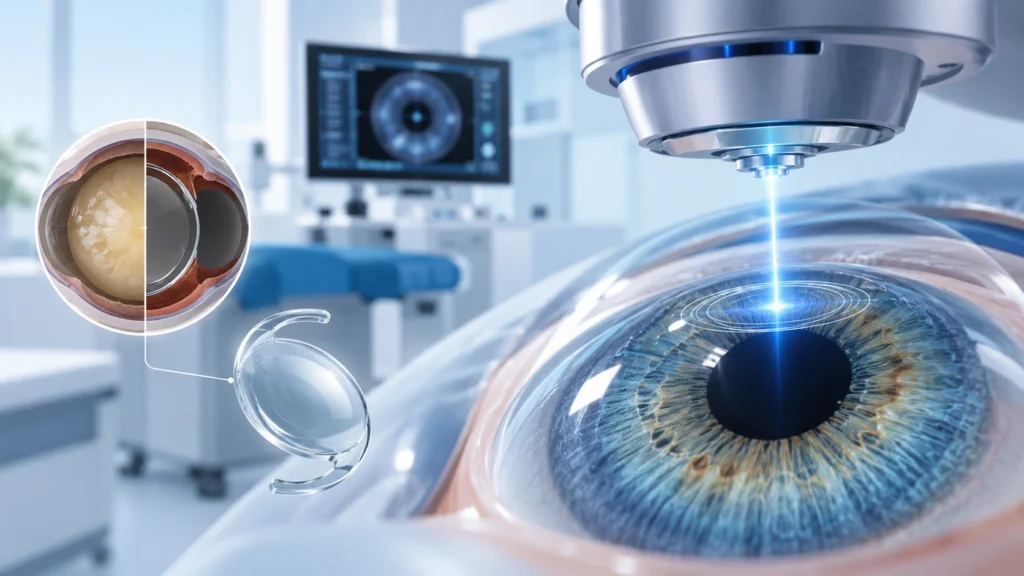
Femtosecond laser-assisted cataract surgery, often called FLACS, is an advanced form of cataract surgery that uses a precise laser for key steps of the procedure. Instead of using only manual instruments, the surgeon uses a computer-controlled femtosecond laser to make incisions, open the lens capsule, and soften the cataract. This allows for greater precision, consistency, and customization. Many patients choose FLACS for its potential benefits in accuracy, recovery, and visual outcomes.

What is Femtosecond Laser-Assisted Cataract Surgery?

Femtosecond laser-assisted cataract surgery is a modern technique that uses an ultrafast laser to perform important steps of cataract surgery. The laser creates extremely precise cuts in the cornea and lens capsule, and it can also soften the cataract before removal. This reduces the amount of manual work needed and allows for a more controlled procedure.

The laser works by delivering very short pulses of energy in femtoseconds, which are one quadrillionth of a second. These pulses create microscopic bubbles that separate tissue cleanly without heat damage. The surgeon then removes the softened cataract and places the new lens as in standard cataract surgery.

FLACS is not a different type of lens implant. It is a different way of performing the surgical steps. The final vision outcome still depends on the type of lens chosen, the health of the eye, and the skill of the surgeon.

How FLACS Differs from Conventional Cataract Surgery?

Conventional cataract surgery, often called phacoemulsification, is already very safe and effective. In this method, the surgeon makes incisions manually with a blade, opens the lens capsule with a instrument, and uses ultrasound to break up the cataract.

FLACS uses a laser for three main steps.

  • Creating corneal incisions with high precision.
  • Making a circular opening in the lens capsule called capsulotomy.
  • Softening or fragmenting the cataract before removal.

The rest of the surgery, including removal of the cataract and placement of the new lens, is similar to conventional surgery. The difference lies in how the initial steps are performed.

Potential advantages of laser assistance

  • More precise and centered capsulotomy.
  • More accurate incision placement and size.
  • Reduced ultrasound energy needed to remove the cataract.
  • Better control in complex cases.
  • Potential for faster visual recovery in some patients.

Benefits of FLACS

FLACS offers several potential benefits compared to conventional cataract surgery, especially for certain patients.

Precision and accuracy

  • Laser-created incisions are highly reproducible.
  • Capsulotomy size and position are very consistent.
  • Better alignment for premium lenses such as toric or multifocal lenses.
  • Improved predictability in refractive outcomes.

Gentler procedure

  • Less ultrasound energy is often needed.
  • Reduced stress on the cornea and inner eye structures.
  • Potentially less swelling after surgery.
  • Faster clarity of vision in some cases.

Customization

  • Incision size, shape, and location can be planned in advance.
  • Capsulotomy can be tailored to the chosen lens.
  • Astigmatism correction can be more precise.
  • Suitable for patients seeking reduced dependence on glasses.

Suitability for complex eyes

  • Helpful in dense or hard cataracts.
  • Useful in eyes with weak lens support.
  • Beneficial for patients with previous eye surgery.
  • Advantageous when precise lens positioning is critical.

Who is a Good Candidate for FLACS?

Not every patient needs FLACS, but many can benefit from it. The decision depends on eye health, cataract type, visual goals, and budget.

Ideal candidates may include:

  • Patients seeking the most precise surgery available.
  • Those choosing premium lenses for reduced glasses dependence.
  • People with significant astigmatism needing accurate correction.
  • Patients with dense or complex cataracts.
  • Individuals with previous eye surgery or unique eye anatomy.
  • Those who prefer advanced technology for peace of mind.

Cases where conventional surgery may be sufficient

The surgeon will evaluate the eye and discuss whether FLACS offers meaningful advantages for that specific patient.

  • Simple cataracts with no special visual goals.
  • Patients comfortable with using glasses after surgery.
  • Eyes with conditions that limit visual potential regardless of technique.
  • Situations where cost is a major concern.

Pre-Surgery Evaluation

Before FLACS, a detailed eye examination is essential to plan the surgery and choose the right lens.

Evaluation steps

  • Comprehensive eye examination by an ophthalmologist.
  • Measurement of vision and refraction.
  • Corneal topography to map the surface of the eye.
  • Biometry to calculate the power of the new lens.
  • Retinal examination to check the health of the back of the eye.
  • Assessment of dry eye, glaucoma, or other conditions.
  • Discussion of visual goals and lifestyle needs.

Preparation before surgery

  • Stop certain medicines if advised by the doctor.
  • Treat any eye infection or inflammation before surgery.
  • Arrange for someone to accompany you on surgery day.
  • Follow fasting instructions if sedation is planned.
  • Avoid eye makeup, creams, or perfumes on surgery day.
  • Wear comfortable clothing and bring sunglasses.

The FLACS Procedure Step by Step

FLACS is usually performed as a day care procedure under local anesthesia. The patient is awake but comfortable, and the eye is numbed with drops.

The entire procedure typically takes about ten to twenty minutes per eye. Most patients go home within a few hours.

Step 1: Laser planning

  • The eye is positioned under the femtosecond laser.
  • Imaging systems create a detailed map of the eye.
  • The surgeon plans incision size, location, and capsulotomy.
  • The laser settings are customized for the patient.

Step 2: Laser application

  • The laser creates corneal incisions.
  • A precise circular opening is made in the lens capsule.
  • The cataract is softened or fragmented by the laser.
  • This step takes only a few minutes.

Step 3: Cataract removal

  • The surgeon removes the softened cataract using gentle suction.
  • Less ultrasound energy is often needed compared to conventional surgery.
  • The inside of the lens capsule is cleaned.

Step 4: Lens implantation

  • A foldable artificial lens is inserted into the capsule.
  • The lens unfolds and is positioned carefully.
  • Incisions are usually self-sealing and do not need stitches.

Step 5: Completion

  • Antibiotic and anti-inflammatory drops are applied.
  • A protective shield may be placed over the eye.
  • The patient is moved to recovery for observation.

Types of Lenses Used with FLACS

FLACS can be combined with different types of intraocular lenses depending on the patient’s needs.

Monofocal lenses

  • Provide clear vision at one distance, usually far.
  • Glasses may still be needed for reading.
  • Most commonly used and cost-effective.

Toric lenses

  • Correct corneal astigmatism.
  • Reduce dependence on glasses for distance.
  • Require precise alignment, where laser can help.

Multifocal or extended depth of focus lenses

  • Provide vision at multiple distances.
  • Reduce need for glasses for both far and near.
  • May cause halos or glare in some patients.

Accommodating lenses

  • Move or change shape inside the eye.
  • Aim to provide more natural focusing.
  • Suitable for selected patients.

The choice of lens depends on eye health, lifestyle, budget, and expectations.

Recovery After FLACS

Recovery from FLACS is usually quick, but proper care is important for the best outcome.

Immediate post-surgery period

  • Vision may be blurry or hazy for the first day.
  • Mild discomfort, watering, or light sensitivity is common.
  • Rest with the head elevated and avoid rubbing the eye.
  • Use prescribed eye drops as instructed.

First week after surgery

  • Vision usually improves significantly within a few days.
  • Avoid heavy lifting, bending, or straining.
  • Do not swim or expose the eye to dirty water.
  • Wear sunglasses outdoors for comfort.
  • Attend the scheduled follow-up visit.

First month after surgery

  • Most patients achieve stable vision within a few weeks.
  • Continue eye drops as prescribed.
  • Avoid eye makeup for at least one to two weeks.
  • Report any sudden pain, redness, or vision drop immediately.

Long-term care

  • Attend all follow-up appointments.
  • Protect eyes from dust and bright sunlight.
  • Manage dry eye if present.
  • Monitor for any late complications.

Risks and Complications

FLACS is very safe, but like any surgery, it carries some risks. Patients should discuss their individual risk profile with the surgeon before deciding.

Common and usually mild issues

  • Temporary dryness or irritation.
  • Mild swelling of the cornea.
  • Fluctuating vision in the first few days.
  • Need for glasses for certain tasks.

Less common complications

  • Infection inside the eye.
  • Increased eye pressure.
  • Retinal swelling or detachment.
  • Lens displacement or incorrect power.
  • Persistent glare or halos.
  • Need for additional procedures.

Why risks are generally low

  • The procedure is minimally invasive.
  • Laser steps are highly controlled.
  • Surgeons are trained in advanced techniques.
  • Strict sterilization and safety protocols are followed.

Cost Considerations for FLACS

FLACS is generally more expensive than conventional cataract surgery due to the advanced technology involved.

Factors affecting cost

  • Type of hospital or eye care center.
  • Surgeon’s experience and reputation.
  • Type of intraocular lens chosen.
  • Use of additional technologies such as image guidance.
  • Pre-operative tests and post-operative care included.

Is FLACS worth the cost?

  • For patients seeking maximum precision, it may be worthwhile.
  • For those choosing premium lenses, laser assistance can add value.
  • For simple cataracts with basic lens needs, conventional surgery may be sufficient.
  • The decision should be based on individual goals and budget.

Many hospitals offer package options that include surgery, lens, tests, and follow-ups.

Why Choose Rama Hospital for FLACS?

Advanced cataract surgery requires experienced surgeons, modern equipment, and comprehensive care. A hospital setting provides safety, backup, and coordinated support.

  • Experienced ophthalmologists specializing in cataract and refractive surgery.
  • Access to advanced femtosecond laser technology.
  • Comprehensive pre-operative evaluation and planning.
  • Safe operating room with strict infection control.
  • Emergency support if any complication arises.
  • Structured post-operative follow-up and care.

Frequently Asked Questions (FAQs)

Is FLACS better than conventional cataract surgery?

FLACS offers greater precision and may reduce ultrasound energy, but both methods are very safe. The best choice depends on the patient’s eye condition, visual goals, and budget. For many routine cases, conventional surgery gives excellent results.

Does FLACS eliminate the need for glasses?

FLACS itself does not guarantee freedom from glasses. The need for glasses depends mainly on the type of lens implanted and the patient’s visual needs. Premium lenses combined with FLACS can reduce glasses dependence for many patients.

Is FLACS safe for elderly patients?

Yes, FLACS is generally safe for elderly patients if they are medically fit for surgery. Age alone is not a barrier. The surgeon will evaluate overall health, eye condition, and ability to cooperate during the procedure.

How long does the FLACS procedure take?

The laser part takes only a few minutes, and the entire surgery usually takes about ten to twenty minutes per eye. Most patients go home within a few hours on the same day.

Is FLACS painful?

The procedure is performed under local anesthesia with eye drops, so it is not painful. Patients may feel pressure or see lights during the laser step, but significant pain is uncommon. Mild discomfort may occur after surgery.

Can both eyes be done on the same day?

In many centers, eyes are operated on separate days to reduce risk and allow monitoring. Some surgeons may offer same-day bilateral surgery in selected cases. The decision depends on hospital protocol and patient factors.

What is the recovery time after FLACS?

Most patients notice significant visual improvement within a few days. Stable vision is usually achieved within a few weeks. Full recovery and final lens adjustment may take up to a month.

Conclusion

Femtosecond laser-assisted cataract surgery represents a significant advancement in cataract care. It combines the safety of modern cataract surgery with the precision of laser technology. For many patients, especially those seeking reduced dependence on glasses or those with complex eye conditions, FLACS offers meaningful benefits in accuracy, customization, and recovery.

The most important steps are proper evaluation, realistic expectations, appropriate lens selection, and careful post-operative care. For patients considering cataract surgery, discussing FLACS with an experienced ophthalmologist can help determine whether it is the right choice. With the right planning and support, FLACS can provide excellent visual outcomes and improved quality of life.

Rama Hospital can provide comprehensive FLACS services, from detailed pre-operative assessment to advanced laser surgery and structured follow-up care, ensuring safe and effective vision restoration for every patient.


Table of Contents

Explore More

What to Know More About Femtosecond Laser‑assisted Cataract Surgery (FLACS)

Find Ailments & Treatments

Search Ailments

Quickly find the information you need. Search our database to explore detailed information on various diseases and conditions, including symptoms, causes, and treatment options.

Search Treatments

Quickly find the information you need. Search our database to explore detailed information on various diseases and conditions, including symptoms, causes, and treatment options.

Recommended Reading

Video Playlist

No rows found.

Experience Healthcare the Rama Way

Emergency • OPD • Surgery • ICU Care

Need Help? Talk to our experts

Get a callback from our experts

Request a callback