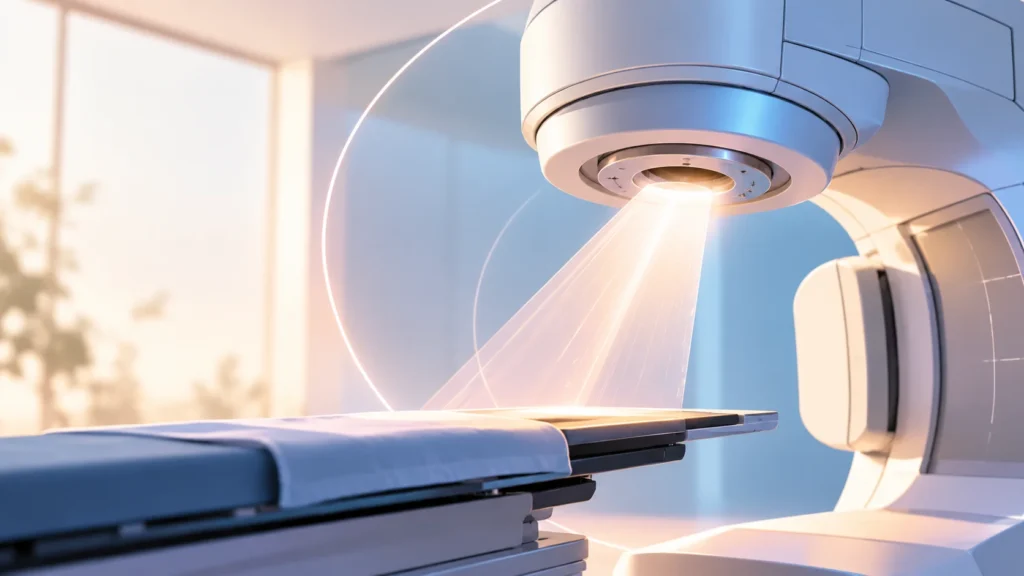
External Beam Radiation Therapy, often called EBRT, is one of the most common and important treatments used in cancer care. It uses high-energy beams, such as X-rays or protons, to target and destroy cancer cells from outside the body. The treatment is carefully planned so that the radiation reaches the tumor while protecting nearby healthy tissues as much as possible.
Many patients hear the word radiation and feel anxious. But modern EBRT is highly precise, painless, and usually given in short daily sessions over a few weeks. It can be used to cure cancer, control its growth, shrink tumors before surgery, or relieve symptoms such as pain, bleeding, or pressure caused by advanced disease.
What is External Beam Radiation Therapy?
External Beam Radiation Therapy is a type of cancer treatment in which radiation is delivered to the tumor from a machine outside the body. The most common machine used is called a linear accelerator. It produces high-energy X-rays or electrons that are shaped and directed toward the cancer area.
Unlike surgery, EBRT does not involve cuts or incisions. Unlike chemotherapy, it is usually focused on a specific part of the body rather than the whole body. The treatment itself is painless, similar to having an X-ray taken, but the dose is much higher and carefully planned.
EBRT can be used alone or together with other treatments such as surgery, chemotherapy, immunotherapy, or hormone therapy. The goal may be to cure the cancer, reduce the risk of it coming back, control its growth, or relieve symptoms in advanced stages.
How Does External Beam Radiation Work?
Radiation works by damaging the DNA inside cancer cells. DNA is the genetic material that tells cells how to grow and divide. When radiation damages this DNA, the cancer cells lose their ability to multiply and eventually die.
Key points about how EBRT works
- Radiation targets rapidly dividing cells, which is why it is effective against many cancers.
- Healthy cells can also be affected, but they usually recover better than cancer cells.
- Treatment is given in small daily doses called fractions to allow normal tissue to heal.
- Modern planning helps focus radiation on the tumor and spare nearby organs.
- The effect of radiation continues even after each session is over, as damaged cancer cells keep dying over time.
Why fractionation is important
Giving radiation in multiple small sessions instead of one large dose helps protect healthy tissue. It also allows doctors to treat a higher total dose safely. This approach improves tumor control while reducing side effects.
Why is External Beam Radiation Therapy Used?
EBRT is used for many different types of cancer and for different reasons depending on the patient’s condition.
Common reasons for using EBRT
- As a primary treatment to cure certain cancers.
- After surgery to kill any remaining cancer cells and reduce the risk of recurrence.
- Before surgery to shrink a tumor and make it easier to remove.
- Along with chemotherapy to improve treatment effectiveness.
- To control cancer growth when cure is not possible.
- To relieve symptoms such as pain, bleeding, pressure, or obstruction caused by tumors.
- To treat cancer that has spread to specific areas such as bone, brain, or spine.
Cancers commonly treated with EBRT
- Breast cancer.
- Lung cancer.
- Prostate cancer.
- Head and neck cancers.
- Brain tumors.
- Cervical and uterine cancers.
- Colorectal cancers.
- Bladder cancer.
- Skin cancers.
- Lymphoma in certain cases.
- Bone metastases.
- Spinal cord compression from cancer.
The exact role of EBRT depends on the type of cancer, its stage, location, and the patient’s overall health.
Types of External Beam Radiation Therapy
Modern radiation oncology offers several advanced forms of EBRT, each suited to different situations.
3D Conformal Radiation Therapy (3D-CRT)
- Uses detailed imaging to map the tumor in three dimensions.
- Shapes the radiation beams to match the tumor’s outline.
- Helps protect nearby healthy tissue better than older techniques.
Intensity-Modulated Radiation Therapy (IMRT)
- A more advanced form of 3D-CRT.
- Adjusts the intensity of radiation within each beam.
- Allows very precise dose delivery around complex tumor shapes.
- Often used for head and neck, prostate, brain, and some pelvic cancers.
Image-Guided Radiation Therapy (IGRT)
- Uses imaging just before or during treatment to confirm position.
- Adjusts for small movements of the tumor or body.
- Improves accuracy and reduces margin of error.
Stereotactic Body Radiation Therapy (SBRT) or Stereotactic Ablative Radiotherapy (SABR)
- Delivers very high doses in a small number of sessions.
- Used for small, well-defined tumors in the body.
- Commonly used for early lung cancer, liver tumors, adrenal tumors, and some spine metastases.
Stereotactic Radiosurgery (SRS)
- Highly focused radiation for small brain tumors or metastases.
- Often done in one to five sessions.
- Very precise, with steep dose fall-off to protect brain tissue.
Proton Beam Therapy
- Uses protons instead of X-rays.
- Can deposit energy more precisely at the tumor site.
- May reduce radiation to surrounding tissue in selected cases.
- Available only at specialized centers.
Palliative Radiation Therapy
- Given to relieve symptoms rather than cure cancer.
- Shorter courses with fewer sessions.
- Helps with pain, bleeding, obstruction, or pressure from tumors.
The External Beam Radiation Therapy Process
The EBRT journey involves several steps, from the first consultation to the end of treatment.
1. Initial consultation
- Meeting with a radiation oncologist.
- Review of medical history, scans, and pathology reports.
- Discussion of treatment goals, benefits, and possible side effects.
- Explanation of the planned approach and number of sessions.
2. Simulation and planning
- A special planning session called simulation.
- Custom molds, masks, or cushions may be made to help you stay in the same position.
- CT scan or other imaging is done in the treatment position.
- The radiation team maps the tumor and nearby organs.
- A personalized treatment plan is created by the radiation oncologist and medical physicists.
3. Treatment delivery
- Sessions are usually given once a day, five days a week.
- Each session may last from a few minutes to around twenty minutes.
- You lie on a treatment table in the planned position.
- The machine moves around you but does not touch you.
- You do not feel pain, heat, or electricity during treatment.
- Technologists monitor you through cameras and intercom.
4. Weekly check-ins
- Regular review with the radiation oncologist or nurse.
- Monitoring of side effects and overall well-being.
- Adjustment of supportive medicines if needed.
- Reinforcement of self-care and safety advice.
5. End of treatment and follow-up
- Final review after the last session.
- Instructions for ongoing self-care.
- Plan for follow-up visits and scans.
- Guidance on when to report new or worsening symptoms.
Preparation for External Beam Radiation Therapy
Good preparation helps make treatment smoother and safer.
Before starting treatment
- Share your complete medical history with the team.
- Inform about all medicines, supplements, and allergies.
- Tell the team if you are pregnant or planning pregnancy.
- Discuss any previous radiation treatment to the same area.
- Arrange transport if you feel weak or anxious about travel.
On the day of simulation
- Wear comfortable, loose clothing.
- Follow any fasting or bladder instructions if given.
- Be prepared to stay still for imaging.
- Ask questions if any step is unclear.
During the treatment course
- Try to arrive on time for each session.
- Keep the skin in the treatment area clean and dry.
- Avoid applying creams, perfumes, or powders unless approved.
- Wear soft, non-restrictive clothing over the treatment area.
- Maintain good hydration and nutrition as advised.
What to Expect During Each Session
Understanding what happens in the treatment room can reduce anxiety.
Before the session
- You may be asked to change into a gown.
- The technologists will help you onto the treatment table.
- Positioning devices such as masks or cushions will be used.
- Marks or small tattoos on the skin help align the machine.
During the session
- The machine may move around you and make humming sounds.
- You must lie still and breathe normally unless instructed otherwise.
- The team watches you through cameras and can hear you at all times.
- You can speak if you feel uncomfortable or need help.
- The actual radiation delivery is painless and usually brief.
After the session
- You can usually go home the same day.
- Most people can continue normal daily activities.
- Some fatigue may build up over the weeks of treatment.
- Follow any skin care or symptom management advice given.
Side Effects of External Beam Radiation Therapy
Side effects depend on the area being treated, the dose, and the patient’s overall health. Not everyone experiences the same side effects, and many are temporary.
General side effects
- Fatigue or tiredness.
- Skin changes in the treatment area such as redness, dryness, or darkening.
- Mild swelling or tenderness.
- Temporary hair loss only in the treated area.
- Reduced appetite.
Side effects based on treatment area
Head and neck radiation
- Sore throat or mouth.
- Dry mouth.
- Taste changes.
- Difficulty swallowing.
- Mouth ulcers.
- Dental sensitivity.
Chest radiation
- Cough.
- Shortness of breath.
- Chest discomfort.
- Esophagus irritation causing pain on swallowing.
Abdomen or pelvis radiation
- Nausea.
- Diarrhea or loose stools.
- Stomach cramps.
- Bladder irritation with frequent urination.
- Rectal discomfort.
Brain radiation
- Headache.
- Nausea.
- Fatigue.
- Temporary swelling in the brain.
- Memory or concentration changes in some cases.
Skin radiation
- Redness.
- Itching.
- Peeling.
- Tenderness.
- Darkening or lightening of skin over time.
Late or long-term side effects
- Stiffness or fibrosis in treated tissues.
- Permanent skin color changes.
- Reduced function of nearby organs in some cases.
- Rare risk of secondary cancers many years later.
- Fertility issues if pelvic area is treated.
Most side effects can be managed with medicines, diet, skin care, and rest. The radiation team will guide you on what to expect for your specific treatment area.
Managing Side Effects During Treatment
Good self-care and early reporting of symptoms can make a big difference.
General self-care tips
- Rest when needed but stay gently active.
- Drink enough fluids unless restricted.
- Eat small, frequent, nutritious meals.
- Avoid smoking and limit alcohol.
- Use only approved skin products on the treatment area.
- Protect the area from sun, heat, and friction.
For fatigue
- Plan your day with rest breaks.
- Prioritize important tasks.
- Ask for help with household work if needed.
- Gentle walking or stretching may help energy levels.
For skin care
- Wash the area gently with lukewarm water.
- Pat dry instead of rubbing.
- Use only mild, fragrance-free products if allowed.
- Avoid tight clothing over the area.
- Do not scratch or pick at peeling skin.
For digestive symptoms
- Follow diet advice for nausea, diarrhea, or constipation.
- Take prescribed medicines on time.
- Report severe or persistent symptoms early.
For mouth and throat symptoms
- Use prescribed mouthwashes.
- Avoid spicy, rough, or very hot foods.
- Maintain good oral hygiene.
- Stay hydrated with cool or room-temperature fluids.
Safety and Precautions
Many patients worry about radiation safety for themselves and their families.
Safety points for patients
- EBRT does not make you radioactive.
- You can safely be around family, children, and pregnant women.
- You do not need special isolation at home.
- Follow instructions about skin care and activity.
- Keep all follow-up appointments.
Precautions during treatment
- Inform the team if you think you might be pregnant.
- Use contraception during treatment if advised.
- Do not apply any new creams or medicines to the treatment area without approval.
- Report any severe or unexpected symptoms immediately.
Life During and After External Beam Radiation Therapy
Most patients can continue many normal activities during EBRT, but some adjustments may be needed.
During treatment
- Many people continue working part-time or full-time.
- Some need to reduce workload due to fatigue.
- Light exercise and walking are usually encouraged.
- Emotional support from family, friends, or counselors can help.
After treatment
- Fatigue may take weeks to improve.
- Skin changes gradually settle but may leave some color change.
- Regular follow-up visits and scans are important.
- Report any new or persistent symptoms to your doctor.
- Long-term health monitoring may be advised depending on the treatment area.
Emotional and psychological support
- Anxiety and fear are common at the start of treatment.
- Support groups, counseling, or spiritual care may help.
- Open communication with the medical team reduces uncertainty.
- Family involvement improves coping and adherence.
Why Choose Rama Hospital for External Beam Radiation Therapy?
Radiation therapy requires advanced technology, experienced specialists, and strong supportive care. A hospital-based program ensures safety, precision, and comprehensive management.
- Experienced radiation oncology team.
- Modern linear accelerators and planning systems.
- Advanced techniques such as IMRT, IGRT, and stereotactic therapy where appropriate.
- Personalized treatment planning for each patient.
- Strong supportive care for side effects and nutrition.
- Coordination with surgery, medical oncology, and other specialties.
- Patient education and counseling throughout the journey.
Frequently Asked Questions (FAQs)
Is radiation therapy painful?
No, the treatment itself is not painful. You may feel some discomfort from lying in the same position or from side effects later, but the radiation beams do not cause pain, heat, or shock during the session.
How long does a course of EBRT last?
The duration depends on the cancer type and treatment goal. It can range from a single session to several weeks of daily treatment. Your radiation oncologist will explain the planned number of sessions for your case.
Will I become radioactive after treatment?
No, External Beam Radiation Therapy does not make you radioactive. You can safely interact with family, children, and pregnant women without any risk of exposing them to radiation.
Can I work during radiation therapy?
Many patients can continue working, at least part-time, during treatment. However, fatigue and side effects may require some adjustment. Your doctor can guide you based on your energy levels and treatment schedule.
What are the common side effects of EBRT?
Common side effects include fatigue, skin changes in the treatment area, and symptoms related to the treated body part such as sore throat, diarrhea, or cough. Most side effects are temporary and can be managed with medicines and self-care.
Can radiation therapy cure cancer?
In some cancers, EBRT can be curative, either alone or with other treatments. In other cases, it is used to control cancer growth or relieve symptoms. The goal depends on the cancer type, stage, and overall treatment plan.
Is radiation therapy safe?
Yes, when planned and delivered by a trained team, EBRT is safe and effective. Modern techniques help focus radiation on the tumor and reduce exposure to healthy tissues. Regular monitoring ensures any side effects are managed early.
Conclusion
External Beam Radiation Therapy is a cornerstone of modern cancer treatment. It offers a powerful way to target tumors with precision while sparing as much healthy tissue as possible. For many patients, it plays a key role in curing cancer, preventing recurrence, or improving quality of life by controlling symptoms.
Although the idea of radiation can feel intimidating, most patients tolerate EBRT well with the support of their care team. Side effects are common but usually manageable, and many improve after treatment ends. The most important steps are understanding the plan, following advice on self-care, and maintaining open communication with the medical team.
Rama Hospital can provide comprehensive External Beam Radiation Therapy with advanced technology, experienced specialists, and strong supportive care. The goal is not only to treat cancer effectively but also to support patients and families through every step of the journey.