Endovenous Laser Ablation, commonly called EVLA or EVLT, is a modern, minimally invasive treatment for varicose veins. It uses laser energy to close off damaged veins in the legs, allowing blood to flow through healthier veins instead. This procedure has largely replaced traditional vein surgery for many patients because it is less painful, requires no large incisions, and allows faster recovery.
Varicose veins are swollen, twisted veins that can cause pain, heaviness, swelling, itching, and cosmetic concerns. They happen when the valves inside veins become weak and blood flows backward, pooling in the legs. Over time, this can lead to skin changes, ulcers, and significant discomfort. EVLA offers a safe and effective solution for patients who want lasting relief with minimal downtime.
What is Endovenous Laser Ablation?
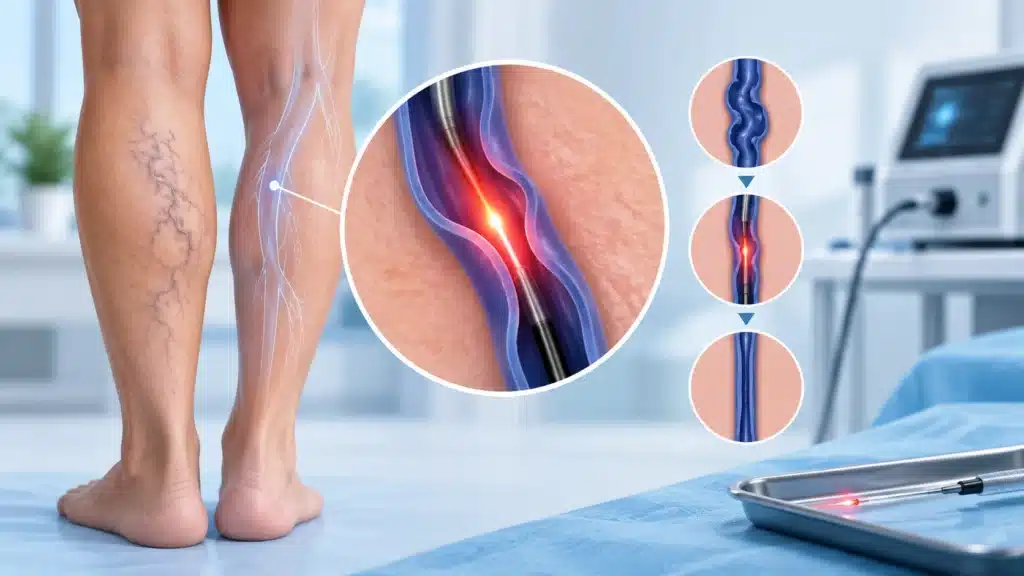
Endovenous Laser Ablation is a minimally invasive procedure that uses laser energy to treat varicose veins. The term endovenous means inside the vein. During the procedure, a thin laser fiber is inserted into the affected vein through a small puncture in the skin. Laser energy is then delivered to the vein wall, causing it to heat up, collapse, and seal shut.
Once the vein is closed, blood naturally reroutes through healthier veins in the leg. The treated vein is gradually absorbed by the body over time. This improves circulation, reduces symptoms, and improves the appearance of the legs.
EVLA is performed under local anesthesia, meaning the patient is awake but the area is numbed. It is usually done as a day care procedure, and most patients can go home the same day. The entire process typically takes about 30 to 60 minutes per leg, depending on the number and size of veins being treated.
How Does EVLA Work?
EVLA works by using controlled laser energy to damage the inner lining of the diseased vein. This causes the vein wall to shrink and close. The body then naturally absorbs the closed vein over weeks to months.
Key steps in how EVLA works
- A small puncture is made in the skin, usually near the knee or ankle.
- A thin catheter with a laser fiber is guided into the varicose vein using ultrasound.
- Local anesthesia is injected around the vein to numb the area and protect surrounding tissue.
- Laser energy is delivered as the catheter is slowly pulled back.
- The heat from the laser seals the vein shut.
- Blood flow is redirected to healthy veins.
- The treated vein gradually fades and is absorbed by the body.
Why laser energy is effective
Laser energy provides precise, controlled heat that targets only the diseased vein. It causes immediate closure of the vein and prevents blood from pooling. This reduces pressure in the leg veins and improves overall circulation. The surrounding healthy veins are not affected and continue to function normally.
Who is a Candidate for EVLA?
Not everyone with varicose veins needs EVLA, but many patients benefit from it. A vascular specialist will evaluate the veins using ultrasound to determine if EVLA is suitable.
Ideal candidates include:
- Patients with symptomatic varicose veins causing pain, heaviness, or swelling.
- People with visible bulging veins in the legs.
- Patients with skin changes or discoloration due to vein disease.
- Individuals who have tried conservative treatments without sufficient relief.
- People who want a minimally invasive option with quick recovery.
- Patients with ultrasound-confirmed vein reflux or valve dysfunction.
- Adults in good general health who can walk after the procedure.
Patients who may not be suitable
- Pregnant or breastfeeding women, as treatment is usually postponed.
- Patients with severe arterial disease or poor circulation.
- People with active infection or blood clotting disorders.
- Patients who cannot walk after the procedure.
- Individuals with very small or superficial veins that may need different treatment.
Benefits of Endovenous Laser Ablation
EVLA offers many advantages over traditional vein surgery and other treatments.
Key benefits include:
- Minimally invasive with no large incisions.
- Performed under local anesthesia, avoiding general anesthesia risks.
- Short procedure time, usually 30 to 60 minutes.
- Day care procedure with same-day discharge.
- Minimal pain and discomfort during and after treatment.
- Faster recovery and return to normal activities.
- High success rate with long-lasting results.
- Improved circulation and reduced leg symptoms.
- Better cosmetic appearance of the legs.
- Low risk of complications when performed by experienced specialists.
- Can be combined with other vein treatments if needed.
- No visible scarring in most cases.
Preparation for EVLA Procedure
Proper preparation helps ensure a smooth procedure and recovery.
Pre-procedure steps
- Consultation with a vascular specialist.
- Ultrasound mapping of leg veins to plan treatment.
- Review of medical history, medicines, and allergies.
- Blood tests or other investigations if needed.
- Instructions on which medicines to continue or stop.
- Advice on fasting if sedation is planned.
- Arrangement for someone to accompany the patient home.
- Wearing loose, comfortable clothing on the day of procedure.
What to bring on the day
- Comfortable walking shoes.
- Loose pants or skirt for easy access to legs.
- Compression stockings if prescribed.
- List of current medicines and allergies.
- Insurance or identification documents.
EVLA Procedure Steps
The procedure is performed in a specialized procedure room or operating theater with ultrasound guidance.
Step-by-step procedure
- The patient lies on the procedure table with the leg exposed.
- Ultrasound is used to mark the vein to be treated.
- The skin is cleaned and numbed with local anesthesia.
- A small puncture is made in the skin using a needle.
- A thin catheter with laser fiber is inserted into the vein.
- Ultrasound confirms correct placement of the catheter.
- Additional local anesthesia is injected around the vein for comfort and protection.
- Laser energy is activated as the catheter is slowly withdrawn.
- The vein seals shut as the laser moves along its length.
- The catheter is removed and a small bandage is applied.
- Compression stockings are placed on the leg.
- The patient is asked to walk for a few minutes to ensure good circulation.
Duration and anesthesia
- The procedure typically takes 30 to 60 minutes per leg.
- Local anesthesia is used, so the patient is awake but comfortable.
- Some patients may receive mild sedation if needed.
- No stitches are required in most cases.
Recovery After EVLA
Recovery is usually quick, and most patients resume normal activities within a few days.
Immediate post-procedure care
- Walking is encouraged immediately after the procedure.
- Compression stockings are worn continuously for the first 24 to 48 hours.
- Mild discomfort, bruising, or tightness in the treated area is normal.
- Pain relief medicines may be prescribed if needed.
- Avoid heavy lifting or strenuous exercise for the first week.
- Keep the leg elevated when resting to reduce swelling.
First week recovery
- Continue wearing compression stockings as advised, usually for 1 to 2 weeks.
- Walk daily to promote circulation and healing.
- Avoid hot baths, saunas, or swimming pools for the first week.
- Showering is usually allowed after 24 hours.
- Small bruises or lumps along the treated vein may appear and resolve over time.
- Most patients can return to work within 2 to 5 days, depending on job type.
Long-term recovery
- Full healing and vein absorption take several weeks to months.
- Symptoms like heaviness and swelling improve gradually.
- Follow-up ultrasound may be done to confirm vein closure.
- Additional treatments may be planned for remaining veins if needed.
- Long-term use of compression stockings may be advised in some cases.
Aftercare Instructions
Proper aftercare is important for best results and to prevent complications.
Important aftercare pointers
- Wear compression stockings as prescribed.
- Walk at least 30 minutes every day.
- Avoid standing or sitting for long periods without movement.
- Elevate legs when resting to reduce swelling.
- Take prescribed medicines on time.
- Keep the puncture site clean and dry.
- Avoid direct sun exposure on treated areas to prevent pigmentation.
- Attend all follow-up appointments.
- Report any unusual symptoms such as severe pain, swelling, or redness.
- Maintain a healthy weight to reduce vein pressure.
Activities to avoid initially
- Heavy lifting or intense exercise for the first week.
- Hot baths, saunas, or steam rooms for 7 to 10 days.
- Long flights or car rides without walking breaks in the first week.
- Scratching or rubbing the treated area.
Possible Risks and Complications
EVLA is generally safe, but like any medical procedure, it carries some risks.
Common and mild side effects
- Bruising along the treated vein.
- Mild pain or discomfort.
- Tightness or pulling sensation in the leg.
- Temporary numbness or tingling.
- Small lumps or hardness along the vein path.
- Skin discoloration that fades over time.
Rare but serious complications
- Infection at the puncture site.
- Blood clot in the deep veins (DVT).
- Skin burns or nerve injury.
- Excessive bleeding.
- Allergic reaction to anesthesia or materials.
- Recurrence of varicose veins over time.
Why complications are uncommon
EVLA is performed under ultrasound guidance, which allows precise targeting of the vein. Local anesthesia protects surrounding tissue, and the procedure is minimally invasive. Experienced vascular specialists further reduce the risk of complications.
When to Seek Medical Attention?
Most patients recover smoothly, but some symptoms need prompt medical evaluation.
Contact your doctor if you have:
- Severe or worsening pain in the leg.
- Significant swelling or redness.
- Fever or chills.
- Pus or discharge from the puncture site.
- Shortness of breath or chest pain.
- Sudden increase in leg size or warmth.
- Numbness or weakness that does not improve.
Seek emergency care if:
- You develop sudden chest pain or difficulty breathing.
- The leg becomes very swollen, painful, and warm.
- You faint or feel severely unwell.
- There is uncontrolled bleeding from the puncture site.
Why Choose Rama Hospital for EVLA Treatment?
Endovenous Laser Ablation requires specialized equipment, ultrasound guidance, and experienced vascular specialists. A hospital-based vascular clinic offers comprehensive care with advanced technology and safety standards.
- Expert evaluation by vascular surgeons and specialists.
- Advanced ultrasound and laser equipment.
- Sterile procedure rooms with strict safety protocols.
- Comprehensive pre- and post-procedure care.
- Ability to manage any complications if they arise.
- Coordinated care for patients with other medical conditions.
- Patient education and long-term follow-up.
Frequently Asked Questions (FAQs)
Is EVLA painful?
Most patients experience minimal discomfort. Local anesthesia numbs the area during the procedure. Some mild pain, bruising, or tightness may occur afterward but usually resolves within a few days.
How long does the procedure take?
The procedure typically takes 30 to 60 minutes per leg. It is done as a day care procedure, and patients can go home the same day after a short observation period.
Will I need to take time off work?
Most patients return to work within 2 to 5 days, depending on the nature of their job. Sedentary jobs may allow earlier return, while physically demanding jobs may require a week of rest.
Do I need to wear compression stockings?
Yes, compression stockings are an important part of recovery. They are usually worn continuously for the first 24 to 48 hours, then during the day for 1 to 2 weeks as advised by the doctor.
Can varicose veins come back after EVLA?
Treated veins do not reopen, but new varicose veins can develop over time in other areas. Maintaining a healthy weight, staying active, and wearing compression stockings when advised can reduce this risk.
Is EVLA better than surgery?
For many patients, EVLA is preferred because it is less invasive, has less pain, faster recovery, and no large scars. However, the best option depends on individual vein anatomy and specialist recommendation.
Can both legs be treated in one session?
Yes, both legs can often be treated in the same session if needed. The decision depends on the extent of vein disease, patient comfort, and doctor’s assessment.
Conclusion
Endovenous Laser Ablation (EVLA / EVLT) is a safe, effective, and minimally invasive treatment for varicose veins. It offers significant relief from pain, heaviness, swelling, and cosmetic concerns with minimal downtime. Most patients experience improved circulation, better leg comfort, and enhanced appearance of their legs after the procedure.
The most important steps are proper evaluation with ultrasound, treatment by an experienced vascular specialist, and following aftercare instructions carefully. For patients with symptomatic varicose veins who want a modern solution with quick recovery, EVLA is an excellent option. With the right care, patients can regain comfort, confidence, and mobility.
Rama Hospital can provide expert evaluation, advanced EVLA treatment, and comprehensive aftercare to support safe and effective varicose vein management.