Radiofrequency Ablation, commonly known as RFA, is a minimally invasive procedure used to relieve chronic pain. It uses heat generated from radio waves to target and disable specific nerves that are sending pain signals to the brain. The procedure is often recommended for patients with long-standing back pain, neck pain, joint pain, or nerve-related pain who have not found lasting relief from medicines, physiotherapy, or injections.
RFA is not a cure for the underlying condition, but it can provide significant pain relief for months or even years. It is especially useful for patients with arthritis of the spine, facet joint pain, sacroiliac joint pain, or certain types of nerve pain. Because it is minimally invasive, it usually requires only local anesthesia and a short recovery time.
What is Radiofrequency Ablation?
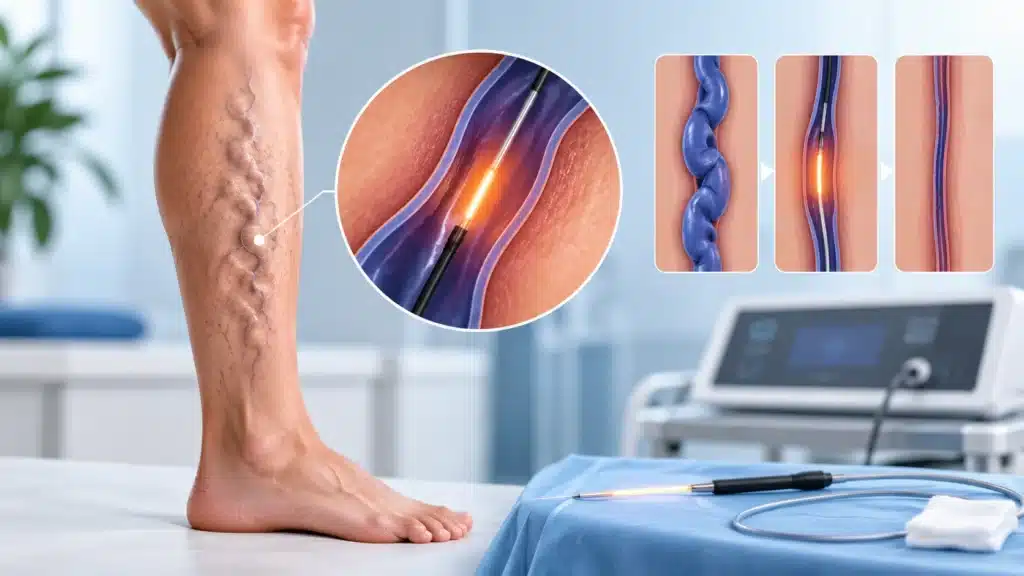
Radiofrequency Ablation is a procedure that uses controlled heat to interrupt pain signals from specific nerves. A thin needle-like probe is placed near the targeted nerve under imaging guidance. Once in position, radiofrequency energy is passed through the probe to create heat. This heat temporarily disables the nerve’s ability to transmit pain signals.
The procedure does not remove the nerve permanently. Over time, the nerve may regenerate, and pain can return. However, many patients experience months to years of relief. If pain returns, the procedure can often be repeated.
RFA is performed by pain specialists, spine specialists, or interventional radiologists. It is usually done as a day-care procedure, meaning the patient can go home the same day.
How Does RFA Work?
RFA works by targeting the nerves responsible for transmitting pain from a specific area of the body.
The basic process
- A small probe is placed near the targeted nerve.
- Radiofrequency energy is passed through the probe.
- Heat is generated at the tip of the probe.
- The heat creates a small, controlled lesion on the nerve.
- This interrupts the pain signals traveling to the brain.
- The surrounding tissues remain largely unaffected.
Why it provides relief
Pain signals travel along specific nerves from the painful area to the spinal cord and brain. By temporarily disabling these nerves, the brain receives fewer or no pain signals from that area. This reduces the perception of pain and allows the patient to function better, participate in physiotherapy, and improve quality of life.
Conditions Treated with RFA
RFA is used for a variety of chronic pain conditions, especially when other treatments have not provided lasting relief.
Common conditions treated
- Chronic lower back pain due to facet joint arthritis.
- Chronic neck pain from cervical facet joint problems.
- Sacroiliac joint pain causing lower back and buttock pain.
- Arthritis of the spine or spondylosis.
- Certain types of nerve pain or neuropathic pain.
- Pain from degenerative disc disease in selected cases.
- Some types of knee pain due to arthritis.
- Selected cases of shoulder or hip joint pain.
- Certain headache types related to nerve irritation.
- Pain from specific peripheral nerves in the body.
When RFA is considered
- When pain has lasted for more than 3 months.
- When medicines and physiotherapy have not helped enough.
- When diagnostic nerve blocks have provided temporary relief.
- When surgery is not needed or not desired.
- When the pain source can be clearly identified.
Benefits of Radiofrequency Ablation
RFA offers several advantages over more invasive surgical options.
Key benefits
- Minimally invasive with no large incisions.
- Performed under local anesthesia or light sedation.
- Short procedure time, often 30 to 60 minutes.
- Day-care procedure with same-day discharge.
- Significant pain relief for many patients.
- Improved ability to perform daily activities.
- Reduced need for pain medicines.
- Can be repeated if pain returns.
- Lower risk compared to open surgery.
- Faster recovery and return to normal routine.
Why patients choose RFA
Many patients prefer RFA because it offers a middle ground between continuing with medicines and undergoing major surgery. It provides meaningful relief with minimal downtime and lower risk.
Procedure Steps for RFA
The RFA procedure follows a structured process to ensure safety and accuracy.
Before the procedure
- Detailed evaluation by a pain specialist.
- Review of medical history and current medicines.
- Imaging review such as X-ray, MRI, or CT scan.
- Diagnostic nerve block may be done first to confirm the pain source.
- Fasting instructions if sedation is planned.
- Arrangements for someone to accompany the patient home.
During the procedure
- The patient lies on a procedure table in a comfortable position.
- The skin over the treatment area is cleaned and numbed.
- A thin needle-like probe is inserted near the targeted nerve.
- Imaging guidance such as X-ray or ultrasound is used to ensure accurate placement.
- A small electrical test may be done to confirm the correct nerve.
- Radiofrequency energy is applied for a few minutes.
- The probe is removed, and a small bandage is applied.
- The patient is monitored for a short time before discharge.
After the procedure
- The patient rests in a recovery area for 30 to 60 minutes.
- Vital signs and the injection site are checked.
- Discharge instructions are provided.
- Someone should drive the patient home if sedation was used.
- Normal activities can usually be resumed within a day or two.
Preparation for RFA
Proper preparation helps ensure a smooth procedure and better outcomes.
Preparation pointers
- Inform the doctor about all current medicines.
- Mention any allergies, especially to contrast dye or anesthesia.
- Discuss blood thinners or diabetes medicines with the doctor.
- Follow fasting instructions if sedation is planned.
- Wear comfortable clothing on the day of the procedure.
- Arrange for someone to accompany you home.
- Avoid applying creams or lotions on the treatment area.
- Bring previous imaging reports and test results.
- Ask any questions or concerns before the procedure.
- Plan for rest on the day of the procedure.
What to avoid before RFA
- Do not eat or drink if fasting is instructed.
- Avoid blood thinners unless the doctor advises otherwise.
- Do not drive yourself home if sedation is used.
- Avoid strenuous activity on the day of the procedure.
Recovery After RFA
Recovery is usually quick, but some care is needed in the first few days.
Immediate recovery
- Mild soreness at the injection site is common.
- Some patients feel temporary increase in pain for a few days.
- Numbness or tingling may occur briefly.
- Ice pack can help reduce discomfort.
- Rest on the day of the procedure.
First week after RFA
- Gradual improvement in pain over 1 to 3 weeks.
- Avoid heavy lifting or strenuous activity for a few days.
- Gentle walking is encouraged.
- Follow pain medicine instructions from the doctor.
- Keep the injection site clean and dry.
Long-term recovery
- Full pain relief may take 2 to 4 weeks to develop.
- Physiotherapy may be recommended to strengthen supporting muscles.
- Regular follow-up to assess pain relief and function.
- Return to normal activities as tolerated.
- Report any unusual symptoms to the doctor.
Activity guidance
- Light activities can be resumed within 24 to 48 hours.
- Avoid heavy exercise for about a week.
- Gradually increase activity as pain improves.
- Follow physiotherapy advice if given.
Risks and Side Effects
RFA is generally safe, but like any medical procedure, it carries some risks.
Common side effects
- Mild pain or soreness at the injection site.
- Temporary increase in usual pain for a few days.
- Minor bruising or swelling.
- Temporary numbness or tingling.
- Mild headache or dizziness.
Rare complications
- Infection at the injection site.
- Bleeding or hematoma.
- Nerve injury causing prolonged numbness or weakness.
- Allergic reaction to medicines or contrast.
- Skin burn at the procedure site.
- Worsening of pain in rare cases.
When to contact the doctor
- Severe or worsening pain after a few days.
- Fever or signs of infection.
- Increasing redness or swelling at the site.
- New weakness or numbness in the limbs.
- Difficulty walking or controlling bladder or bowels.
- Any unusual or concerning symptoms.
Who is a Good Candidate for RFA?
Not everyone with chronic pain is suitable for RFA. Proper selection is important for good outcomes.
Good candidates
- Patients with chronic pain lasting more than 3 months.
- Pain clearly linked to specific nerves or joints.
- Temporary relief from diagnostic nerve blocks.
- No improvement with medicines and physiotherapy.
- Not a candidate for or not desiring surgery.
- Realistic expectations about pain relief.
- Willing to participate in rehabilitation and follow-up.
Patients who may not be suitable
- Active infection at the procedure site.
- Uncontrolled bleeding disorder.
- Pregnancy in some cases.
- Pain source not clearly identified.
- No relief from diagnostic nerve blocks.
- Severe psychological or psychiatric conditions affecting pain perception.
- Unrealistic expectations of complete pain elimination.
Alternatives to RFA
RFA is one of several options for chronic pain management.
Alternative treatments
- Continued conservative care with medicines and physiotherapy.
- Steroid injections or nerve blocks.
- Other minimally invasive pain procedures.
- Surgical options for selected structural problems.
- Multidisciplinary pain management programs.
- Lifestyle modifications and weight management.
- Complementary therapies such as acupuncture in some cases.
Why RFA may be preferred
- Longer-lasting relief compared to steroid injections.
- Minimally invasive with lower risk than surgery.
- Can be repeated if needed.
- Allows better participation in rehabilitation.
Why Choose Rama Hospital for RFA?
Radiofrequency Ablation requires expertise, precision, and proper patient selection. A hospital-based pain management program offers comprehensive care under one roof.
- Evaluation by experienced pain and spine specialists.
- Advanced imaging and procedure facilities.
- Strict safety and sterility protocols.
- Coordinated care with physiotherapy and rehabilitation.
- Follow-up support to monitor outcomes.
- Access to other pain treatments if needed.
Frequently Asked Questions (FAQs)
Is RFA a permanent cure for pain?
No, RFA is not a permanent cure. It provides pain relief by temporarily disabling pain-transmitting nerves. The nerves may regenerate over time, and pain can return. Many patients get relief for 6 months to 2 years or more.
Is the RFA procedure painful?
Most patients tolerate RFA well with local anesthesia and sometimes light sedation. There may be mild discomfort during needle placement and a feeling of warmth during energy application. Post-procedure soreness is common but usually manageable.
How long does it take to feel relief after RFA?
Some patients feel improvement within a few days, but full relief often takes 2 to 4 weeks. Initial soreness or temporary increase in pain is common before significant improvement occurs.
Can RFA be repeated if pain returns?
Yes, RFA can be repeated if the pain returns and the patient had good relief from the first procedure. The decision to repeat depends on the individual case and the doctor’s assessment.
How long does the RFA procedure take?
The procedure usually takes 30 to 60 minutes depending on the number of nerves treated. It is typically done as a day-care procedure, and patients can go home the same day after a short observation period.
Are there any restrictions after RFA?
Most patients can resume light activities within 24 to 48 hours. Heavy lifting and strenuous exercise should be avoided for about a week. Physiotherapy and gradual activity increase are often recommended for best outcomes.
What are the risks of RFA?
RFA is generally safe. Common side effects include temporary soreness, bruising, or mild increase in pain. Rare risks include infection, bleeding, nerve injury, or skin burn. Serious complications are uncommon when performed by experienced specialists.
Conclusion
Radiofrequency Ablation is a valuable treatment option for patients suffering from chronic pain that has not responded well to medicines, physiotherapy, or injections. It offers meaningful pain relief with minimal invasiveness, short procedure time, and quick recovery. While it is not a permanent cure, it can significantly improve quality of life and function for many months or even years.
The most important steps are proper patient selection, accurate targeting of pain-generating nerves, and coordinated care with rehabilitation and follow-up. For patients with persistent back pain, neck pain, joint pain, or nerve-related pain, a specialist evaluation can determine whether RFA is a suitable option. With the right approach, RFA can be an effective part of a comprehensive pain management plan.
Rama Hospital can provide expert evaluation for chronic pain, determine suitability for Radiofrequency Ablation, and offer a clear treatment plan that supports pain relief, functional improvement, and long-term care.