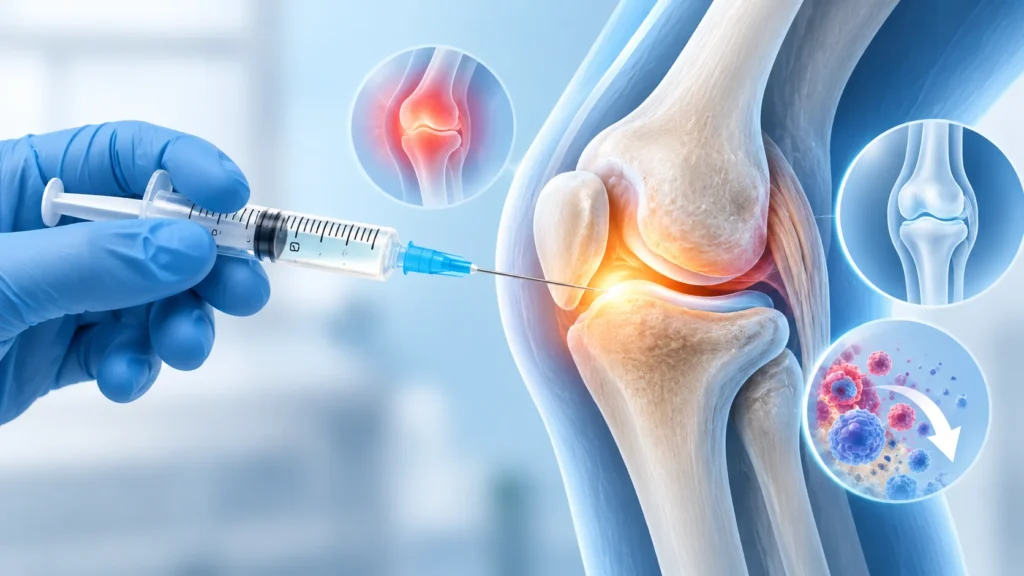
Corticosteroid injections are one of the most commonly used treatments for pain and inflammation in joints, muscles, tendons, and spine-related conditions. Many people know them as steroid injections, cortisone injections, or anti-inflammatory injections. They are used to reduce swelling, ease pain, and improve movement in conditions such as arthritis, tendonitis, bursitis, back pain, and joint inflammation.
These injections are not painkillers in the usual sense. They work by reducing inflammation at the site of pain. Inflammation is often the main reason for swelling, stiffness, and discomfort in many musculoskeletal and spine conditions. By calming this inflammation, corticosteroid injections can provide significant relief and help patients return to normal activity.
Corticosteroid injections are usually given when other treatments such as rest, medicines, physiotherapy, or lifestyle changes have not given enough relief. They can be used in many parts of the body, including the knee, shoulder, hip, wrist, ankle, spine, and small joints of the hands and feet. In some cases, they are also used for nerve-related pain or inflammation around nerves.
What are Corticosteroid Injections?
Corticosteroid injections are medical injections that contain a man-made form of cortisol, which is a natural hormone produced by the body. Cortisol helps control inflammation, immune response, and stress. When given as an injection, corticosteroids act locally at the site of pain or inflammation.
These injections are different from anabolic steroids used for muscle building. Corticosteroids are anti-inflammatory medicines and are used to reduce swelling and pain. They are commonly used in orthopaedics, rheumatology, pain management, and spine care.
The injection usually contains a corticosteroid medicine along with a local anesthetic. The anesthetic gives quick but short-term relief, while the steroid works over the next few days to reduce inflammation and provide longer-lasting relief.
How do Corticosteroid Injections Work?
Corticosteroid injections work by reducing inflammation at the site of injection.
Mechanism of action
- They suppress the immune response that causes inflammation.
- They reduce swelling in tissues around joints, tendons, or nerves.
- They decrease the production of inflammatory chemicals.
- They help reduce pain by calming irritated nerves and tissues.
- They improve movement by reducing stiffness and swelling.
Why inflammation matters
Inflammation is the body’s natural response to injury or irritation. However, when it becomes chronic or excessive, it can cause pain, swelling, stiffness, and tissue damage. Corticosteroid injections help control this inflammation and give the body a chance to heal.
Types of Corticosteroid Injections
Corticosteroid injections can be classified based on the site of injection and the purpose of treatment.
Based on site of injection
- Joint injections, such as knee, shoulder, hip, ankle, or small joints of hands and feet.
- Tendon or tendon sheath injections, used for tendonitis or tenosynovitis.
- Bursa injections, used for bursitis or inflammation of fluid-filled sacs near joints.
- Spine injections, such as epidural, facet joint, or sacroiliac joint injections.
- Nerve block injections, used for nerve-related pain.
- Soft tissue injections, used for trigger points or muscle pain.
Based on purpose
- Diagnostic injections, used to confirm the source of pain.
- Therapeutic injections, used to treat pain and inflammation.
- Preventive injections, used in some chronic conditions to reduce flare-ups.
Common Uses of Corticosteroid Injections
Corticosteroid injections are used in many conditions where inflammation is the main cause of pain.
Joint conditions
- Osteoarthritis.
- Rheumatoid arthritis.
- Gout or pseudo-gout.
- Psoriatic arthritis.
- Joint inflammation after injury.
Soft tissue conditions
- Tendonitis.
- Bursitis.
- Tennis elbow.
- Golfer’s elbow.
- Trigger finger.
- Plantar fasciitis.
- Rotator cuff-related pain.
Spine and nerve conditions
- Sciatica.
- Herniated disc with nerve compression.
- Spinal stenosis.
- Facet joint pain.
- Sacroiliac joint pain.
- Radiculopathy or nerve root pain.
Other uses
- Inflammatory skin or scar conditions.
- Certain autoimmune or inflammatory diseases.
- Localized pain that has not responded to other treatments.
Benefits of Corticosteroid Injections
Corticosteroid injections can provide significant relief for many patients.
Main benefits
- Rapid pain relief in many cases.
- Reduction in swelling and inflammation.
- Improved joint movement and flexibility.
- Better ability to do daily activities.
- Reduced need for oral pain medicines.
- Help in rehabilitation by reducing pain during physiotherapy.
- Delay or avoidance of surgery in some cases.
- Targeted treatment with less systemic effect than oral steroids.
Why patients choose injections
- Fast relief compared to oral medicines.
- Direct action at the site of pain.
- Useful when oral medicines are not suitable.
- Can help in both diagnosis and treatment.
- Often combined with physiotherapy for better results.
Risks and Side Effects
Like any medical procedure, corticosteroid injections have some risks and side effects.
Common short-term side effects
- Pain or soreness at the injection site.
- Temporary increase in pain for a day or two.
- Redness or warmth at the site.
- Temporary flushing of the face.
- Mild rise in blood sugar in diabetic patients.
- Temporary change in menstrual cycle in some women.
Less common risks
- Infection at the injection site.
- Bleeding or bruising.
- Allergic reaction.
- Nerve injury.
- Tendon weakening or rupture with repeated injections.
- Skin thinning or depigmentation at the injection site.
- Fat atrophy or dimpling under the skin.
Long-term concerns
- Repeated injections may weaken tendons or cartilage over time.
- Frequent use can affect bone density.
- Systemic effects may occur if injections are too frequent.
- Risk of joint damage with overuse.
Who should be cautious
- Patients with uncontrolled diabetes.
- Patients with active infection.
- Patients with bleeding disorders.
- Patients on blood thinners.
- Pregnant women in some cases.
- Patients with certain immune or bone conditions.
Procedure for Corticosteroid Injection
The procedure is usually done in a clinic or hospital setting and takes only a few minutes.
Before the procedure
- Medical history and examination.
- Review of medicines and allergies.
- Imaging such as X-ray, ultrasound, or MRI if needed.
- Informed consent and explanation of risks and benefits.
During the procedure
- The area is cleaned with antiseptic.
- Local anesthetic may be given to numb the skin.
- The needle is guided to the target site, sometimes using ultrasound or fluoroscopy.
- The corticosteroid and anesthetic are injected.
- The needle is removed and a bandage is applied.
After the procedure
- Patient is monitored for a short time.
- Ice may be advised to reduce soreness.
- Rest and avoidance of strenuous activity for a day or two.
- Follow-up advice is given based on the condition treated.
Recovery After Corticosteroid Injection
Recovery is usually quick, but some care is needed in the first few days.
Immediate recovery
- Mild soreness at the injection site is common.
- Pain relief from anesthetic may be felt within hours.
- Steroid effect may take a few days to become noticeable.
- Avoid heavy activity for a day or two.
First week
- Gradual return to normal activity.
- Physiotherapy may be started or continued.
- Monitor for any unusual symptoms.
- Follow-up as advised.
Long-term recovery
- Relief may last from weeks to months depending on the condition.
- Repeat injections may be needed in some cases.
- Lifestyle and physiotherapy support long-term benefit.
Aftercare and Precautions
Proper aftercare helps improve results and reduce risks.
Aftercare pointers
- Keep the injection site clean and dry.
- Avoid strenuous activity for a day or two.
- Use ice if there is soreness.
- Take medicines as prescribed.
- Watch for signs of infection such as fever, redness, or swelling.
- Inform the doctor if pain worsens or new symptoms appear.
- Follow physiotherapy advice for best results.
Precautions for diabetic patients
- Monitor blood sugar closely after injection.
- Blood sugar may rise temporarily.
- Inform the treating doctor if sugar levels are difficult to control.
When are Corticosteroid Injections Not Suitable?
Corticosteroid injections are not suitable for everyone.
Situations where injections may be avoided
- Active infection at or near the injection site.
- Uncontrolled diabetes.
- Bleeding disorders or use of blood thinners without proper management.
- Allergy to corticosteroids or anesthetics.
- Pregnancy in some cases.
- Certain bone or joint conditions.
- Repeated injections in the same site in a short period.
Why caution is needed
Injections are powerful anti-inflammatory tools, but overuse can cause tissue damage. Proper patient selection and timing are important to get benefit without harm.
Alternatives to Corticosteroid Injections
In some cases, other treatments may be used instead of or along with corticosteroid injections.
Alternative treatments
- Oral anti-inflammatory medicines.
- Physiotherapy and exercise.
- Platelet-rich plasma injections in selected cases.
- Hyaluronic acid injections for certain joint conditions.
- Nerve blocks or other pain management techniques.
- Surgery for severe or structural problems.
Why alternatives matter
Not every patient is suitable for steroid injection. Some conditions respond better to other treatments. A doctor will choose the best option based on diagnosis, severity, and patient health.
When to See a Doctor
Medical evaluation is important before and after corticosteroid injection.
- Persistent pain that does not improve.
- Swelling, redness, or warmth at the injection site.
- Fever or chills after injection.
- Worsening pain or new symptoms.
- Numbness or weakness.
- Signs of allergic reaction.
- Uncontrolled blood sugar after injection.
Prevention of Complications
While complications are rare, some steps can reduce risk.
Prevention pointers
- Choose an experienced doctor or specialist.
- Ensure proper sterile technique.
- Follow aftercare instructions.
- Avoid repeated injections too frequently.
- Manage diabetes and other health conditions.
- Combine injection with physiotherapy for better long-term results.
Why Choose Rama Hospital for Corticosteroid Injection Treatment?
Corticosteroid injections require accurate diagnosis, proper technique, and safe aftercare. A hospital with experienced orthopaedic, pain management, and spine specialists can make a major difference in outcomes.
- Expert evaluation to confirm the source of pain.
- Imaging guidance for accurate injection.
- Safe and sterile procedure.
- Comprehensive pain management plan.
- Rehabilitation support for long-term benefit.
- Follow-up care to monitor results.
Frequently Asked Questions (FAQs)
How long does pain relief last?
Relief can last from a few weeks to several months depending on the condition and the patient. Some patients get long-term benefit, while others may need repeat injections.
Is the injection painful?
Most patients feel only mild discomfort during the procedure. Local anesthetic is often used to numb the area. Some soreness after the injection is normal and usually settles in a day or two.
Are corticosteroid injections safe?
Yes, when done properly and not overused, they are generally safe. Like any procedure, there are some risks such as infection, bleeding, or temporary pain flare. Proper technique and aftercare reduce these risks.
Can diabetic patients take corticosteroid injections?
Yes, but blood sugar may rise temporarily after the injection. Diabetic patients should monitor sugar levels closely and inform their doctor if levels are difficult to control.
How many injections can I take?
The number depends on the condition and response. Repeated injections in the same site are usually limited to avoid tissue damage. The doctor will decide the safe frequency based on the case.
Can corticosteroid injections cure my condition?
They do not always cure the underlying condition but can provide significant relief from pain and inflammation. In many cases, they help support physiotherapy and other treatments for long-term improvement.
What should I avoid after the injection?
Avoid strenuous activity, heavy lifting, or intense exercise for a day or two. Keep the injection site clean and dry. Follow the doctor’s advice on rest and physiotherapy.
Conclusion
Corticosteroid injections are a valuable treatment option for many conditions involving pain and inflammation. They provide targeted relief, improve movement, and help patients return to normal activity. When used appropriately and combined with physiotherapy and lifestyle support, they can make a major difference in quality of life.
The most important steps are accurate diagnosis, proper technique, and safe aftercare. For patients with joint pain, tendonitis, bursitis, or spine-related pain, a medical evaluation can determine whether corticosteroid injection is the right option. With the right care, most patients experience significant relief and improved function.
Rama Hospital can help evaluate pain conditions, provide safe and effective corticosteroid injection treatment, and guide patients through recovery and rehabilitation for long-term benefit.